What Is a Dimmable Picture Wall Light? A Simple Guide for Art Lovers

A dimmable picture wall light is a wall-mounted fixture designed to shine focused light onto artwork, photographs, prints, or decorative displays. Its brightness can be raised or lowered with a compatible dimmer, remote, switch, or built-in control.
A dimmable picture wall light helps you see artwork clearly while letting you control the mood of the room. It combines focused display lighting with adjustable brightness, making it useful for living rooms, hallways, bedrooms, studies, and home galleries.
I have always believed that good art deserves good light. A beautiful painting can feel flat in a dark corner, while the right picture light can reveal color, texture, brush marks, and small details you may not have noticed before.
The dimming feature makes the fixture even more useful. You can use brighter light when viewing the artwork and softer light when relaxing in the evening.
In this guide, I will explain what a dimmable picture wall light is, how it works, what to look for, and how to choose one that suits your art and home.
What Is a Dimmable Picture Wall Light?
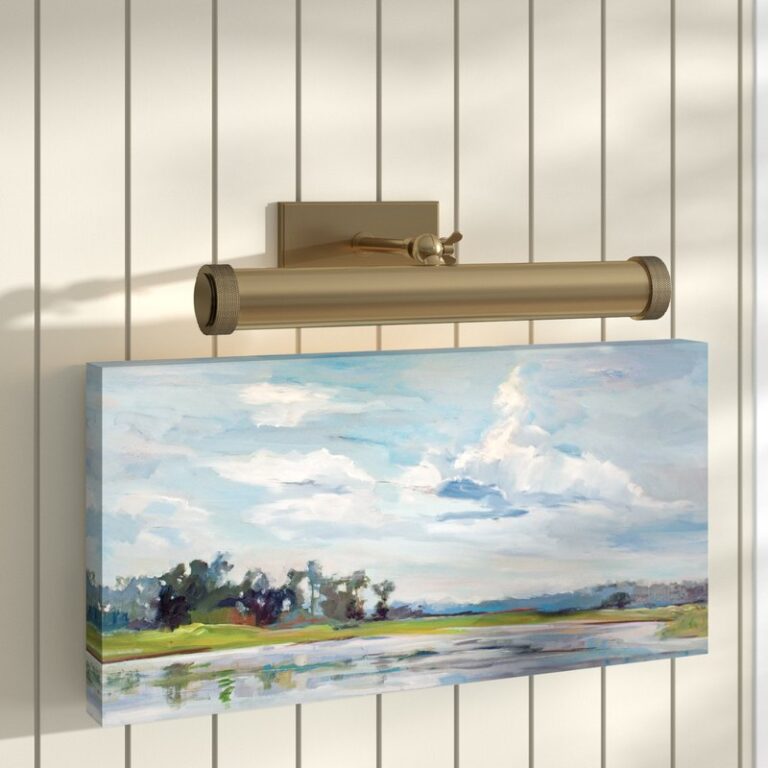
A picture wall light is a narrow fixture installed above or near a framed picture. It directs light toward the artwork instead of lighting the whole room.
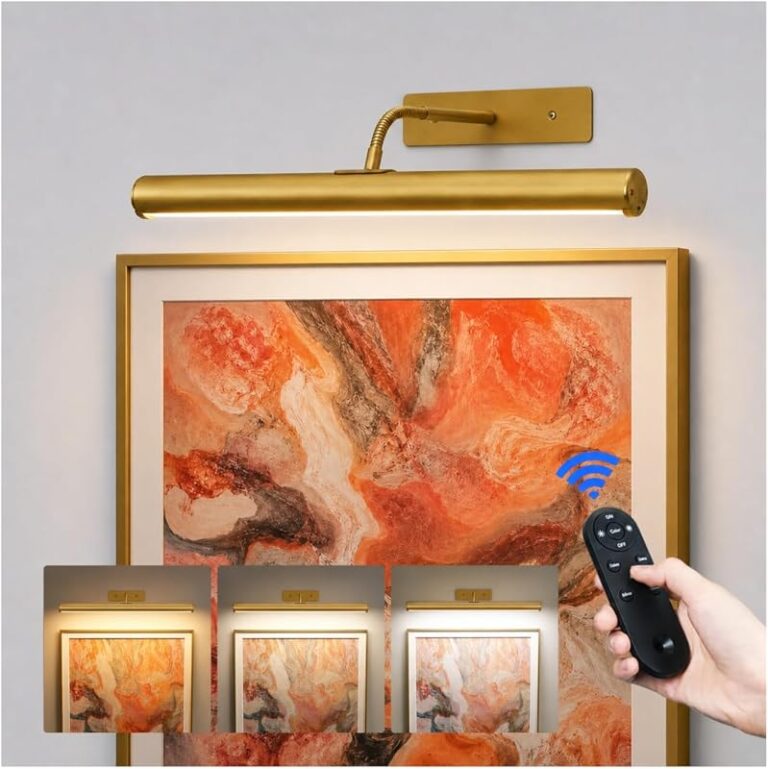
A dimmable model lets you adjust how bright that focused light appears. Depending on the product, you may control it with a wall dimmer, a small switch, a remote, a touch button, or a mobile app.
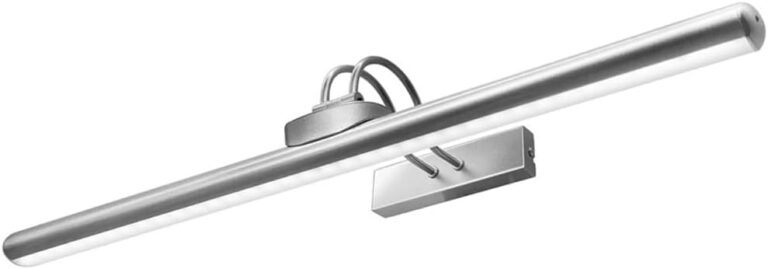
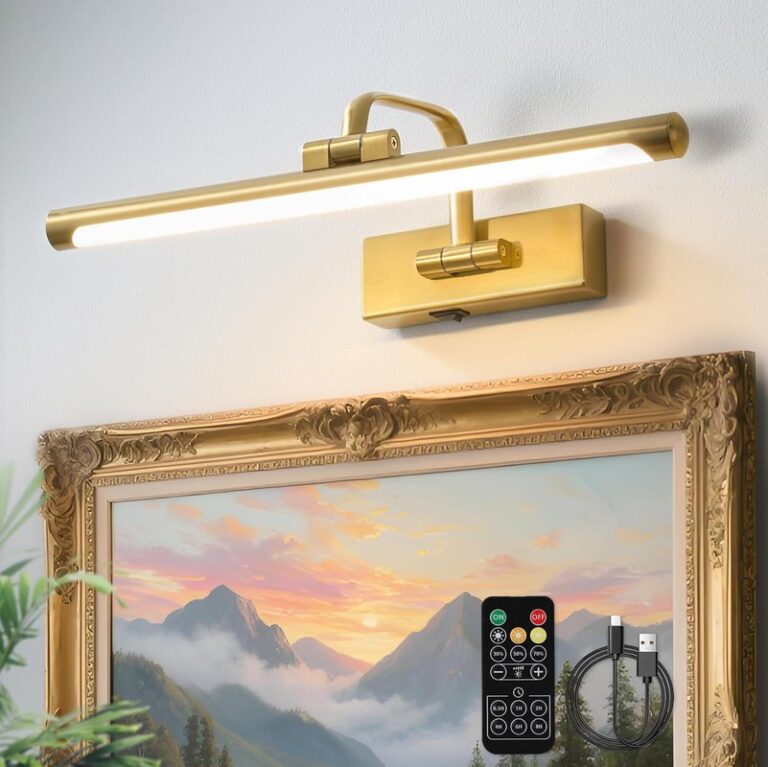
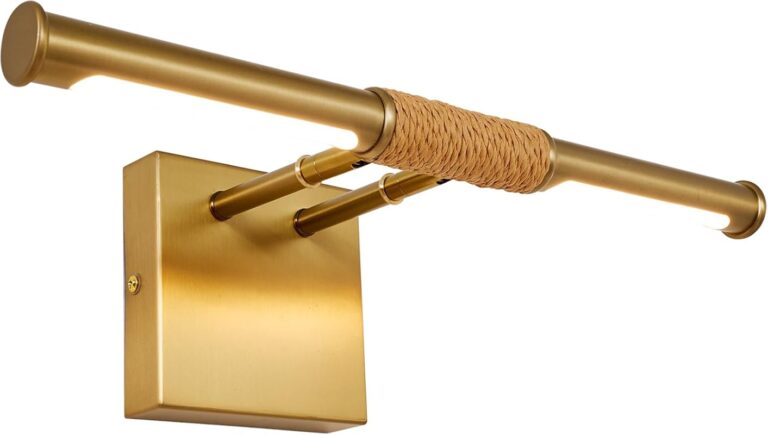
The fixture normally includes a long light bar, one or more LED sources, an adjustable arm, and a shade that directs light downward. Some models can also tilt forward or backward.
Picture lights are not only for paintings. You can also use them over photography, textile art, maps, shadow boxes, bookcases, certificates, mirrors, and sculptural wall pieces.
You can explore more display ideas in my Lighting & Ambience guide. For help pairing a light with the right frame, visit the Art & Frames guide.
Main Parts of a Dimmable Picture Light
The Light Bar
The light bar holds the LED bulbs or integrated LED strip. A wider bar spreads light across a larger piece of art, while a narrow bar works well for smaller frames.
The Shade
The shade helps control glare. It directs the beam toward the artwork and reduces the amount of light that shines into your eyes.
The Arm
The arm moves the fixture away from the wall. Adjustable arms let you change the angle and coverage of the beam.
The Dimming Control
This is the part that lowers or raises the brightness. It may be built into the fixture or connected to a separate wall dimmer.
The Power Source
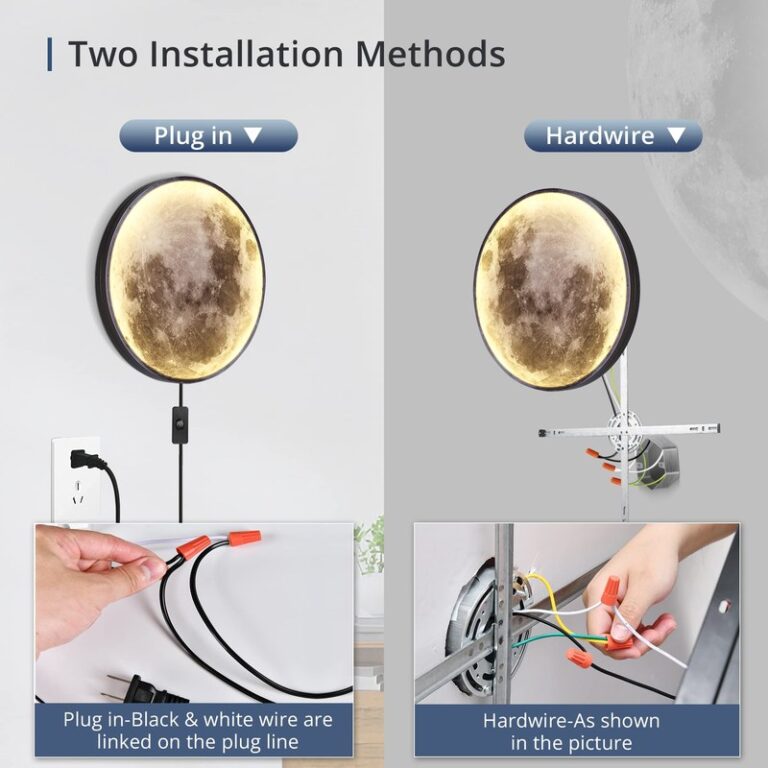
Picture lights may be hardwired into the wall, plugged into an outlet, or powered by rechargeable batteries. Each option has a different look and installation process.
A fixture described as LED does not automatically mean it is dimmable. The light source, driver, and control must all support dimming.
How Does a Dimmable Picture Wall Light Work?
A standard light receives a fixed amount of power. A dimmable light uses a compatible control to change the electrical output reaching the bulb or LED driver.
When the output drops, the light becomes softer. When it rises, the light becomes brighter.
Modern LED picture lights often use an electronic driver. The driver manages the power sent to the LEDs. For smooth performance, the driver and dimmer need to work well together.
How to Choose and Set Up a Dimmable Picture Light
Measure the full width of the frame. A picture light that is roughly one-half to two-thirds of the frame width often gives balanced coverage.
Select a hardwired light for the cleanest finish, a plug-in model for easier installation, or a rechargeable model when there is no nearby outlet.
Confirm that the fixture, LED driver, bulb, and wall dimmer are compatible. Look for clear wording such as “dimmable LED” or “compatible with LED dimmers.”
Find the center of the frame and mark the matching point above it. Use a level so the fixture sits straight.
Follow the manufacturer’s instructions. Hire a qualified electrician when new wiring or a hardwired connection is required.
Tilt the light until the beam covers the artwork evenly without creating a bright reflection on glass or a shiny painted surface.
Begin at a low level and increase the brightness slowly. Stop when the artwork looks clear but not harsh or washed out.
Test the light after sunset as well as during the day. A setting that looks gentle in daylight may feel much brighter in a dark room.
Why Dimmable Art Lighting Matters
It Helps Reveal Detail
Focused light can show fine lines, layers, textures, and subtle color changes. This is helpful for oil paintings, detailed prints, photography, and mixed-media work.
It Gives You More Control
One fixed brightness may not work all day. Sunlight changes, curtains move, and other lamps turn on or off. Dimming lets you balance the artwork with the rest of the room.
It Creates a Softer Evening Mood
A bright ceiling light may feel too strong when you want to relax. A dimmed picture light adds a calm glow without leaving the room completely dark.
It Makes Art Feel Intentional
Lighting tells the eye where to look. It can turn one framed piece into a clear focal point and make a simple wall feel more carefully designed.
The lighting advice from Architectural Digest’s lighting collection also shows how fixtures can work as part of the room’s overall design, not only as a practical light source.
Real-World Ways to Use a Picture Wall Light
Place a warm brass picture light above a vintage landscape, a slim black fixture above modern photography, or a soft white light above a child’s framed artwork. The fixture should support the story of the piece.
Above a Living Room Painting
A dimmable light can make a large painting the main feature of the room. Lower the light during movie nights and raise it when guests arrive.
Over a Hallway Gallery
A series of small lights can guide the eye along a hallway. For a simpler setup, use one longer fixture above a carefully grouped set of frames.
Inside a Reading Corner
A picture light above art near a reading chair adds depth and warmth. It works especially well when paired with a floor lamp or table lamp.
Above a Desk or Console
Use the fixture to highlight art above a home office desk or entry console. You can find more room-styling ideas in my Creative Living section.
Over a Personal Collection
Picture lights can bring attention to family photographs, travel prints, handwritten letters, record covers, or meaningful objects in a shadow box.
Benefits and Limitations
- Adjustable brightness for day and night
- Creates a clear focal point
- Shows more detail in artwork
- Adds gentle accent lighting
- Available in many finishes and sizes
- Can reduce the need for harsh overhead light
- Some models need professional wiring
- Incompatible dimmers may cause flickering
- Poor placement can create glare
- Battery models need regular charging
- Very hot or intense light may harm sensitive art
- Cheap LEDs may show colors poorly
Picture Light Style Guide
For more decorating examples, browse the HGTV decorating library. You can also study how different art styles and colors respond to display conditions by exploring The Met’s online art collection.
What Should You Budget?
Prices change by size, finish, brand, control type, and power source. Decorative brass fixtures and high-CRI integrated LEDs often cost more than small battery-powered models.
For most homes, I prefer a slim dimmable LED picture light with an adjustable arm, a warm 2700K to 3000K output, and a CRI of at least 90. It gives you useful control without making the setup feel too technical.
Pro Tips for Better Picture Lighting
- Choose the fixture after measuring the full outer width of the frame.
- Use warm light for traditional rooms and slightly cleaner light for modern spaces.
- Aim the beam toward the center and lower portion of the artwork.
- Keep the light soft when artwork is behind reflective glass.
- Check the CRI when accurate reds, blues, greens, and skin tones matter.
- Use the lowest brightness that still lets you enjoy the details.
- Match the fixture finish with the frame or nearby cabinet hardware.
- Test rechargeable models before drilling permanent mounting holes.
- Is the fixture truly dimmable?
- Is the dimmer included or sold separately?
- Does the light need wiring, an outlet, or charging?
- Is the light bar wide enough for the artwork?
- Can the arm and shade be adjusted?
- Is the color temperature suitable for the room?
- Does it have a CRI of 90 or higher?
- Will the beam create glare on glass?
- Can replacement bulbs or parts be found?
- Are mounting screws and instructions included?
Common Picture Light Mistakes
Buying the Wrong Width
A tiny light above a wide painting may leave the outer edges dark. A fixture that is too large can overpower a small frame.
Ignoring Dimmer Compatibility
An incompatible dimmer may cause flickering, buzzing, sudden brightness changes, or a limited dimming range.
Using Light That Is Too Cool
Very cool light can make a warm room feel clinical. It may also change how creams, reds, wood tones, and skin colors appear.
Turning the Brightness Too High
More light is not always better. Strong light can flatten texture, create glare, and pull too much attention away from the rest of the room.
Placing the Fixture Too Close
When the light sits too close to the frame, it may create a narrow bright strip. An adjustable arm helps spread the beam more evenly.
Forgetting About Glass
Glass can reflect the bulb, nearby windows, and people standing in the room. Change the angle until the reflection becomes less noticeable.
Choosing Style Before Performance
A beautiful finish will not fix weak color rendering, poor beam control, short battery life, or unreliable dimming.
- Measure the frame before shopping
- Confirm LED and dimmer compatibility
- Use adjustable brightness
- Check the artwork from several viewing angles
- Use a qualified electrician for new wiring
- Point a harsh beam directly at reflective glass
- Assume every LED fixture can dim
- Use a very hot bulb close to sensitive artwork
- Hide electrical cords where they may be damaged
- Leave valuable art under strong light all day
Light exposure can affect sensitive paper, textiles, photographs, pigments, and historic artwork over time. Use LED lighting with low heat, avoid excessive brightness, and limit the number of hours valuable pieces remain illuminated. Ask a professional conservator about rare or irreplaceable art.
When comparing LED bulbs and fixtures, the Consumer Reports lightbulb resources can help you understand brightness, energy use, and bulb performance.
Shop Dimmable Picture Light Options
- A dimmable picture wall light directs adjustable light toward art or framed displays.
- The main choices are hardwired, plug-in, and rechargeable fixtures.
- Good dimming compatibility helps prevent flickering and buzzing.
- A warm 2700K to 3000K light and a CRI of 90 or higher suit many homes.
- The fixture should be sized to the frame and angled to reduce glare.
- Low heat and moderate brightness are safer for sensitive artwork.
A dimmable picture wall light gives artwork focused illumination without forcing you to use one fixed brightness. Choose a properly sized fixture, confirm that every dimming part is compatible, and use a gentle LED beam. The goal is not to make the light noticeable. The goal is to help the artwork look its best.
Picture Light Type Comparison
| Picture Light Type | Best Use | Main Advantage | Possible Drawback |
|---|---|---|---|
| Hardwired | Permanent living rooms, dining rooms, and galleries | Clean appearance with no visible cord | May require an electrician |
| Plug-in | Rooms with a nearby outlet | Easier to install and move | The cord may remain visible |
| Rechargeable | Rentals, hallways, and walls without outlets | No new wiring is needed | Requires regular charging |
| Remote-controlled | High walls or hard-to-reach fixtures | Convenient brightness control | The remote can be misplaced |
| Smart picture light | Connected homes and automated rooms | App, voice, or schedule control | Setup may be more complex |
Artwork Size and Lighting Guide
| Artwork Width | Suggested Light Width | Useful Placement | Recommended Approach |
|---|---|---|---|
| Under 18 inches | 8–12 inches | Centered just above the frame | Use a soft, narrow beam |
| 18–30 inches | 12–20 inches | Centered with an adjustable arm | Choose a medium output |
| 30–48 inches | 18–30 inches | Allow enough distance for wider coverage | Use high-CRI LEDs and smooth dimming |
| Over 48 inches | 24 inches or wider | Test for dark edges before final mounting | Consider two fixtures or professional lighting |
| Gallery grouping | Based on the full grouped width | Center over the complete arrangement | Treat the frames as one visual display |
Problem, Cause, and Solution Guide
| Problem | Likely Cause | Practical Solution |
|---|---|---|
| The light flickers | Incompatible LED driver or dimmer | Check the manufacturer’s compatibility list and use an LED-rated dimmer |
| The artwork has dark edges | The light bar is too narrow or too close | Choose a wider fixture or extend the adjustable arm |
| Glass shows reflections | The beam angle is too direct | Tilt the light and lower the brightness |
| Colors look dull | Low CRI or unsuitable color temperature | Choose a CRI of 90 or higher and test warmer light |
| The room feels harsh | The brightness is too high | Dim the picture light and balance it with softer room lamps |
| The battery runs down quickly | High brightness or a small battery | Use a lower setting or choose a larger rechargeable model |
Frequently Asked Questions
It is used to direct adjustable light onto paintings, photographs, prints, frames, and decorative wall displays.
No. The bulb or integrated LED, driver, fixture, and dimmer must all support dimming.
A warm 2700K to neutral 3000K light works well in many homes, but the best choice depends on the artwork and room colors.
A light that measures about one-half to two-thirds of the frame width often provides balanced coverage.
Excess heat, ultraviolet light, strong brightness, and long exposure may affect sensitive art, so use low-heat LEDs and moderate settings.
They are useful for rentals and walls without outlets, but they need charging and may not stay bright as long as wired fixtures.
You should hire a qualified electrician when the installation requires new wiring or changes to an electrical circuit.
Final Recommendation
A dimmable picture wall light is a focused art light with adjustable brightness. It lets you highlight a painting or framed display during the day, then create a softer glow at night.
For a simple and reliable setup, I recommend a warm LED fixture with smooth dimming, an adjustable arm, and a CRI of at least 90. Measure your frame before choosing the width, and check every part for dimmer compatibility.
Use moderate brightness and watch for glare, heat, and long exposure. When the light is chosen and positioned well, it should not steal attention from the artwork. It should make you want to stop, look, and enjoy the piece a little longer.