Softbox vs Ring Light: Which Is Right for You?

A softbox and a ring light can both improve photos and videos, but they solve different lighting problems. A ring light places bright, even light close to the camera lens, while a softbox lets you place a larger diffused source to one side and shape the shadows more deliberately.
That difference affects more than brightness. It changes facial depth, catchlights, reflections, setup time, and the amount of space you need. The best choice therefore depends on what you create most often, how much control you want, and whether your setup must stay compact.
Choose a ring light for makeup tutorials, video calls, livestreams, desk videos, and quick front-facing content. Choose a softbox for portraits, interviews, product photography, and videos that need softer shadows and more natural depth. For many creators, a softbox offers more long-term flexibility, while a ring light is easier to set up and use immediately.
- Ring lights create simple, even frontal light and circular catchlights.
- Softboxes create broader, directional light with more control over shadow shape.
- A ring light usually needs less room and fewer adjustments.
- A softbox is generally more versatile for portraits, products, interviews, and studio-style video.
- Stand quality, color control, output, and included accessories matter as much as the light type.
Ring Light vs. Softbox at a Glance
Before looking at technical details, it helps to match each light to the experience you want. A ring light prioritizes speed and consistency, while a softbox prioritizes direction and creative control.
- You record yourself at a desk or in a small room.
- You want quick, even light with minimal setup.
- You create makeup, beauty, livestream, or video-call content.
- You prefer an integrated phone or camera holder.
- You like the visible circular catchlight.
- You want more natural facial depth and softer side shadows.
- You photograph portraits, products, or more than one person.
- You record interviews or polished talking-head videos.
- You need more control over direction, spill, and contrast.
- You have enough space for a separate stand and larger modifier.
The comparison becomes clearer once you understand how the shape and placement of each source affect the image. That is the most important difference between the two.
How Light Shape Changes Your Photos and Videos
The apparent size of a light source controls how quickly brightness changes across the subject. Its position controls where the shadows fall. Because ring lights and softboxes are shaped and positioned differently, they create noticeably different results even when their measured brightness is similar.
Shadow Softness, Contrast, and Facial Depth
A softbox creates broad, diffused light when it sits close to the subject. Placing it about 30–45 degrees to one side gives the face or product a brighter side and a darker side, producing shape without making the shadows look harsh.
A ring light surrounds the lens and sends light from almost the same direction as the camera. This reduces many front-facing shadows and can make skin look evenly illuminated, but it may also flatten facial features because there is less side-to-side contrast.
You can soften either source by moving it closer and lowering its output. However, a large softbox usually gives you more freedom to decide exactly where the light falls and how much shadow remains.
Catchlights and Reflections
A ring light produces a recognizable circular catchlight in the eyes. That look suits beauty videos, makeup demonstrations, and close-up social content, but it may feel distracting when you want a natural portrait.
A square or rectangular softbox creates a window-like catchlight. Because you can raise, rotate, and move it to the side, you have more control over where that reflection appears in the eyes, glasses, glossy packaging, polished metal, or screens.
The light source itself appears in reflective surfaces. When photographing glass, cosmetics, jewelry, or screens, moving the light a few inches or changing its angle can improve the image more than simply lowering the brightness.
Once you know the look each source creates, the next practical question is how much equipment and room each setup requires.
Equipment Size, Output, and Setup Time
Size and Light Output
Ring lights commonly range from compact desktop models to larger standing versions. Smaller lights work for webcams and close-up phone videos, while larger models spread light across more of the face and upper body.
Softboxes vary more widely in shape and size. A compact model can fit a home office, while a 24-inch or larger softbox covers portraits, interviews, and product scenes more evenly. Larger diffusion surfaces create softer shadows, but they also need stronger stands and more floor space.
Output numbers alone do not tell the whole story. A brighter light can still look harsh if its emitting area is small, while a larger diffused source can look smoother even at a lower setting.
Portability and Setup Time
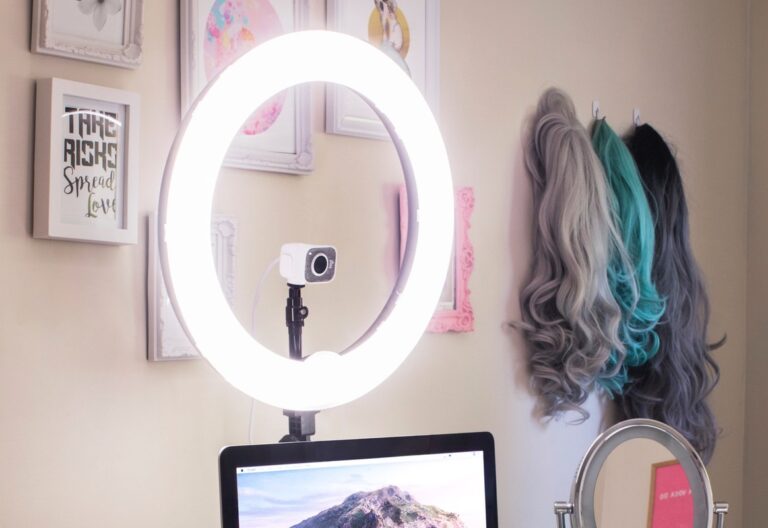
A ring light often combines the light, stand, phone holder, and camera mount in one package. That makes it easy to unfold the stand, adjust the brightness, place the camera in the center, and begin recording within minutes.
A softbox normally requires a separate stand, light source, diffuser, and modifier. It takes longer to assemble and stores as several pieces, but the additional parts give you more control over height, angle, distance, and direction.
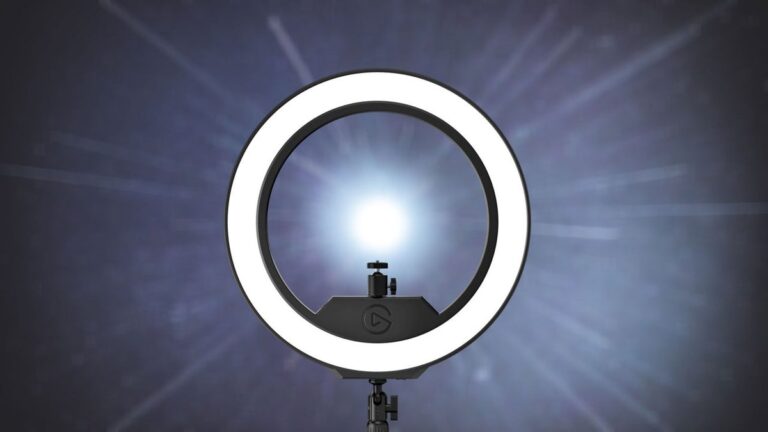
For creators who regularly move between rooms or record at a desk, an all-in-one ring light can remove much of that setup friction. The model below is a practical example of that approach.
 Check RL-18 Price & Availability →
A quick setup is valuable, but speed is not the only consideration. The kind of work you create most often should determine whether that convenience is worth giving up some directional control.
Best Uses for Portraits, Beauty, and Video
Headshots, Makeup, and Beauty Content
A ring light works well when the camera stays directly in front of the subject. Place the lens near the center of the ring and keep the light slightly above eye level. This reduces strong facial shadows and makes details easy to see, which is useful for makeup tutorials, skincare demonstrations, and close-up videos.
The same evenness can make a portrait look flat, especially when the light is very close to the lens. Lowering the brightness, raising the light slightly, or turning the face a little can create a more flattering result.
A softbox gives you a different kind of control. Position it to one side and slightly above eye level, then use a white reflector on the opposite side when the shadow becomes too dark. This arrangement keeps the skin soft while preserving shape around the cheeks, nose, and jawline.
Interviews, Talking-Head Videos, and Product Photography
For interviews and polished talking-head videos, a softbox usually creates the more natural look. Its angled placement adds facial depth, and the broader source can illuminate more than one person when it is large enough and positioned farther away.
The same control helps with product photography. You can rotate the softbox, move it across a glossy surface, or use a second light as fill until the reflections reveal the product’s shape without hiding important details.
Creators who shoot both portraits and products often benefit from a two-light softbox kit. One light can act as the key, while the second can soften shadows, light the background, or create edge separation.
 View the NK103 Softbox Kit →
The softbox kit offers more options, but those options only help when you can position the lights correctly. The next section explains how direction, spill, and room size affect the final choice.
Control, Modifiers, and Placement
Adjusting Direction and Spill
A softbox sends light through a broad front panel, but you can still aim it precisely. Turn it toward the subject for more exposure, feather it away for gentler light, raise it to change the facial shadows, or move it closer to make the source appear larger and softer.
A grid can narrow the beam and prevent excess light from reaching the wall or background. Black foam board or a flag can also block spill and deepen contrast on one side of the subject.
A ring light offers fewer directional options because it normally remains near the camera. You can still raise it, tilt it, change the distance, and lower the brightness, but it cannot shape one side of the face as independently as a softbox placed off-axis.
Working in Small Spaces
A ring light is easier to fit beside a desk because one stand can support the light and phone. This makes it a practical option for bedrooms, compact offices, video calls, and frequent solo recording.
A softbox needs room for the stand legs, the modifier, and an angled path toward the subject. In a tight room, use a smaller softbox, keep the stand close to a wall, and leave enough space behind the subject to reduce hard background shadows.
Before buying a second light, try a white reflector opposite your main source. It can brighten the shadowed side of the face or product without adding another cable, stand, or color-temperature setting.
A collapsible reflector is useful with either setup. It can bounce a ring light from the side, soften a single-softbox setup, block unwanted spill with its black surface, or add controlled highlights to a product.
 See Reflector Sizes & Options →
With placement and modifiers considered, the final buying decision comes down to total cost, durability, and the features you will actually use.
Cost and Buying Considerations
Budget Kits vs. Professional Gear
A basic ring light is often an easier first purchase because the light, stand, and phone mount may arrive in one box. Lower-cost models can work well for occasional use, but check the stand stability, power source, brightness range, and whether the color temperature is adjustable.
Softbox prices vary more because some listings include only the modifier, while others include bulbs, stands, diffusers, remotes, and carrying bags. Compare the complete package rather than the headline price so you do not discover later that a compatible light or stand must be purchased separately.
Professional equipment usually costs more because it offers stronger output, more accurate color, better cooling, more durable stands, replaceable parts, and wider accessory compatibility. Those advantages matter for frequent paid work, but they may be unnecessary for occasional video calls or social clips.
Product bundles, prices, and included accessories can change. Confirm the exact stand height, power source, color-temperature range, camera or phone mount, number of lights, return policy, and package contents on the retailer listing before ordering.
How to Choose Your First Lighting Tool
Instead of starting with brand names, begin with your most common subject and shooting space. This keeps the purchase focused on the work you actually do.
Choose beauty, video calls, streaming, portraits, interviews, products, or a mix. The more varied the work, the more useful directional control becomes.
Check floor space, ceiling height, wall distance, storage, and cable routes. A light that cannot be positioned safely will not produce its best result.
Choose a ring light for simple frontal illumination or a softbox when you want to shape shadows, reflections, background spill, and facial depth.
Look beyond the light itself and confirm the stand, mount, power supply, diffuser, remote, carrying bag, and warranty or return terms.
Following those steps usually makes the choice clear. However, some creators do not need to choose only one type of light.
Can You Use a Ring Light and Softbox Together?
Yes. A softbox can serve as the main light from one side, while a ring light near the camera adds gentle fill. This combination preserves some facial depth while reducing shadows that look too heavy on camera.
Start with the softbox and establish the look first. Then turn on the ring light at a low setting and increase it only until the darker side becomes clear enough. If the ring light is too bright, it can remove the shape created by the softbox.
Keep the color temperatures similar so skin tones remain consistent. Also watch for two different catchlight shapes in the eyes, which may look distracting in close-up portraits.
Let one light be clearly stronger than the other. When both lights have the same brightness from different directions, the image can develop double shadows and lose a clear visual direction.
Which Lighting Option Is Best for You?
The best light is the one that fits your most frequent work without making setup difficult. A compact tool you use consistently is more valuable than a larger system that remains stored away.
Choose a ring light when convenience, compact storage, and front-facing content are your priorities. Choose a softbox when image quality, directional control, and versatility across portraits, products, and interviews matter more. For the widest range of creative work, begin with one softbox and add a reflector before investing in a second powered light.
Frequently Asked Questions
A ring light is usually easier for video calls because it fits near the camera and provides even facial light. A small softbox placed slightly to one side can look more natural when you have enough desk and floor space.
A large softbox placed close to the subject usually creates softer, more controllable shadow edges. A ring light reduces front-facing shadows but often produces a flatter look.
Often, yes. Its centered light shows facial detail clearly and many kits include a phone holder. Adjust the height and brightness to avoid glare on skin, glasses, or reflective makeup packaging.
Choose a softbox for portraits, interviews, product photography, or any setup where you want to control the direction, contrast, reflection, and shadow depth.
A ring light usually offers the quickest setup because the light, stand, and camera or phone mount are often integrated. A softbox takes more assembly and positioning but offers more creative control.
Yes. Use the softbox as the main directional light and keep the ring light lower as fill. Match their color temperatures and avoid making both lights equally bright.
No. One softbox can create an effective key light. Add a white reflector first if you only need to brighten the shadowed side; purchase a second light when you need independent fill, rim, or background control.
Conclusion
A ring light is the practical choice for quick solo content, beauty work, livestreams, and video calls. It provides consistent front-facing light, uses limited space, and usually requires fewer accessories.
A softbox is the stronger choice when you want natural depth, softer directional shadows, controlled reflections, and a lighting setup that can adapt to portraits, products, interviews, and professional-looking video.
Whichever option you choose, begin with one light, position it carefully, and test the result before adding more equipment. Good placement and controlled brightness will improve the image more than simply buying the most powerful kit.
Buy a ring light for speed and simplicity. Buy a softbox for control and versatility. When you are still unsure, choose the option that matches the content you create most often and the space you can use safely.