
Best Wall Mounted Shoe Shelves for Entryways and Closets

Shoes can quickly crowd an entryway, closet, or bedroom floor. Wall-mounted shoe shelves use vertical space to keep footwear organized, visible, and easier to reach. They work well in small homes, narrow hallways, and busy entry areas where floor space matters.
Which Wall Mounted Shoe Shelves Should You Choose?
Shoe shelves work best when the depth, spacing, and airflow match the shoes you actually wear. Use the wall carefully so the entryway stays open and tidy.
| Use case | Best choice | What to check |
|---|---|---|
| Entryway shoes | Open wall shelf with raised edge | Depth, dirt control, and daily access |
| Closet storage | Stacked wall-mounted shelves | Vertical spacing and capacity |
| Small apartment | Slim floating shoe shelf | Projection from wall and walking clearance |
| Kids or family shoes | Low, sturdy shelf system | Easy reach and secure mounting |
Quick Buying Checklist
- Measure the wall width and depth before choosing a shelf.
- Check the listed weight limit and match it to what you plan to display.
- Look for hardware that fits your wall type, especially drywall, tile, or masonry.
- Choose finishes that match nearby frames, hooks, faucets, or cabinet hardware.
- Use the Amazon listing photos and dimensions to confirm scale before buying.
Affiliate note: If a product fits your space, use the Amazon listing to confirm current size, finish, hardware, and availability before purchase.
Related Hurrell Editions Guides
- Wall mounted laundry shelves
- Wall mounted corner shelves
- Wall mounted bookshelves
- Home studio organization ideas
The best wall-mounted shoe shelves balance strong construction, useful shelf depth, secure mounting, and a size that fits both your wall and your shoes. Before buying, we check the shelf’s weight limit, mounting hardware, materials, spacing, and design. We also consider whether it can hold bulky shoes, boots, or several pairs without bending or pulling away from the wall.
We compared wall-mounted shoe shelves to find options that make storage more practical without adding clutter.
10 Best Wall-Mounted Shoe Shelves
We reviewed wall-mounted shoe shelves for storage capacity, durability, ease of installation, and overall design. Our list includes practical options for organizing shoes while saving floor space.
Jchccu Expandable Wall-Mounted Shoe Rack
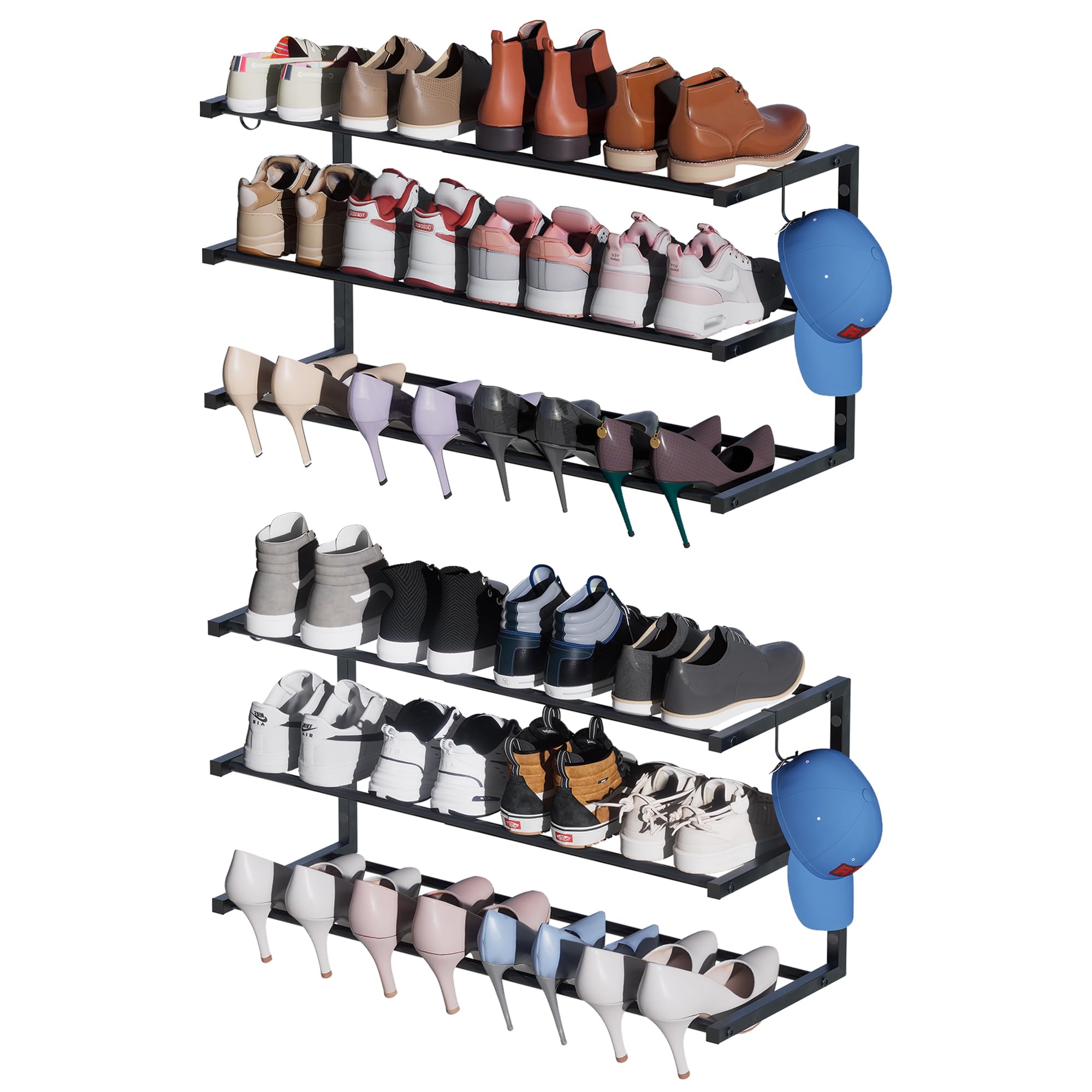
We recommend this two-pack for households that need flexible shoe storage without using floor space.
Pros
- Adjustable width fits different wall spaces
- Three tiers hold many pairs of shoes
- Hooks add storage for hats, keys, or coats
Cons
- Extended bars may flex under heavier loads
- Wide gaps may not suit small children’s shoes
- Wall mounting requires careful placement
We found the racks simple to assemble and mount, with the included hardware and instructions making setup quick. Once installed, they helped clear shoes from the floor in a closet and garage.
The adjustable design worked well when we needed to fit each rack into a different space. The four hooks also gave us a useful spot for hats and keys, though the racks looked best when we kept the load within the stated limit.
The metal frame feels sturdy with regular shoe storage, but some parts can flex when the rack is fully extended. We also noticed that smaller shoes may not sit as securely because of the spacing between the bars.
Jchccu Expandable Wall-Mounted Shoe Rack
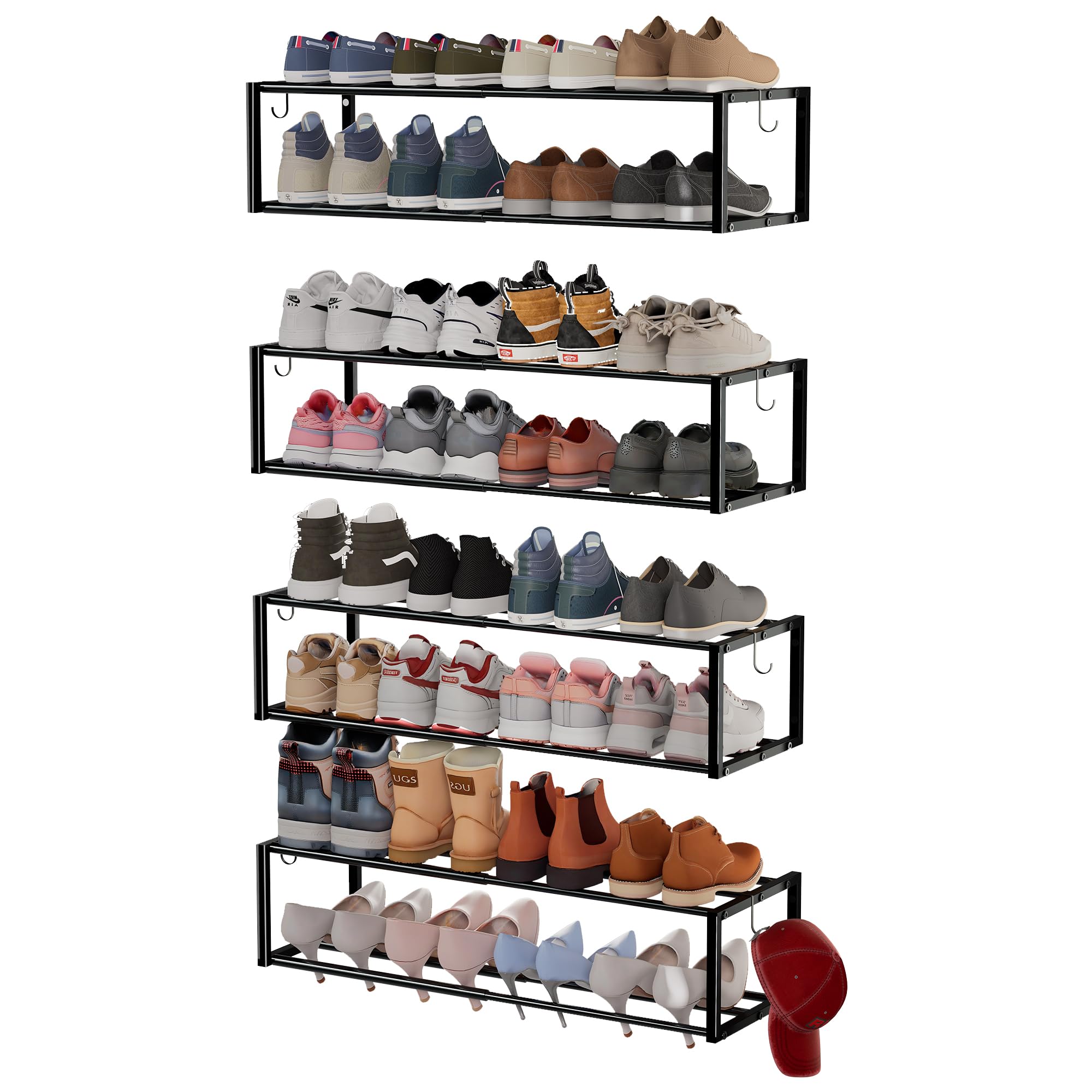
We recommend this four-pack for flexible shoe storage when you can mount it securely to wall studs.
Pros
- Adjustable width fits narrow or wide spaces
- Metal shelves feel sturdy during daily use
- Hooks add room for keys, hats, or bags
Cons
- Included drywall anchors may need replacing
- Installation requires careful wall measuring
- A full load needs strong mounting support
We found the adjustable width useful in an awkward closet space. Each rack can stretch to fit the available wall area, so we could arrange the shelves around doors, corners, and other obstacles.
The metal frame handled everyday shoes well and kept pairs off the floor. The black finish also gave the entryway a clean, simple look. The added hooks worked for small items, though we would not use them for heavy coats.
Assembly took little time, and the instructions were easy to follow. However, the included plastic drywall anchors felt weak. We would use better anchors for drywall and attach the rack to studs whenever possible.
The four racks offer plenty of storage for households with several pairs of shoes. We would choose this set for an entryway, closet, or small apartment where floor space matters.
Jchccu 3-Pack Wall-Mounted Shoe Rack
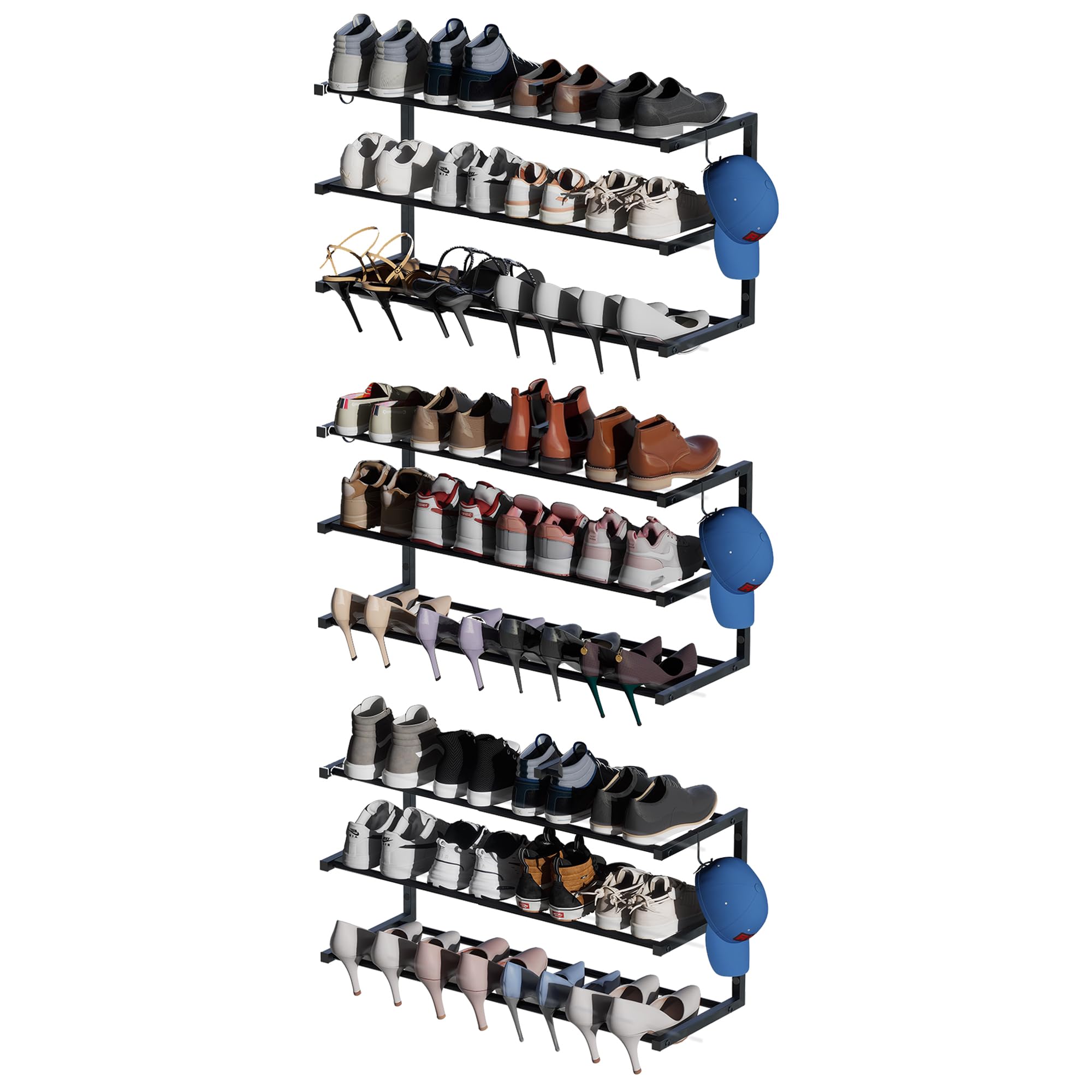
We recommend this rack for homes that need flexible shoe storage without using floor space.
Pros
- Adjustable width fits different wall areas.
- Hooks add storage for hats, keys, or scarves.
- Metal shelves keep shoes off the floor.
Cons
- The frame can flex when fully extended.
- Wide shelf gaps may not suit small shoes.
- Wall mounting requires careful installation.
We found the three-tier layout useful in a closet and entryway. The rack holds several pairs while leaving the floor open, and the included hooks give small accessories a convenient place.
The width adjusts to fit tighter spaces or wider sections of wall. However, extending it fully makes the frame feel less rigid, especially with heavier shoes. We would keep the load moderate rather than placing bulky boots on it.
Installation was quick with the included hardware and instructions. The black metal finish has a simple modern look that works well in closets, bedrooms, and garages.
With a 4.2-star rating from 168 customers, this set offers practical storage at a reasonable size. We would choose it for adult shoes and flexible organization, but smaller footwear may slip through the shelf gaps.
Kitsure 10-Tier Shoe Rack
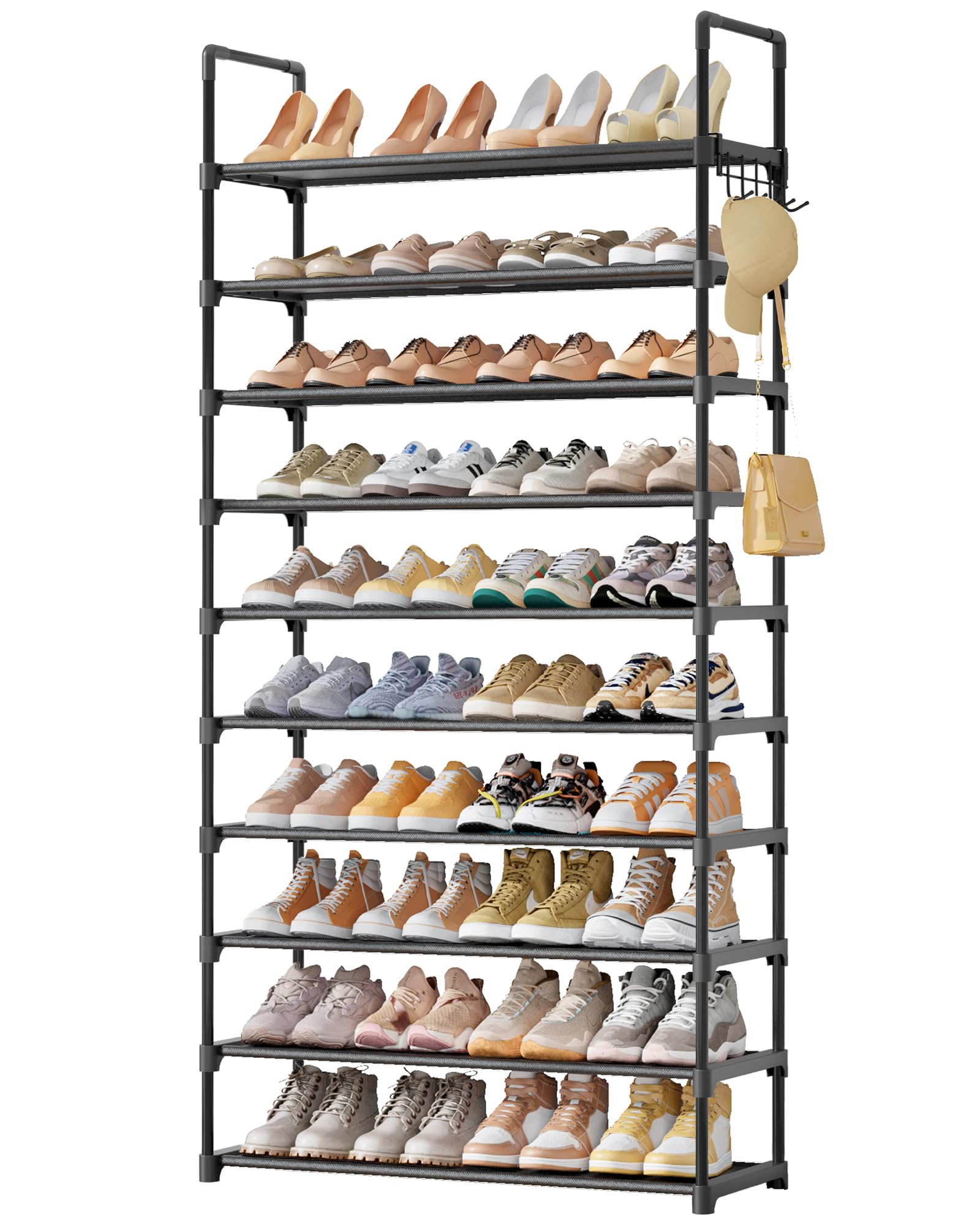
We recommend this rack for households that need high-capacity shoe storage in a narrow vertical design.
Pros
- Holds many pairs while using little floor space
- Includes useful side hooks for bags and keys
- Simple assembly with clear instructions
Cons
- Lightweight frame may wobble if moved often
- Four pairs per shelf may not fit larger shoes
- Fabric shelves suit everyday shoes better than heavy footwear
After assembling it, we found the setup straightforward and manageable without extra tools. The connectors fit together easily, although the rack felt light during construction.
Its ten levels provide plenty of storage for an entryway, bedroom, garage, or closet. We liked the side hooks because they add a convenient spot for small bags and accessories.
The shelf spacing works well for sneakers, flats, and sandals. Larger men’s shoes may reduce the number that fit across each level, and tall boots may require removing divider bars.
Once fully assembled, the frame feels stable when left in place. However, we would avoid frequent moving or placing heavy items on it because the lightweight materials can feel somewhat flexible.
Jchccu Expandable Wall Shoe Rack
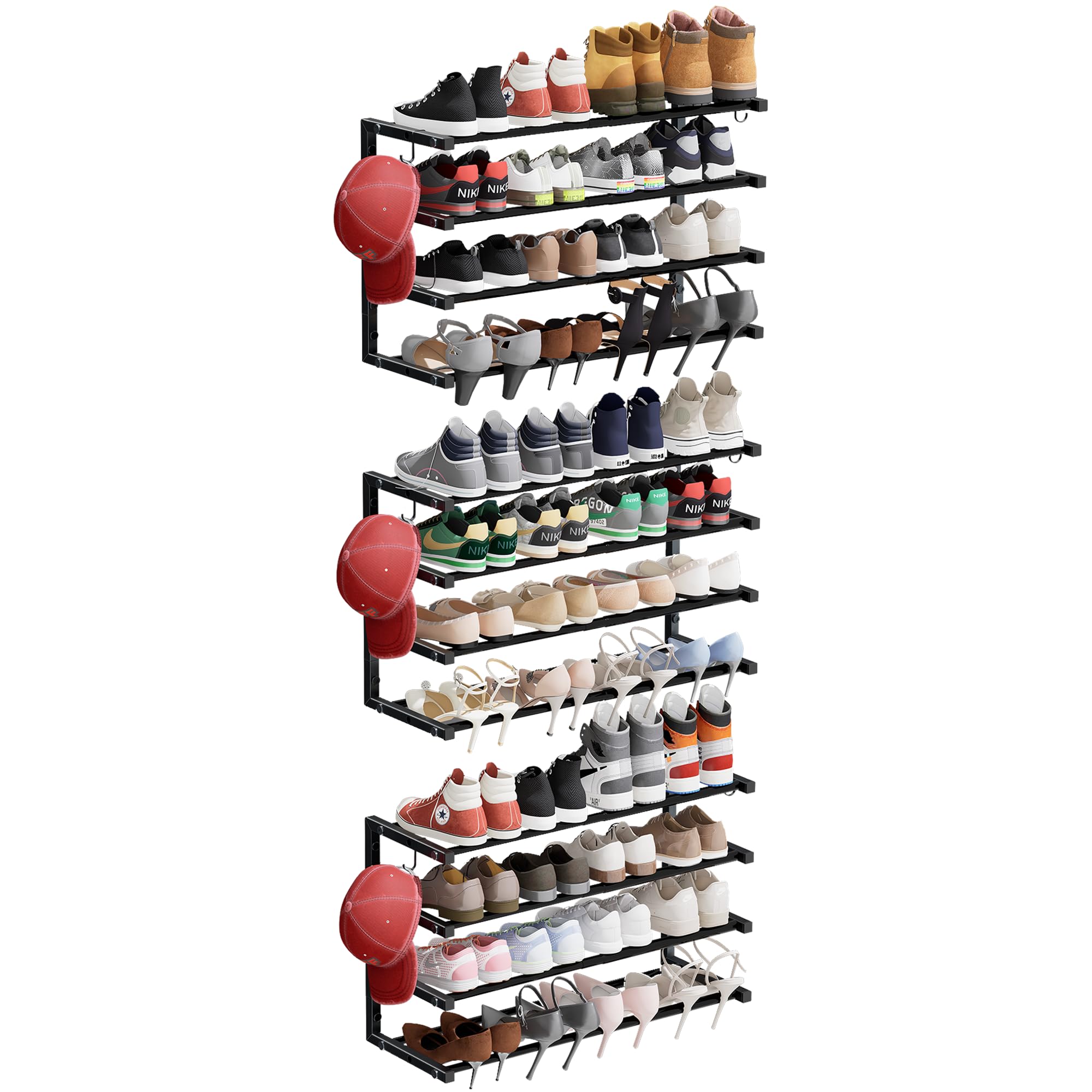
We recommend this three-pack for flexible shoe storage in garages, closets, and entryways, especially when floor space is limited.
Pros
- Adjustable width fits different wall spaces
- Hooks add room for keys, hats, or bags
- Metal design feels sturdy for daily use
Cons
- Small shoes may slip between the shelf bars
- Wall anchors may not suit plaster or lath walls
- Installation requires careful measuring
We found the adjustable design useful when fitting the racks into different spaces. Each shelf can extend or contract, which helped us work around nearby doors and corners.
The four hooks gave us a convenient spot for keys and small accessories. The black metal finish also looked neat in a garage or closet without drawing much attention.
Shoes did not always sit securely on the open bars, especially smaller pairs. We would add a liner or place smaller shoes in bins to prevent them from slipping through.
The included hardware made setup fairly quick on a solid wall. However, we would choose anchors suited to the wall material rather than relying on the included pieces alone.
VASAGLE 10-Tier Shoe Cabinet

We recommend this cabinet for households that need tall, compact shoe storage with a clean look.
Pros
- Holds many pairs without taking much floor space
- Fits flats, sneakers, heels, and some boots
- Includes an anti-tip kit for added stability
Cons
- Assembly can take time
- Some compartments may feel short for bulky shoes
- Engineered wood needs careful handling
We found the slim design useful in a narrow entryway or bedroom. Its tall frame provides plenty of storage while leaving more walking space open. The top compartment also gives us room for baskets or shoe boxes.
The shelves handled everyday shoes well, including sneakers and flats. Taller footwear may need a shelf removed, and some larger shoes fit better on their sides. We would check the available space before adding bulky boots.
Assembly was manageable with the numbered parts, though it took patience. Once built, the cabinet felt steady when loaded, especially when secured to the wall with the included anti-tip hardware.
The white finish and curved details give it a more polished look than a basic open rack. We would choose it for organized entryway storage, but buyers who want quick setup or solid wood construction may prefer another option.
OYREL 10-Tier Shoe Rack

We recommend this rack for narrow closets and entryways because it offers flexible storage without taking much floor space.
Pros
- Slim design fits tight corners and small rooms
- Adjustable tiers can hold shoes, bags, or boxes
- Easy assembly needs no tools
Cons
- Tall frame may wobble without nearby support
- Plastic connectors feel less durable than the metal tubes
- Assembly takes time despite the simple design
We found the narrow shape useful in a crowded closet. The shelves held several pairs of shoes while leaving more walking space than a wider rack. Two adult shoes fit on many levels, though larger footwear may need extra room.
The ten-tier design can be changed to suit the space. We could remove a shelf for boots or split the unit into smaller racks for different rooms. This flexibility also helps when a full-height rack will not fit through a doorway.
Assembly was simple but somewhat tedious. The metal tubes and plastic connectors went together without tools, although the tall frame had some movement when we handled it. It felt suitable for shoes and other light items, but we would avoid placing heavy storage boxes on it.
The black finish gives the rack a clean, basic look. With its narrow footprint and flexible layout, it works best for renters, small closets, and entryways that need extra shoe storage.
Jchccu Expandable Wall Shoe Rack
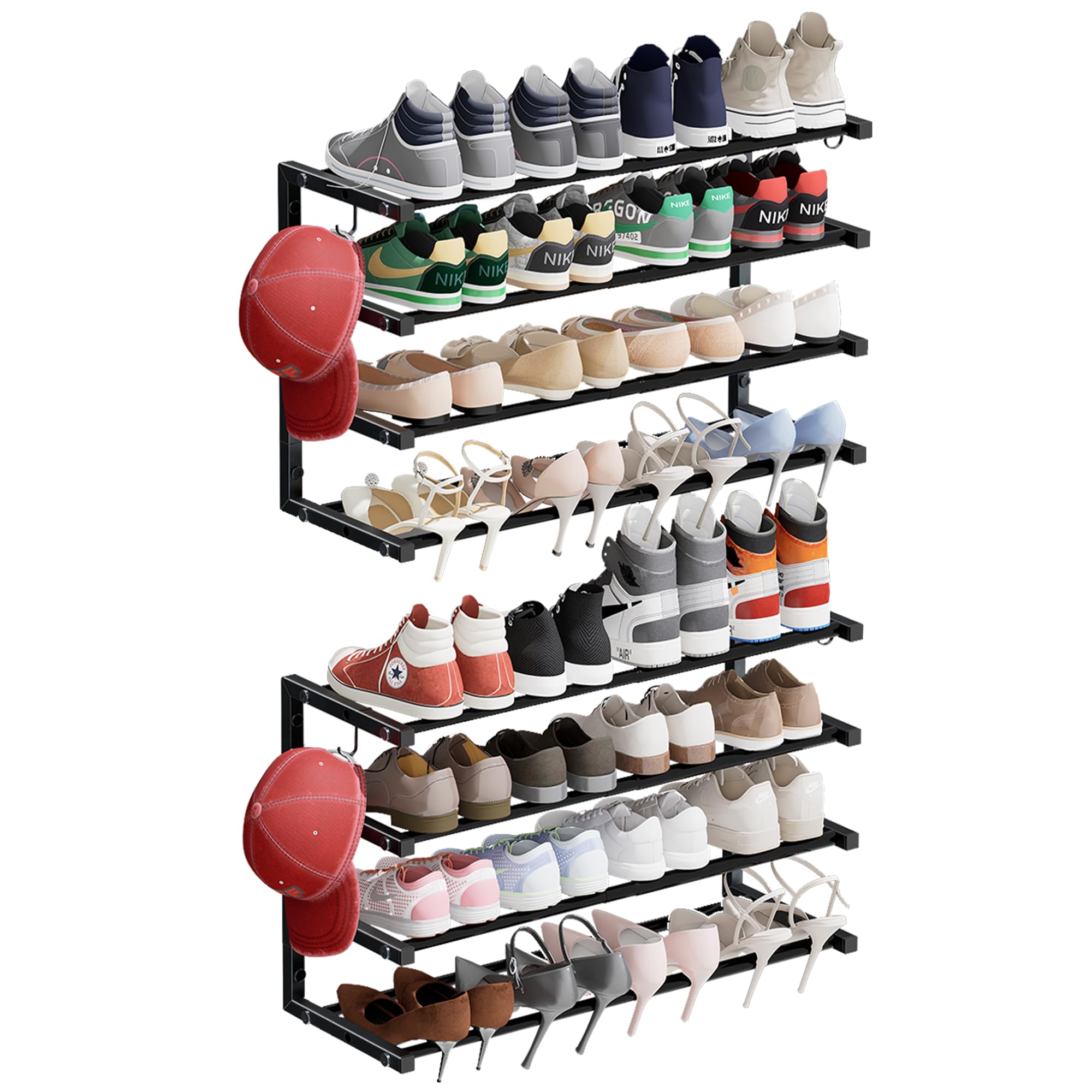
We recommend this rack for households that need flexible wall storage and have strong mounting surfaces.
Pros
- Expands to fit different wall spaces
- Includes four useful storage hooks
- Holds many shoes without using floor space
Cons
- Small shoes may slip through the shelf gaps
- Wall anchors may not suit plaster or lath walls
- The metal can feel lighter than expected
We found the adjustable width useful in a closet and garage. The rack extends to fit wider spaces, while the wall-mounted design keeps shoes off the floor and makes them easier to see.
The four hooks add helpful storage for keys, hats, or small bags. Assembly was quick, and the included hardware made setup simple on a solid wall.
However, the open shelf design does not hold every shoe securely. Smaller footwear may fall through the gaps, so we would place sandals or children’s shoes in a bin instead.
Mounting matters with this rack. It stayed more secure on a firm surface, but plaster or lath walls may need stronger anchors. Overall, we like it for entryways, closets, and garages where flexible shoe storage matters most.
Homeiju Expandable Wall Shoe Rack
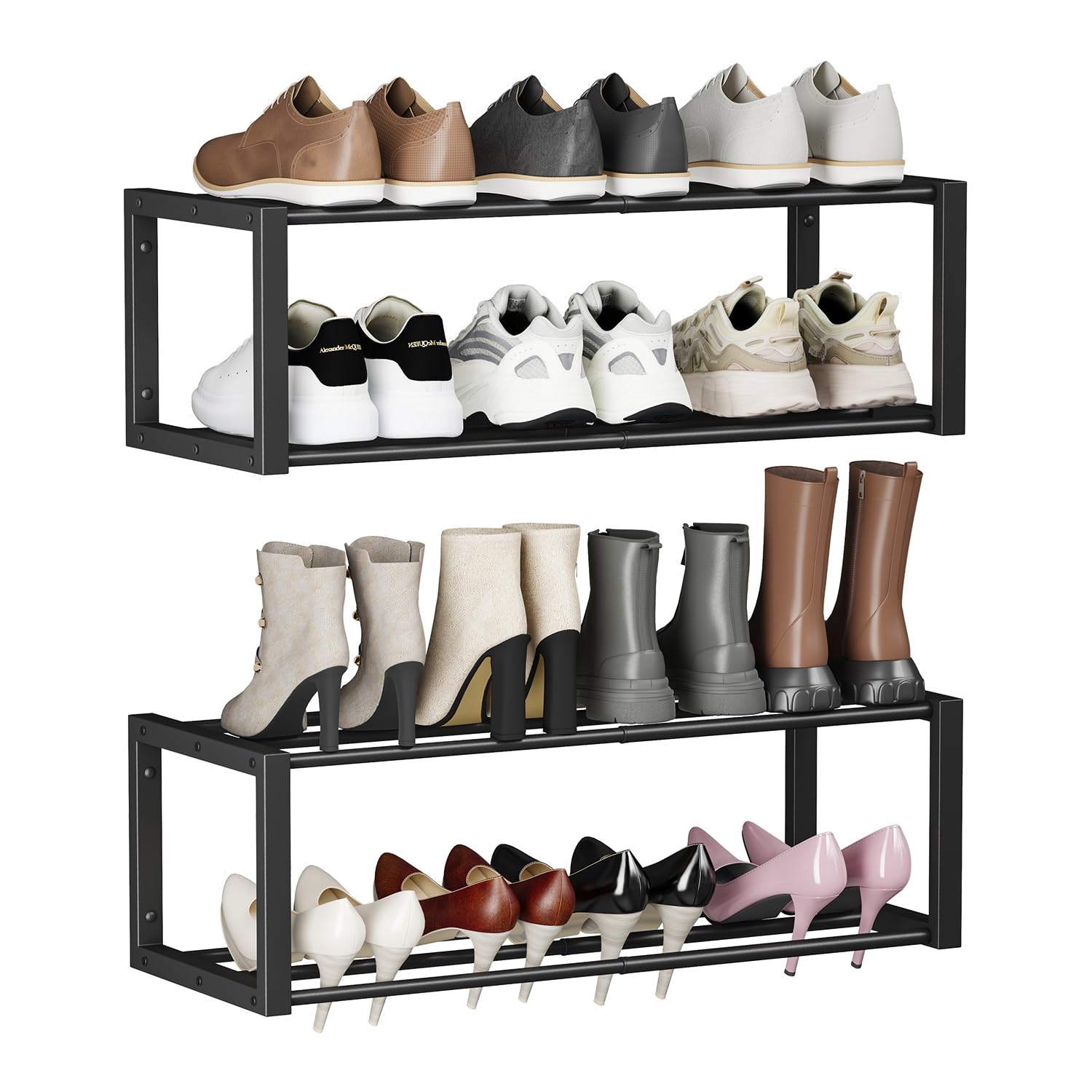
We recommend this rack for flexible shoe storage in small entryways, closets, garages, or RVs.
Pros
- Adjustable width helps fit different spaces.
- Metal design looks clean and wipes down easily.
- The two-pack offers useful storage for several pairs.
Cons
- It may feel less stable when fully extended.
- Included wall screws may not suit every wall type.
- Its depth can limit placement in narrow areas.
We found the adjustable design useful because we could shorten the rack for a smaller closet or extend it for more shoes. The two racks held everyday footwear well, including sneakers, flats, and some boots.
Assembly was simple, with pre-drilled holes and included hardware. We still recommend checking the wall material and using suitable anchors, since the included screws may not work for every surface.
The metal frame has a plain black finish that fits most rooms. It also cleaned easily with a damp cloth. When fully extended, though, the rack felt less rigid, so we would avoid overloading it or placing heavy boots across the widest span.
Kitsure 3-Tier Shoe Rack

We recommend this rack for affordable, flexible shoe storage in closets, entryways, dorms, and garages.
Pros
- Quick, tool-free assembly
- Fabric shelves help reduce scuffs and dust
- Stackable design suits changing storage needs
Cons
- Wide men’s shoes may fit tightly
- Lightweight parts feel less premium
- Freestanding design uses floor space
We found the rack simple to assemble and easy to place in a narrow closet. Its three tiers held everyday sneakers, sandals, and slippers without taking over the room.
The fabric shelves gave shoes a softer surface than bare metal. They also helped keep dirt from dropping onto the shoes below. Still, the rack feels lightweight, so we would avoid overloading it or using it as a bench.
The 27.5-inch width works well for smaller spaces, though larger men’s shoes may sit close together. We also liked the option to stack additional units when one rack no longer provides enough storage.
Buying Guide
We should start by measuring the wall space, including its width, height, and depth. Confirm that the shelf will not block doors, trim, switches, or walkways. We also need to check whether the wall can support the shelf and its expected load.
Key features to compare include:
- Size and capacity: Choose enough space for our shoe collection without crowding the room.
- Weight limit: Check the stated capacity and consider the weight of several pairs together.
- Mounting system: Look for suitable hardware and clear installation instructions. Wall type matters, especially for drywall, brick, or concrete.
- Shelf depth: Make sure it fits our largest shoes while keeping the shelves from sticking too far into the room.
- Material: Metal, solid wood, and engineered wood offer different levels of strength, weight, and maintenance.
- Ventilation: Open shelves allow airflow and make shoes easier to see.
- Cleaning: Smooth, sealed surfaces usually need less effort to wipe clean.
- Safety: Rounded edges, secure fasteners, and stable construction can reduce risks in busy areas.
| Feature | What to check |
|---|---|
| Installation | Hardware matches our wall type |
| Storage | Shelves fit the shoes we own |
| Finish | Surface suits the room and cleans easily |
| Design | Shape supports safe, simple access |
We should also consider how often we use the shoes. Open shelves work well for daily pairs, while a more enclosed design can keep less-used footwear out of sight.
Editor’s Picks
We chose wall mounted shoe shelves that fit different entryway needs, from small apartments to busy family homes. We focused on sturdy materials, simple installation, useful shelf depth, and designs that keep shoes easy to reach.
| Pick | Best for | Features we value |
|---|---|---|
| Slim metal shelf | Narrow halls | Low profile, open design, easy cleaning |
| Wooden floating shelf | Warm interiors | Strong surface, hidden hardware, clean lines |
| Tiered shoe rack | Larger collections | More storage, better visibility, flexible spacing |
| Fold-down shoe cabinet | Tidy entryways | Enclosed storage, dust control, compact depth |
We prefer open shelves when we need quick access and good airflow. They work well for daily shoes, but they may need regular dusting.
For a cleaner appearance, we look for enclosed cabinets with adjustable shelves or slatted doors. Before buying, we measure the wall space, check the shelf weight limit, and confirm that the mounting hardware suits the wall type.
We also consider shelf depth. A shallow shelf suits flats and sneakers, while boots and larger shoes need more clearance. Rounded edges and a secure wall mount add practical safety in busy entryways.
Frequently asked questions
How many pairs can wall mounted shoe shelves hold?
Capacity depends on the shelf size and design. We can usually store two to six pairs per shelf, while larger units may hold more.
Can we install them on any wall?
We should attach shelves to studs or use wall anchors rated for the shelf’s weight. Drywall alone may not support heavy shoes or several loaded shelves.
What height works best?
We can place the lowest shelf several inches above the floor for easy cleaning. Higher shelves should remain within comfortable reach, especially when we use them every day.
Are wall mounted shoe shelves suitable for small spaces?
Yes. They use vertical wall space and keep shoes off the floor. This can help entryways, bedrooms, and closets feel less crowded.
How do we clean them?
We can remove shoes and wipe the shelves with a soft, damp cloth. For metal or plastic shelves, we should follow the maker’s cleaning instructions and dry the surface afterward.
Do all shoes fit on these shelves?
Most shelves fit regular shoes, sneakers, and sandals. We should check the shelf depth before storing boots, high-top shoes, or larger footwear.
Conclusion
Wall-mounted shoe shelves help us use vertical space while keeping footwear easy to reach. They work well in entryways, bedrooms, closets, and other areas with limited floor space.
We should choose a shelf based on the number of shoes it must hold, the wall type, and the available space. Strong mounting hardware matters, especially when storing heavy shoes or several pairs.
Regular cleaning keeps the shelves neat and protects the wall from dirt and scuffs. We can also improve organization by grouping shoes by type, season, or frequency of use.
A suitable design lets us keep shoes visible, organized, and off the floor without taking up valuable walking space.






3 Comments