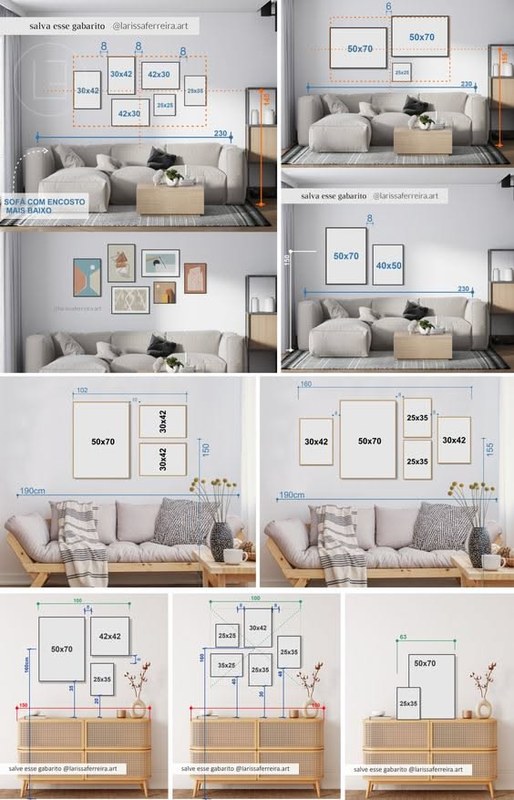
How to Display Canvas and Framed Art Together Like a Pro

Mix unframed canvas pieces with framed prints by balancing visual weight, keeping spacing consistent, and choosing complementary frames. Plan the layout before hanging, and use hardware rated for each piece and suited to your wall type.
Decorating a wall with both stretched canvas and framed prints is one of the most effective ways to add depth to a room, but knowing how to display canvas and framed art together without creating visual chaos takes a little planning. The principles are straightforward: balance visual weight, choose frames that relate to the room, keep spacing consistent, and use hardware suited to each piece and wall type. Get those four elements right, and a mixed arrangement will look intentional rather than accidental.
- Visual weight: Unframed canvas reads lighter than framed pieces, so balance heavy frames with larger or.
- Frame pairing: One or two frame finishes that echo the room and the canvas tones create.
- Layout: Plan with paper templates and keep spacing consistent across every piece.
- Hardware: Match fixings to your wall type and choose hardware rated above each piece’s weight.
- Care: Dust canvas gently, avoid direct sunlight, and check hardware every few months.
The Short Answer: Mixing Canvas and Framed Art Works—Here’s How to Do It Right
Yes, canvas and framed art can share a wall beautifully. The contrast between the soft, frameless edge of a stretched canvas and the crisp line of a framed print adds depth and texture that a single format rarely achieves. The key is to treat the wall as one composition rather than two separate collections.
Start with one dominant piece—usually the largest canvas or the most striking framed work—and build the arrangement around it. Then distribute the remaining pieces so the visual weight feels balanced from side to side and top to bottom. Keep spacing consistent and limit frame finishes to one or two complementary options. If you are planning a full gallery wall, our guide on how to display art at home like a designer covers the broader principles of scale, flow, and focal points.
Visual Weight: Why Canvas and Framed Pieces Need Different Handling

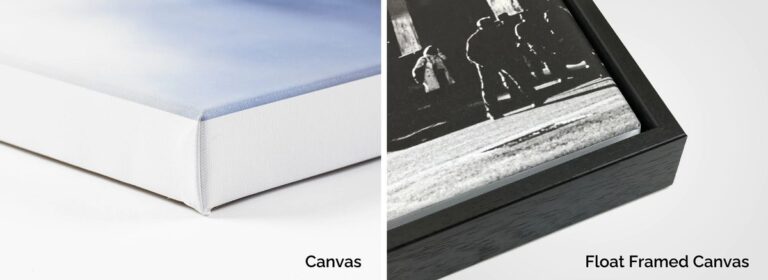
Canvas prints hang flat against the wall while framed pieces project outward with added visual weight.
Visual weight is how much a piece appears to pull from the wall, and it is not the same as physical weight. An unframed canvas has a thin profile and sits close to the wall, reading as lighter and more casual. A framed piece adds a mat, a frame, and often glass, creating a deeper edge with more visual presence.
This difference matters when you arrange pieces together: a large, dark framed print beside a small, pale canvas will feel lopsided even if the physical sizes are similar. Balance a heavy framed piece with a larger canvas, or offset a dark frame with a bright, open composition. Color plays a role too: deep tones and busy patterns carry more weight than light tones and negative space, so distribute those elements evenly.
Choosing Frames That Complement Your Canvas Art
The frames you choose are the connective tissue between canvas and framed works. They should relate to the room and to the tones in the artwork, not compete with them.
Frame Materials and Finishes That Pair Well with Canvas
Wood frames are the most forgiving partner for canvas art. Natural oak or walnut warms up an abstract canvas, while painted white or black wood keeps the look clean and gallery-like. Slim metal frames in black, silver, or brass suit photography, graphic prints, and contemporary canvases, adding structure without overwhelming the artwork.
If you are unsure, repeat a single finish across all framed pieces. Two finishes can work when they relate to the room—for example, black metal frames that echo the hardware, plus a natural wood frame that matches the floor tone. If you want to experiment with more than one frame material, our guide on how to mix wood and metal picture frames explains which combinations feel intentional rather than chaotic.
Matching Frames to Your Existing Decor
Let the room guide your choices. In a modern space, slim black or metal frames keep the display sharp. In a traditional or farmhouse setting, wood frames with visible grain add warmth. In an eclectic room you have more freedom, but anchor the arrangement with one consistent element—a frame finish, a color palette, or a mat width.
Another reliable trick is to pull a color from the canvas and echo it in the frame. If a canvas features terracotta and cream, a warm wood frame on the adjacent prints will tie the two formats together. Avoid matching every frame to the exact same tone; slight variation keeps the display feeling collected rather than manufactured.
Layout, Sizing, and Spacing for a Cohesive Gallery Wall<
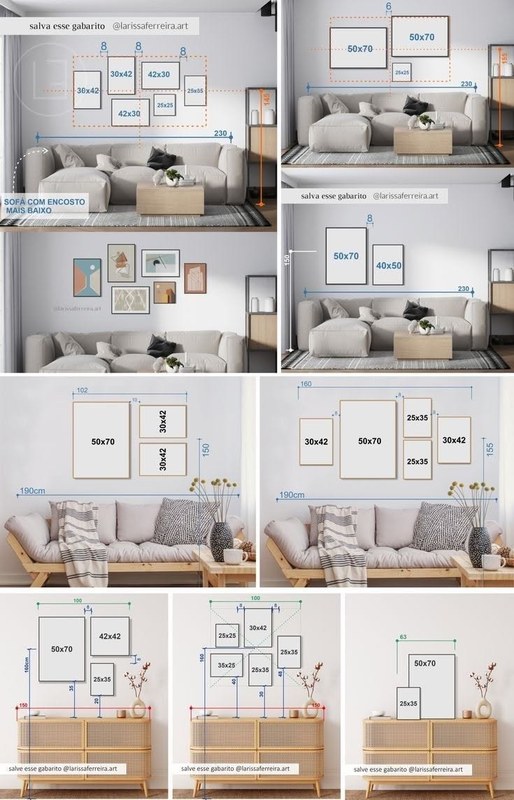
A gallery wall combining canvas pieces and framed prints with consistent spacing.
A gallery wall combining canvas pieces and framed prints with consistent spacing.
/h2>
Planning is where most mixed displays succeed or fail. A little measuring and arranging on the floor will save you from a wall full of misplaced nail holes.
Measuring Your Wall and Planning the Composition
Note the width and height of the wall space, including any furniture below it. A good rule is to keep the arrangement within two-thirds to three-quarters of the width of the sofa, console, or bed beneath it.
Arrange the canvas and framed works in front of the wall or on a flat surface. Move them until the visual weight feels balanced, then measure the overall width and height of the composition.
Cut kraft paper to the exact size of each piece, including the frame. Tape the templates to the wall and adjust positions until the layout feels right. This lets you test spacing without putting a single nail in the wall.
Once the templates are placed, mark the top edge and hanging point of each piece, then install the hardware and hang the artwork. If you are mixing many sizes, our guide on how to mix frame sizes for a gallery wall offers practical strategies for keeping the arrangement balanced.
Spacing Guidelines for a Balanced Mixed Arrangement
Consistent spacing is the single most effective way to make a mixed display look professional. A gap of two to three inches between pieces works well in most rooms, while larger walls with bigger artwork can handle four to five inches. The exact number matters less than consistency: if the gap between the canvas and the framed print is two inches, keep that gap everywhere.
Align the centers of the pieces in each row rather than their top edges when you are mixing canvas and framed works. Center alignment creates a calmer rhythm because the varying frame depths and sizes do not fight each other. For a more dynamic look, align the bottom edges instead—just pick one rule and stick to it across the whole wall.
Hanging Hardware and Wall Types: What You Need to Know
The right hardware depends on two things: what you are hanging and what the wall is made of. Getting this wrong is the most common cause of fallen art and damaged walls.
Drywall, Plaster, and Brick: Choosing the Right Fixings
Drywall is the most forgiving surface. Light pieces can hang from a standard picture hook rated for the weight. Heavier pieces need wall anchors or toggle bolts that spread the load behind the surface. Plaster walls are harder and more brittle, requiring a masonry drill bit and plaster-friendly anchors, drilled slowly to avoid cracking. Brick and concrete walls need masonry anchors and a hammer drill.
Weight limits vary by anchor type, wall condition, and piece size, so check the manufacturer’s rating on the packaging. If you are hanging a large, heavy canvas or a collection of framed works and you are unsure whether your wall can support the load, consult a professional installer.
Framed pieces with glass are heavier than they look. A large framed print with glass and a thick wood frame can weigh several times more than a similarly sized canvas. Weigh the piece before choosing a hook or anchor, and buy hardware rated above the actual weight rather than exactly at it.
Hardware for Framed Pieces vs. Unframed Canvas
Framed pieces typically hang from D-rings and wire, which let the frame sit flat against the wall and make leveling easy. Sawtooth hangers work for small, light frames but can let larger pieces shift out of level. Unframed canvas needs a different approach because there is no frame to attach hardware to. Most stretched canvases have a wooden stretcher bar on the back; you can screw a D-ring or sawtooth hanger directly into that bar, or use canvas clips that grip the edge of the stretcher without damaging it.
For heavier canvases, use two hooks spaced apart rather than a single centered hook. This prevents the canvas from tilting forward or rotating on the wall.
Room-by-Room Styling Ideas for Mixed Art Displays
Different rooms call for different approaches. The same arrangement that suits a busy living room wall may feel overwhelming in a small hallway.
Living Rooms and Staircases: Making a Statement
Living rooms are the natural home for bold mixed displays. A large canvas above the sofa, flanked by smaller framed prints, creates a strong focal point without requiring a perfectly symmetrical grid. On staircase walls, follow the line of the stairs: hang pieces at a consistent distance from the stair treads, stepping each piece up as the staircase rises, and mix canvas and framed works along that diagonal rhythm.
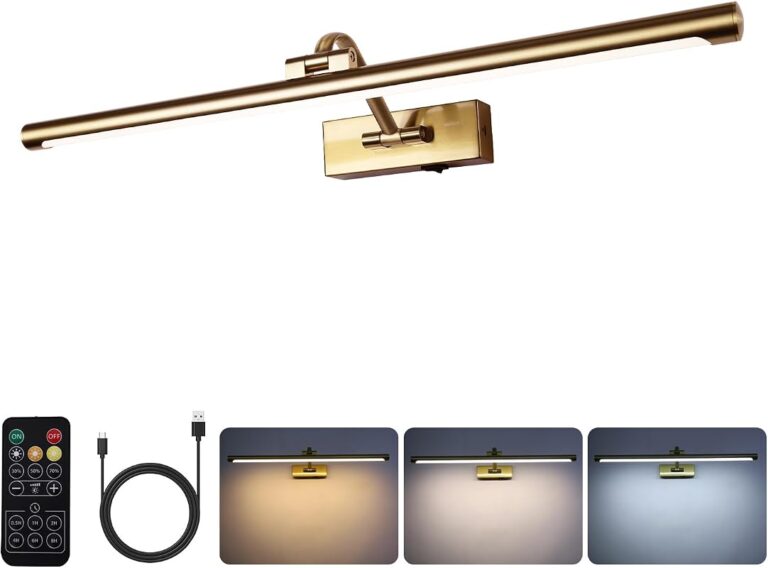
In both settings, relate the arrangement to the furniture below it. Keep the bottom edge of the display roughly six to twelve inches above the back of the sofa or console, leaving enough breathing room so the art does not feel cramped. For hallway and staircase walls, lighting matters as much as layout, so consider plug-in or battery-powered picture lights before you hang.
Bedrooms, Hallways, and Home Offices: Subtle Pairings
In bedrooms, a calmer composition works best. Choose one or two framed pieces to accompany a single canvas above the bed, and keep the frame finish consistent with the room’s palette. Hallways are ideal for a long, narrow arrangement of mixed pieces because the corridor naturally guides the eye along a single line. Home offices benefit from smaller groupings—a canvas and two framed prints above a desk, for example—that add personality without competing with the screen.
In all of these spaces, scale matters more than quantity. A single well-chosen canvas paired with one or two framed works can feel more polished than a wall crowded with many pieces.
Common Mistakes to Avoid When Mixing Canvas and Framed Art
- Hang the center of the arrangement at eye level, roughly 57 to 60 inches from the floor, adjusted for the furniture beneath it.
- Keep spacing consistent between every adjacent piece, whether it is a canvas or a framed print.
- Repeat one frame finish across framed pieces to create cohesion with the canvas.
- Check the weight of each piece and choose hardware rated above that weight.
- Step back and view the wall from across the room before committing to final placement.
- Hanging everything at the same height—mixed formats need varied heights to feel balanced, not a single straight line.
- Using three or more different frame finishes in one arrangement; the wall will start to look cluttered.
- Clustering all the heavy or dark pieces on one side of the wall.
- Ignoring the wall type and using a lightweight hook for a heavy framed piece.
- Filling every inch of the wall; breathing room makes the art feel more intentional.
Care, Maintenance, and the Final Verdict
A mixed display is not set-and-forget. Canvas and framed pieces have different care needs, and routine maintenance keeps them looking their best.
Cleaning and Protecting Your Mixed Display
Dust canvas pieces gently with a soft, dry microfiber cloth or a brush attachment on a low-suction vacuum. Avoid water or cleaning solutions on the canvas, as they can soak into the fibers and leave marks. Clean the glass on framed pieces with a glass cleaner applied to the cloth, never sprayed directly onto the glass, so liquid does not seep behind the frame.
Direct sunlight is the biggest long-term threat to both canvas and framed art. UV rays fade pigments and can yellow varnish on canvas over time. Hang mixed displays away from south- or west-facing windows when possible, or use UV-filtering glass on framed pieces. If you want to protect an existing collection, our guide on how to protect framed art from sunlight at home covers practical steps for reducing exposure.
Every few months, check that the hardware is still secure. Gently lift the bottom edge of each piece to confirm the hooks or anchors have not loosened, and re-tighten any screws as needed.
Is a Mixed Canvas and Framed Display Right for Your Space?
For most homes, yes. Mixing canvas and framed art is one of the most flexible ways to build a wall that feels personal, layered, and collected over time. It lets you keep pieces you love even when they do not share a format, and it gives a room a sense of depth that a single format rarely achieves.
The approach is not right for every situation. If you prefer a strict, symmetrical gallery look, a uniform grid of matching frames may suit you better. If your wall is very small or your collection is very large, a single format can feel cleaner. But for anyone who wants a display with character, the combination of canvas and framed art is worth the extra planning.
- Balance visual weight by pairing heavy framed pieces with larger or lighter canvases.
- Choose one or two frame finishes that relate to the room and to the tones in the canvas.
- Plan the layout with templates, and keep spacing consistent across all pieces.
- Use hardware rated for the weight of each piece and suited to your wall type.
- Protect the display from direct sunlight and check the hardware every few months.
Frequently Asked Questions