Should Canvas Art Be Framed With Glass Pros And Cons

For most canvas art, skip the glass; it flattens texture and adds glare. Use glass only for paper prints mounted to canvas or in high-traffic, sun-filled rooms.
Wondering should canvas art be framed with glass? The straightforward answer is usually no, but the right choice depends on the artwork itself and the room where it will hang. This guide walks through the pros and cons so you can decide with confidence rather than guesswork.
- Glass-free default: True painted canvas is designed to be shown without glazing.
- Exceptions exist: Paper prints on canvas and harsh environments justify glass.
- Protection without glass: A conservation varnish guards against UV fading.
- Framing choice: Floater frames protect edges while keeping the surface exposed.
- Hanging safety: Check wall type and weight limits before installing a framed canvas.
The Short Answer: Should You Put Glass Over Canvas Art?
For most canvas art, the answer is no. Canvas is typically stretched over wooden stretcher bars with visible texture and finished edges, and glass works against everything that makes the format appealing. It adds glare, flattens the surface, and creates a barrier between the viewer and the piece.
Why Most Canvas Art Is Designed to Be Shown Glass-Free
Most canvas art is gallery-wrapped, meaning the fabric wraps around the stretcher bars and continues onto the sides. The weave of the fabric, the visible brushstrokes, and the dimensional depth of the paint are all part of the artwork. Placing glass directly over those surfaces removes the tactile quality and turns a sculptural object into something that reads like a flat print.
Artists and framers generally intend for canvas to hang without glazing. The canvas is more durable than paper, and the painted surface resists the damage glass is meant to prevent. That is why most ready-made canvas pieces arrive with finished sides and an exposed front.
Stretched canvas became the standard painting support in 16th-century Venice, where artists preferred it over wooden panels because it was lighter and less prone to warping in humid conditions.
The One Situation Where Glass Is Worth Considering
The clearest exception is a work on paper that has been mounted or pressed onto a canvas backing. Paper lacks the durability of a true painted canvas, so glass can shield it from fingerprints, moisture, and airborne grime. If the piece is a limited-edition print on paper, glazing is a reasonable safeguard.
Another edge case is a canvas that must live in an unusually harsh environment, such as a kitchen with grease in the air or a child’s playroom where the surface is likely to be touched. These situations call for practical thinking over tradition.
Why Glass Usually Doesn’t Belong Over Canvas
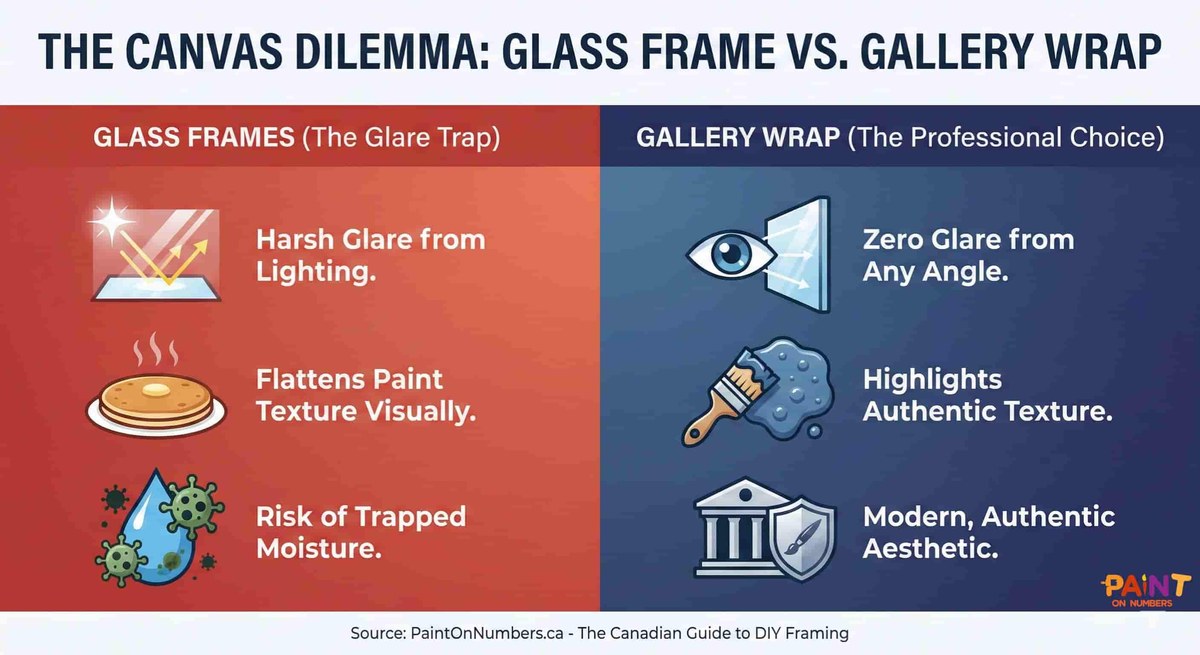
Glass over canvas reflects light and obscures the paint texture.
Three main problems come up when you put glass over canvas: it hides the texture, it reflects light, and it complicates the framing structure.
The Texture and Dimensional Depth Problem
Canvas has a visible weave and often carries thick brushstrokes or palette-knife texture. Glass pressed close to that surface either touches the paint or sits far enough away that the piece looks cased rather than displayed. Either way, the dimensional quality that makes canvas appealing is diminished.
In some cases, glass can actually touch the paint if the canvas is not perfectly flat. That contact can cause abrasion over time, especially if the artwork shifts slightly during handling or temperature changes.
Reflections, Glare, and the Viewing Experience
Even non-glare glass reduces clarity to some degree, and standard glass creates noticeable reflections in bright rooms. A canvas hung opposite a window or under a track light will bounce light back at the viewer, making the artwork harder to see. That defeats the purpose of displaying it in the first place.
Museum-grade anti-reflective glass exists, but it is costly and still adds a layer between viewer and art. For a medium meant to feel immediate, that barrier is rarely worth the expense at home.
Weight, Framing Depth, and Structural Complications
Glass is heavy. Adding a pane to a canvas piece means the frame must be deeper, the hardware must be stronger, and the wall anchor must handle more load. That is a real consideration for large canvases, which are already the heaviest category of wall art.
Framing a canvas with glass also requires a deeper rabbet or a spacer system so the glass never presses against the painted surface. This increases the overall depth of the frame and can make the piece stick out awkwardly from the wall. If you are weighing the structural options, our guide on whether canvas can be framed covers the details.
When Glass Over Canvas Makes Sense: The Exceptions
There are legitimate reasons to put glass over canvas, and they all come down to protection rather than aesthetics.
High-Value Works on Paper Mounted to Canvas
If you own a limited-edition print or a valuable work on paper mounted to canvas for display, glass is a reasonable safeguard. Paper is far more vulnerable than canvas to moisture, oils, and UV damage. A layer of UV-protective glass can meaningfully extend the life of the piece.
For true painted canvas, however, a protective varnish serves the same purpose without the visual downsides of glass. The choice comes down to what the artwork is actually made of.
High-Traffic Rooms, Children’s Spaces, and Kitchens
Kitchens produce airborne grease that settles on surfaces, and busy family rooms see accidental touches and bumps. In those environments, glass provides a wipeable barrier that keeps the canvas clean. The trade-off in visual warmth is often worth it when the alternative is a stained or scratched surface.
That said, a simpler solution is often to hang the canvas in a less exposed spot or to reduce direct light exposure. For guidance on managing light and other environmental risks, see how to protect framed art from sunlight at home.
Sun-Filled Rooms Where UV Protection Is Critical
Direct sunlight fades pigments over time, and canvas is not immune. If a piece must hang in a bright, south-facing room and you cannot control the light with blinds or curtains, UV-filtering glass adds a layer of protection that varnish alone may not provide.
The catch is that UV glass is one of the more expensive framing upgrades, and it still does not eliminate glare. A better first step is to reposition the art or use a picture light with a warm, low-UV output to reduce direct sun exposure.
Glass vs. No Glass: Key Comparisons for Your Space<
Two canvas artworks on a wall, one behind glass and one without.
Two canvas artworks on a wall, one behind glass and one without.
/h2>
To make the decision easier, here is how the two approaches compare across the factors that matter most in a home.
| Factor | No Glass | With Glass |
|---|---|---|
| Visual depth | Full texture and brushwork visible | Surface flattened by the glazing layer |
| Glare and reflections | None | Present unless using anti-reflective glass |
| Cleaning | Light dusting with a soft brush | Glass wipes clean easily |
| Weight | Lighter and easier to hang | Heavier, needs stronger hardware |
| UV protection | Depends on the varnish used | High with UV-rated glass |
| Overall cost | Lower | Higher due to glass and deeper frame |
Visual Impact and Perceived Depth
Without glass, a canvas reads as a physical object. The shadows cast by thick paint, the slight unevenness of the weave, and the way light moves across the surface all contribute to the viewing experience. Glass removes most of that. If the artwork is the centerpiece of the room, skipping glass almost always looks better.
Cleaning, Maintenance, and Dust Accumulation
This is where glass wins. An exposed canvas collects dust in its crevices, and cleaning it properly requires a soft brush or a low-suction vacuum attachment. Glass, by contrast, wipes clean with a microfiber cloth in seconds. In a dusty home or a room that is not cleaned often, that convenience matters.
Longevity, Archival Quality, and Conservation Value
For conservation, the best approach is to control the room environment rather than seal the artwork behind glass. Stable humidity, moderate temperatures, and indirect light do more for a canvas than any glazing. If you do choose glass, make sure it is UV-rated and that the frame uses spacers so the glass never touches the painted surface.
Framing Options for Canvas Art Without Glass
If you decide to skip glass, the frame itself becomes the main protective and aesthetic element.
Gallery-Wrap vs. Floater Frames: What to Look For
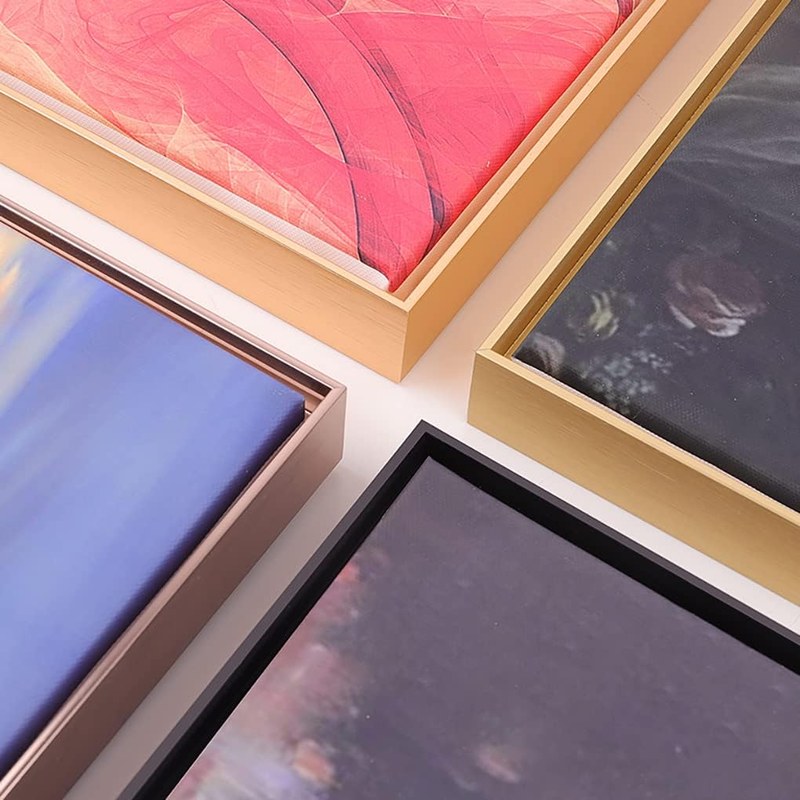
A gallery-wrap canvas has the image continue around the edges, so it can hang with no frame at all. A floater frame, on the other hand, surrounds the canvas with a visible gap between the frame and the artwork, giving the piece a finished look while keeping the edges visible. Both are designed specifically for glass-free display.
Floater frames are the most popular choice for canvas because they protect the edges of the stretcher bars without covering any of the image. They come in wood and metal profiles and are built to the exact dimensions of the canvas. If you are shopping for one, our guide to floater frames for canvas prints covers the sizing details.
Choosing the Right Frame Profile, Finish, and Material
Thin profiles suit modern and minimalist rooms, while wider profiles give a more traditional, gallery-like presence. Wood frames add warmth, and black or metal frames recede so the artwork stays the focus. Match the finish to the dominant tones in the room rather than to the artwork itself, and the frame will feel intentional rather than accidental.
Sizing, Spacing, and Hanging Considerations
Getting the frame size right is essential, especially with floater frames, which must fit the canvas almost exactly.
How to Size a Floater Frame for Your Canvas
Measure the canvas across the stretcher bars from outer edge to outer edge, both horizontally and vertically. Floater frames are sold by the exact canvas size, and the gap between the canvas and the frame is built into the design, so you do not need to add extra room. Order the size that matches your measurement.
Measure at the center of each side rather than at the corners. Stretched canvas can bow slightly at the corners, and measuring the middle gives you the truest dimension for ordering a floater frame.
Hanging Hardware, Wall Types, and Weight Limits
A framed canvas with a floater frame is heavier than an unframed one, so check the weight before choosing hardware. For drywall, use a picture hook rated for the total weight, or a wall anchor if the piece is large. For plaster or brick, you may need masonry anchors or a professional installer.
Always confirm the wall type before driving any hardware, and if the piece weighs more than a standard picture hook can handle, err on the side of a stronger anchor or professional help.
Matching Framed Canvas to Your Room’s Decor
The frame should connect the artwork to the room, not compete with it.
Styling Ideas for Living Rooms, Bedrooms, and Hallways
In living rooms, a single large framed canvas above the sofa works best when the frame echoes a finish already present in the room, such as the coffee table wood tone or the light fixtures. In bedrooms, lighter frames keep the mood calm, while a dark frame can anchor a neutral palette. Hallways suit narrower frames that do not protrude into the walking path.
How to Coordinate Frame Finishes with Existing Furniture
If your furniture has mixed metal finishes, choose a frame finish that appears at least twice in the room. For example, if brass hardware shows up on the lamps and cabinet pulls, a brass-toned frame will feel cohesive. If the room is all one wood tone, match the frame closely or go deliberately contrasting in black for a cleaner break.
Common Mistakes to Avoid When Framing Canvas
Two mistakes cause most of the damage seen in framed canvas art.
Skipping UV-Protective Coatings or Varnishes
Canvas that hangs without glass still needs protection from UV light. A conservation-grade varnish absorbs UV rays and can be removed by a professional conservator without damaging the paint underneath. Skipping this step leaves the artwork exposed to fading, especially in bright rooms.
Do not apply varnish to an artwork unless you are certain it is the right type for the paint medium. Acrylic and oil canvases require different varnishes, and the wrong one can yellow or become impossible to remove safely. When in doubt, ask a professional framer or conservator.
Using Non-Archival Materials That Damage the Canvas
Cheap frames sometimes include backing boards or glazing that are not archival. Acidic materials can leach into the canvas over time and cause yellowing or brittleness. If you are framing a piece you care about, use acid-free backing and check that any adhesive is archival-grade and reversible.
Final Recommendation: What Julian Mercer Suggests
After weighing the visual, practical, and conservation factors, the recommendation is clear for most homes.
Balancing Protection, Aesthetics, and Long-Term Value
For true painted canvas, skip the glass. Use a floater frame or a gallery-wrap display, apply a conservation varnish, and control the light in the room. That combination preserves the artwork’s texture and depth while protecting it from the most common sources of damage.
The Verdict: When to Frame with Glass and When to Skip It
Frame with glass only when the artwork is on paper mounted to canvas, or when the piece must live in a kitchen, child’s room, or sun-drenched space where protection outweighs aesthetics. In every other scenario, the texture and immediacy of canvas are worth preserving. For more framing guidance, our collection of frames for canvas art is a useful next step.
- Most canvas art is designed to hang glass-free; glazing flattens texture and adds glare.
- Glass makes sense for paper prints mounted to canvas and for harsh environments like kitchens or kids’ rooms.
- Skip glass for true painted canvas, and use a floater frame plus a conservation varnish instead.
- UV-rated glass is worth considering for sun-filled rooms, but repositioning the art is the better first move.
Frequently Asked Questions