How to Choose Textile Storage Boxes for Heirloom Fabric

Choose acid-free, lignin-free archival board boxes with breathable fabric covers, and store textiles flat in a cool, dry, dark space. Match the box size to the folded item, pad creases with acid-free tissue, and check contents twice a year.
Knowing how to choose textile storage boxes for heirloom fabric is one of the quietest investments you can make in your family’s history. A christening gown, a grandmother’s quilt, a wedding veil — these pieces carry memories no digital scan can replace, yet they are among the most vulnerable things in a home. The right box does more than keep dust off; it slows the chemical and physical processes that turn beloved textiles into brittle fragments. This guide covers what archival storage really means, what to look for, and how to match a box to both your textile and your room.
- Material first: Acid-free, lignin-free board with a breathable cover protects fabric from acid migration and moisture.
- Breathe, don’t seal: Plastic traps humidity; board and fabric allow air exchange without letting in dust.
- Flat and loose: Store textiles flat, pad folds with acid-free tissue, and never overstuff the box.
- Room matters: Match the box to the space — shallow flat boxes for drawers, low-profile for.
- Check twice a year: Inspect for pests and moisture, air textiles on dry days, and refresh tissue to.
Why Heirloom Textiles Demand a Different Storage Standard
Ordinary storage boxes are designed to hold things you might eventually throw away. Heirloom textiles are different: they are meant to outlive you. That single shift in intention changes every decision, from the materials of the box to where you place it in the house.
The Hidden Threats: Light, Dust, Pests, and Acid Migration
Four enemies do most of the damage to stored fabric. Light, especially ultraviolet light, fades dyes and weakens fibers over time, even through indirect daylight — which is why you should protect framed art from sunlight with the same seriousness. Dust is abrasive and holds moisture against the fabric, which in turn attracts pests. Speaking of pests, moths, carpet beetles, and silverfish feed on protein fibers like wool and silk, and they are far better at finding fabric than you are at finding them.
The least visible threat is acid migration. Acids from poor-quality cardboard, wood, newspaper, or even some tissue papers transfer directly into the textile, causing yellowing, embrittlement, and eventual breakdown. This is why a box that looks perfectly clean can still be slowly damaging its contents.
What Makes a Storage Box Truly Archival
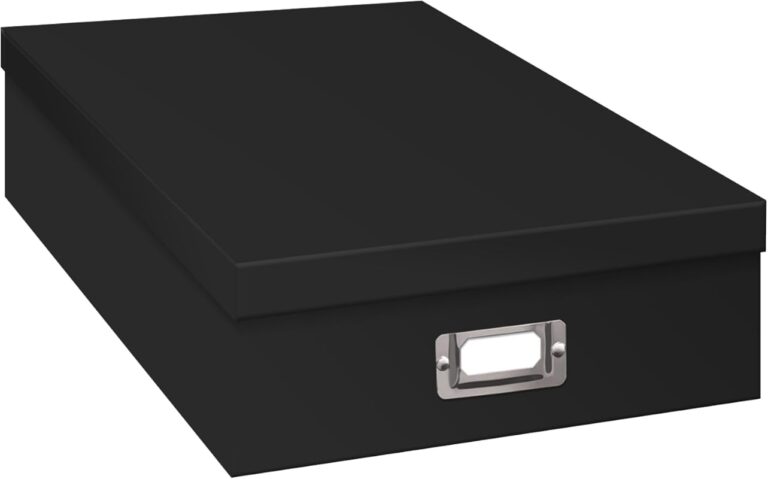
An archival storage box is one engineered to avoid all four threats. It is made from acid-free, lignin-free materials, has no exposed metal parts that could rust or snag, and provides a barrier against dust while still allowing the textile to breathe. The word “archival” is used loosely in retail, so the reliable test is not the label on the front but the specifications on the manufacturer’s product sheet.
What to Look For in a Textile Storage Box

Open storage box with folded fabric and acid-free tissue paper.
Once you understand the threats, the shopping criteria become clear. You are looking for a box that is chemically safe, physically breathable, and structurally strong enough to protect heavy textiles for decades.
Archival Materials: Acid-Free, Lignin-Free, and pH Neutral
Acid-free means no acid was introduced during manufacturing. Lignin-free means the board contains no lignin, the wood component that generates acid as it ages. A pH-neutral box sits at roughly pH 7, the point where it neither adds acid nor alkali to your fabric. Many archival boxes go a step further and are buffered.
Buffered boxes contain an alkaline reserve that neutralizes acids as they form, making them a good match for cotton and linen. Unbuffered boxes are often recommended for protein fibers such as silk and wool, which can be sensitive to alkaline compounds. When in doubt, check the supplier’s product sheet.
For a closer look at what these terms mean in practice, our guide to acid-free storage boxes for textiles breaks down the material science in plain language.
Breathability: Why Fabric and Unbleached Board Beat Plastic
Textiles need to exchange moisture with the air around them. A sealed plastic tub interrupts that exchange, and when the temperature changes, condensation forms inside the tub and against the fabric. Over months, that moisture causes mildew, musty odors, and fiber damage. Unbleached archival board and fabric-covered boxes allow gentle air movement while still keeping out dust. If a box has a plastic window for labeling, that is a small compromise; if the whole box is plastic or lined with plastic, it is the wrong choice for long-term heirloom storage.
Size, Strength, and Stackability for Heavy Heirlooms
Quilts, blankets, and heavy linens are surprisingly heavy, and a box that collapses under its own stack can crease or crush the textiles inside. Look for double-wall or reinforced board, snug-fitting lids, and corners that are not merely glued. Choose a box that is larger than the folded item on every side — you want a few inches of clearance so the textile is not compressed against the walls. If you plan to stack, confirm the boxes are designed to support weight evenly.
Choosing the Right Box for the Right Room
The best box for a textile is the one that fits both the fabric and the room it lives in. A perfect archival box that ends up in a damp basement protects far less than a good box in a stable, dry closet.
Wardrobes and Dressers: Flat Storage for Delicate Pieces
Flat storage is the safest position for most heirloom textiles because it distributes weight evenly and avoids the stretching that hangers cause, especially on knits, silks, and heavily embellished pieces. In a wardrobe or dresser, choose shallow boxes that slide out easily, and avoid stacking them so high that the bottom box is crushed. A flat box with a lift-off lid works well for pieces you access a few times a year.
Under-Bed and Loft Storage: Maximising Space Without Risk
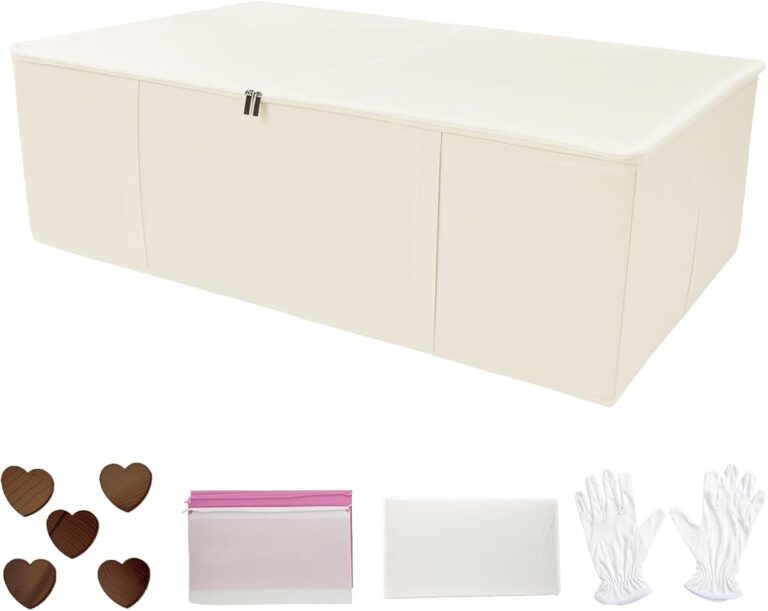
Under-bed storage is a practical use of dead space, but it comes with two caveats. First, measure the clearance under your bed before buying — many low-profile boxes are designed for this exact spot, but not all will fit. Second, the space under a bed is dustier than a closed wardrobe, so choose boxes with tight-fitting lids. Loft or attic storage is riskier: uninsulated lofts swing between hot and cold, which drives condensation and can damage textiles even inside good boxes. If you must use a loft, choose the most insulated corner and check the boxes more frequently.
Open Shelving: When Storage Doubles as Display
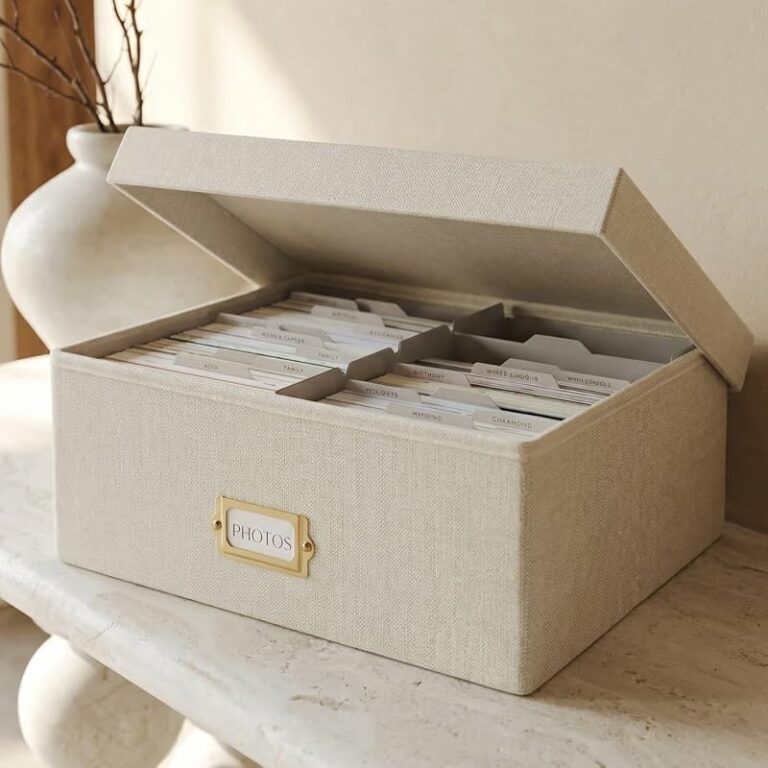
There is no rule that storage must be hidden. Fabric-covered archival boxes in natural linen, cream, or soft gray can look intentional on open shelving, and they protect contents while contributing to the room’s palette. If you store boxes on open shelves, keep them out of direct sunlight and choose boxes with lids so dust settles on the box rather than the textile. This approach works especially well in bedrooms and reading nooks where the boxes become part of the decor.
Styling Your Storage: Preservation Meets Aesthetics<
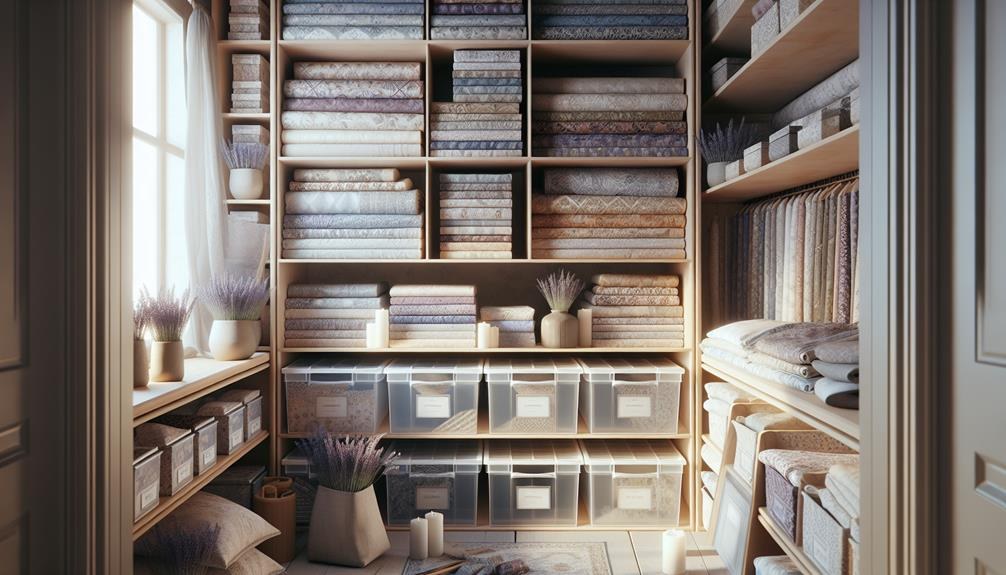
Folded heirloom fabrics stored in archival-quality textile boxes on a shelf.
Folded heirloom fabrics stored in archival-quality textile boxes on a shelf.
/h2>
Preservation and aesthetics are not competing goals. The same habits that protect your textiles — labeling, stacking, and rotating — also make your storage look considered and calm.
Labeling, Stacking, and Coordinating with Linen and Leather
A well-labeled box is a protected box, because you will not have to open every box to find one item, disturbing the contents each time. Write the label before you pack, and include the item, the year it was made if you know it, and the storage location.
Use a small label holder on the outside of the box so you can update contents without sticking anything to the archival surface. Coordinating the box colors with your room’s linen and leather accents makes a row of storage look like a deliberate design choice rather than a pile of containers.
Creating a Seasonal Rotation System That Looks as Good as It Works
A seasonal rotation system is simple: keep the current season’s textiles accessible and store the rest. At each change of season, swap the boxes, refresh the tissue, and note what you have. This habit prevents the two biggest storage failures — forgotten boxes and overstuffed ones — and it gives you a natural moment to inspect everything. The visual bonus is that your storage always reflects the present season, which looks far more intentional than a permanent wall of boxes.
Common Mistakes That Damage Heirloom Fabrics
Most textile damage comes not from neglect but from well-intentioned mistakes. Knowing what not to do is as important as choosing the right box.
Plastic Tubs, Mothballs, and Other Well-Intentioned Errors
Plastic tubs are the most common mistake. They seem protective, but they trap humidity and create condensation that damages fabric over time. Mothballs are the second. Their fumes do not just repel pests; they can yellow fibers, leave residues that are difficult to remove, and pose health risks in enclosed spaces.
Skip plastic tubs and chemical moth repellents. If you need pest protection, keep the storage area clean, inspect textiles before packing, and use tightly sealed archival boxes. A clean, dry textile in a breathable box is the most reliable pest deterrent.
Overstuffing, Folding Creases, and Ignoring Humidity
Overstuffing a box compresses folds into permanent creases and can stress the fibers until they crack. Fold textiles loosely and pad each fold with rolled or folded acid-free tissue to soften the radius of the crease. For very large quilts, rolling around an acid-free tube is gentler than folding. Humidity is the quiet killer: textiles stored in damp basements or humid rooms can develop mold even inside good boxes. Aim for a cool, dry, stable environment, and if you suspect dampness, address it before investing in storage.
Caring for Your Storage Boxes and Their Contents
A storage box is not a set-and-forget solution. It is a protective system that needs occasional attention to keep working.
Seasonal Checks, Airing, and Refreshing Acid-Free Tissue
Twice a year, at the change of seasons, open each box and inspect the contents. Look for signs of pests, moisture, or yellowing, and feel the fabric for any unusual stiffness or dampness. On a dry, mild day, you can air textiles briefly in a shaded, clean spot, then refold them on new crease lines so the same folds are not stressed repeatedly. Replace acid-free tissue that has yellowed, crushed, or become dusty.
Cleaning and Maintaining the Boxes Themselves
Wipe the outside of boxes with a dry, lint-free cloth to remove dust. Do not use wet cleaners on board boxes, as moisture can weaken the board and transfer to the contents. Inspect the boxes themselves for warping, softening, or signs of pests, and replace any box that is no longer structurally sound. A damaged box offers less protection than no box at all, because it can trap moisture against the textile.
Value: What a Good Storage Box Is Worth
Good archival boxes cost more than plastic tubs, and they are worth every extra dollar when you consider what they protect.
The True Cost of Restoration vs. the Price of Prevention
Professional textile conservation is labor-intensive and expensive, and even the best conservator cannot fully reverse damage that has already occurred. A yellowed christening gown, a moth-eaten quilt, or a mold-stained veil loses both monetary and sentimental value. Prevention, by contrast, is a single purchase of a box and tissue. When you frame it that way, the price of a good box looks less like an expense and more like an insurance policy. Knowing where to buy acid-free storage boxes can also help you avoid paying inflated prices for standard board with a fancy label.
How to Judge Quality Without Overpaying
Quality shows up in the specifications and the construction, not the packaging. Look for explicit claims of acid-free and lignin-free materials, check the board thickness and corner reinforcement, and read the care instructions. Compare a few options side by side before committing. If you are ready to see what is available, our roundup of the best textile storage boxes for archival art preservation is a practical starting point.
- Confirm the box is labeled acid-free and lignin-free by the manufacturer
- Measure the folded textile, then add a few inches on every side
- Check the lid fit — it should close snugly but not compress the contents
- Verify the box suits your room: low-profile for under-bed, flat for drawers
- Read the supplier’s care and specification sheet before ordering
The Final Verdict: A Curator’s Recommendation
There is no single best storage box, only the right box for a specific textile in a specific room. The decision comes down to matching materials to fibers and size to space.
Matching the Box to the Textile and the Space
Start with the fiber. Silk and wool are protein fibers, so unbuffered archival boxes are the safer match. Cotton and linen are cellulose fibers and do well in buffered boxes. Then match the size: a large quilt needs a box with room to fold loosely, while a small christening gown can sit flat in a shallow box that slides into a dresser. Finally, match the box to the room — fabric-covered for visible shelving, low-profile for under-bed, flat for drawers.
Where to Start If You Have a Mixed Collection
If you have a mixed collection and cannot replace every box at once, prioritize. Start with the most fragile or most sentimental pieces: silk, wool, heavily embellished garments, and anything already showing signs of aging. Store them in the best boxes you can afford, and upgrade the rest gradually. Even one proper archival box is a meaningful improvement over a plastic tub, and each upgrade builds a system that will serve the next generation.
- Choose acid-free, lignin-free board with a breathable fabric cover
- Store flat, pad folds with acid-free tissue, and never overstuff
- Keep boxes in stable, moderate humidity away from light and pests
- Label clearly, check twice a year, and replace tissue when it yellows
Frequently Asked Questions