When to Use a Magnetic Poster Hanger Instead of a Frame

Use a magnetic poster hanger instead of a frame when you want to swap artwork frequently or need a lightweight, damage-free solution for renters and temporary displays. It is also the better choice for large, rolled posters that would be costly to frame and for achieving a clean, modern look without the bulk and expense of traditional framing.
Framing a poster is a commitment. You pick a frame, choose a mat, maybe upgrade the glass — and suddenly that concert print has a presentation that costs more than the art itself. Swapping it out feels like a chore, and the frame becomes the permanent home for something you might want to change.
A magnetic poster hanger offers a different path. It’s a minimal rail system that grips your print at the top and bottom with magnets, holding it flat against the wall without glass, matting, or a backing board. The result is a clean, modern look that’s easy to change whenever your mood — or the season — shifts.
So when should you choose a magnetic hanger over a frame? The short answer: when you value flexibility, lightness, and a casual contemporary aesthetic more than the heavy, protective enclosure of a traditional frame. Below, we break down the specific situations where a magnetic hanger is the better call — and the cases where a frame still deserves the job.
- Quick Swaps: Magnetic hangers make rotating posters effortless, ideal for seasonal or frequently updated artwork.
- Budget Friendly: They cost a fraction of custom framing, perfect for large prints where frame prices.
- Zero Damage: No pins, tape, or mounting required, keeping your poster and walls in pristine condition.
- Clean Aesthetic: The floating, frameless look suits modern and minimalist interiors, letting the artwork stand alone.
- Easy Install: Most hangers mount in minutes with simple hardware, no tools or professional help needed.
What Is a Magnetic Poster Hanger, Exactly?
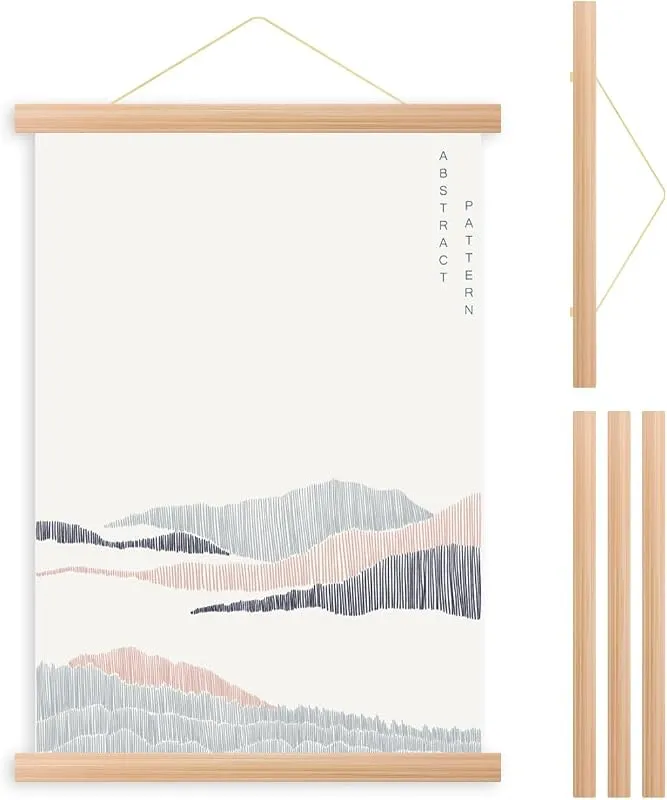
A magnetic poster hanger is a two-piece rail system. The top rail mounts to the wall and holds the upper edge of your poster between two magnetic strips. The bottom rail attaches the same way, using its weight to keep the print taut and flat. Because there’s no frame around the edges, the poster appears to float on the wall — a look that works especially well with bold graphics, photography, and prints with decorative borders.
Hangers come in wood, metal, and acrylic finishes, and in a range of lengths to suit different poster sizes. The exact dimensions, magnet strength, and included hardware vary by model and retailer, so it’s always worth checking the product listing before you buy.
Neodymium magnets, often used in poster hangers, are among the strongest permanent magnets available — which is why a slim rail can hold a large print securely.
When a Magnetic Poster Hanger Makes Sense
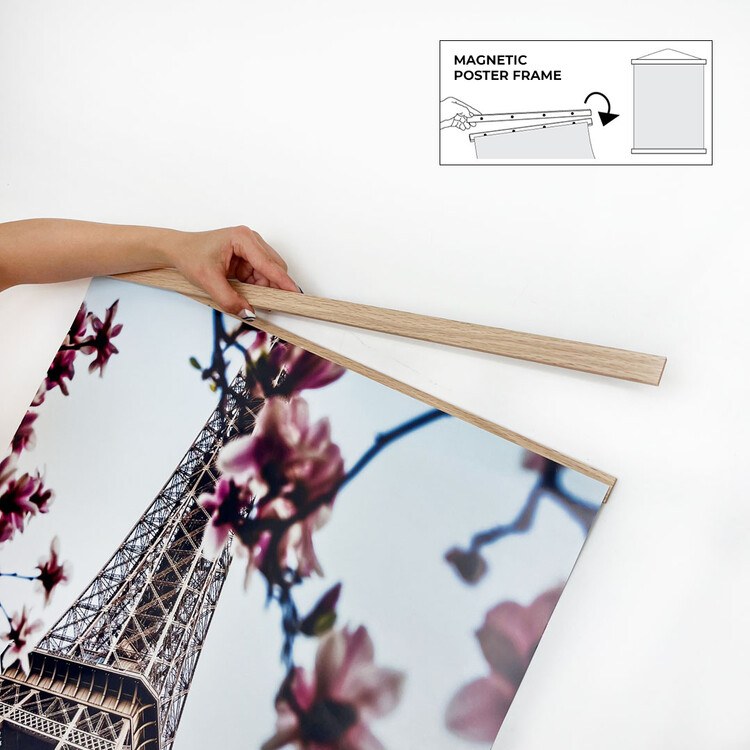
Magnetic poster hanger holding a poster against a wall with visible top and bottom bars
You Rotate Your Art Frequently
If you’re the kind of person who changes art with the seasons, swaps in a new poster after each show, or rotates your kids’ latest drawings, a magnetic hanger is a revelation. Swapping a print takes under a minute: pull the magnets apart, slide in the new poster, press them closed. No tools, no nails, no re-hanging.
Compare that to a framed poster, which requires you to either buy a new frame or carefully dismantle and reassemble the old one. This is where the magnetic hanger pulls ahead of the traditional frame — a trade-off we’ve explored in depth in our guide to the magnetic poster hanger vs. the traditional poster frame.
You Rent and Want to Keep Walls Intact
Renters face a familiar problem: you want a gallery wall, but your lease says no nails. Magnetic poster hangers are generally lighter than framed glass, and many models hang from a single hook or a pair of small screws. That said, hardware varies — some hangers need two screws, others use adhesive strips. Check your wall type and the product’s hanging instructions before committing.
Even a lightweight hanger isn’t weightless once a large poster is attached. If you’re unsure about drywall anchors or plaster walls, ask your landlord or consult a professional installer before drilling.
You’re Hanging a Large or Oversized Poster
Large posters are where frames get expensive and heavy. A 24-by-36-inch print in a frame with glass can weigh a surprising amount, and the bigger you go, the more you pay for custom sizing. A magnetic hanger, by contrast, adds minimal weight — just the rails — and the bottom bar’s tension keeps the print flat without glass pressing on it.
If you’re hanging a big statement piece, a hanger can save your wall from a heavy load and your wallet from a custom-frame bill. For more on handling oversized prints without the weight of glass, see our guide on how to hang a large poster without a frame.
You Want a Clean, Modern Look
Frames create a boundary. A magnetic hanger removes it. The print becomes the object, floating directly on the wall with its edges visible. This suits contemporary interiors, Scandinavian minimalism, and gallery-style arrangements where you want the art to feel approachable, not enshrined. Wood rails add warmth; black metal rails add an industrial edge; acrylic rails nearly disappear.
You Need a Budget-Friendly or Temporary Display
If you’re furnishing a first apartment, setting up a temporary exhibition, or dressing a room you know you’ll change, a magnetic hanger is often the more affordable route. You’re paying for rails and magnets, not glass, matting, and a frame. And when the poster comes down, the hanger stores flat in a drawer, ready for the next print.
When a Frame Is Still the Better Choice
The Art Is Valuable or Archival
Here’s the honest counterpoint: a magnetic hanger offers little protection. There’s no glass to block UV rays, no mat to keep the paper from touching anything, and no rigid backing to prevent bending. If you own a signed print, a vintage movie poster, or anything with real monetary or sentimental value, a conservation-quality frame with UV-protective glass and acid-free matting is the responsible choice.
The hanger is for living with art. The frame is for preserving it.
The Room Calls for Formality
A heavy gilded frame in a traditional dining room, or a sleek black frame in a formal office, communicates a certain polish. A magnetic hanger reads casual by design. In spaces where you want formality and permanence, a frame is usually the better match.
The Print Is Small or Detailed
Small prints — 8 by 10 inches and under — can look lost on a hanger, and detailed artwork benefits from the protection of glass. Frames also allow for matting, which gives small prints breathing room and a more finished presentation. For guidance on sizing and standard options, our poster frame sizes explained guide is a helpful reference.
Magnetic Hanger vs. Frame: Key Differences at a Glance<
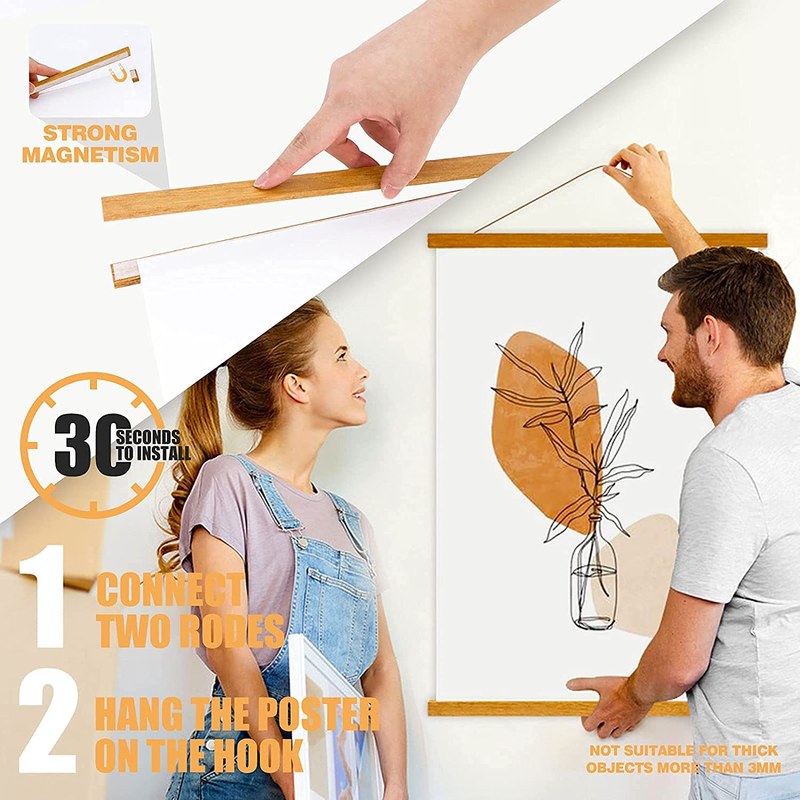
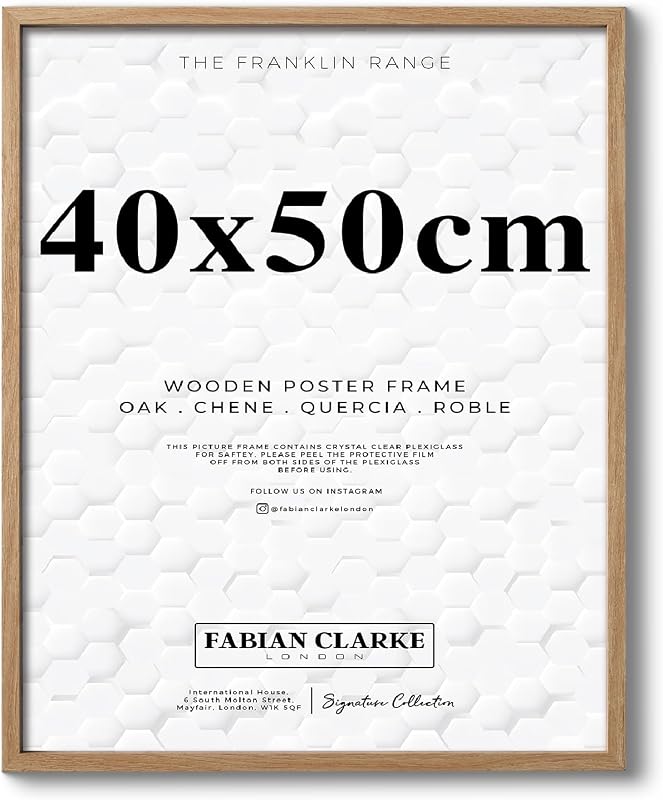
Left: magnetic poster hanger; right: traditional framed poster.
Left: magnetic poster hanger; right: traditional framed poster.
/h2>
| Option | Best For | Key Consideration |
|---|---|---|
| Magnetic poster hanger | Rotating art, large prints, rental homes, modern interiors | Minimal protection; check the weight limit and included hardware |
| Traditional frame | Valuable art, formal rooms, small detailed prints | Heavier and more expensive; harder to swap prints |
How to Choose the Right Magnetic Poster Hanger
Match the Bar to the Poster Width
Choose a hanger that’s close to your poster’s width — generally, the bar should be about the same width as the print, or slightly narrower, so the magnets grip the full edge cleanly. Many listings state the maximum print width the hanger can hold; check that number before ordering. Our guide on how to choose magnetic poster hanger width for prints walks through the sizing details.
When in doubt, size the hanger to your largest poster. A bar that’s slightly narrower than the print looks intentional; one that’s wider leaves an awkward gap at the edges.
Pick a Material That Suits the Room
Wood rails warm up a space and pair well with rustic or mid-century decor. Black metal rails suit industrial and modern rooms. Acrylic rails recede into the background, letting the poster do all the talking. Think of the rail as a piece of furniture — it should complement the print, not compete with it.
Check the Weight Limit and Hardware
Not all magnets are created equal. Heavier posters — thick paper, cardstock, or prints with a backing — need stronger magnets. Check the product listing for the maximum print weight and for what’s included: screws, anchors, hooks, or adhesive strips. If the hardware doesn’t match your wall type, buy the right anchors separately.
- Measure your poster’s width and confirm the hanger’s maximum print width
- Note the poster’s weight and confirm the magnet strength
- Check what hardware is included and whether it suits your wall type
- Choose a finish — wood, metal, or acrylic — that fits the room
- Confirm the return policy in case the size doesn’t work out
How to Hang a Magnetic Poster Hanger
Hold the top rail at your desired height and mark the screw positions with a pencil. Use a level to keep the line straight.
Install the included hardware according to the product instructions. For drywall, use appropriate anchors; for plaster or concrete, use the right masonry anchors or consult a professional. Make sure the rail is secure before adding the poster.
Open the magnets, slide the top edge of the poster into the rail, and press the magnets closed. Let the poster hang naturally.
Attach the bottom rail the same way. Its weight will pull the poster taut and keep it flat.
Caring for Your Poster and Hanger
Poster paper is more delicate than it looks. Direct sunlight can fade inks over time, and humid rooms can make paper curl or develop waves. If you’re displaying a print you love, choose a spot with indirect light and keep the hanger away from bathrooms, kitchens, and radiators. Wipe the rails occasionally with a dry cloth to keep dust from transferring onto the paper.
Prolonged direct sunlight and high humidity are the two biggest enemies of unframed posters. Rotate prints occasionally, and if a piece matters to you, consider a UV-protective frame instead of a hanger.
Styling Ideas for Magnetic Poster Hangers
Magnetic hangers shine in relaxed, lived-in spaces. A single large print above a sofa, a pair of matching hangers side by side for a diptych effect, or a row of small posters along a hallway — the rails themselves become part of the composition.
- Mix hangers and frames in a gallery wall for texture — the contrast between framed pieces and floating prints adds depth.
- Align the top rail with the center line of your sofa, console, or headboard for a balanced look.
- Use two matching hangers side by side for a diptych effect.
- In a kids’ room, install a hanger at eye level and swap in new artwork whenever it arrives.
- For a bedroom, hang a calming print slightly lower than you would in a living room.
For more arrangement ideas, see our guide on how to style magnetic poster hangers in an artful home.
The Bottom Line
A magnetic poster hanger isn’t a replacement for every frame — it’s a tool for a different way of living with art. Choose it when you want to swap prints easily, keep walls light, and let the artwork feel immediate and modern. Choose a frame when protection, formality, or permanence matters more.
- Choose a magnetic poster hanger when you rotate art often, rent, hang large prints, or want a modern, casual look.
- Choose a frame when the art is valuable, the room is formal, or the print is small and detailed.
- Match the hanger width to your poster, check the weight limit, and confirm the hardware suits your wall.
- Protect prints from direct sunlight and humidity, no matter which option you choose.
Frequently Asked Questions