Picture Ledge Shelves vs Hanging Individual Frames: Which Display Style Is Better?

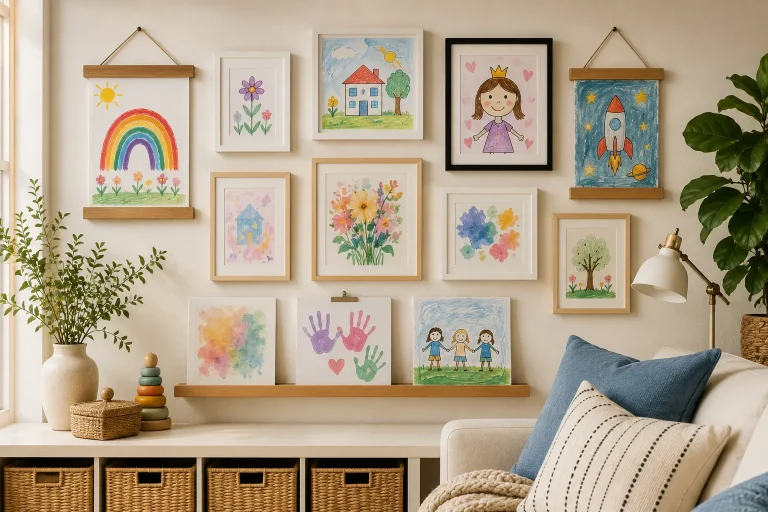
Picture ledge shelves are usually better if you like changing artwork, layering frames, or decorating without planning a fixed gallery wall. Hanging individual frames is better if you want a cleaner, more formal display that stays in place and uses less visual depth. For many creative homes, a picture ledge works best in relaxed living areas, while individually hung frames suit polished focal walls and valuable artwork.
Choosing between picture ledge shelves and hanging individual frames comes down to flexibility, room style, wall space, safety, and how often you want to change your art. Both can look beautiful, but they create very different moods.
I love a home that feels personal, not overdesigned. Framed artwork can help a room tell your story, whether it is a quiet botanical print, a museum poster, a family photograph, or a piece you found while travelling.
When planning a wall display, I often start with one question: do you want the art arrangement to be easy to change, or do you want it to feel settled and precise? That question makes the choice much simpler.
What Is the Difference Between Picture Ledge Shelves and Hanging Individual Frames?
A picture ledge shelf is a narrow wall shelf with a raised lip. Frames rest on the shelf and usually lean against the wall. You can overlap pieces, move them around, and add small decorative accents.
Individually hung frames are attached directly to the wall with hooks, nails, picture-hanging hardware, or other suitable fixings. Each piece has its own fixed position. This creates a flatter, more structured art display.
Both choices belong naturally in an artful home. You can find more display ideas in our Art & Frames guide, especially if you are building a wall around prints, photographs, or small collected pieces.
| Feature | Picture Ledge Shelves | Hanging Individual Frames |
|---|---|---|
| Overall look | Layered, relaxed, collected | Clean, flat, gallery-like |
| Changing artwork | Easy to swap and restyle | Needs rehanging or new fixings |
| Wall holes | Fewer main mounting points | One or more fixings per frame |
| Depth from wall | More projection | Usually slimmer |
| Best for | Flexible displays and layered art | Permanent layouts and formal arrangements |
Picture Ledge Shelves: Why People Love Them
Picture ledges are friendly and forgiving. You do not need to plan every frame position before you begin. You can style the ledge, step back, and change a piece until the display feels balanced.
This makes ledges especially useful for people who collect art slowly. A ledge can begin with two frames and become richer over time. Add a postcard from an exhibition, a small photograph, or a new print when you find something meaningful.
- Easy to refresh for seasons or new artwork.
- Allows layered frames and a collected look.
- Can combine art with a small book or object.
- Helpful when you are unsure of a final layout.
- Projects farther from the wall.
- Needs secure installation and sensible weight.
- Can look cluttered if overfilled.
- May not suit narrow walkways or heavy framed art.
For a soft living-room display, try a natural wood ledge with one large landscape print, one smaller line drawing, and a family photograph in front. Add one slim ceramic accent only if there is still breathing space.
Hanging Individual Frames: Why They Still Work Beautifully
Individually hung frames give a wall order and calm. Each work has space around it. This is helpful when a print deserves full attention or when you want a refined, gallery-style focal point.
I often prefer individual hanging for large artwork, valuable pieces, or a precise grid of matched frames. If your art arrangement is unlikely to change, there is no real need for a shelf.
How to Decide Which Display Method Is Right for Your Room
Before you buy a ledge or start adding hooks to your wall, look at the room itself. Think about the wall width, the furniture below it, the type of art you own, and how often your taste changes.
Measure the open wall above a sofa, desk, bed, or console. Your display should relate to the furniture below it rather than floating without connection.
If your pieces vary in size and you like overlapping them, a ledge may feel natural. If you have one large statement print or a tidy matched set, hanging often works better.
Ask yourself whether you plan to swap art by season or occasion. A ledge makes these changes easy and gentle on the wall.
A projecting ledge may not be ideal in a narrow hallway or above an active play area. Individually hung art usually takes up less physical space.
Use painter’s tape or arrange the pieces on the floor. This lets you compare a layered ledge look with a spaced hanging arrangement before making holes.
Take a photo of both test layouts on your phone. A photograph often makes uneven spacing or visual clutter easier to see than standing close to the wall.
Which Choice Is Best for Different Rooms?
A display method should support the way a room is used. A home office can handle an evolving inspiration ledge. A formal dining room may look stronger with carefully hung framed art. A bedroom needs particular care if artwork sits over the bed.
| Room or Area | Better Starting Choice | Why It Works |
|---|---|---|
| Living room above console | Picture ledge shelf | Easy to layer art and decor without crowding seating |
| Living room above sofa | Either, with secure installation | Choose ledge for flexibility or hanging for a lighter wall profile |
| Bedroom above bed | Individually hung lightweight frames | Less projection and easier to keep the display simple |
| Home office | Picture ledge shelf | Lets you rotate inspiring art, sketches, and photographs |
| Narrow hallway | Hanging individual frames | Frames project less into passing space |
| Dining room focal wall | Individually hung frames | Creates a calm and polished presentation |
Why the Choice Matters for Your Art and Home
The way you display a frame changes how you notice it. A print on a ledge becomes part of a layered story. The same print hung alone can feel more important and still.
There is no correct answer for every home. The best display is the one that protects your art, feels good to live with, and fits the mood you want to create.
Good lighting can also change the result. Soft, warm light helps framed pieces feel welcoming, while glare can make glass hard to view. Our Lighting & Ambience guide can help you think through light near an art display.
Museums and galleries give artwork room to breathe because spacing affects how the eye rests on each piece. At home, you can borrow that idea even when styling a relaxed ledge display.
Style Guide: Matching the Display to Your Interior
Wall Damage and Installation: Which Is Easier?
A common reason people choose picture ledges is to reduce the number of holes in a wall. One ledge can support several lightweight frames, while hanging each frame separately may require several fixing points.
Still, a ledge is not a no-damage solution. It needs strong screws or anchors because it carries several pieces at once. The installation holes may also be larger than a small picture hook.
Individually hung frames can be easy for one or two lightweight works. But a full gallery wall requires more measuring, more spacing decisions, and often more holes if the arrangement changes later.
If you rent your home, check what wall fixing is allowed before choosing either option. Removable methods may suit very light frames only and should never be assumed safe for heavy artwork or loaded shelves.
Picture Ledge Shelves vs Hanging Individual Frames for Safety
Safety should always come before appearance. A picture ledge holds several items, so the total weight matters. A ledge must be installed correctly and should have a front lip to help stop frames from sliding forward.
Individually hung frames spread the load across separate fixing points. This can be a better choice for heavier artwork, especially if each frame uses suitable hanging hardware.
| Safety Question | Picture Ledge Shelf | Individual Frames |
|---|---|---|
| Heavy artwork | Use only if shelf and fittings support the load | Often better with secure frame-specific hardware |
| Above a bed or crib | Usually avoid heavy ledge displays | Use extreme care and lightweight, secure pieces |
| Busy hallway | Can project too far from the wall | Usually safer and slimmer |
| Children or pets nearby | Keep out of reach and avoid loose objects | Keep securely fixed and positioned safely |
| Frequent art swaps | Easier without new holes | Repeated changes can affect wall and fixing points |
Do not place a heavily loaded ledge or heavy glass-framed art above a bed, crib, or frequently used seat unless the installation and weight suitability are fully confirmed. Choose lightweight frames and secure hardware whenever falling artwork could cause harm.
Budget: Which Option Costs More?
The price depends on how many pieces you display. A ledge adds the cost of the shelf and fittings, but you may be able to restyle it for years without buying new mounting hardware. Hanging frames individually may cost less at first if you are showing only one or two works.
Products to Consider for Each Display Style
If you are creating a changeable art wall, a simple ledge with a front lip can be a practical starting point. If you prefer separate hanging, a set of clean, lightweight frames can help you build a calm arrangement.
Pro Tips for Choosing Between Ledges and Hanging Frames
- Choose a ledge when your collection is growing or changes often.
- Choose individual hanging for a single large piece or a formal grid.
- Use lightweight acrylic-front frames where safety is a concern.
- Keep ledges out of tight walkways where people may bump the display.
- Do not overcrowd a ledge; empty space helps art look more special.
- Plan lighting early, especially if framed glass may reflect lamps or windows.
Common Mistakes to Avoid
One mistake is selecting a ledge only because it seems easier, then filling it with heavy frames and objects. A ledge still needs planning. Weight, wall type, shelf depth, and placement all matter.
Another mistake is hanging frames individually without testing the arrangement first. A neat wall can quickly become frustrating when the frame spacing feels wrong after several holes have already been made.
- Measure your wall and artwork before choosing.
- Use proper fixings for your wall type.
- Keep precious or heavy art securely mounted.
- Let the room’s style guide the display method.
- Start with fewer pieces and add slowly.
- Do not overload a shelf for the sake of a fuller look.
- Do not hang frames at random heights without a plan.
- Do not ignore children, pets, or room traffic.
- Do not mix too many finishes without a repeated link.
- Do not use heavy art above resting areas without care.
Finding Art Display Inspiration
For thoughtful presentation ideas, I often look at how art is given space in museum and design settings. The Met Museum and Museum of Modern Art are excellent places to notice scale, spacing, and the quiet effect of a well-presented artwork.
For home-specific styling, Architectural Digest and Apartment Therapy offer visual examples of artwork used in lived-in rooms. The goal is not to copy a room exactly, but to understand what feels balanced in your own home.
You may also enjoy bringing small art books or creative objects into the room through our Books & Gifts section and exploring relaxed styling through our Creative Living section.
If you are starting with a mixed collection of small prints and photographs, choose a securely mounted picture ledge. If you own one striking print that you want viewers to notice first, hang it individually and give it room to breathe.
- Do I want to change my art often?
- Is my wall wide enough for a ledge without feeling crowded?
- Are any of my frames heavy or valuable?
- Is the display above a bed, crib, sofa, or walkway?
- Can I safely install a ledge or frame hardware on this wall?
- Do I prefer a layered look or a clean gallery look?
- Does the room need more flexibility or more calm?
- Picture ledge shelves are best for flexible, layered displays.
- Hanging individual frames is best for clean, permanent arrangements.
- Heavy or valuable art often benefits from individual secure hanging.
- Ledges are useful for rotating prints and personal collections.
- Safety, wall type, and room traffic should guide your final choice.
In the picture ledge shelves vs hanging individual frames debate, neither option is better for every home. Choose a picture ledge when you want a flexible, layered, creative display. Choose individual hanging when you want a clean focal wall, have heavier framed art, or prefer a permanent arrangement. Whatever you choose, secure installation and thoughtful spacing matter most.
FAQ: Picture Ledge Shelves vs Hanging Individual Frames
Picture ledges are better if you want to change artwork often or create a layered look. Hanging frames are better for a fixed, clean, gallery-style arrangement.
A ledge may require fewer fixing locations than hanging many frames, but its screws or anchors need to be strong. Both options can leave holes in the wall.
Only use heavy framed art on a ledge if the shelf and wall fixings are rated for the total weight. Individual secure hanging may be a safer choice for heavy pieces.
Individually hung frames usually take up less physical depth, which can suit narrow spaces. A small ledge can still work on a calm wall above a desk or console.
You can, but use extra care. Keep frames lightweight, mount the ledge securely, and avoid heavy glass pieces in places where falling items could cause injury.
A picture ledge is easier because you can swap or layer framed prints without adding new wall holes each time.
Yes. A carefully styled ledge with a limited frame palette, balanced sizes, and open space can feel elegant and intentional.
Final Thoughts
Picture ledge shelves and individually hung frames both have a place in a beautiful home. The best choice is not the one that is most fashionable. It is the one that fits your art, your wall, and the way you live.
For a relaxed display that can grow and change, I recommend a securely installed picture ledge with lightweight framed art. For a strong statement piece, a formal arrangement, or heavier artwork, hanging individual frames is often the better choice.
Measure carefully, install safely, and give your art enough space to be enjoyed. A well-chosen display method can turn a blank wall into one of the most personal parts of your home.