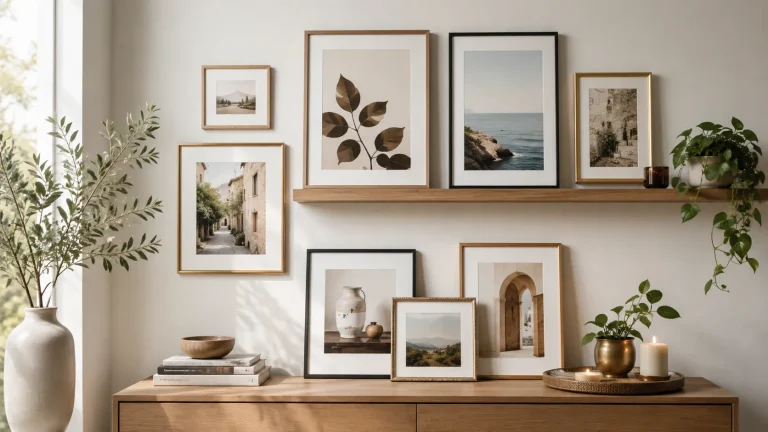
Are Picture Ledges Safe for Displaying Framed Art?

Yes, picture ledges can be safe for displaying framed art when they are installed correctly, matched to the right wall type, kept within the shelf weight limit, and used with stable frames. The safest setup uses proper wall anchors or studs, lightweight frames, a front lip on the ledge, and careful placement away from beds, cribs, and busy walkways.
Picture ledges are generally safe for framed art, but only when the shelf, wall fixing, frame weight, and room placement all work together. A beautiful ledge is not just about styling. It also needs to hold steady over time.
I use picture ledges often because they make art display flexible. You can move prints, change frames, and refresh a wall without creating many nail holes. But I always treat safety as part of the design.
In this guide, I will explain when picture ledges are safe, when they are risky, and how to use them properly in a real home.
What Makes a Picture Ledge Safe?
A safe picture ledge has four things working together: a strong shelf, good wall fixings, sensible frame weight, and a safe location.
The ledge itself should have a raised front edge. This small lip helps stop frames from sliding forward. The wall screws or anchors should suit your wall type. Drywall, plaster, brick, and studs all need different fixing methods.
For more ideas on display choices, visit our Art & Frames guide. If you want to add soft lighting near your framed art, our Lighting & Ambience guide may also help.
The safest ledge is not always the most expensive one. A simple ledge can be safe if it is installed correctly and not overloaded.
When Are Picture Ledges Not Safe?
Picture ledges become unsafe when they are overloaded, poorly fixed, or used in the wrong place. A heavy glass frame on a weak ledge is a risk. So is a ledge placed where people brush against it often.
I would be extra careful in homes with children, pets, rental walls, old plaster, or very heavy framed art. In these cases, it is better to use lighter frames and stronger mounting hardware.
Do not place heavy glass frames on a picture ledge above a bed, crib, sofa, or chair unless the ledge is professionally secured and rated for the weight. When in doubt, use lightweight acrylic frames or hang the art directly with secure wall hardware.
How to Check If Your Picture Ledge Is Safe
Find out whether the wall is drywall, plaster, brick, concrete, or timber stud. The wall type decides what fixing method you need.
Check the shelf instructions. Do not guess. The total weight includes the ledge, frames, glass, books, and decor objects.
If you cannot screw into studs, use wall anchors suitable for your wall and load. Weak anchors can pull out over time.
After installation, apply gentle pressure and check for wobble. If the ledge moves, do not load it with frames yet.
Lean frames at a safe angle. Keep heavier frames at the back and avoid placing them near the front edge.
If you want the look of large art without the weight, use lightweight poster frames with acrylic glazing instead of heavy glass.
Picture Ledge Safety by Wall Type
| Wall Type | Safety Level | Best Fixing Method |
|---|---|---|
| Timber stud behind drywall | Very good | Screws fixed into studs |
| Drywall only | Moderate | Quality drywall anchors rated for the load |
| Old plaster wall | Varies | Careful drilling and suitable plaster anchors |
| Brick or concrete | Very good | Masonry plugs and screws |
| Rental wall | Depends | Follow lease rules and avoid heavy displays |
Best Frames for Picture Ledges
The safest frames for picture ledges are light, stable, and not too deep. Heavy ornate frames can look beautiful, but they are not always the best choice for a narrow ledge.
For everyday home styling, I prefer lightweight wood, thin metal, or acrylic-front frames. They reduce risk and still look polished.
| Frame Type | Safety for Ledges | Best Use |
|---|---|---|
| Lightweight wood frame | High | Prints, photos, gallery walls |
| Thin metal frame | High | Modern art and clean interiors |
| Acrylic-front frame | High | Bedrooms, family areas, rentals |
| Heavy glass frame | Medium to low | Only on strong, secure ledges |
| Deep shadow box | Medium | Wide ledges with strong support |
Safe Styling Rules for Framed Art
Safety does not mean the display has to look plain. You can still create a layered, stylish wall. The main idea is to balance weight and depth.
- Use a ledge with a front lip.
- Place heavier frames toward the back.
- Keep the shelf within its weight limit.
- Use lightweight frames in bedrooms and family spaces.
- Check the ledge every few months for movement.
- Do not overload the ledge with books and glass frames.
- Do not place fragile frames near the edge.
- Do not rely on weak adhesive strips for heavy displays.
- Do not install above a crib or bed without extra safety care.
- Do not ignore loose screws or wall cracks.
Safe Places to Use Picture Ledges
Some places are better than others. A hallway ledge can work well if the hall is wide enough. A ledge above a console table is usually safer because people are less likely to bump it.
Above a bed or sofa needs more caution. The risk is not only the shelf falling. A frame can also slide or tip if the ledge is overloaded or knocked.
A safe picture ledge can still feel elegant. Try three lightweight frames, one small art book, and a ceramic accent. Keep the display low in weight and high in style.
Common Problems and Simple Fixes
| Problem | Cause | Safe Fix |
|---|---|---|
| Ledge feels loose | Weak anchors or missed studs | Reinstall with stronger hardware |
| Frames slide forward | No front lip or poor leaning angle | Use a ledge with a lip and add grip pads |
| Wall cracks near screws | Wall cannot support the load | Remove weight and repair before reinstalling |
| Display feels too heavy | Too many glass frames or books | Switch to acrylic and reduce objects |
| Frames get bumped often | Ledge is in a narrow walkway | Move it to a calmer wall |
Budget Estimate for a Safer Picture Ledge Setup
Products That Can Help Make Picture Ledges Safer
Pro Tips for Safer Picture Ledge Displays
- Use studs where possible, especially for longer ledges.
- Choose acrylic instead of glass for bedrooms and family rooms.
- Do not stack heavy books on a narrow ledge.
- Keep frames slightly tilted back, not straight upright.
- Use small clear grip pads behind frames if they slide.
- Check screws after the first week, then every few months.
If you want to combine safety with a richer look, browse our Creative Living section for simple home styling ideas. For giftable display pieces and art books, see our Books & Gifts section.
What Trusted Home and Design Sources Suggest
Good display design is always a balance of beauty and function. Architectural Digest often shows how art can shape a room without making it feel cluttered. Apartment Therapy is helpful for practical small-space display ideas. For general home safety habits, Consumer Reports is a useful source to keep in mind. For visual art context, the Met Museum is always worth exploring.
For most homes, my safest recommendation is a wood or metal picture ledge with a front lip, fixed into studs where possible, styled with lightweight acrylic-front frames.
- Does the ledge have a raised front lip?
- Does the product show a clear weight limit?
- Can you install it into studs or strong anchors?
- Are your frames light enough for the ledge?
- Will it be away from beds, cribs, and busy walkways?
- Can the wall support the full display?
- Do you have the right tools for installation?
- Picture ledges are safe when mounted correctly.
- Wall type and hardware matter more than styling.
- Lightweight frames are safer than heavy glass frames.
- A front lip helps keep frames stable.
- Avoid placing heavy framed art above beds, cribs, or seating areas.
Picture ledges can be safe for displaying framed art if you choose the right ledge, install it securely, respect the weight limit, and use sensible frame choices. For most homes, lightweight frames, a strong front-lip ledge, and proper wall anchors are the safest combination.
FAQ: Are Picture Ledges Safe for Displaying Framed Art?
Yes, picture ledges are safe when they are installed correctly, not overloaded, and used with suitable frames.
Some picture ledges can hold heavier frames, but only if the ledge and wall hardware are rated for the weight.
Use caution above a bed. Lightweight frames are safer, and the ledge must be very securely mounted.
Use a ledge with a front lip, lean frames slightly back, and add small grip pads if needed.
Lightweight wood, thin metal, and acrylic-front frames are usually safer than heavy glass frames.
They can leave screw holes, but proper installation usually causes less wall damage than a large multi-frame gallery wall.
Yes, studs are the strongest option when available. If studs are not available, use quality anchors rated for the load.
Final Thoughts
So, are picture ledges safe for displaying framed art? Yes, they can be. But safety depends on the full setup, not just the shelf itself.
My advice is to choose a ledge with a front lip, install it with the right hardware, use lightweight frames, and avoid risky spots like cribs, beds, and narrow walkways. Keep the display beautiful, but keep it practical too.
A secure picture ledge gives you the best of both worlds: flexible art styling and peace of mind.