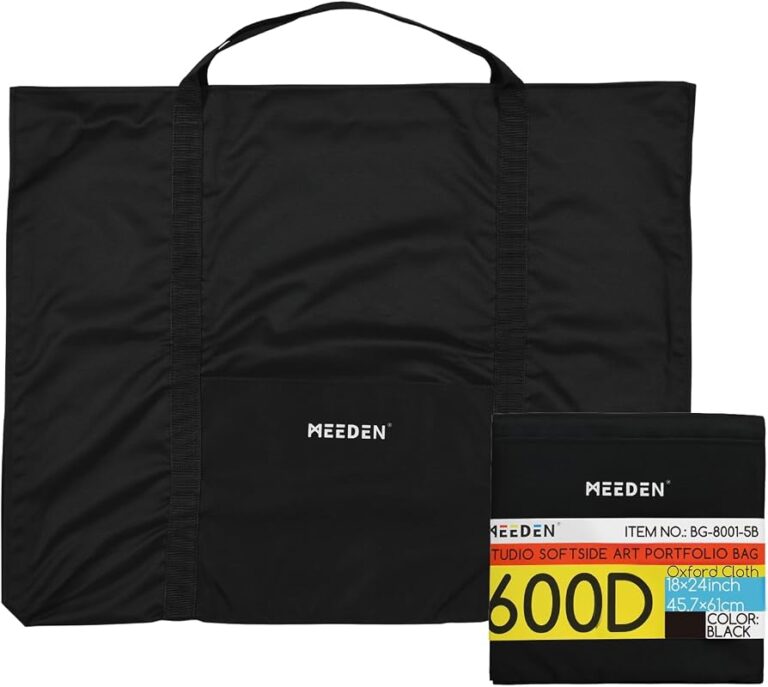
How Art Portfolio Case Should Look

An art portfolio case should look structured, clean, and proportional to the work inside it. The best choice balances professional presentation with real protection, easy carrying, and the right size for your artwork.
how art portfolio case should look depends on three things: the work you carry, the way you present it, and how much protection you need on the move. In practice, the best cases look clean, structured, and purposeful rather than flashy, because the case should support the work instead of competing with it.
For Hurrell Editions, the right look is not just about style. It is about whether the case feels professional, stores artwork safely, and makes your portfolio easier to carry, organize, and present.
- Structure first: A good case should hold its shape and keep artwork flat.
- Size matters: Match interior dimensions to your largest regular piece, not just the exterior.
- Finish should fit the setting: Neutral, matte, or lightly textured cases usually look most professional.
- Comfort counts: Handles and closures should feel secure for frequent carrying.
- Avoid overpacking: Too much content can distort the case and reduce protection.
How an Art Portfolio Case Should Look: The Short Answer for 2026
An art portfolio case should look slim, sturdy, and intentional. The exterior should appear neat enough for client meetings or school critiques, while the interior should keep artwork flat, separated, and protected from bending or scuffing.
The most useful visual cue is balance: a case should look refined, not bulky; durable, not heavy; and tailored to the size of the work inside. If it looks oversized, flimsy, or overly decorative, it usually signals a compromise in structure or usability.
What Makes a Good Art Portfolio Case: Materials, Structure, and Finish
The best-looking portfolio cases usually share the same underlying qualities: a firm shell, a smooth finish, and hardware that feels secure rather than ornamental. The materials matter because they shape both the look and the long-term function of the case.
Outer shell and water resistance
The outer shell should look clean and hold its shape. Common options include coated fabric, faux leather, leather, rigid board, and reinforced synthetic materials. The right choice depends on how formal you want the case to look and how much wear it will face.
A subtle texture often ages better than a glossy finish, especially if the case is carried often. Water resistance is also worth considering, but it is best to treat manufacturer claims carefully and confirm whether the protection is splash-resistant, water-resistant, or simply easy to wipe clean.
Water resistance varies widely by model and material. If you need real protection for transit or outdoor commuting, check the product listing and care instructions rather than assuming a polished exterior means the case is sealed.
Interior protection and document support
Inside, the case should look organized and feel supportive. A good interior often includes a smooth lining, a firm backing, and enough structure to keep sheets from shifting too much during transport. Some cases also include pockets or sleeves for labels, prints, or smaller presentation materials.
For presentation use, the interior matters almost as much as the exterior because clients and instructors often notice how easily the work can be accessed. If the case opens awkwardly or the pages slide around, the overall impression drops even if the outside looks elegant.
Flat storage is one of the simplest ways to reduce curling and edge wear in paper-based artwork, especially when pieces are handled repeatedly.
Handles, closures, and carrying comfort
Handles and closures should look understated and feel reliable. A well-designed handle is usually reinforced and proportioned to the case size, while zippers, buckles, or clasps should close smoothly without adding visual clutter.
Comfort matters because an attractive case that digs into your hand will not stay pleasant to use. If you carry work through campuses, studios, or client spaces, the handle placement and grip shape should be part of the buying decision, not an afterthought.
- A structured exterior looks professional and helps the case hold its shape.
- Simple closures usually make the case feel more polished and easier to use.
- Reinforced handles improve carry comfort for heavier portfolios.
- Very decorative finishes can look stylish but may not age as well.
- Overly slim cases may protect less than they appear to.
- Cheap hardware can undermine both the look and the function.
Choosing the Right Size and Format for Your Work
Size is one of the biggest reasons an art portfolio case looks right or wrong. A case that matches your work size appears intentional, while one that is too large can look awkward and one that is too small can cause bending or cramped storage.
Standard paper and artwork sizes
Start with the largest piece you need to store regularly. Standard sizes such as letter, tabloid, and larger presentation formats are common, but your actual work may require a case that leaves room for mats, sleeves, or protective boards.
If you are comparing options, look at the manufacturer’s stated interior dimensions rather than the exterior size alone. That distinction matters because a visually sleek case may have less usable space than expected, especially once padding or structural panels are included.
- Measure your largest artwork, including any mat or backing board.
- Check interior dimensions, not just the outside dimensions.
- Confirm whether the case is designed for flat sheets, mounted work, or mixed media.
Portrait vs. landscape portfolios
Portrait portfolios often feel traditional and formal, which suits many presentation settings. Landscape cases can be better for wide compositions, photography prints, architectural drawings, or layouts that are meant to be viewed horizontally.
The visual look should match the orientation of the work inside. If most of your pieces are wide-format, a landscape case usually looks more natural and avoids the awkwardness of forcing the work into a format that does not fit the way it is meant to be viewed.
Thickness, capacity, and expansion needs
Capacity is not only about how many sheets fit. It is also about whether the case can handle thicker items such as boards, sleeves, or presentation packages without bowing, buckling, or making the closure feel strained.
If your work changes often, choose a case with a little expansion room rather than one that fits perfectly on day one. Overpacking can make even a well-made portfolio look overstuffed and can shorten the life of the seams, hinges, or closures.
Who an Art Portfolio Case Suits Best
An art portfolio case is useful for anyone who needs to move visual work safely while keeping a polished presentation. The best fit depends on the type of work, how often it travels, and how formal the setting is.
Students, illustrators, and designers
Students often need a case that looks clean, dependable, and easy to carry between classes, studios, and critiques. Illustrators and designers may prefer a case with a more refined finish because it can double as a presentation piece in meetings or reviews.
For these users, the case should feel practical before it feels luxurious. A good portfolio should make work easy to organize and remove, which is why many creatives appreciate models that stay flat and open cleanly. If you are still deciding whether the format is worth it, our guide on whether art portfolio cases are good may help clarify the tradeoffs.
Architects, photographers, and presentation professionals
Architects and photographers often need a case that supports larger prints, plans, or image sets without adding visual noise. In these settings, the case should look restrained and professional, with a finish that reads as confident rather than casual.
Presentation professionals usually benefit from a case that opens quickly, keeps contents aligned, and looks appropriate in front of clients. The best-looking option is often the one that disappears behind the work and lets the portfolio speak for itself.
Which studio, office, or home setup it fits
A portfolio case also has to fit the space where it is stored. In a studio, it may live upright near a desk or flat in a rack. In an office or home, it may need to blend with shelving, cabinets, or a dedicated storage area without looking cluttered.
If your setup is small, a slimmer case with a neat spine and minimal hardware usually looks best. For more guidance on organizing creative spaces, see how to set up a home art studio space and how to organise art supplies in a small space.
How to Style and Present an Art Portfolio Case
A portfolio case can be part of your personal brand if you choose it carefully. The best styling approach is subtle: let the case look considered, coordinated, and appropriate for the setting without making it feel like a fashion accessory.
Minimal, professional, and creative visual cues
Minimal cases tend to look best in formal settings because they keep attention on the artwork. More creative cases can work well in studios or informal meetings, especially when the finish, stitching, or hardware reflects the rest of your tools and materials.
The goal is not to make the case loud. It is to make it look like it belongs with your work. A clean silhouette, restrained detailing, and consistent proportions usually communicate confidence more effectively than decorative extras.
- Choose one dominant visual tone: matte, textured, glossy, or natural.
- Match the case’s formality to the setting where it will be opened most often.
- Keep visible accessories minimal so the artwork remains the focus.
Matching case color and finish to your personal brand
Color is one of the easiest ways to make a portfolio case feel intentional. Black, charcoal, and deep brown usually read as classic and professional, while lighter neutrals can feel more contemporary and airy. Bright colors may suit some creative practices, but they can also date faster.
Finish matters just as much as color. Matte surfaces tend to feel more understated, while smooth or lightly reflective finishes can look more polished in client-facing environments. The best choice depends on whether you want your case to blend in or stand out.
Think of the case as a visual extension of your portfolio cover: it should hint at your style, not overwhelm the work inside.
Display ideas for studios, shelves, and client meetings
In a studio or office, a portfolio case can be stored upright like a book if the spine is stable and the case is designed for that orientation. On a shelf, it looks best when grouped with similarly sized storage items rather than squeezed between unrelated objects.
For client meetings, keep the case clean, uncrumpled, and easy to open. If you plan to present work from the case, you may also want to review how to use an art portfolio presentation case so the contents are organized in a way that supports the conversation.
Key Benefits, Limitations, and Common Buying Mistakes
Most people look at appearance first, but a good portfolio case is really a combination of protection, portability, and presentation value. When those three align, the case feels worth owning. When they do not, it becomes a storage problem disguised as a stylish object.
Protection, portability, and presentation value
Protection is the core function. Portability matters because a case that is awkward to carry will not be used as often. Presentation value is what makes the case feel appropriate for school critiques, interviews, studio visits, or client-facing work.
That combination is why a well-made case often looks plain in the best possible way. It does not need to be ornate to be effective. It needs to keep its shape, support the contents, and create a calm first impression.
Where cheaper cases fall short
Lower-cost cases often fail in the details. The shell may sag, the closure may feel weak, or the handle may be attached in a way that looks fine at first but wears quickly. Some also use materials that look polished in photos but feel thin or inconsistent in person.
Another common issue is poor interior support. If the inside does not hold sheets securely, the work can shift, wrinkle, or become harder to organize. That is especially frustrating for anyone using the case in professional settings.
A case that looks sleek in product photos may still be unsuitable for heavy daily use. Confirm the model-specific materials, closure type, and care guidance before assuming it will hold up to frequent carrying.
Sizing errors, poor materials, and overpacking
The most common mistake is buying a case based on the outside look alone. If the size does not fit the work, the case will either waste space or put pressure on the contents. Another common issue is choosing a material that looks premium but is too delicate for the way the case will actually be used.
Overpacking is the final trap. Even a strong case can become misshapen if it is loaded beyond its intended capacity. If you need a larger format, it is usually better to size up than to force too much into a smaller, prettier option.
Care, Maintenance, and Long-Term Storage
Good care helps a portfolio case keep its shape and appearance for years. The basic idea is simple: keep it clean, keep it dry, and avoid storing artwork in conditions that encourage bending, dust buildup, or moisture damage.
Cleaning different materials safely
Cleaning methods depend on the material. Coated surfaces and synthetics may be wiped gently with a soft cloth, while fabric or textured finishes may need more cautious spot cleaning. Leather or leather-like finishes should always be treated according to the manufacturer’s instructions.
Avoid harsh cleaners unless the care guide explicitly allows them. When in doubt, test any cleaning method on a small hidden area first or consult the product listing and care documentation.
Storing artwork flat, dry, and crease-free
Artwork should be stored flat whenever possible, especially if it is paper-based or includes delicate surfaces. A dry environment helps reduce warping and prevents moisture from affecting the case or the contents.
Keep the portfolio away from direct sunlight, damp walls, and crowded spaces where edges can catch or fold. If the case is being stored for a long time, check it occasionally for dust, pressure marks, or signs that the contents need to be reorganized.
- Store the case where it can stay flat or upright without being bent.
- Use protective sleeves or backing boards when the work is fragile.
- Confirm care instructions for the exact material before cleaning.
- Leaving the case in humid storage areas or near direct heat.
- Forcing oversized work into a case that is too small.
- Using strong cleaners on finishes that may stain or dull easily.
When to replace or upgrade a case
Replace or upgrade a case when the shell no longer holds its shape, the closure becomes unreliable, or the interior no longer protects the work the way it should. You may also want a new case if your practice changes and you begin carrying larger, thicker, or more presentation-ready pieces.
Sometimes the right upgrade is not a more expensive case but a better-matched format. If you are moving into larger work, a case designed for that scale will usually look and perform better than a smaller one that is being asked to do too much.
Final Recommendation: How an Art Portfolio Case Should Look in 2026
The best answer to how art portfolio case should look is simple: it should look like a professional tool that respects the artwork inside it. That means a clean silhouette, a size that matches your work, materials that suit your level of use, and a finish that fits your personal style without distracting from the portfolio itself.
If you want the safest general choice, choose a structured, understated case in a neutral finish with a secure closure and enough interior room for your largest regular piece. From there, let your studio habits, presentation needs, and storage space guide the final decision.
Frequently Asked Questions