How to Use an Art Portfolio Presentation Case

Choose a portfolio case that fits your largest work, then arrange the contents in a clear, edited order with proper protection between pieces. Open and carry it carefully so the case supports both presentation and long-term storage.
how to use an art portfolio presentation case starts with choosing the right case, arranging your work in a clear order, and protecting each piece so it arrives looking intentional. Used well, it becomes both a storage tool and a presentation tool for reviews, interviews, client meetings, and studio organization.
- Fit first: The case should hold your largest piece flat without bending corners.
- Edit hard: A smaller, stronger selection usually presents better than an overpacked portfolio.
- Protect surfaces: Use sleeves, interleaving, or backing boards when paper or prints are delicate.
- Think portable: Weight, handles, and weather exposure matter if you travel with the case.
- Maintain it: Clean, dry, and replace worn parts before the case starts damaging the work.
How to Use an Art Portfolio Presentation Case: A Quick Overview
An art portfolio presentation case is designed to carry, protect, and present artwork in a format that feels organized and professional. The basic idea is simple: choose a case that fits your work, place the strongest pieces first, keep surfaces clean and separated, and open the case in a way that supports the story you want to tell.
That story matters because a portfolio is not only about individual images. It also communicates how you edit, sequence, and care for your work. For artists building a physical presentation set, this guide also pairs well with how to make an art portfolio case and how to sew an art portfolio case if you are comparing handmade and ready-made options.
Choose the Right Portfolio Case for Your Work and Purpose

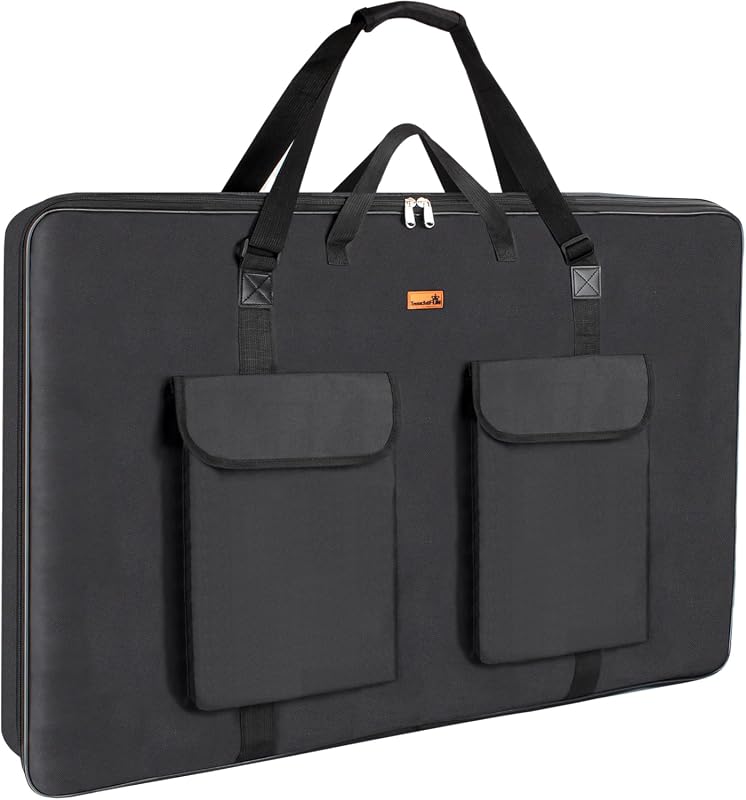
Portfolio cases displayed together to compare size, material, and style.
The best case depends on what you carry and why you carry it. A student showing class work, a photographer presenting prints, and a fine artist meeting a client may all need different levels of structure, protection, and visual polish.
Size, Capacity, and Sheet Protection
Start with the largest piece you need to carry, then choose a case that accommodates it without bending corners or forcing a tight fit. If your work includes mixed sizes, leave room for backing boards, sleeves, or interleaving sheets so pieces can lie flat instead of rubbing together.
Capacity should be realistic, not ambitious. Overstuffing a portfolio case can warp prints, crease paper, and make the presentation harder to navigate. A slimmer, better-edited set often reads as more professional than a bulky one packed to the edges.
Materials, Closure Type, and Archival Quality
Look closely at the manufacturer’s material description and care notes. “Archival” may refer to acid-free interiors, but the exact meaning can vary by model, liner, and inserts, so it is worth confirming the product details before buying.
Closure type also affects daily use. Zippers, buckles, straps, and magnetic closures each change how quickly you can open the case and how securely it stays shut during transport. For work that will be handled frequently, a closure that feels sturdy and easy to operate is usually more practical than one that looks elegant but slows down a presentation.
- Match the interior size to your largest portfolio piece
- Confirm whether sleeves, boards, or inserts are included
- Check whether the interior is acid-free or archival-grade
- Review the closure, handles, and shoulder strap options if portability matters
How to Organize Artwork Inside the Case
Once the case fits your work, the next step is arranging it so someone can understand your range quickly. The strongest portfolios feel edited, not crowded, and they guide the viewer from the most important piece to the supporting work.
Sequencing Pieces for Reviews, Interviews, or Client Meetings
Place your strongest or most relevant piece first, because many viewers make an early judgment from the opening spread. After that, sequence the work to show range with purpose: similar pieces can sit together, or you can alternate between finished work, process-driven pieces, and different media if that supports the conversation.
For a review or interview, the order should help you speak clearly about your choices. For a client meeting, lead with work that matches the client’s needs or aesthetic, then use the rest of the case to show flexibility. If you also keep digital references, a broader studio workflow can be easier to manage when paired with a consistent practice, as discussed in how to keep a consistent art practice at home.
Using Interleaving, Sleeves, and Labels
Interleaving sheets help prevent rubbing, smudging, and surface transfer, especially when you are carrying graphite, charcoal, pastel, or prints with delicate finishes. Sleeves can add another layer of protection, but they should not make the portfolio so stiff that pages become difficult to turn.
Labels are useful when you are carrying multiple series or sizes, but keep them simple. A discreet title page, section divider, or small tab can help the viewer navigate without making the case look cluttered. If you need to identify materials accurately, it can also help to know how to read an art supply label correctly so the descriptions you use in your portfolio stay consistent.
- Group similar scales together so the viewer can compare work easily
- Use one consistent labeling style throughout the case
- Keep the first few pieces especially polished, since they set the tone
Presentation Tips for a Professional First Impression
A portfolio case works best when the outside presentation and the inside sequence feel aligned. Even a simple case can look polished if you handle it calmly, keep the contents tidy, and open it in a way that gives the viewer confidence.
Matching the Case Style to Your Practice or Brand
The case style should support the kind of work you make. A minimal black case often suits contemporary portfolios, while a softer fabric or leather-like finish may feel more appropriate for boutique, editorial, or client-facing work. The point is not to match a trend, but to choose a look that doesn’t distract from the art.
If your practice is highly structured, a clean and understated case can reinforce that impression. If your work is more experimental, the case can still be refined, but it does not need to feel overly formal. The best choice is the one that makes your work appear deliberate.
Think of the case as the cover of a book: it should hint at the tone of the work inside without competing with it.
How to Handle, Open, and Display the Case Confidently
Carry the case with both hands if it is large or heavy, and set it down on a clean, dry surface before opening it. Open it slowly so pages do not shift or catch, and keep your hand near the leading edge of each sheet as you turn through the work.
In a meeting, clear a small area before you begin. If you are presenting to multiple people, angle the case so the viewer can see the work without crowding the pages. Confidence here is less about performance and more about control: smooth handling suggests that the contents have been thought through.
If you expect to present in a tight space, pre-select the exact sequence you want to show so you are not flipping through unnecessary pages in front of the viewer.
Where and When an Art Portfolio Presentation Case Works Best
Portfolio cases are useful anywhere artwork needs to stay protected while still being easy to review. Their value is highest in settings where first impressions matter and where paper, prints, or mounted pieces need to remain flat.
Students, Illustrators, Photographers, and Fine Artists
Students often need a case that is practical, affordable, and large enough to carry assignments safely. Illustrators may prefer a case that keeps drawings flat and easy to sort. Photographers usually need a layout that supports print protection and clean sequencing, while fine artists may care more about the case’s overall presentation and the way it supports a cohesive body of work.
For gift shoppers choosing tools for creatives, the same logic applies: the best fit depends on the recipient’s medium and how they present their work. If you are shopping broadly for an artist, you may also find how to choose a gift for an artist friend helpful for matching the case to the person’s habits rather than the occasion alone.
Studio, Gallery, Classroom, and Interview Settings
In a studio, the case can function as a sorting system for works in progress, finished pieces, and presentation-ready selections. In a gallery, it helps keep work clean while moving between conversations. In a classroom or critique setting, it can make it easier to share a curated selection without carrying loose sheets.
Interview settings call for the most restraint. Keep the case neat, easy to open, and not overloaded with extra material. If the room is small, a case with a tidy profile is often easier to manage than a large rigid format that dominates the table.
For travel or frequent commuting, portability can matter more than exterior polish. A lighter case that is easier to carry may be the better long-term choice if you move between campuses, studios, or meetings often.
Common Mistakes to Avoid When Using a Portfolio Case
Most problems come from trying to make the case do too much. If the portfolio is overcrowded, poorly sequenced, or not protected well enough, the presentation can feel rushed even when the work itself is strong.
Overfilling, Poor Protection, and Weak Visual Order
Do not pack every finished piece into the same case. A curated selection is easier to review and makes your strongest work stand out. Too many similar images can blur together, while too many different styles without a clear order can make the presentation feel unfocused.
Protection matters just as much as order. If sheets are sliding, rubbing, or bending, the case is not doing its job. Use sleeves, interleaving, or backing where needed, and remove anything that creates bulk without adding real protection.
- Edit down to a clear, purposeful selection
- Keep fragile surfaces separated from one another
- Review the order before every meeting or presentation
- Stuffing the case until pages bow or buckle
- Mixing unrelated work without a clear reason
- Using loose sheets that can scuff or crease in transit
Ignoring Weight, Portability, and Weather Exposure
A case that looks ideal in a studio may be awkward on a commute. Weight, handle comfort, and shoulder support all matter if you carry work for long distances. If the case is too heavy when full, you may end up leaving pieces behind or handling it less carefully.
Weather exposure is another overlooked issue. Rain, humidity, and sudden temperature changes can affect paper and some case materials, so keep the portfolio covered and avoid leaving it in a hot car or damp entryway. If the model has specific care instructions, follow those rather than guessing based on the exterior finish.
A portfolio case is not a climate-controlled storage system. For long-term protection, keep artwork away from moisture, direct sun, and unstable temperatures whenever possible.
Care, Maintenance, and Long-Term Storage
Good care extends the life of both the case and the work inside it. Even a well-made portfolio can fail to protect artwork if it is stored in poor conditions or left with damaged components.
Cleaning, Drying, and Safe Storage Conditions
Wipe the exterior gently according to the material type. Fabric, coated surfaces, and leather-like finishes may each require different care, so the safest approach is to check the manufacturer’s instructions before using water, cleaners, or conditioners. If the case becomes damp, let it dry fully before storing artwork inside again.
Store the case flat or upright in a stable, dry location where it will not be crushed. Avoid basements, attics, and areas with strong humidity swings if possible. For artists who keep multiple supplies organized in one place, a structured storage approach can also help the rest of the studio stay manageable, as in how to organise art supplies in a small space.
Replacing Damaged Sleeves, Corners, or Fasteners
When sleeves cloud, corners split, or fasteners stop closing securely, the case becomes less protective even if the exterior still looks fine. Replace worn parts when the model allows it, or retire the case if the damage compromises the contents.
This is especially important for portfolios that travel often. A broken closure or torn sleeve can expose work to bending, dust, or accidental contact. In storage-focused terms, maintenance is not cosmetic; it is part of the preservation strategy.
Value, Limitations, and Final Recommendation
A portfolio presentation case is worth buying when you need a repeatable way to protect and present artwork with less effort and more consistency. Its value comes from organization, not just appearance.
What Makes a Portfolio Case Worth Buying in 2026
In 2026, the most useful cases are still the ones that balance protection, clean presentation, and portability. Confirm the details that matter most for your work: interior size, archival claims, closure strength, handle comfort, and whether the layout supports the number of pieces you actually plan to carry.
The best purchase is usually the one that fits your real routine rather than your ideal one. If you present often, durability and easy access may matter more than a decorative exterior. If you store work long term, safer materials and flatter support surfaces may be more important than quick opening.
A mid-structure portfolio case with acid-free interiors, reliable closures, and enough room for sleeves is the most balanced choice for students, working artists, and client-facing presentations. It is not always the lightest option, but it usually offers the best mix of protection and professional appearance.
When a Different Presentation Format May Be Better
A portfolio case is not always the right answer. If you mainly show a few oversized pieces, a rigid presentation board, print folio, or custom transport solution may be easier to manage. If your work is primarily digital, a tablet-based presentation may be more practical than carrying heavy physical samples.
Choose a different format when the case adds more bulk than benefit or when your work needs a more specialized display method. The right system is the one that helps your art travel safely and look intentional when you open it.
Frequently Asked Questions