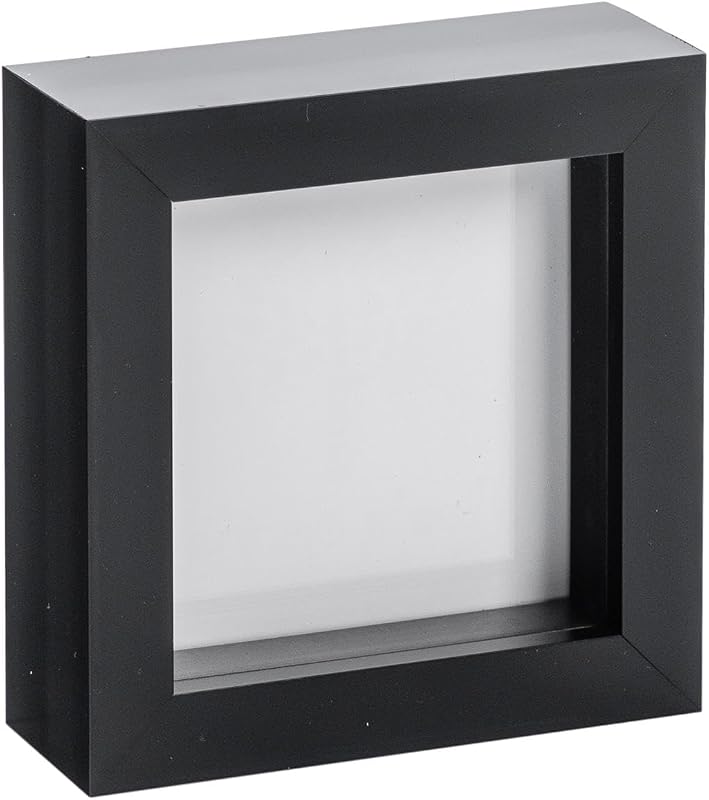
Can Canvas Be Framed Yes Here Is How to Do It Right

Yes, canvas can be framed — stretched canvas, canvas board, and canvas prints all work with the right frame style and depth. Floater frames suit stretched canvas best, while traditional and tray frames suit thinner panels and prints.
Can canvas be framed? Yes — and the honest answer is that almost any canvas surface, from a stretched gallery-wrapped painting to a thin canvas board or a rolled canvas print, can be framed successfully. What changes is not whether it is possible but which frame style, depth, and hardware suit the specific piece. Get those three things right and a frame makes a canvas look deliberate, protected, and finished. Get them wrong and the same frame can flatten the artwork, crowd the wall, or simply look like an afterthought.
This guide walks through the decisions in the order they actually matter: what framing a canvas means, how the major frame styles differ, how to size and hang the result, how to style it room by room, and what to check before you buy or commission anything.
- Measure depth first: Frame rabbet depth must equal or exceed the canvas depth, or the frame will.
- Floater frames for stretched canvas: They hide staples and stretcher edges without covering painted surfaces, with an even gap.
- Glazing is usually optional: Most stretched canvas is framed without glass; acrylic makes more sense for prints and.
- Hardware follows weight: D-rings for medium pieces, cleats or Z-bars for larger and heavier works, with ratings.
- Framing is a choice, not a requirement: A confident gallery-wrapped canvas with a painted edge can look better unframed.
Yes, Canvas Can Be Framed — Here’s the Short Answer
Canvas is a fabric surface stretched over a wooden or composite support. Because that support has depth, framing a canvas is less about enclosing a flat sheet and more about building a border that respects the object’s three-dimensional profile. That single fact explains nearly every rule that follows.
What “framing a canvas” actually means
Framing a canvas usually means one of three things. First, a floater frame: a shallow outer border that surrounds the canvas with a small visible gap, so the painted edges stay exposed. Second, a traditional or tray frame, where the canvas sits inside a moulding and the frame overlaps the front edge slightly. Third, a liner or slip, which is an inner border placed between the canvas and the outer moulding.
None of these require glass in the way a paper print does. The frame is doing structural and visual work, not sealing a flat surface behind glazing.
When a frame improves a canvas — and when it fights it
A frame helps when the canvas needs containment: when the edges are unfinished, when the image would otherwise float ambiguously on the wall, when the room’s architecture calls for a rectangular anchor, or when the piece will hang near a doorway, radiator, or high-traffic zone where edges take knocks.
A frame fights the canvas when the artwork already has a strong painted edge and a confident shape, or when the frame’s ornament competes with the image. Gallery-wrapped canvases with continued edge painting are often best left unframed. That is a stylistic judgment, not a rule, and it is entirely reversible.
How Canvas Framing Works: Styles, Materials, and Key Specifications

A stretched canvas mounted in a floater frame, showing the gap between canvas and frame.
Frame style is the first decision because it determines every measurement that follows. Choose the style, then measure to it — not the other way around.
Floater frames: the gallery standard for stretched canvas
A floater frame is built slightly larger and slightly deeper than the canvas, so the artwork appears to hover inside the border. The gap is typically small and even on all four sides; an uneven gap is the most visible flaw in an otherwise good installation.
This style suits stretched canvas best because it hides the staples and stretcher edges without covering any painted surface. It also reads as contemporary and quiet, which is why galleries favor it. If you want a deeper look at how these are constructed and compared, our guide to the best floating frames for canvas covers the trade-offs in more detail.
The “floater” concept exists because stretched canvas is a three-dimensional object. Traditional frames were designed for flat panels and paper, which is why they often pinch or hide the edges of a canvas.
Traditional and tray frames, linen liners, and when each suits a print or painting
Traditional mouldings work well on canvas board, canvas panels, and thinner canvas prints, where the surface is nearly flat and the frame can sit close without crushing anything. Tray frames — sometimes called float frames with a solid back — hold a canvas board or mounted print inside a shallow box, which is a clean solution for small works.
Linen liners sit between the canvas and the outer frame. They add a visual buffer, which helps when a heavily ornamented moulding would otherwise touch the painting. Liners are more common on older or more formal works than on contemporary canvas.
Stretcher bar depth, canvas thickness, and why measurements decide everything
Before ordering anything, measure three numbers: the width and height of the canvas face, the total depth from the front surface to the back of the stretcher, and the canvas thickness at the edge. Frame rabbet depth — the recess cut into the back of the moulding — must be at least as deep as the canvas, or the frame will not seat properly.
For floater frames, you also need the outer dimensions of the canvas plus the intended gap on each side. Sizes vary by manufacturer and by whether the canvas is a standard or custom size, so confirm the frame’s stated fitting range before purchase rather than assuming a nominal size will match.
Canvas depths are not standardized. Two canvases sold as the same nominal size can differ in stretcher depth by several millimeters, which is enough to change which frame fits. Measure the actual piece, not the label.
Glazing: when glass or acrylic belongs in front of a canvas — and when it does not
Most stretched canvas is framed without glazing. Canvas has a textured, slightly absorbent surface, and glass directly over it can create reflections that flatten the image and obscure brushwork. In humid rooms, glazing can also trap moisture against the canvas.
Glazing earns its place on canvas prints, giclée reproductions on canvas paper, and any canvas with a delicate or friable surface — pastel grounds, for instance. Acrylic is lighter and safer than glass for larger pieces. If you are weighing acrylic specifically, our article on art framed in acrylic explains where it makes sense.
Sizing a Framed Canvas: Proportions, Depth, and Wall Space
Framing changes the footprint of a canvas. A frame that is four inches wide adds eight inches to both the width and the height. That is a meaningful difference on a small wall, and it is easy to overlook when ordering.
Moulding depth versus canvas depth: getting the reveal right
The reveal is the amount of frame visible around the canvas edge. In a floater frame, the reveal is the gap; in a traditional frame, it is the overlap. Both should look intentional and even. A frame that is too shallow will not sit flush; a frame that is much deeper than the canvas can look hollow from the side.
How much frame width a canvas can carry before it looks crowded
As a styling guideline rather than a rule, narrow mouldings — roughly one to two inches — tend to suit small and medium canvases and modern interiors. Wider mouldings, three inches and up, can anchor a large canvas or a room with substantial architecture, but they compete with busy images.
The practical test: step back to your normal viewing distance. If the frame is the first thing you notice, it is too heavy for the artwork.
Sizing to sofas, beds, and console tables
A common interior-design guideline is to choose art that spans roughly two-thirds to three-quarters of the width of the furniture below it. On a sofa, that usually means a single large canvas or a pair rather than a scattering of small ones. Above a bed, a single wide piece or two matched verticals tends to read more calmly than a grid.
Console tables are a special case because the art often leans rather than hangs. Our guide to displaying framed art on a console table covers the depth and stability considerations that apply there.
| Frame Style | Best For | Key Consideration |
|---|---|---|
| Floater frame | Stretched canvas, gallery-wrapped paintings | Requires accurate outer dimensions plus gap |
| Tray frame | Canvas board, panels, small prints | Backing depth must match panel thickness |
| Traditional moulding | Thin canvas prints, mounted works | Rabbet depth and overlap must not crush edges |
| Liner plus moulding | Formal or older works, ornate settings | Adds width; recalculate total footprint |
Hanging a Framed Canvas: Wall Type, Hardware, and Spacing<
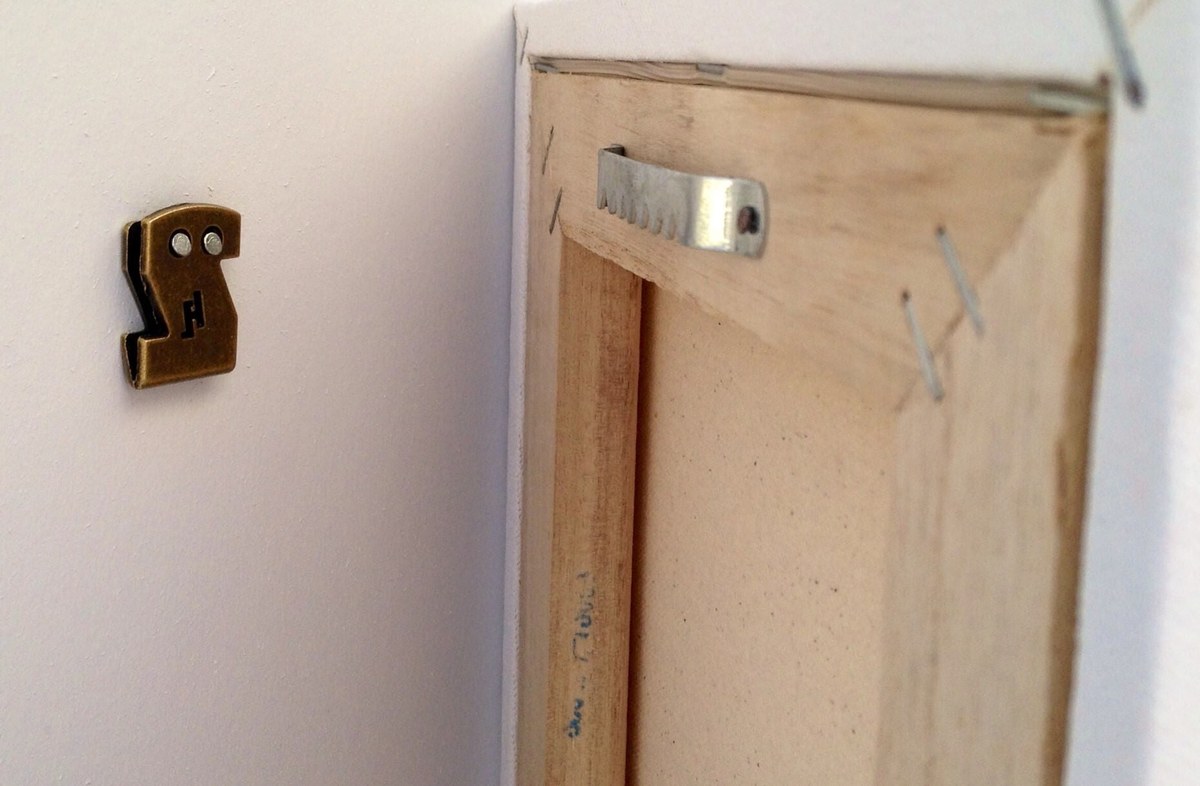
A framed canvas hangs from a wall hook and picture wire above a sofa.
A framed canvas hangs from a wall hook and picture wire above a sofa.
/h2>
A framed canvas is heavier than an unframed one, and the frame adds a rigid rectangle that can catch on things. Hardware choice should follow weight and wall construction, not habit.
Drywall, plaster, brick, and stud placement
Drywall generally accepts hollow-wall anchors within their stated weight ratings. Plaster is more brittle and often needs different anchors or a pilot approach. Brick and masonry require masonry bits and appropriate plugs. Wherever possible, locate a stud — but note that a stud may not fall where you need it, which is where adjustable hanging systems help.
For heavy pieces, mounted lighting, or anything where the wall’s construction is uncertain, consult a professional installer rather than guessing at capacity.
D-rings, wire, French cleats, and matching hardware to weight
D-rings fitted to the frame’s back are the most common solution for medium canvases. Picture wire strung between them is convenient but reduces stability, because the piece can swing and tilt. French cleats and Z-bar systems distribute load across the width of the frame and keep the piece flat against the wall, which is why they are preferred for larger or heavier works.
Always check the hardware’s stated weight rating and confirm that the frame itself can carry the load at its attachment points.
Attach two small adhesive bumpers to the bottom corners of the frame. They keep the canvas parallel to the wall, reduce rattling, and let air circulate behind the piece.
Height, spacing, and gallery wall layout formulas that hold up
The standard hanging height centers artwork at roughly eye level — commonly cited as 57 to 60 inches from the floor to the center of the piece, though this shifts with ceiling height and furniture. Above furniture, leave roughly six to ten inches between the top of the sofa or console and the bottom of the frame.
In a gallery arrangement, keep spacing consistent, usually two to three inches between frames, and treat the whole cluster as one shape. Lay it out on the floor first. Symmetrical grids read formal; aligned-center arrangements read calmer; salon-style clusters reward patience.
Styling a Framed Canvas Room by Room
The same framed canvas can look completely different depending on the room’s light, scale, and existing finishes. These are editorial styling suggestions, not fixed rules.
Living rooms and open-plan spaces
Open-plan rooms need larger pieces to hold their own against distance. A single substantial framed canvas often works better than several small ones, because it gives the eye one clear resting point. Lean toward quieter frame finishes — natural wood, matte black, brushed metal — so the artwork carries the color.
Bedrooms and quieter, lower-contrast walls
Bedrooms reward lower contrast. A frame that closely matches the wall tone, or a soft neutral wood, keeps the wall calm. Avoid glossy finishes that catch bedside lamp light and create glare in a room meant for rest.
Hallways, stairwells, and narrow walls
Hallways are viewing-at-close-range spaces, so smaller works and tighter spacing feel intentional rather than sparse. On stairwells, follow the pitch of the stairs with the bottom edge of the frames for a layout that reads as deliberate rather than accidental. Secure everything firmly — these are high-traffic zones.
Matching frame finishes to existing decor and hardware
You do not need to match every metal in a room, but you should avoid direct conflict in the same sightline. If your cabinet pulls and light fixtures are warm brass, a warm-toned frame will feel related. Cool chrome and nickel pair more naturally with cooler frame tones. Wood frames should relate to the room’s dominant wood — flooring, furniture, or trim — rather than to a wood that appears nowhere else.
What to Look For — and What to Avoid — in Frames and Framing Services
Frame quality is mostly about construction, not brand. A few inspection points tell you most of what you need to know.
Materials, finishes, and construction signals worth checking
Look for joined corners that meet tightly with no visible gap or filler. Check that the finish is even inside the rabbet, not just on the visible face. Solid wood and quality composite mouldings hold up better than thin, hollow profiles. For floater frames, confirm the frame is deep enough for your stretcher and that the gap will be consistent.
Common mistakes that undo an otherwise good frame
The most frequent errors are buying a frame that is too shallow for the canvas depth, ordering a nominal size that does not match the actual canvas dimensions, choosing a frame width that overwhelms a small piece, and hanging with wire when a cleat would be safer. Each of these is avoidable with a tape measure and five minutes of checking.
- Actual canvas width, height, and total depth measured with a tape
- Frame rabbet depth equal to or greater than canvas depth
- Total framed footprint calculated, including frame width on all sides
- Weight known, with hardware rated above it
- Return policy and fitting range confirmed with the seller
DIY framing versus professional framing: honest trade-offs
DIY framing works well for standard-size canvases, simple floater frames, and anyone comfortable with basic assembly. It costs less and gives you control. Professional framing makes more sense for non-standard sizes, valuable or fragile works, and anything needing a custom liner or a specific finish match.
- Lower cost for standard sizes
- Full control over finish and timing
- Straightforward with pre-made floater frames
- Higher cost, longer turnaround
- Better for odd sizes and valuable works
- Handles liners, mounting, and finish matching
If you are going the DIY route, our step-by-step guide on how to frame a canvas covers assembly order and the measurements that matter most.
Care, Maintenance, and Long-Term Value
A framed canvas is easier to maintain than an unframed one, but it is not maintenance-free. Small habits protect both the artwork and the frame.
Cleaning, handling, and dusting without damaging the surface
Dust the frame with a dry, soft cloth. For the canvas itself, use a dry, soft brush or a low-suction vacuum with a brush attachment held slightly away from the surface. Never spray cleaner onto the canvas, and never rub a painted surface with a damp cloth. Lift framed pieces by the frame’s sides, not by the top edge or the wire.
Avoid solvent-based cleaners, abrasive pads, and any liquid applied directly to canvas. If the surface is soiled or flaking, consult a conservator rather than treating it yourself.
Light, humidity, and storage considerations
Direct sunlight fades pigments and can dry or crack the canvas over time. Humidity swings are harder on the stretcher than on the fabric, causing expansion and slackening. Keep framed canvases off exterior walls where condensation is likely, and away from heat sources.
If a piece comes down, store it vertically rather than flat, wrapped so the surface is not in contact with anything rigid. Our guide to storing canvas paintings at home without damage covers padding and orientation in detail.
Does framing affect resale, insurance, or perceived value?
Framing can affect perceived value and, in some cases, insurability. A well-framed work generally presents better in a sale or appraisal context, and a documented frame may be included in an insurance valuation. That said, framing does not increase the intrinsic value of the artwork itself, and an inappropriate frame can detract. For anything of significant value, confirm with your insurer what documentation they require.
Julian Mercer’s Verdict: When Framing a Canvas Is Worth It
Framing a canvas is worth it when the frame solves a real problem: unfinished edges you want to hide, a wall that needs a defined anchor, a piece in a high-traffic area that needs protection, or a canvas print that benefits from visual weight. In those cases, a floater frame is usually the safest and most flattering choice, and the measurement work is straightforward.
It is not worth it when the canvas already has a strong painted edge and a confident presence, or when you would be framing purely out of habit. Leaving a good gallery-wrapped canvas unframed is a legitimate choice, not an oversight.
Whatever you decide, measure first, match the frame depth to the canvas depth, and choose hardware rated for the weight. Those three steps prevent nearly every problem people run into — and they cost nothing but a few minutes with a tape measure.
Frequently Asked Questions