Canvas Frame Depth Guide How to Choose the Perfect Depth

Canvas frame depth is the distance between the wall and the front face of the artwork, usually ranging from about 1.5 inches to 3 inches or more. Choose a shallower profile for bedrooms, hallways, and gallery walls, and a deeper profile for large walls in open-plan rooms.
This canvas frame depth guide explains how the distance between your wall and the face of your canvas changes the way art looks, feels, and fits in a room. Depth rarely shows up in flat product photos, yet it is one of the first things you notice in person — and one of the easiest details to get wrong when buying online.
- Depth is visual weight: A deeper frame adds shadow and presence, while a shallow frame keeps the focus.
- Common profiles: 1.5-inch gallery, 2-inch standard, and 3-inch deep wraps cover most canvas options.
- Match the room: Use shallow depths in bedrooms, hallways, and gallery walls; reserve deep profiles for open-plan.
- Check the specs: “Gallery wrap” means different depths at different retailers, so confirm the exact inches before.
- Hang safely: Deep frames weigh more, so use anchors rated for the combined weight and consider.
What Is Canvas Frame Depth and Why Does It Matter?
Canvas frame depth is the measurement from the back of the stretcher bars to the front surface of the canvas — in other words, how far the artwork stands off the wall. On a framed canvas, that distance is determined by the thickness of the wooden support bars and any additional frame profile wrapped around them.
The Short Answer: Depth Changes the Entire Look of Your Art
A shallow canvas sits close to the wall like a poster in a frame; a deep canvas projects into the room like a sculptural object. The same print in a 1.5-inch profile and a 3-inch profile reads as two completely different pieces — one quiet and graphic, the other bold and dimensional. Depth also changes how large the art feels. A deeper edge adds physical bulk, so a modestly sized canvas can look far more substantial than its measurements suggest.
How Depth Affects Light, Shadow, and Perceived Size
When light hits a deep canvas, the sides cast a shadow across the wall, creating a crisp outline that visually separates the art from its background. Shallow canvases produce a much softer shadow, which makes the piece feel more integrated with the wall. That shadow is not a flaw — it is the main styling tool depth gives you.
Depth also changes perceived size from across a room. A deep wrap expands the silhouette of the artwork, while a shallow profile keeps the visual weight closer to the printed image. If you are trying to fill a large wall without buying a bigger print, a deeper profile can help the piece carry more presence.
Before you order, hold a cardboard box or a stack of books against the wall at the depth you are considering. Live with that mock-up for a day — you will quickly see whether the added projection feels dramatic or overpowering in your space.
Standard Canvas Frame Depths: A Quick Reference
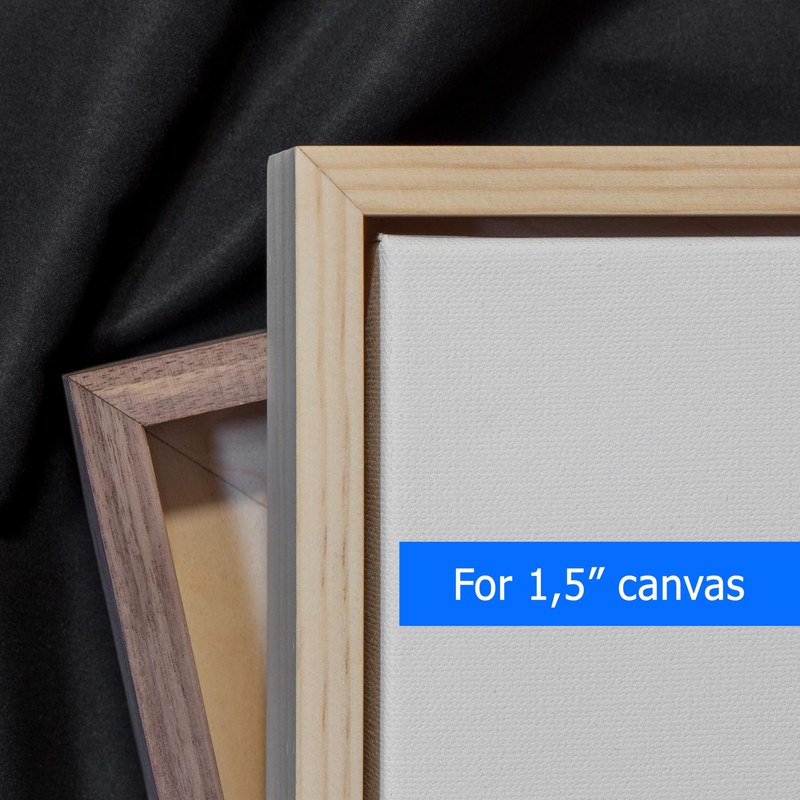
Standard canvas frame depths compared side by side with measurements.
Most canvas prints and frames fall into three common depth categories. These are general industry conventions, not universal standards — always check the exact measurement on the product listing before you buy.
The Gallery Profile (1.5-Inch Depth)
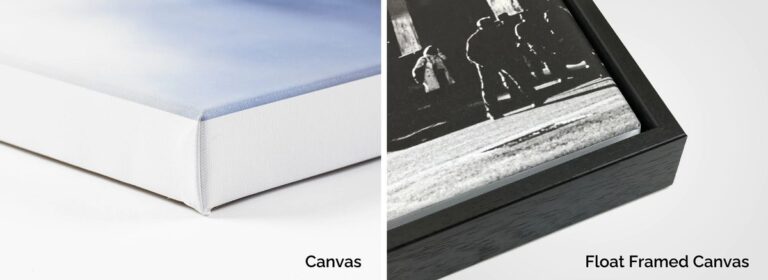
This is the most common depth for ready-made canvas prints. The canvas wraps around the sides of the stretcher bars, so it can hang without a separate frame. It is light, easy to mount, and works well in almost any room. If you want the canvas to appear to float in front of the wall with a visible gap around the edges, a floating frame adds that effect — our floating frame for canvas DIY guide shows how the construction works.
The Standard Wrap (2-Inch Depth)
Often called a standard wrap or museum wrap, a 2-inch profile gives the sides a little more surface area. That extra edge is useful when the image continues around the sides rather than ending at the front face. A 2-inch depth is a good middle ground: more presence than a gallery profile, but still shallow enough to hang in a hallway or above furniture without feeling bulky.
The Deep Wrap (3-Inch and Above)
Deep wraps are the statement option. A 3-inch or deeper profile creates a pronounced shadow, makes the piece feel almost like an installation, and is frequently used for large abstract or landscape prints. The trade-off is weight and projection. Deep canvases sit farther from the wall, so they need sturdier hardware and more careful placement.
Depth measurements vary by retailer, brand, and print size. A listing that says “gallery wrap” at one shop may measure 1.25 inches, while another uses 1.5 inches. Always confirm the exact dimension in inches before comparing options.
Choosing the Right Depth for Your Room and Decor
Room function, wall size, and furniture height all matter more than personal taste alone. Use the room as your starting point and let the depth follow.
Living Rooms and Open-Plan Spaces
Open-plan rooms reward depth. Because you often view art from across the room, a 2-inch or 3-inch profile gives the piece enough presence to hold its own against large sofas and tall ceilings. A shallow 1.5-inch canvas can look lost on a big wall unless the print itself is very large. For oversized canvases above a sofa, a deep wrap also shortens the visual distance between the art and the viewer, making the space feel more intimate.
Bedrooms and Intimate Settings
Bedrooms call for calm, and deep frames can feel too assertive above a bed or dresser. A 1.5-inch gallery profile keeps the focus on the image itself, which suits soft, muted artwork. If you love the depth look, use a single deep piece rather than several — one sculptural canvas can anchor the room without making it feel crowded.
Hallways, Staircases, and Narrow Walls
In narrow spaces, depth is a double-edged sword. A deep canvas projects into the walking path and can make a tight hallway feel even tighter. It also casts shadows that change throughout the day as people pass by. Stick to 1.5-inch profiles in corridors and stairwells unless the wall is unusually wide.
Deep vs. Shallow Frames: Benefits and Limitations<

A deep frame stands taller than a shallow frame when viewed from the side.
A deep frame stands taller than a shallow frame when viewed from the side.
/h2>
There is no universally correct depth — only the right depth for a given wall, room, and artwork. Here is an honest look at what each does well and where it falls short.
What Deep Frames Do Well and Where They Fall Short
- Adds sculptural presence and a dramatic cast shadow
- Makes smaller prints feel more substantial
- Strong fit for modern, industrial, and open-plan interiors
- Heavier and harder to hang securely
- Can overwhelm narrow hallways and small rooms
- Requires more wall clearance and careful lighting
What Shallow Frames Do Well and Where They Fall Short
- Light, easy to hang, and versatile across many decor styles
- Keeps visual focus on the artwork, not the frame
- Ideal for gallery walls, bedrooms, and tight spaces
- Can look flat or underwhelming on a large, empty wall
- Produces minimal shadow, so it offers less dimensional interest
- Small prints may feel lost in open-plan rooms
Before you decide, think about how the piece will be finished. A canvas with a shallow profile can always be mounted inside a separate frame later — our guide on how to frame a canvas walks through the options if you change your mind after purchase.
Styling Ideas: Using Depth to Elevate Your Walls
Once you understand the visual weight of each profile, depth becomes a styling tool rather than a technical spec.
Creating a Gallery Wall with Mixed Depths
A gallery wall made entirely of 1.5-inch canvases looks clean and cohesive. Adding one or two 2-inch or 3-inch pieces introduces dimension, but only if you keep the spacing consistent — mixed depths already create visual rhythm, so irregular gaps will make the wall feel chaotic. When you combine different sizes as well as depths, proportions matter even more; our guide on how to mix frame sizes for a gallery wall explains how to plan the layout before you start hanging.
Pairing Frame Depth with Furniture and Textiles
Match the depth to the weight of your furniture. Chunky upholstery, dark wood, and textured linens pair naturally with deep wraps, while slim metal legs, light oak, and flat-weave textiles suit shallow profiles. If you want to soften a deep canvas in a minimalist room, hang it above a low, long console so the horizontal line of the furniture balances the projection of the art. For a subtle finishing touch, add a wall-mounted picture light — the raking light across the sides of the frame turns the depth itself into part of the display.
Common Mistakes to Avoid When Selecting Frame Depth
Ignoring the Scale of the Wall and the Artwork
A deep frame cannot fix a print that is simply too small for the wall. Depth adds presence, but it does not replace size. Measure the wall, mark the intended footprint with painter’s tape, and check the depth against that footprint before you order.
Overlooking the Viewing Distance
Depth is most visible from a short to medium distance. From across a large room, a 1.5-inch and a 2-inch profile look nearly identical. If most of the viewing happens from far away, spend your budget on a larger print rather than a deeper frame.
Forgetting About Lighting and Glare
Deep canvases create strong shadows, and those shadows change with the light. A piece hung near a window will cast a different shadow at noon than at dusk, which can be charming or distracting depending on the room. Shallow profiles are safer in spaces with unpredictable or direct lighting because they produce almost no shadow of their own.
- Measure the exact depth in the product listing before buying
- Test the projection with a mock-up at home first
- Choose deeper profiles for large walls and open-plan rooms
- Don’t assume “gallery wrap” means the same depth everywhere
- Don’t hang deep canvases in narrow walkways
- Don’t mix depths on a gallery wall without keeping spacing even
Hanging Hardware, Wall Types, and Spacing
Wall Types and the Right Hardware for Each
Shallow canvases are light enough for a simple nail or picture hook in most walls. Deep canvases weigh noticeably more because the thicker stretcher bars add wood, so the hanging method matters. On drywall, use a wall anchor rated for the combined weight of the canvas and frame; on plaster or concrete, you will need masonry anchors or a hammer drill. For oversized or heavy deep-wrap pieces, a professional installer is the safest option.
Always check the weight limit of your wall anchor before hanging a deep canvas. A 3-inch profile can add significant weight to a large print, and a failed anchor can damage both the wall and the artwork. If you are unsure, consult a professional installer.
Spacing and Layout Guidelines for Deep Frames
Deep frames need more physical clearance than shallow ones. Leave at least 3 to 4 inches between a deep canvas and any adjacent furniture, molding, or doorway so the projection does not feel cramped. On a gallery wall, keep the gaps between frames consistent — 2 to 3 inches works well for most layouts — and place deeper pieces toward the outer edges or center, depending on the visual weight you want. Small rubber bumpers on the lower corners keep the canvas from shifting against the wall and protect the surface from scratches; our guide to the best picture frame bumpers to stop slipping covers the options.
Care, Maintenance, and Final Recommendation
Keeping Deep and Shallow Frames in Top Condition
Dust the top edges and sides of the canvas regularly, because deep wraps collect dust on their ledges. Use a soft, dry microfiber cloth and avoid water or cleaning sprays, which can stain the canvas. Keep both deep and shallow pieces out of direct sunlight to prevent fading, and check the hanging hardware every few months to make sure nothing has loosened.
Our Verdict: Which Depth Should You Choose?
Start with the room, then the wall, then the print. For most homes, a 2-inch standard wrap is the safest all-round choice: it has more presence than a gallery profile without the weight and clearance demands of a deep wrap. Choose a 1.5-inch gallery profile for bedrooms, hallways, and gallery walls. Choose a 3-inch or deeper profile only for large walls in open-plan rooms where the art can project freely and the hardware can support it.
If you are still deciding between two depths, order the deeper option only when you have the wall space and the lighting to let it shine. When in doubt, the shallower profile is the easier one to live with — and the easier one to reframe later if your taste changes.
Frequently Asked Questions