Textile Preservation Boxes vs Plastic Storage Bins Showdown

Preservation boxes are the safer choice for heirloom and natural-fiber textiles because they are breathable, acid-free, and pest-resistant. Plastic bins work well for sturdy, everyday items in climate-controlled rooms when moisture is carefully managed.
Choosing between textile preservation boxes vs plastic storage bins comes down to one question: are you protecting fabric for the long haul or just tidying it away for a season? Both options keep textiles out of sight and stack neatly in a closet, but they behave very differently over time. This guide breaks down when archival boxes are worth the investment and when a plastic bin is perfectly acceptable.
- Heirlooms win with boxes: Acid-free, breathable construction prevents yellowing, brittleness, and mildew.
- Plastic has a place: Polypropylene bins suit sturdy, seasonal items in dry, climate-controlled spaces.
- Moisture is the enemy: Sealed plastic traps dampness; archival boxes let fabric breathe.
- Preparation matters: Clean, fully dry, and wrap textiles in acid-free tissue before storing.
- Check yearly: Refold along new lines, refresh tissue, and inspect for pests or dampness annually.
The Verdict Up Front: Which Storage Wins?
For heirloom garments, quilts, wedding gowns, and any natural-fiber textile you intend to keep for years, textile preservation boxes are the safer choice. Their breathable, acid-free construction protects fabric from chemical breakdown and moisture buildup in ways that sealed plastic containers cannot. For everyday clothes, sturdy synthetics, and items you will rotate in and out regularly, a plastic bin offers convenience at a fraction of the cost.
Why Preservation Boxes Are the Safer Long-Term Bet
Archival boxes are built from pH-neutral, lignin-free board that buffers against acid migration from the box itself and from the environment. Because they are not airtight, they allow moisture to escape gradually, preventing the condensation and mildew risk that plague sealed containers. When paired with acid-free tissue paper, they create a stable microclimate that slows yellowing, embrittlement, and fiber breakdown — the main enemies of stored fabric.
When Plastic Bins Are Still a Reasonable Choice
Plastic bins are not universally bad. For items you actually use — seasonal clothing that rotates out every few months, blankets for the guest room, or durable synthetic fabrics that resist moisture — a quality polypropylene bin is a practical, budget-friendly option. The key is knowing when your textiles are valuable enough to demand archival materials and when they are not.
Plastic bins can work well in a climate-controlled bedroom closet where temperature and humidity stay steady. The risk rises sharply in garages, attics, and basements, where temperature swings create condensation inside sealed containers.
Why Textiles Need Specialized Storage

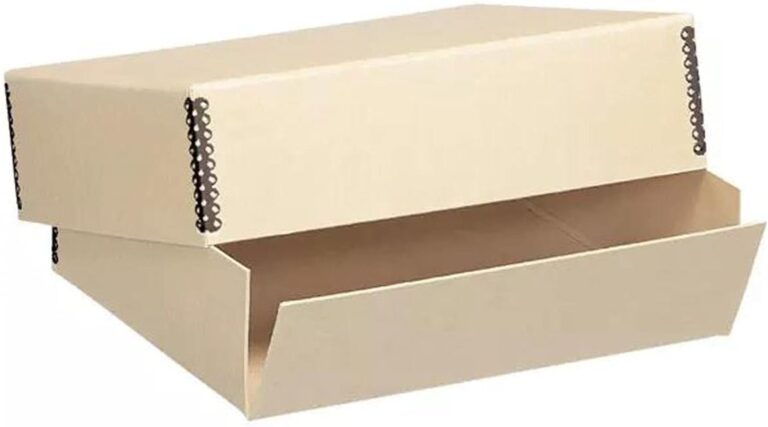
Archival box and plastic bin side by side showing different storage approaches for fabrics.
Textiles are among the most fragile household possessions. Wool, silk, cotton, and linen are protein and cellulose fibers that react to heat, light, moisture, and airborne pollutants. Unlike ceramics or metal, fabric is porous and absorbs whatever surrounds it — including the chemicals in cheap storage containers. Understanding that vulnerability is the first step in choosing the right box.
The Hidden Risks of Plastic: Off-Gassing, Moisture, and Pests
Many plastics contain plasticizers and stabilizers that slowly release volatile compounds over time. PVC in particular is known for off-gassing chemicals that can yellow or stiffen nearby fabric. Even “inert” plastics create a second, less obvious problem: an airtight seal traps any moisture present at the moment of storage. If a garment goes into a bin even slightly damp, that moisture has nowhere to go, creating ideal conditions for mildew and mold. Pests are also a consideration — many insects can chew through thin plastic, and dark, undisturbed bins make inviting nesting spots.
What Archival Standards Require: Acid-Free, Lignin-Free, and Breathable
Archival storage standards center on three principles. Acid-free materials are manufactured with a neutral pH so they do not introduce acids that degrade fibers over time. Lignin-free board removes the wood compound that causes paper and cardboard to yellow and crumble. Breathability allows the fabric to “breathe,” letting moisture escape while still providing a barrier against dust and light. These are the features you should look for in acid-free storage boxes for textiles, and they are precisely what most plastic bins cannot offer.
Textile Preservation Boxes: What to Look For, Benefits, and Limitations
Not every box sold as “storage” qualifies as archival. True textile preservation boxes are purpose-built, and their quality varies by manufacturer. Before buying, verify the materials and construction details so you know exactly what you are getting.
Key Materials and Specifications: pH-Neutral Boards, Archival Tissue, and Metal Corners
Look for boxes made from pH-neutral, lignin-free board, ideally buffered with an alkaline reserve to neutralize acids over time. Unbuffered versions exist for certain fabrics and should be chosen when a manufacturer recommends them. Archival tissue paper, used to wrap or interleave the textile, should also be acid-free and lignin-free. Metal corners reinforce the box for stacking, and a well-fitted lid keeps dust out without creating an airtight seal.
Benefits: Long-Term Stability, Stackability, and Aesthetic Appeal
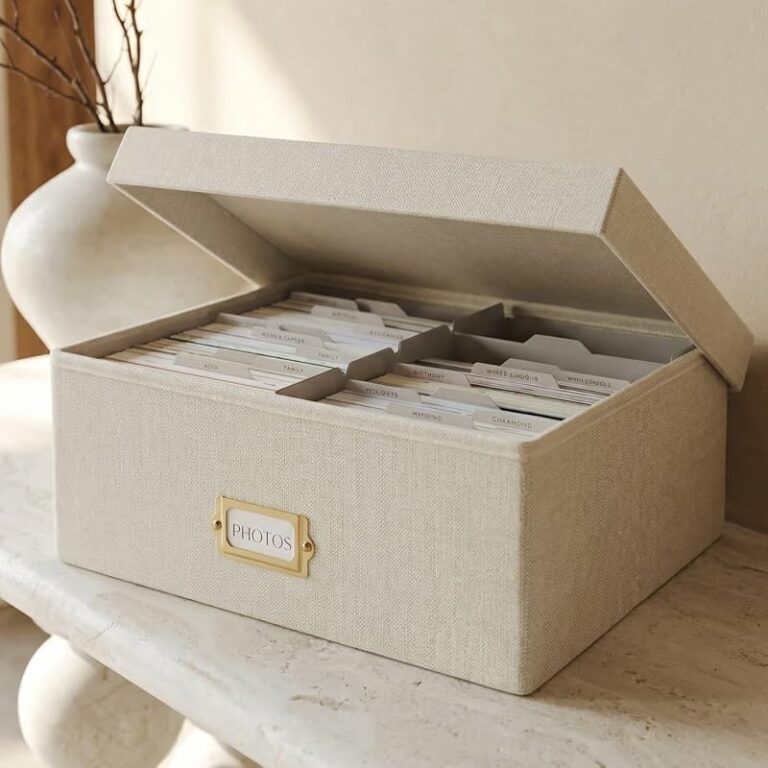
The primary benefit of a preservation box is longevity. Fabrics stored properly in archival boxes can last decades without visible degradation. The sturdy construction allows safe stacking, protecting contents from crushing. And because most archival boxes use a clean, natural kraft or white finish, they look noticeably better on open shelving than a pile of colored plastic bins.
Limitations: Cost, Space, and the Need for Climate Control
Archival boxes cost several times more than comparable plastic bins, and the expense multiplies when you need tissue, labels, and multiple sizes. They are also bulkier and less space-efficient than collapsible plastic bins. Perhaps most importantly, they are not a magic shield: even the best preservation box cannot compensate for a damp basement or a scorching attic. For the best results, they need a stable, moderate environment to do their job.
- Acid-free, lignin-free construction prevents chemical degradation
- Breathable design allows moisture to escape
- Stackable, durable, and visually clean on open shelving
- Higher upfront cost per box
- Takes up more space than collapsible bins
- Still requires a reasonably stable climate to work well
Plastic Storage Bins: When They Work and When They Don’t<

Plastic bin with condensation on the lid, showing moisture risk for textiles.
Plastic bin with condensation on the lid, showing moisture risk for textiles.
/h2>
Plastic bins dominate the storage market for good reason: they are cheap, lightweight, and waterproof. The question is whether those advantages matter for the textile you are storing. The answer depends largely on the type of plastic and the storage location.
Choosing the Right Plastic: Polypropylene vs PVC and Other Additives
If you choose plastic, polypropylene (often marked with recycling code #5) is the safest common option because it is relatively inert and contains fewer plasticizers. Avoid PVC (code #3), which is more prone to off-gassing, and be wary of bins with a strong chemical smell — that odor is a sign that volatile additives are present. Check the bottom of the bin for the recycling code before committing.
Benefits: Affordability, Water Resistance, and Visibility
Plastic bins win decisively on cost and convenience. They are inexpensive enough to buy in quantity, they resist water spills and basement dampness from outside, and clear versions let you see the contents without lifting a lid. For short-term rotation of everyday textiles, these practical advantages are hard to argue with.
Limitations: Trapped Moisture, Chemical Transfer, and Pest Access
The same airtight seal that keeps water out also traps water in. Textiles stored in plastic have no way to release moisture, making them vulnerable to mildew if stored even slightly damp. Chemical transfer from plasticizers remains a concern with lower-quality plastics, and thin bins can be chewed through by rodents, giving pests easy access to your fabrics.
Never store damp or freshly laundered textiles in a sealed plastic bin. Even slight residual moisture can cause mildew within weeks, permanently staining and weakening the fabric. Always air-dry completely before sealing.
Head-to-Head: Preservation Boxes vs Plastic Bins
To make an informed choice, compare both options against the criteria that actually matter for textile storage. Each option excels in different areas, and knowing those differences is what separates a wise purchase from an expensive mistake.
Evaluation Criteria: Moisture Control, Chemical Stability, Durability, Cost, and Accessibility
Five factors determine which option fits your situation. Moisture control measures how well the container handles humidity. Chemical stability covers whether the container itself can damage the fabric. Durability refers to how well it protects against crushing, pests, and water. Cost includes both the upfront price and the long-term value of the items inside. Accessibility describes how easily you can see and reach your stored textiles.
Side-by-Side Summary: Where Each Option Excels and Falls Short
| Criterion | Preservation Boxes | Plastic Bins |
|---|---|---|
| Moisture control | Breathable, allows gradual moisture release | Sealed, traps moisture inside |
| Chemical stability | Acid-free and lignin-free | Varies; PVC and low-grade plastics off-gas |
| Durability | Strong board, metal corners, stackable | Lightweight but can crack; thin plastic is rodent-chewable |
| Cost | Higher per unit | Low per unit, easy to scale |
| Accessibility | Opened by lifting lid; opaque | Clear options allow quick visibility |
Who Should Choose What: Room-by-Room Storage Guide
The right answer depends as much on your space as on the textile itself. A walk-in closet, a humid basement, and a temperature-fluctuating attic all create different conditions that favor one option over the other.
Bedroom and Closet: Everyday Rotation vs Seasonal Keepsakes
In a climate-controlled bedroom closet, plastic bins are perfectly reasonable for off-season clothing, extra bedding, and items you reach for regularly. But for the christening gown, the vintage handbag, or the handmade quilt you hope to pass down, switch to preservation boxes. These are exactly the best textile storage boxes for archival art preservation and are worth the space they occupy.
Attic, Basement, and Archive Use: Climate Considerations and Styling Ideas
Attics and basements are the most dangerous places for textiles, regardless of container. Temperature swings cause condensation inside sealed plastic, and humidity invites mildew in archival paper. If you must store fabric in these spaces, place preservation boxes on shelves rather than directly on concrete floors, and avoid plastic bins altogether for anything you value. For large collections, such as acid-free quilt storage boxes, keep the boxes elevated and check them seasonally. On open shelving, matching archival boxes create a clean, gallery-like look that plastic bins rarely achieve.
Common Storage Mistakes and How to Avoid Them
Even the correct container cannot save a textile that was stored incorrectly. Preparation is half the battle, and ongoing maintenance is the other half.
Preparation Mistakes: Cleaning, Folding, and Wrapping Textiles Before Storage
Never store textiles without cleaning them first. Food residues and body oils attract pests, and stains can set permanently over years of storage. Wash or dry-clean according to the care label, then ensure items are completely dry. Fold garments loosely, using acid-free tissue paper to cushion creases and prevent sharp fold lines. For delicate pieces, wrap them fully in tissue before placing them in the box. A wedding gown, for example, should be handled carefully and stored in an acid-free wedding gown storage box rather than crushed into a bin.
Maintenance Tips: Monitoring Humidity, Refreshing Tissue, and Annual Checks
Stored textiles should be checked at least once a year. Open the boxes, inspect for pests or damp spots, and refold items along different lines to prevent permanent creases. Replace tissue that has yellowed or become crushed. If you live in a humid region, monitor the humidity level of your storage area and consider a dehumidifier for basements or closets that feel damp.
Refold stored garments along different lines each year. Creases that sit unchanged for years can become permanent, so rotating the fold position keeps fabric fibers flexible and damage-free.
Alternatives, Value, and the Final Recommendation
Preservation boxes and plastic bins are not the only options on the market. Understanding the alternatives clarifies what each main choice is really offering.
Alternatives Worth Considering: Cedar Chests, Vacuum Bags, and Muslin Wraps
Cedar chests offer natural pest deterrence and a beautiful furniture piece, but the wood’s natural acidity can damage textiles over time, so they require an acid-free liner. Vacuum bags compress volume dramatically, but the extreme pressure can crush fibers and trap moisture, making them risky for anything but sturdy, short-term storage. Muslin wraps offer breathable protection inside furniture drawers or other containers, but they lack rigidity and block only dust, not pests or moisture. Each alternative has a niche, but none matches the combination of stability and protection that archival boxes provide for delicate fabrics.
Evidence Limitations: What This Guide Is and Isn’t Based On
This guide is based on established archival preservation principles and industry-standard materials specifications, not on laboratory testing performed by this publication. Specific outcomes can vary based on your local climate, the condition of the textile, and the exact materials used by individual manufacturers. Prices, availability, and material claims should be verified directly with the retailer or manufacturer before purchase.
The Final Verdict: Matching Storage to Your Textiles and Your Space
Choose preservation boxes for anything you want to keep for years — heirlooms, keepsakes, delicate fabrics, and sentimentally valuable pieces. Choose plastic bins for sturdy, everyday items in a climate-controlled room where moisture is not a concern. The rule of thumb is simple: the more you care about the textile, the more its container should be made of acid-free, breathable materials.
- Preservation boxes win for heirloom and natural-fiber textiles because they are breathable, acid-free, and pest-resistant.
- Plastic bins are fine for sturdy, short-term storage in climate-controlled spaces, especially synthetic fabrics.
- Clean, dry, and wrap textiles before storage, and check stored items at least once a year.
- Check recycling codes, avoid PVC, and verify archival material claims before buying either option.
Frequently Asked Questions