How To Frame A Canvas: Complete Artist’s Guide: Complete Artist’s Guide

Frame a canvas by choosing a style that suits the artwork, measuring carefully, and mounting it without pressing on the stretched surface. The right frame improves the look, protects the edges, and helps the piece feel finished in the room.
Framing a canvas is one of those finishing steps that can quietly transform a room. Done well, it gives the artwork presence, protects the edges, and helps the piece feel intentional rather than temporary.
- Frame style matters: Floating, wood, and metal finishes each change the artwork’s mood.
- Measure first: Canvas width, height, and depth determine a secure fit.
- Protect the surface: Avoid pressure on paint, corners, and textured edges.
- Match the room: Choose a frame that suits the interior, not just the art.
- Care extends life: Keep framed canvases away from harsh sun, humidity, and heat.
Why Framing a Canvas Matters in 2026 Interiors
In today’s interiors, canvas art often serves as the visual anchor in a room. A frame can sharpen that role, making the work feel more grounded against textured walls, layered shelving, or softly lit corners.
It is also a practical choice. A frame can help shield the stretched edges from scuffs and reduce the sense that a canvas is floating awkwardly without context.
How a frame changes the mood, scale, and finish of a canvas
A frame changes more than the borders of the artwork. It can make a small canvas feel more substantial, a bold abstract feel more polished, or a quiet landscape feel more complete.
Dark wood often adds warmth and seriousness, while slim metal or pale painted finishes can keep the look light and contemporary. The same painting can read as relaxed, formal, or gallery-like depending on the frame.
What readers usually want: protection, polish, and a more gallery-worthy look
Most people looking into how to frame a canvas want three things: a cleaner finish, a bit of protection, and a result that feels worthy of display. Those goals are especially common for gifted art, original work, and pieces meant to live in visible spaces.
If you are curating a home with books, art, and layered decor, framing helps a canvas hold its own. For more display ideas, see our guide on how to display framed art on a console table.
Choosing the Right Frame Style for the Artwork
The best frame is not always the most ornate or expensive one. It is the frame that suits the artwork’s mood, the room’s palette, and the way you want the piece to be read from across the space.
Floating frames for contemporary paintings and stretched canvases
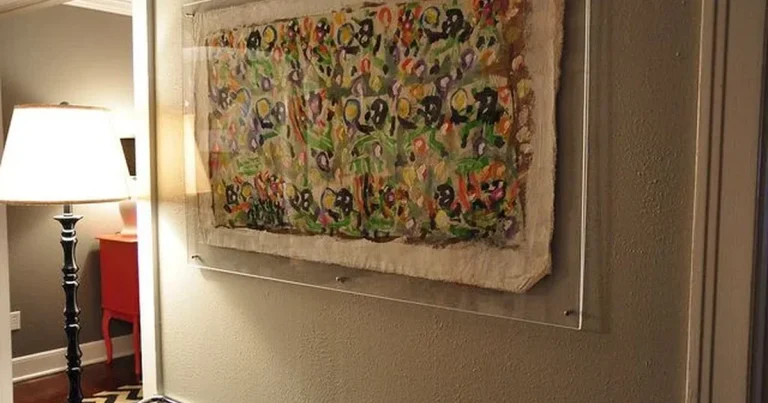
Floating frames are a favorite for stretched canvases because they create a slim visual gap between the artwork and the frame. That small shadow line gives the canvas a clean, modern finish without covering the edges completely.
This style works especially well for contemporary abstracts, bold color fields, and minimal compositions. It keeps the work feeling like art, not decoration.
Wood, metal, and painted finishes: matching tone, texture, and subject matter
Wood frames usually bring warmth and softness, especially in rooms with natural textures, linen upholstery, or bookshelves. Metal frames tend to feel sharper and more architectural, which suits modern interiors and graphic artwork.
Painted finishes can bridge both worlds. A muted black, ivory, or clay-toned frame can echo the subject matter without overwhelming it. If you are building a more cohesive creative space, our article on how to set up a home art studio space may help with the surrounding environment.
When to let the canvas edge show versus when to conceal it
Leaving the canvas edge visible can be beautiful when the sides are painted, textured, or part of the composition. It preserves the handmade feel and works well for expressive, painterly pieces.
Concealing the edge is often better when the sides are raw, unfinished, or visually distracting. A frame can bring order to the piece and make it feel more resolved on the wall.
Before choosing a frame, stand back and look at the canvas from the distance it will usually be viewed. The best frame often disappears just enough to let the artwork lead.
How to Frame a Canvas Step by Step
Framing a canvas does not have to be complicated, but it does require care. The goal is a secure fit that protects the artwork without pressing into the stretched surface or warping the edges.
Measuring the canvas accurately for a secure fit
Measure the height, width, and depth of the stretched canvas, not just the front face. Depth matters because it determines whether the frame can accommodate the stretcher bars and how the canvas will sit inside the structure.
It helps to measure in more than one place, especially on handmade or older canvases where dimensions may vary slightly. A snug but not forced fit is what you want.
Preparing the artwork and selecting the correct mounting method
Before placing the canvas in the frame, check the surface for dust, loose fibers, or anything that could be trapped behind the edges. Handle the work by the stretcher bars rather than the painted surface whenever possible.
Mounting methods vary by frame style. Some canvases sit in a floating frame with side clips or brackets, while others are secured with hardware that holds the stretcher bars from behind. If the piece is valuable, fragile, or signed, it is worth pausing here and considering professional advice.
Not every canvas should be tightly enclosed. Thick impasto, fragile surfaces, or irregular edges may need extra clearance so the paint surface never touches the frame.
Assembling the frame without damaging the stretched surface
Work on a clean, flat surface with enough room to move gently and check alignment. Avoid dragging the canvas face-down across hard tables or pressing on the painted area.
As you assemble, keep the frame square and check that the canvas sits evenly within the opening. If the fit feels forced, stop and reassess rather than pushing the work into place.
Final checks for alignment, stability, and wall-readiness
Once assembled, inspect the frame from the front and side. Look for even spacing, straight corners, and any sign that the canvas is shifting inside the frame.
Then check the hanging hardware, especially for larger or heavier pieces. A framed canvas should feel secure before it reaches the wall, not after.
Record the canvas width, height, and depth so the frame fits the stretcher bars properly.
Select a floating or traditional method based on the canvas depth and surface sensitivity.
Keep the artwork flat, square, and untouched on the painted surface while securing the frame.
Confirm alignment, stability, and hardware strength before placing the piece on the wall.
Curator-Approved Styling for Homes, Studios, and Gifted Art
Framed canvas art should feel at home in the room it enters. The most successful choices echo the architecture, the furniture, and the mood of the space rather than competing with them.
Framing choices for minimalist, maximalist, and classic interiors
Minimalist interiors usually benefit from slim frames, quiet finishes, and generous breathing room around the artwork. The frame should support the composition without adding visual noise.
Maximalist rooms can handle richer woods, deeper tones, or more expressive frame profiles. Classic interiors often suit traditional moulding, soft neutrals, and frames that echo heritage materials.
How to frame canvas art for a thoughtful housewarming or wedding gift
Framed canvas art makes a memorable gift because it arrives feeling finished and ready to live in a home. It is especially thoughtful when the subject reflects the recipient’s style, travels, or favorite colors.
For gifting, keep the frame versatile unless you know the room well. A restrained finish often travels better across different interiors and remains useful if the recipient redecorates later. If you are choosing art-related gifts more broadly, our guide to what makes a good gift for an art lover may be useful.
Pairing framed canvases with bookshelves, lighting, and layered decor
A framed canvas looks especially elegant near bookshelves, reading chairs, and warm ambient lighting. The frame can echo a shelf finish, a lamp base, or the tone of nearby book spines for a quietly cohesive effect.
For a layered look, place framed canvas art alongside ceramics, coffee table books, or a smaller leaned frame. If you enjoy that collected feel, our piece on how to style picture ledges for layered art display offers a helpful companion approach.
Style Trade-Offs: DIY Framing vs Professional Framing
There is no single right answer here. The best choice depends on the value of the artwork, the complexity of the frame, and how much precision you want in the final result.
What you gain with a DIY approach: control, speed, and lower cost
DIY framing gives you more control over the final look and can be a good fit for decorative canvases, student work, or pieces you want to display quickly. It can also be more economical, especially for smaller formats.
That said, the savings are only worthwhile if the fit is secure and the canvas is not at risk. A simple frame done well is better than a costly frame done carelessly.
When professional framing is worth the investment for valuable work
Professional framing is often worth considering for originals, heirlooms, limited editions, or canvases with delicate surfaces. It becomes especially valuable when the piece has emotional or resale significance.
A professional can advise on spacing, mounting, and materials that reduce risk over time. That matters if the artwork will be exposed to light, humidity, or frequent moving.
Common mistakes that affect appearance, longevity, and resale value
The most common mistakes are surprisingly simple: choosing the wrong depth, forcing the canvas into a frame, using weak hanging hardware, or ignoring the room’s light and humidity conditions.
Another frequent issue is over-framing. A frame that is too ornate or too heavy for the artwork can distract from the piece and make it feel less authentic.
- Decorative canvases and everyday display
- Fast room refreshes and budget-conscious styling
- The artwork is valuable, delicate, or irreplaceable
- You need archival materials or custom mounting
Price Context: What Framing a Canvas Typically Costs
Framing costs vary widely by size, material, custom work, and whether you choose a ready-made or bespoke solution. It is best to think in ranges rather than fixed numbers, especially since labor and materials differ by region.
Budget-friendly options for small decorative canvases
Entry-level framing usually suits small decorative canvases, student pieces, or art you want to refresh without a large commitment. These options often rely on simpler materials and standard sizes.
This is a practical route for seasonal styling, rented homes, or gallery walls where multiple pieces need to work together without a high per-frame cost.
Mid-range framing for statement art and interior styling
Mid-range framing is often the sweet spot for statement pieces in living rooms, bedrooms, and entryways. It usually offers better material quality, more finish options, and a more tailored look than basic ready-made solutions.
For many homes, this level balances appearance and durability well. It is often the most satisfying choice when the canvas is meant to stay on display for years.
Premium framing considerations for originals, editions, and heirlooms
Premium framing is worth considering when the artwork has collector value, sentimental importance, or delicate materials. At this level, conservation-minded choices and custom fitting matter as much as appearance.
Expect the price to reflect craftsmanship, not just the frame itself. For a meaningful piece, that difference is often visible in the way the artwork settles into the room.
Care Tips for Framed Canvases in Real Living Spaces
A framed canvas should look beautiful in daily life, not only on installation day. A little care helps preserve both the artwork and the frame finish over time.
How to protect framed art from humidity, dust, and direct sunlight
Keep framed canvases away from persistent humidity, such as steamy bathrooms or damp corners. Moisture can affect both the canvas and the frame, especially if the piece is made with natural materials.
Direct sunlight can fade pigments and dry out materials over time. If you cannot avoid a bright wall, consider UV-filtering glass for suitable works or rotate the piece occasionally.
Canvas art can be especially vulnerable to heat, sunlight, and moisture. If the painting is original or lightly varnished, avoid placing it near radiators, fireplaces, or south-facing windows without protection.
Cleaning tips for frames, edges, and visible canvas surfaces
Dust the frame gently with a soft, dry cloth or a clean brush attachment used carefully at low suction if needed. Avoid harsh cleaners, which can dull finishes or seep into joints.
If the canvas edge is visible, dust it lightly rather than rubbing. Painted surfaces and textured edges can be sensitive, especially on older or handmade work.
Storage and moving advice for seasonal redecorating or gifting
When storing a framed canvas, keep it upright in a dry, stable place with padding between pieces. Never stack heavy objects on top of the frame or lean it where it can warp.
If you are gifting framed art, wrap it securely at the corners and protect the surface from scratches during transport. A simple note about care can be a thoughtful finishing touch for the recipient.
A Creative Recap: Framing as the Final Layer of Artful Living
Framing is not just a technical step. It is the final layer that helps a canvas become part of a room’s story, whether that room is a quiet reading nook, a polished hallway, or a studio wall full of inspiration.
How the right frame turns a canvas into a finished interior statement
The right frame gives a canvas definition, balance, and a sense of arrival. It can make the piece feel more intentional, more durable, and more connected to the rest of the home.
For art lovers and thoughtful decorators, that is often the real goal: not just to hang a canvas, but to complete it.
Key takeaways for choosing, styling, and preserving framed canvas art
Choose a frame that suits the artwork’s mood, the room’s palette, and the canvas depth. Measure carefully, mount gently, and think about light, humidity, and long-term care before you hang.
Whether you frame a small decorative piece or a meaningful original, the best result is one that feels quiet, confident, and beautifully at home.
Recommended Products
SHOP THIS SETUP
MCS Industries Canvas Float Frame for 18 x 24 Canvas, Black
This float frame is a great choice for framing stretched canvas because it creates a clean, gallery-style look without covering the artwork edges. It’s easy to use for standard canvas sizes and gives a finished, professional presentation that suits both modern and traditional interiors.
Frequently Asked Questions
A floating frame is often the cleanest choice for a stretched canvas because it creates a neat border without covering the painted surface. The best method still depends on the canvas depth, the artwork’s style, and how securely it needs to be mounted.
Yes, stretched canvas is commonly framed without glass. This is especially true for floating frames and many traditional canvas framing methods, though delicate works may need conservation guidance.
Measure the canvas width, height, and depth before choosing a frame. The depth is especially important because it determines whether the canvas will sit properly without touching the frame or being forced into place.
It can, especially if the edge is painted or part of the artwork’s look. If the edge is unfinished or distracting, a frame that conceals it may create a cleaner result.
DIY framing can be worth it for decorative or lower-value canvases because it gives you control and can reduce costs. For originals, heirlooms, or fragile work, professional framing is often the safer choice.
Keep framed canvas art away from direct sunlight, excess humidity, and heat sources. Dust frames gently, avoid harsh cleaners, and store or move the piece upright with padding when needed.