Master the Gallery Wall Frame Size Guide for Sofas

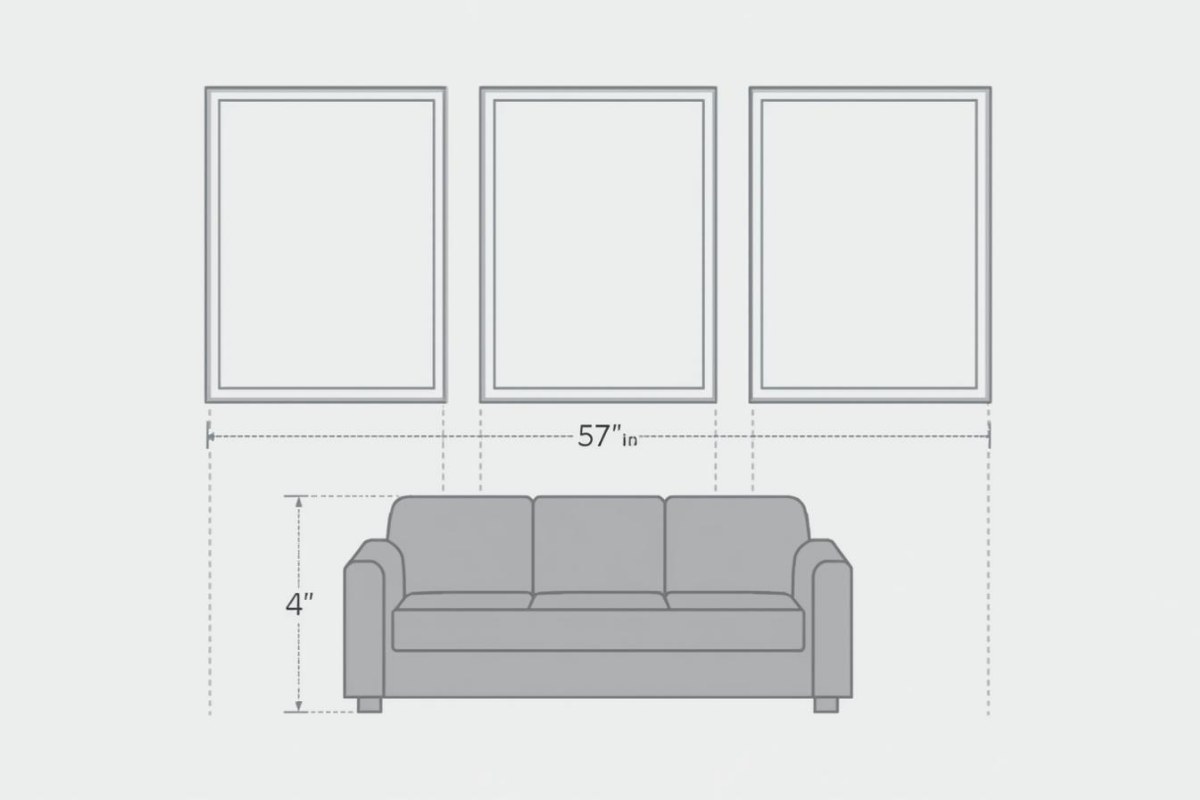
For a balanced gallery wall above a sofa, make the total arrangement about 75% of the sofa’s width and leave 15–20cm between the sofa back and the lowest frame. Keep gaps between frames consistent at 5–10cm and center the arrangement at eye level for seated viewers.
If you’ve been searching for a gallery wall frame size guide for sofas, the good news is that the basic rules are simpler than they look. A well-proportioned gallery wall above a sofa comes down to three numbers: the width of your sofa, the height of its back, and the gap between the two. Get those right, and almost any arrangement of frames will feel intentional rather than accidental.
- 75% width rule: Total gallery wall width should be about 75% of your sofa’s width.
- 15–20cm clearance: Leave this gap between the sofa back and the lowest frame.
- 5–10cm spacing: Keep consistent gaps between frames for visual flow.
- Anchor frame first: Start with one large frame, then build around it.
- Eye level matters: Center the arrangement for seated viewers, not standing ones.
The Golden Rule: How Wide Should Your Gallery Wall Be Above a Sofa?
The most reliable starting point is the 75% benchmark: the total width of your gallery wall should be roughly three-quarters of your sofa’s width. If your sofa is 240cm wide, aim for a gallery wall that spans about 180cm from the outer edge of the first frame to the outer edge of the last. This proportion keeps the art visually anchored to the seating area without competing with it.
Why 75%? A composition narrower than that can look lost above a large sofa, while one that nearly matches the full sofa width can overwhelm the wall. The 75% figure leaves a comfortable margin on both sides and room for future additions.
The 75% Benchmark: Matching the Gallery Wall to Sofa Width
To apply the benchmark, measure the full width of your sofa from arm to arm, not just the seating section. Multiply that number by 0.75 to get your target gallery wall width. If you’re working with a sectional, use the width of the main seating section that sits against the wall.
Measure the outer edges of your outermost frames, not the center of each frame, when calculating total gallery wall width. A few centimeters either way won’t ruin the look, but the outer-edge measurement keeps your math honest.
Height and Clearance: The 15–20cm Rule from the Sofa Back
The second number to memorize is the clearance between the top of your sofa back and the bottom of your lowest frame: 15 to 20cm (roughly 6 to 8 inches). This gap gives the eye a clean line to travel from the upholstery to the art. Less than 15cm and the frames can feel cramped against the sofa; more than 20cm and the art starts to float away from the seating area.
Measure from the highest point of the sofa back. If your sofa has a tall, structured back, the gap is measured from that top edge. If it has a low, relaxed back, the gap starts lower, which naturally lowers the whole arrangement.
Measuring Your Sofa and Wall Space Before Choosing Frames
Measuring the sofa and wall space with a tape measure before selecting frame sizes.
Before you choose a single frame, take three measurements: sofa width, sofa back height, and the available wall height from the top of the sofa to the ceiling or any architectural feature. Write them down. These three numbers will guide every decision that follows.
Sofa Width, Back Height, and the Shape of Your Seating Area
Sofa width determines your target gallery width. Back height determines where your 15–20cm gap starts. The shape of the seating area matters too: a deep, plush sofa reads differently on the wall than a slim, mid-century one. A chunky sofa can carry a slightly larger gallery wall; a delicate sofa looks better with a lighter arrangement.
Ceiling Height, Skirting Boards, and Available Wall Real Estate
Ceiling height shapes the overall format of your gallery wall. In a room with standard 2.4m ceilings, a wide, horizontal composition works best because it echoes the line of the sofa. In a room with taller ceilings, you have room for a more vertical arrangement, but keep the lower edge anchored to the 15–20cm clearance rule.
Skirting boards rarely affect a gallery wall above a sofa since the arrangement sits well above the floor. Picture rails, crown molding, or strong architectural features will. If your wall has a picture rail, use it to align the top edge of your frames; if there’s a light switch or radiator below, factor that into your sightlines.
Choosing Frame Sizes and Proportions for a Balanced Gallery Wall
With your measurements in hand, the next step is choosing frame sizes. The right mix depends on the mood you want: a formal, tailored look or a relaxed, curated one.
Anchor Pieces: Large Frames That Ground the Arrangement
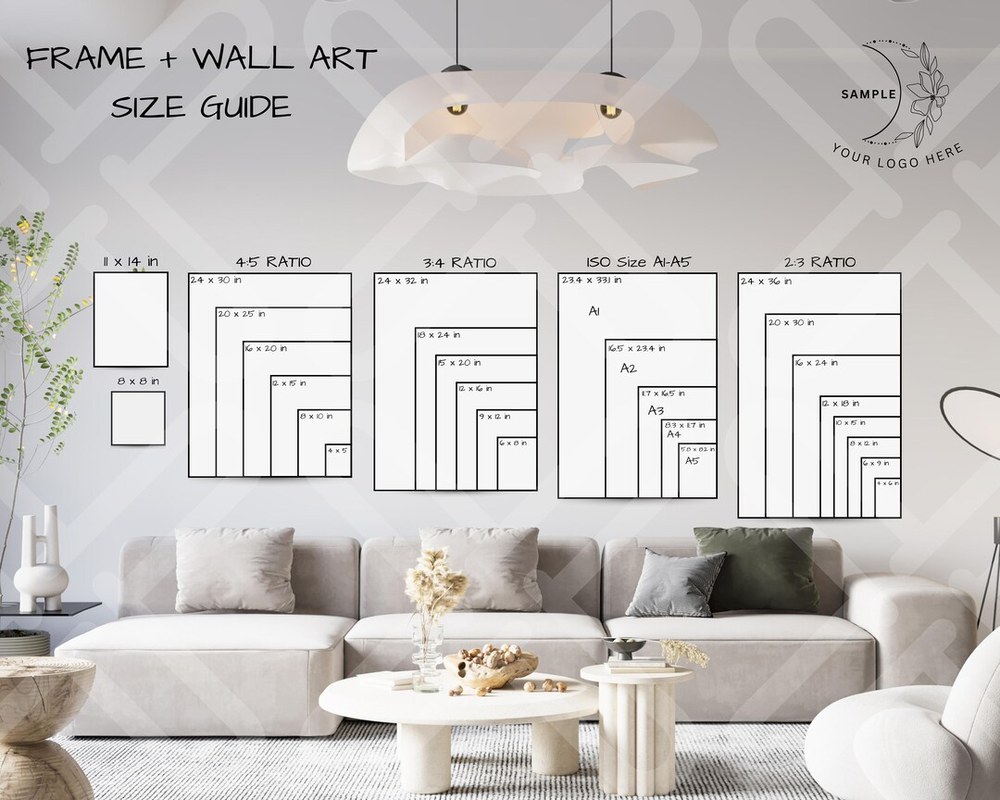
Every successful gallery wall benefits from at least one anchor piece: a large frame that gives the eye a place to rest. A 50x70cm or 60x80cm frame works well for most living rooms. Place it near the center of the composition, slightly off-center if you prefer a more dynamic feel, and build the smaller frames around it. If you’re starting from scratch, a large gallery wall frame set can provide the anchor piece and supporting frames in one order.
Grid Arrangements: Uniform Sizes for a Tailored, Formal Look
If you prefer order, a grid arrangement uses frames of the same size and spacing for a clean, architectural look. Common choices include 30x40cm or 40x50cm frames in a 2×2, 2×3, or 3×3 grid. Grids work beautifully in minimalist or modern rooms and are the easiest layout to measure because every gap is identical.
Mixed-Size Displays: The Organic, Curated Approach
For a more personal, collected-over-time feel, mix frame sizes around an anchor piece. The key is variety with intention: combine a few large, medium, and small frames rather than a random scatter. If you’re unsure where to start, our guide on how to mix frame sizes for a gallery wall walks through the proportions that tend to work best.
| Layout Style | Best For | Key Consideration |
|---|---|---|
| Anchor piece | Organic, curated living rooms | Start with one large frame, build around it |
| Grid | Modern and minimalist rooms | Uniform sizes and identical gaps |
| Mixed-size | Personal, collected-over-time feel | Variety with intention, not random scatter |
Spacing and Layout: The 5–10cm Rule for Visual Flow<
Frames spaced 5-10cm apart above a sofa create even visual flow.
Frames spaced 5-10cm apart above a sofa create even visual flow.
/h2>
Once you’ve chosen your frames, spacing determines whether the arrangement feels unified or chaotic. The 5–10cm rule is simple: keep the gap between frames consistent at 5 to 10cm (roughly 2 to 4 inches). Consistency matters more than the exact number. If every gap is 7cm, the eye reads the arrangement as one cohesive unit.
Consistent Gaps, Alignment, and Negative Space Between Frames
Align at least one edge or center line across the arrangement. In a grid, alignment is automatic. In a mixed-size display, align the outer edges of the largest frames or run a consistent horizontal line through the center of the composition. Negative space around the frames is just as important as the frames themselves; don’t crowd the wall.
Sketching a Floor Plan: Paper Templates and Layout Tools
The most reliable way to plan a gallery wall is to mock it up before you put a single nail in the wall. Cut paper templates to the exact size of each frame, tape them to the wall, and adjust until the spacing and alignment feel right. Our gallery wall layout templates for frames offer ready-made arrangements you can adapt to your measurements.
- Start with the anchor: place your largest frame first, then build around it.
- Keep the center of the gallery wall at eye level for a seated viewer.
- Use the 5–10cm gap consistently across the entire arrangement.
- Leave more negative space around the outer edges than between frames.
Placement and Sightlines: Anchoring the Gallery Wall Above Your Sofa
The right height makes a gallery wall feel effortless. The center of the arrangement should sit at eye level, but above a sofa, “eye level” depends on who’s looking. If the room is primarily used for sitting, the center of the gallery wall should be lower than the typical 150cm eye-level line used in many galleries.
Eye-Level Considerations for Seated and Standing Viewers
A good compromise for a sofa gallery wall is to place the center of the arrangement at roughly 145 to 155cm from the floor. This works for both seated and standing viewers in most living rooms. If the sofa is the main seating area and people spend most of their time sitting, lean toward the lower end of that range.
Adjusting for Sofa Height, Recliners, and Low-Back Designs
Sofa height changes everything. A high-back recliner pushes the 15–20cm clearance line up, which means the whole gallery wall sits higher. A low-back Japanese-style sofa pulls it down. Measure your actual sofa rather than assuming a standard height, and adjust the center of the arrangement accordingly.
Wall Types, Hanging Hardware, and Frame Care
A gallery wall is only as good as its hardware. The right fixings depend on your wall type, and the right hanging method depends on the weight of your frames.
Drywall, Plaster, and Brick: Choosing the Right Fixings
Drywall is the most common wall type and needs anchors rated for the weight of your frames. Plaster is more fragile and can crack if you use the wrong drill bit or anchor. Brick and concrete need masonry drill bits and plugs. If you’re hanging a heavy mirror or a very large frame, check the weight rating on your anchors and consider a professional installer.
Hanging Heavy Frames Securely with Picture Rails and Wire
For frames heavier than a few kilograms, use two hooks spaced apart rather than one central hook. This prevents the frame from shifting and keeps the bottom edge level. Picture wire should be rated for the frame’s weight, and the wire should be taut enough that the frame hangs close to the wall.
Before hanging, check the wall type and the weight rating of your anchors. For heavy mirrors or large frames, or if you’re unsure about plaster or brick walls, consult a professional installer. Avoid hanging valuable prints in direct sunlight, which can fade artwork over time.
Protecting Your Prints and Frames from Dust and Sunlight
Sunlight is the slow enemy of prints and art. Hang your gallery wall away from direct sun where possible, or use UV-protective glazing if your frames offer it. Dust frames regularly with a soft, dry cloth, and avoid moisture-prone walls like those in bathrooms or unventilated spaces.
Matching Frame Finishes and Art to Your Sofa and Room Decor
Frame finish is the bridge between your art and your furniture. The goal is complement, not match: a finish that relates to the sofa or the room’s palette without clashing.
Frame Materials and Finishes That Complement Upholstery
Black frames pair well with dark leather, charcoal upholstery, or industrial-style rooms. Gold frames add warmth and work beautifully with jewel tones or neutral linen. Natural wood frames suit beige, olive, or earthy upholstery, while white frames keep the look light and airy in bright, minimal spaces. If you’re considering a single finish across the whole wall, our guide to the best black gallery wall frame sets can help you compare options.
Coordinating Art Subjects and Colour Palettes with the Room
The art inside the frames matters as much as the frames themselves. Choose subjects that echo the room’s mood: botanical prints for a calm, organic feel; abstract pieces for a modern edge; typography for a graphic, gallery-like look. Pull at least one color from the art into the room’s cushions or rug to tie the whole scheme together.
Common Mistakes, Value, and the Final Verdict
Even with the right measurements, a few common mistakes can unbalance a sofa gallery wall. Here’s what to watch for, and how to fix it.
Mistakes That Unbalance a Sofa Gallery Wall and How to Avoid Them
- Measure the full width of your sofa and aim for a gallery wall at about 75% of that width.
- Keep a consistent 5–10cm gap between frames.
- Hang the center of the arrangement at eye level for seated viewers.
- Avoid hanging frames too high; a gallery wall that floats far above the sofa loses its connection to the seating area.
- Avoid mixing too many frame finishes; stick to one or two complementary finishes.
- Avoid spacing frames unevenly; inconsistent gaps make the arrangement feel accidental.
Why Investing in Quality Frames Pays Off in the Long Run
Quality frames are an investment in the art they hold. Better materials mean sturdier corners, more reliable hanging hardware, and finishes that don’t fade or chip. Conservation-grade backing and glazing protect your prints from dust, moisture, and UV light. A well-made frame can last decades and be re-used when you want to refresh the art inside.
Final Recommendation: A Step-by-Step Approach to Your Gallery Wall
Record the sofa width, back height, and available wall height. Multiply the sofa width by 0.75 to set your target gallery width.
Decide on a grid, anchor, or mixed-size arrangement. Select frames that fit your room’s style.
Cut paper templates to each frame’s size and tape them to the wall. Adjust spacing and alignment until the composition feels balanced.
Check your wall type and use anchors rated for your frame weights. Use two hooks for heavy frames.
View the gallery wall from the sofa and from standing positions. Adjust any frame that feels out of place.
Start with the measurements, choose a layout you love, and build from there. Respect the proportions and spacing rules, and the result will look intentional.
Frequently Asked Questions