Acid Free Archival Photo Storage Boxes: Just for You

acid free archival photo storage boxes are one of the simplest ways to keep printed memories, negatives, and loose family photos from deteriorating in ordinary household storage. They are especially useful when you want protection first, but still need an organized system that is easy to label, stack, and revisit later.
- Best use: Long-term storage for prints, negatives, slides, and mixed family archives.
- Material check: Look for acid-free construction and clear details on lignin-free or buffered board.
- Fit matters: Internal dimensions and closure style are as important as the label.
- Storage reality: A good box helps, but dry, stable indoor conditions matter just as much.
What Acid Free Archival Photo Storage Boxes Are and Why They Matter
These boxes are made to store photographs in materials that are less likely to contribute to yellowing, sticking, or paper breakdown over time. For readers building a long-term home archive, that matters because the wrong container can do quiet damage for years before the problem becomes visible.
Define acid-free, lignin-free, and archival-safe materials in plain language
Acid-free means the storage material is made or treated to avoid acidic conditions that can speed up deterioration. Lignin-free usually refers to board or paper products that avoid lignin, a wood component that can break down and create acids as it ages.
Archival-safe is a broader claim. It generally means the box is intended for long-term preservation and should not react badly with paper, photos, or negatives, but the exact standard depends on the manufacturer. If a listing uses the word archival, it is still smart to check the actual material details rather than rely on the label alone.
Answer the core buying question early: who needs them and what they protect against
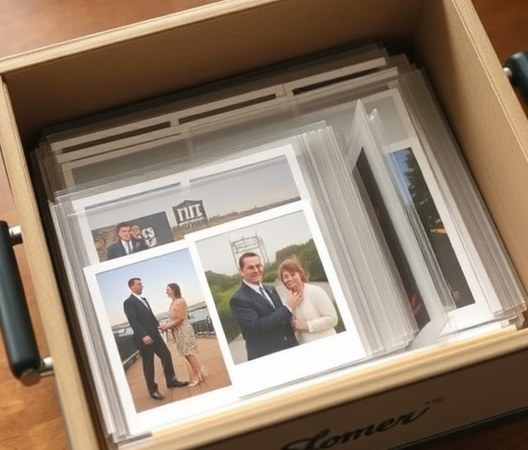
These boxes are a strong fit for anyone storing irreplaceable prints, inherited albums, negatives, slides, or a growing personal archive. They help protect against common household threats such as dust, light exposure, bending, fingerprints, and casual compression from stacked items.
They are not a magic shield, though. If your storage area is damp, hot, or exposed to pests, the box can only do so much. That is why the best use case is a clean, stable, indoor storage spot paired with careful handling and sensible organization.
How to Choose the Right Acid Free Archival Photo Storage Box
The right box depends on what you are storing, how often you need access, and where the box will live. A good choice is not just about preservation; it is also about whether the box fits your collection without forcing you to overstuff it.
Key specifications: material quality, pH neutrality, buffering, lid style, and closure
Start with the material. Many boxes are made from archival board or reinforced cardboard, but the quality can differ a lot. Look for clear language about acid-free construction, lignin-free board, and whether the material is buffered or unbuffered.
Buffering means the board contains an alkaline reserve that can help neutralize acids over time. That can be useful for some paper materials, but not every photo format benefits equally, so the best choice depends on the contents. For example, negatives, slides, and certain older photo materials may call for different storage preferences than modern prints.
Closure matters too. A snug lid, clamshell design, or secure tuck closure can help keep dust out and reduce light exposure. If the lid is too loose, the box may be convenient but less protective.
Capacity and sizing: prints, negatives, slides, albums, and mixed photo collections
Think in terms of what you already own and what you expect to add later. Flat prints need enough horizontal room to lie without curling, while negatives and slides often benefit from inserts, sleeves, or divided compartments.
Mixed collections are where sizing mistakes happen most often. If you are storing prints plus envelopes, small albums, or loose ephemera, choose a box with a little extra interior room rather than one that requires force to close. Overfilled boxes can bend corners and make retrieval awkward.
If you are storing album-style items, measure the thickest item first and confirm the internal dimensions, not just the exterior size. Retailers sometimes list both, and the usable space can be smaller than expected once inserts or board thickness are factored in.
What to look for in 2026: durability, certification claims, and long-term storage value
In 2026, the most useful buying filters are still the practical ones: sturdy construction, honest material descriptions, and a design that will hold up to repeated handling. A box that looks premium but crushes easily is not a good long-term value.
If a product mentions certification, testing, or compliance, confirm exactly what was tested and by whom. Some brands provide more detail than others, and the meaning of a claim can vary. When that information is missing, treat the listing as a starting point rather than proof.
Long-term value also includes replacement risk. A box that is easy to label, stack, and rehouse may be more useful than a decorative option that is harder to maintain. For broader preservation planning, our archival storage guide can help you compare box types and related storage formats.
- Confirm the exact interior dimensions for your prints, negatives, or albums
- Check whether the board is acid-free, lignin-free, buffered, or unbuffered
- Look for a closure that protects contents without making access difficult
- Make sure the box will fit your shelf, closet, or cabinet space
Best Uses by Room, Collection Type, and Storage Situation
These boxes work best when the room is stable, dry, and easy to access. The best storage setup is usually the one that makes you more likely to keep the collection organized over time.
Which rooms they fit best: closet, bedroom, office, archive shelf, and climate-controlled storage
A closet shelf is often a practical choice because it keeps boxes out of direct sunlight and away from the busiest traffic areas. A bedroom cabinet or office shelf can also work well if the room stays relatively steady in temperature and humidity.
Climate-controlled storage is the safest option for larger archives, but even there, the box itself still matters. A good archival box helps create a second layer of protection between the environment and the photos inside.
Under-bed storage can work in a pinch, but only if the area stays clean, dry, and free of heavy pressure. If the box is likely to be dragged out often, choose a style with a sturdy exterior and a lid that stays aligned.
Ideal users: photographers, collectors, families, genealogists, and estate organizers
Photographers often need a system for negatives, contact sheets, proof prints, or sorted project archives. Collectors may want a cleaner way to preserve vintage prints, postcards, or photo ephemera without mixing them into general storage.
Families and genealogists usually need easy labeling and quick access, especially when organizing decades of mixed material. Estate organizers may value boxes that can be sorted by person, decade, or event, making later review less overwhelming.
When boxes are better than albums, binders, sleeves, or plastic bins
Boxes are usually better than albums when you want flexible storage for loose prints, envelopes, or items that do not fit a standard page layout. They are often better than binders when you want less handling and fewer exposed edges.
Sleeves are useful for viewing and sorting, but they do not always solve the storage problem on their own. Plastic bins may be convenient, yet they are not automatically archival-safe, and many lack the material transparency needed for long-term preservation.
If your priority is display or frequent browsing, a different system may be better. If your priority is preservation and order, a box often wins.
Materials, Construction, and Protection Features to Compare
Not all archival boxes are built the same way. The structure of the board, the interior layout, and the way the lid closes all affect how well the box performs in real storage.
Cardboard versus museum-grade board versus reinforced archival board
Basic archival cardboard boxes can be perfectly useful for light-to-moderate storage, especially when the collection is not extremely heavy. Museum-grade board and reinforced archival board typically aim for greater rigidity and a more premium long-term feel.
The tradeoff is usually cost, weight, and form factor. Reinforced boxes may hold shape better on a shelf, but they can also be bulkier. The best choice depends on how often you will handle the box and how much stacking pressure it will face.
- Reinforced construction can better resist sagging
- Higher-grade board often feels more stable for long-term storage
- Heavier or thicker boxes may reduce storage efficiency
- Premium materials do not automatically solve humidity or pest issues
Interior fit: dividers, inserts, tissue, and photo-safe sleeves
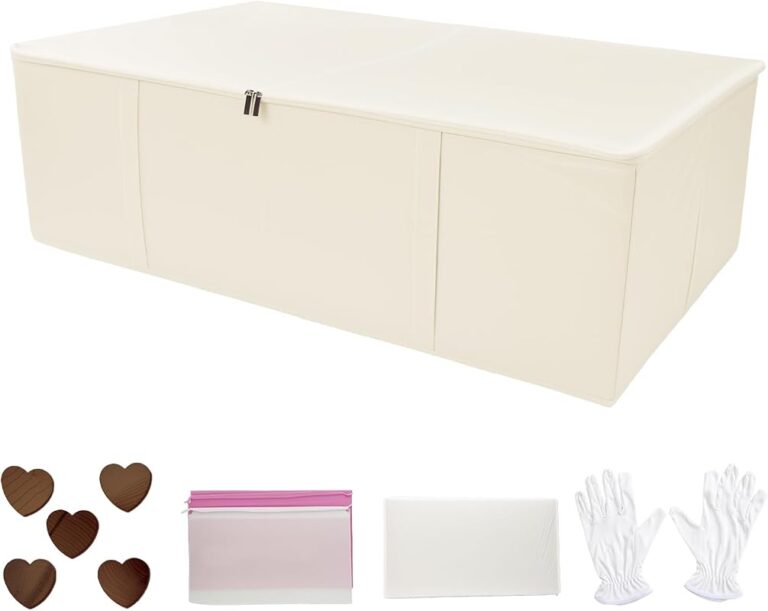
Interior organization can make a box much more useful. Dividers help separate decades, subjects, or family branches. Inserts can keep smaller items from sliding around. Tissue and photo-safe sleeves can reduce abrasion for delicate prints or mixed media.
If the box includes inserts, check whether they are also archival-safe. A good outer box can be undermined by a questionable interior component. For more specialized storage formats, our archival portfolio cases guide is useful for readers comparing flatter, presentation-oriented options.
Protection limits: moisture, light, dust, crushing, and temperature changes
Archival boxes are good at reducing dust, blocking casual light exposure, and helping prevent bending or surface scuffs. They are much less effective against major moisture problems, severe heat, or pest infestations.
That means the box should be part of a larger preservation plan. If the room is prone to humidity swings, use a better location before you rely on a better box. If stacking is necessary, avoid placing heavy items on top unless the box is specifically built for that load.
Styling and Storage Ideas for a Clean, Organized Archive
Photo storage does not have to look clinical. A well-chosen box can keep a collection tidy while still blending into a home office, closet, or studio shelf.
How to label, stack, and arrange boxes for quick access and visual order
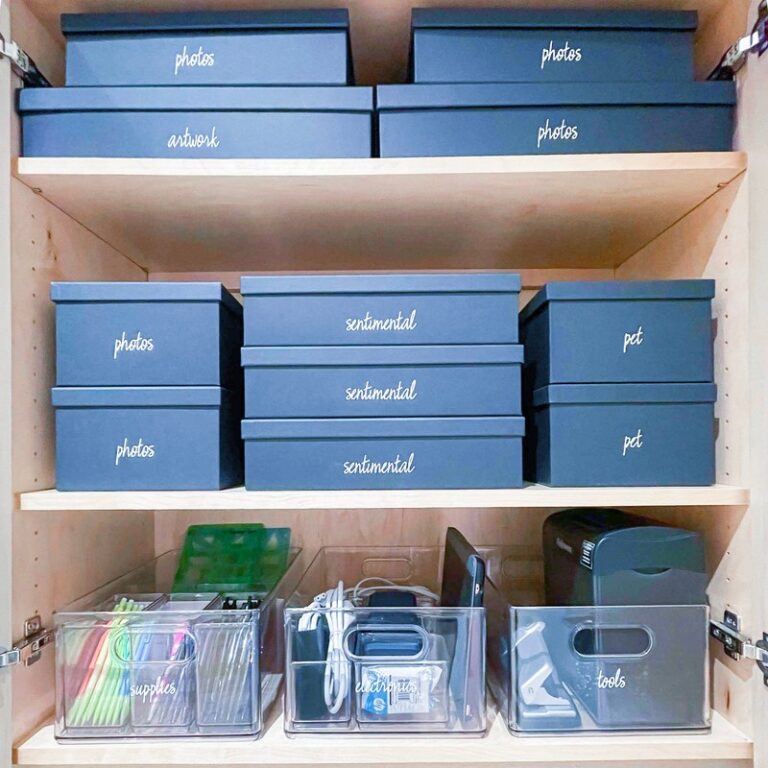
Label boxes by family name, year range, event, or format so you can find items quickly without opening every container. If the archive is large, consistent labeling becomes more important than decorative appearance.
Stack boxes by access frequency, not just by size. Keep the items you reach for most often at eye level or in the easiest-to-grab position, and move slower-access boxes to higher or lower shelves.
- Use one labeling system across all boxes so the archive stays easy to scan.
- Keep similar box sizes together for a cleaner shelf line and safer stacking.
- Leave a little open space so boxes can be removed without scraping neighboring items.
Storage placement tips for shelves, cabinets, under-bed space, and closet systems
Shelves are the easiest place to manage photo boxes because you can see the labels and check the condition of the containers. Cabinets are useful when you want a cleaner visual profile or a more dust-protected setup.
Under-bed storage can be practical for long-term overflow, but only if the box is low-profile and easy to slide out without bending. Closet systems work well for many households because they combine concealment with reasonable access.
If you are building a dedicated storage zone, make sure the shelf depth matches the box depth closely enough to support it. A box that overhangs a shelf is more likely to tip or get damaged during retrieval.
Matching archival storage to home decor, studio aesthetics, or office organization
For a home office, neutral-toned boxes tend to blend best with books, files, and supply storage. In a studio, a more uniform set of boxes can make the archive feel intentional rather than improvised.
In a visible room, consistency matters more than ornament. Matching box sizes and labels can create a calm, orderly look even if the collection itself is large. For readers who also store digital keepsakes, our DIY digital photo frame guide offers a complementary way to display favorite images without exposing prints to handling.
Benefits, Limitations, and Common Mistakes to Avoid
Understanding the strengths and weaknesses of these boxes helps you avoid disappointment. They are excellent preservation tools, but only when used with realistic expectations.
Main benefits: preservation, organization, portability, and collection control
The biggest benefit is preservation. Acid-free construction helps reduce the risk of container-related damage, while the enclosed format protects against dust and casual light exposure.
They also improve organization. Once photos are sorted into labeled boxes, it becomes easier to manage family history, project archives, or inherited materials. Many people find that the simple act of boxing the collection restores a sense of control.
Portability is another advantage. A labeled box is easier to move than a loose stack of albums, envelopes, and sleeves, especially during a move, renovation, or estate review.
Common mistakes: using non-archival containers, overfilling, and storing in damp areas
One common mistake is assuming any sturdy box is safe. Decorative boxes, shipping cartons, and generic plastic bins may not be suitable for long-term photo storage.
Overfilling is another problem. When a box is packed too tightly, photos can curl, sleeves can buckle, and the lid may stop closing properly. Damp storage areas are the third major issue, because humidity can undo many of the benefits of a good container.
- Leave enough space for easy removal and safe handling
- Use labels that stay readable over time
- Store boxes in stable indoor conditions
- Mixing archival boxes with non-archival fillers or bins
- Pressing the lid down on an overstuffed collection
- Assuming a box alone can fix poor storage conditions
Limitations to note: not all boxes protect equally from humidity, pests, or fire
Even the best photo storage box has limits. Most are not waterproof, pest-proof, or fireproof in any meaningful sense. Some may offer more structural protection than others, but they are still part of a broader storage plan rather than the entire solution.
If your collection is especially valuable, irreplaceable, or vulnerable, consider whether you need a higher-security storage method or a climate-controlled environment. The right box is helpful, but it is not a substitute for safe conditions.
Care, Maintenance, and Long-Term Preservation Tips
Once the box is in place, the work shifts to maintenance. A little routine attention can extend the usefulness of the box and help you catch problems before they spread through the collection.
How to inspect, rotate, and rehouse photos over time
Check boxes periodically for sagging, moisture marks, odor, dust buildup, or signs that the contents have shifted. If a box begins to bow or the lid no longer closes cleanly, it may be time to rehouse the collection into a sturdier format.
Rotation is useful when you have multiple boxes in storage. Bringing a box forward occasionally allows you to inspect condition without handling everything at once. If you find a collection has grown beyond its original box, split it by date, subject, or format rather than forcing everything back in.
Best practices for handling prints, negatives, and family archives safely
Handle materials with clean, dry hands, and avoid touching image surfaces whenever possible. For especially delicate items, sleeves or tissue can reduce friction during sorting.
Keep a simple inventory if the archive is substantial. Even a short list of box contents can save time later and reduce unnecessary handling. For negatives and slides, keep the system consistent so formats do not get mixed in a way that makes retrieval harder.
Environmental care: light exposure, airflow, and stable temperature guidance
Store boxes away from direct sun and strong indoor light. Even brief repeated exposure can affect surrounding materials over time, especially if boxes are opened often in bright rooms.
Airflow should be gentle and dry, not stagnant and humid. Stable temperature is more important than trying to create a perfect environment, because large swings are harder on stored materials than modest but consistent conditions.
Final Recommendation: Who Should Buy Acid Free Archival Photo Storage Boxes in 2026
These boxes make the most sense for anyone who wants a practical, low-drama way to protect printed photos, negatives, or mixed family archives. They are especially worthwhile when the collection matters enough to preserve, but not so frequently used that it needs to live in an album or display system.
Transparent verdict on value, ideal buyer profile, and when to upgrade to premium options
The best value usually comes from a box that balances sturdy construction, clear archival material claims, and a size that matches the collection without waste. If you are storing a modest archive in a closet or office shelf, a well-made standard archival box is often enough.
Upgrade to premium options when the collection is heavy, frequently handled, or especially important to preserve in a more rigid format. That said, premium materials only matter if the room conditions and interior fit are also right.
Closing guidance on choosing the right box for preservation, display, and peace of mind
If you want the simplest decision rule, choose the box that best fits your format, your storage space, and your long-term handling habits. A good archival box should make the archive easier to live with, not just safer in theory.
For readers who want a calmer, more organized photo system, acid-free storage is one of the most reliable starting points. It is a small purchase that can make a big difference in preserving the images that matter most.