
10 Best Gifts for Artists Who Draw: Essential Tools, Books, and Inspiration for Every Sketcher

Drawing is a popular hobby and a professional skill that needs the right tools. Pencils, pens, sketchbooks, erasers, and markers each solve a specific drawing task, from laying down loose ideas to finishing detailed illustrations. The best gifts for artists who draw help them work more comfortably, improve their marks, and last through regular use.
When choosing a gift, focus on what the artist makes and how they work: do they sketch lightly or ink with confidence, prefer smooth paper or textured tooth, and need portable supplies or a studio upgrade? Quality, durability, paper weight, and line consistency matter most — those factors affect how satisfying and useful a tool will be. This guide points to practical picks for sketching, inking, and mixed-media drawing to help find a gift that the artist will use and enjoy.
10 Best Gifts for Artists Who Draw
They pick tools that help ideas become clear images. Below is a short list of the best drawing gifts that suit beginners through pros, chosen for quality, value, and ease of use.
Caliart 176PCS Sketching Kit
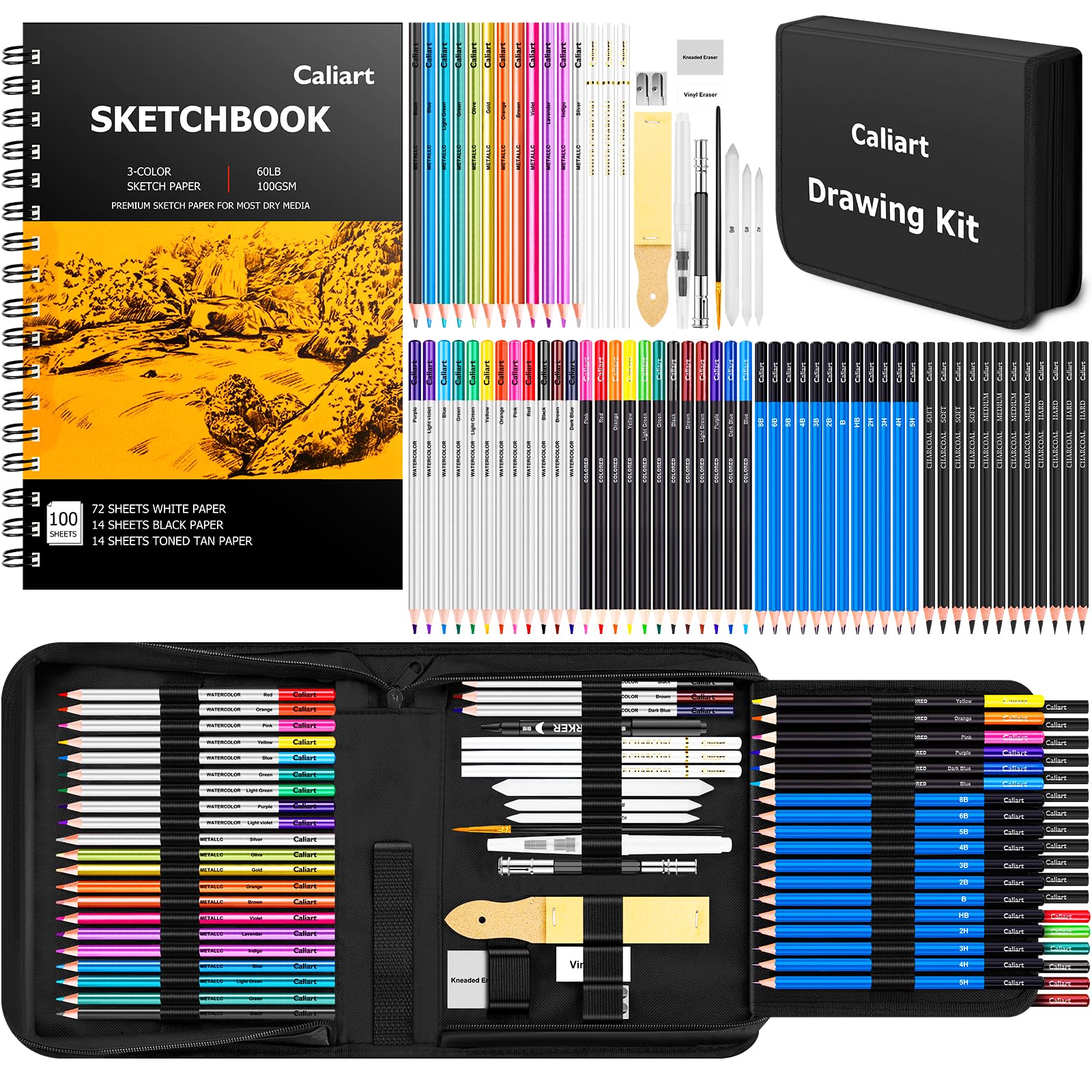
This kit is a strong choice for someone who wants a complete, travel-ready drawing set with lots of variety at a low price.
Pros
- Wide range of pencils and tools for many techniques.
- Comes with a compact case and a 3-color sketchbook.
- Good value for beginners and hobbyists.
Cons
- Some items may be lower quality than studio-grade tools.
- Small case can feel cramped once everything is packed.
- Not all pencils are labeled consistently across every piece.
The set offers many types of pencils: graphite, charcoal, watercolor, metallic, and colored. The 3-color sketchbook adds quick options for white, tan, and black paper. That variety helps someone try new techniques without buying separate supplies.
The travel case keeps gear together and makes sketching on the go easier. The refillable water brush and blending stumps support basic watercolor and blending work. Many users will like the all-in-one nature for gifts or starter kits.
Expect mixed performance on tougher projects. Some pencils work very well for sketches, while others feel basic or soft. This kit suits learners, teens, and casual creators rather than professional studios.
Reverse Coloring Book™

This book is worth buying for creative people who want a low-pressure way to practice drawing and composition.
Pros
- Encourages creativity without forcing color choices.
- Thick paper resists bleed-through from pens.
- Works well with many tools: fine liners, gel pens, markers, pencils.
Cons
- Some printed areas are darker than ideal for drawing.
- Limited number of pages for heavy users.
- Not a traditional sketchbook for freehand drawings.
This reverse coloring book gives pre-filled colors and asks the artist to add the lines. It removes the stress of choosing palettes and lets the user focus on form and detail.
People who feel stuck or who want a relaxing activity often find it calming. The layout suits beginners and experienced drawers who want quick, guided practice.
The paper quality gets frequent praise and handles ink neatly. It can help someone build confidence by creating finished-looking pieces faster.
Buy it to give an artist a simple, creative prompt that sparks ideas and reduces decision fatigue: Reverse Coloring Book™.
Buddha Board

It is a neat, low-mess gift that helps artists practice simple brushwork and mindfulness without any cleanup.
Pros
- Mess-free creativity with just water.
- Encourages practice of brush strokes and calligraphy.
- Compact and easy to leave out for quick use.
Cons
- Artwork fades, so nothing is permanent.
- Limited detail compared to paper and ink.
- Brush and surface can feel basic to some users.
The Buddha Board lets someone paint, watch the image disappear, and start again. It aims at practice and relaxation rather than creating lasting pieces. This makes it good for warm-ups, short sessions, or mindful breaks.
People who like calligraphy, sumi-e practice, or simple doodling will find it useful. The lack of cleanup and the gentle fade can lower the barrier to try new marks or undo worries about mistakes.
It works well on a desk, in a classroom, or in a living room as a casual activity. Those who want to keep finished work or do fine, long-term projects may prefer traditional supplies instead.
Buy it on Amazon: Buddha Board – The Original Water Painting Board for Mindfulness & Creativity
How to Draw Cool Stuff

This book is a solid pick for beginners and young artists because it breaks drawing into simple, fun steps.
Pros
- Clear step-by-step examples that are easy to follow.
- Fun subjects that keep kids and beginners interested.
- Lightweight and easy to carry.
Cons
- Not advanced enough for serious or professional artists.
- Some explanations may feel basic for older teens.
- Paper size and format limit large-scale practice.
The book uses short lessons and lots of pictures to teach basic drawing ideas. It focuses on shapes, simple anatomy, and creative subjects that appeal to kids and classroom use.
Teachers and parents will like the friendly pace and varied exercises. It can help a learner build confidence without overwhelming them.
This works well as a gift for a child or novice who wants a clear, hands-on way to practice drawing.
PANDAFLY Sketching Pencil Set

The set is a good buy for beginners and hobbyists because it offers many pencil types and tools for shading and blending at a low price.
Pros
- Wide range of tones and charcoal options for varied shading.
- Includes blending stumps and erasers to finish drawings.
- Smooth, pigmented leads that layer well.
Cons
- No dedicated case for tidy storage.
- Some users wanted a dual sharpener included.
- Might be more than a casual user needs.
The kit gives a lot of tools in one pack. It covers graphite from dark to light and adds charcoal, sticks, and a white charcoal pencil for highlights. That variety helps try different looks without buying extras.
The pencils feel smooth and blend easily, which helps when making gradients or soft shadows. The set also comes with kneaded and vinyl erasers and blending stumps, so it supports finishing touches and corrections.
A missing storage case and a single basic sharpener mean artists may need to add a case or better sharpener later. Still, the kit’s scope and price make it a practical gift for someone starting drawing or exploring new techniques.
Art Dice by Two Tumbleweeds
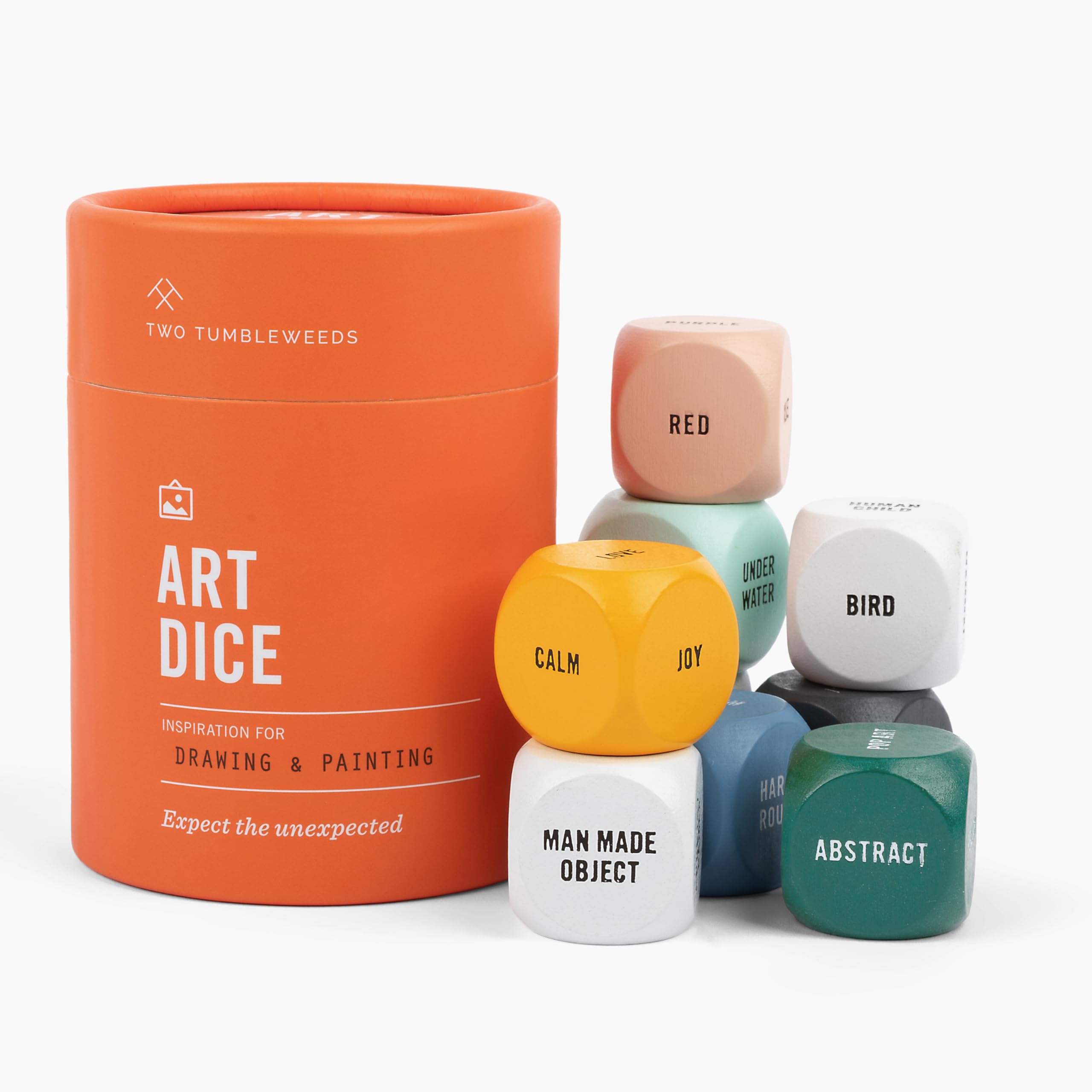
They should buy this if they want a simple, playful tool to beat artist’s block and spark fresh drawing ideas.
Pros
- Easy to use and fun to roll for quick prompts.
- Encourages trying new styles and subjects.
- Works solo or in groups for classroom or family use.
Cons
- Limited to the printed prompts on the dice.
- Small set may repeat ideas over time.
- Not a substitute for structured lessons or practice.
The dice come as a compact, colorful set that prompts ideas by rolling. It fits into a sketchbag or classroom drawer and starts creativity without setup.
Many users find the randomness pushes them out of comfort zones, mixing mediums or themes they wouldn’t choose on their own. It helps artists and writers break a blank-page habit with a fast, playful nudge.
Teachers and group facilitators will like the options for collaborative games and timed exercises. The set feels flexible: students can use it for a quick warm-up or a longer series challenge.
Buyers should note the tool is idea-focused, not instructional. It works best paired with sketchbooks or supplies so artists can act on prompts right away.
How to Draw Anything in 3D

This book is a good pick for beginners who want clear steps to make simple 3D drawings and practice perspective.
Pros
- Clear step-by-step visuals that break shapes into simple parts.
- Good for young artists and beginners.
- Covers basic perspective and shading concepts.
Cons
- Some steps skip small details, which may confuse learners.
- Short book with limited advanced techniques.
- Focuses on basics, so it may outgrow quickly.
The layout keeps lessons short and focused, which helps new artists build confidence fast. It uses simple shapes and visual steps that make three-dimensional drawing less scary.
Examples include everyday objects and fun subjects that appeal to kids and casual learners. Readers can practice perspective and light to add depth to drawings without heavy theory.
This works best as a starter guide or a gift bundled with pencils and a sketchbook. More advanced learners may want additional resources after mastering these basics.
How to Draw & Think Like a True Artist

This workbook-style guide is a solid pick for beginners and hobbyists who want a clear 30-day path to improve drawing basics.
Pros
- Clear step-by-step lessons that build skills steadily
- Covers fundamentals like perspective, shading, and proportions
- Short exercises make practice manageable day to day
Cons
- Print-on-demand feel may affect paper or print quality
- Might be too basic for advanced artists seeking deep theory
- Limited content depth for those who want long-form instruction
The guide lays out short, focused lessons that a new artist can follow each day. It emphasizes simple tools, pencil handling, and basic shapes before moving to shading and perspective.
It shows many small exercises and examples so a reader can practice and see gradual progress. The tone and layout aim to feel like a workbook rather than a long textbook.
Some readers may find the printing quality inconsistent, and more experienced artists may want more advanced exercises. For someone restarting drawing or teaching a younger learner, it offers an easy routine to build core skills.
PRINA 81 Sketching Kit

This kit is a strong gift choice for beginner to hobby artists because it bundles many pencil types, a sketchbook, and a travel case at one low price.
Pros
- Lots of tools in one set for sketching, coloring, and experimenting.
- Portable case keeps supplies organized for travel or classes.
- Includes special items (rainbow, metallic, watercolor pencils) for fun effects.
Cons
- Some items are best for practice rather than professional work.
- A few specialty pencils may wear faster with heavy use.
- Paper in the small sketchbook is limited in size and page count.
The set gives a wide range of pencils: graphite, charcoal, watercolor, metallic, oil-based colored, and the rainbow multicolor pencils. It also includes a compact spiral sketchbook and a small coloring book. This lets an artist try many styles without buying separate products.
The travel case makes it easy to bring supplies to school, a park, or a workshop. The starter tutorial and the varied pencils help beginners learn shading, blending, and layering. Many buyers like the variety, especially for kids and teens.
This kit can feel like a sampler. Serious artists may want higher-grade paper or pro-level pigments later. Still, it suits anyone who draws for fun or who wants a ready-made gift to explore new techniques.
Artist’s Drawing Book

This workbook-style guide is a solid pick for beginners and hobbyists who want clear lessons and hands-on practice to build drawing skills.
Pros
- Clear step-by-step exercises that encourage practice
- High-quality paper and strong illustrations
- Useful for a wide range of skill levels
Cons
- Workbook format may frustrate those who want a pure reference book
- Some readers find parts too basic for advanced learning
- Not ideal if someone prefers video or class-based instruction
It presents short lessons and many practice pages that help learners build confidence. The layout pushes readers to draw directly in the book, which speeds skill growth for people who actually use it.
The paper and printing feel sturdy, and the examples are easy to follow. Some buyers note the content suits self-taught artists and crafters well, while others say it lacks the depth a professional might need.
Readers should expect a hands-on workbook rather than a theory-only text. That makes it a practical gift for someone ready to practice regularly.
Buying Guide
They should start by thinking about the artist’s medium and style. Look for supplies that match the way they draw: pencils for sketchers, ink tools for illustrators, and markers or pens for line work.
Consider quality and feel. Material matters: paper weight, pencil hardness, and pen nib types affect the result. Check durability and consistency so tools perform the same over time.
Size and portability matter for many artists. Choose items that fit their workspace and habits. A compact travel set helps those who draw on the go, while larger pads suit studio work.
Look at ergonomics and comfort. Tools with comfortable grips reduce hand strain. Paper with a pleasant texture encourages longer sessions.
Think about versatility and expandability. Items that work with different inks or media give more creative freedom. Also consider refillable or replaceable parts to extend life.
Price vs. value deserves attention. Higher cost can mean better longevity, but affordable options may suit beginners. Read specs like paper weight (gsm), nib size, and pencil grade range to compare value.
Check compatibility and care. Some markers bleed on thin paper. Some inks smudge if not dry. Verify what surfaces and maintenance the item needs.
Use a simple checklist before buying:
- Medium match (pencil, ink, marker)
- Material quality (paper weight, nib, lead)
- Size and portability
- Ergonomics and comfort
- Versatility and refill options
- Price vs. expected lifespan
Editor’s picks
They chose tools that match different skill levels and styles. Each pick focuses on usefulness, build quality, and value.
- Professional sketchbook — Thick, toothy paper that holds pencil, ink, and light wash.
- Mechanical pencil set — Consistent lines and fine control for detailed work.
- Portable lightbox — Easy tracing and clean line work, useful for layered projects.
- Quality erasers — Kneaded and vinyl options for precise corrections.
- Blending stumps — Smooth gradients and soft shading without smudging.
| Item | Best for | Why it stands out |
|---|---|---|
| Sketchbook (80–150 lb) | Mixed media | Durable pages; resists bleed-through |
| Mechanical pencils (0.3–0.7 mm) | Detail work | Consistent thin lines; refillable |
| Lightbox (LED, dimmable) | Tracing & animation | Portable; low heat; even light |
| Kneaded & vinyl erasers | Cleanup | Gentle and precise correction |
| Blending set | Shading | Keeps tones smooth and controlled |
They recommend starting with a few versatile pieces rather than many single-use items. A well-chosen sketchbook and a good pencil set make the most immediate difference.
Frequently asked questions
What should someone buy for a beginner who draws?
They often need basic supplies that work well and are easy to use. A set of pencils (2H–6B), a sketchbook, and a kneaded eraser make a good starter kit.
Are digital gifts good for traditional artists?
Yes. Many traditional artists also like digital tools. A budget graphics tablet or a drawing app gift card can help them try digital drawing without replacing their current tools.
How to choose the right paper or sketchbook?
Look for paper weight (100–200 gsm for sketching, heavier for markers) and tooth (smooth for fine lines, textured for pencils). Size matters too—small for travel, larger for studio work.
Is brand important for markers and inks?
Brands matter for consistency, lightfastness, and bleed control. If unsure, pick a well-reviewed mid-range brand rather than the cheapest option.
What if the artist already has many supplies?
Gift experiences, learning resources, or storage solutions work well. Examples: an online class, a museum pass, or an adjustable easel.
How to pick a gift for a specific drawing style?
Match the tool to the style: fine liners for ink work, soft graphite for portraits, alcohol markers for vibrant color. When uncertain, choose versatile tools.
Can non-art items be good gifts?
Yes. Comfortable chairs, good lighting, and portable lamps improve working conditions and are often appreciated.
Conclusion
Choosing the right gift for someone who draws means thinking about how they work and what they enjoy. Practical tools like quality pencils, sketchbooks, or a good eraser matter a lot. They improve daily practice and feel rewarding to use.
Consider gifts that spark new ideas, such as reference books, online class subscriptions, or mixed-media sets. These items help an artist try new techniques and grow skills. Small tech tools like a tablet pen or a lamp can also change how they create.
Personal and thoughtful gifts stand out. A custom sketchbook, a favorite brand restocked, or a framed print of their work shows care. Practicality plus meaning makes a gift more useful and more valued.
Keep budget and skill level in mind when choosing. Beginners need basics; advanced artists may prefer specialty items or long-term tools. When in doubt, a gift card to an art store lets them pick what fits best.