Do Gallery Picture Lights Need Batteries

No, gallery picture lights do not always need batteries. Many use rechargeable batteries, but plug-in and hardwired models are also common and may suit permanent displays better.
Do gallery picture lights need batteries? Not always. Some picture lights run on rechargeable batteries, some plug into a wall outlet, and some are hardwired into the home’s electrical system, so the right choice depends more on your wall, artwork, and installation goals than on the word “gallery” alone.
For many shoppers, the real question is not whether a picture light can use batteries, but whether a battery-powered model will be bright enough, convenient enough, and tidy enough for the way the art is displayed. A single framed print in a rental hallway has very different needs from a large painting above a fireplace or a full salon wall in a formal dining room. Understanding the power options first makes the rest of the buying decision much easier.
- Short answer: Picture lights can be battery powered, plug-in, or hardwired.
- Best for renters: Battery models are usually easiest to install with less disruption.
- Best for daily use: Plug-in or hardwired lights often make more sense for long evening runtime.
- Key buying factor: Check brightness, beam spread, and color temperature, not just power source.
- Practical caution: Confirm charging access, wall type, and mounting requirements before buying.
Do gallery picture lights need batteries? The short answer and when batteries make sense
No, gallery picture lights do not inherently need batteries. Battery power is simply one of several common ways to run a picture light, alongside plug-in and hardwired options. Battery-powered models make the most sense when you want minimal installation, when there is no outlet nearby, or when you want a cleaner wall without a visible cord.
They are especially popular with renters, anyone avoiding electrical work, and people lighting one or two pieces of art rather than a whole room. They can also be a practical fit for awkward wall locations where chasing cables would be disruptive or visually distracting.
Battery-powered vs plug-in vs hardwired picture lights at a glance
Battery-powered lights are the easiest to install and usually the least disruptive. They suit temporary displays, smaller artworks, and spaces where drilling and wiring need to be kept to a minimum. The trade-off is ongoing charging or battery replacement, plus output limits on some models.
Plug-in picture lights are a middle ground. They offer steady power without the complexity of hardwiring, but the cord needs to be managed carefully so it does not undermine the finished look. They often work well where an outlet is nearby or where a cord can be hidden behind furniture or architectural details.
Hardwired picture lights are the most integrated-looking option. They are often chosen for permanent displays, higher-end interiors, and larger focal artworks. They usually make the most visual sense when the light is part of a planned room design, but installation is more involved and may require a qualified electrician depending on the setup and local code.
| Option | Best For | Key Consideration |
|---|---|---|
| Rechargeable battery | Rentals, single artworks, low-disruption installs | Needs regular charging and runtime varies by brightness setting |
| Plug-in | Rooms with nearby outlets and moderate permanence | Visible cord management matters |
| Hardwired | Permanent displays and polished built-in looks | More complex installation and less flexibility later |
Why many modern gallery lights are rechargeable rather than disposable-battery models
In 2026, many battery picture lights are rechargeable rather than built around disposable AA or AAA batteries. That shift is largely about convenience, lower waste, and better compatibility with dimming and remote features. Rechargeable systems also tend to support slimmer fixture designs because the internal battery pack can be shaped around the body of the light.
That does not mean disposable-battery models have disappeared. Some still appeal to shoppers who want quick swaps instead of charging downtime. But rechargeable lights have become a more common default, especially in decorative indoor use. If you are comparing formats, Hurrell Editions also covers what batteries picture lights use and how those options differ by model.
How gallery picture lights are powered in 2026
The current market is less about one “standard” power source and more about matching the fixture to the display. Most picture lights now fall into four broad groups: rechargeable battery, plug-in, hardwired, and hybrid designs with added convenience features.
Rechargeable battery lights
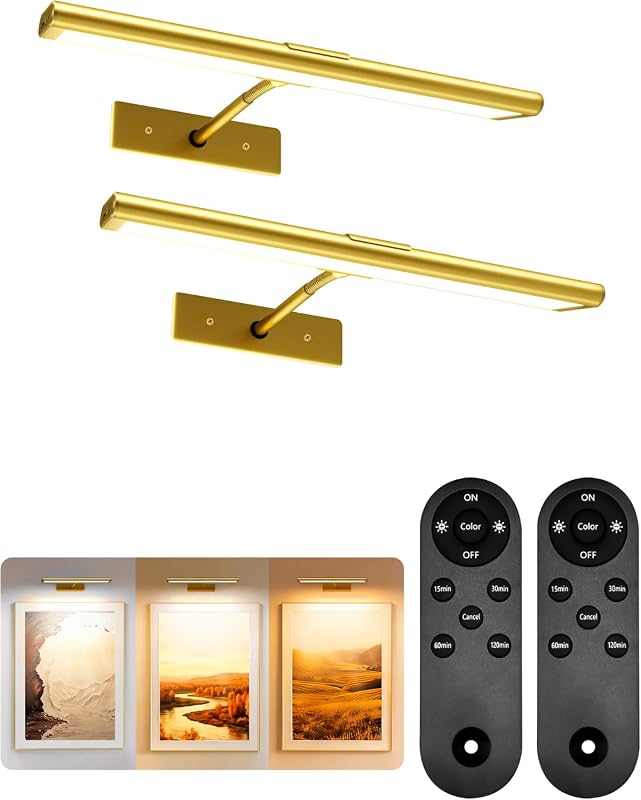
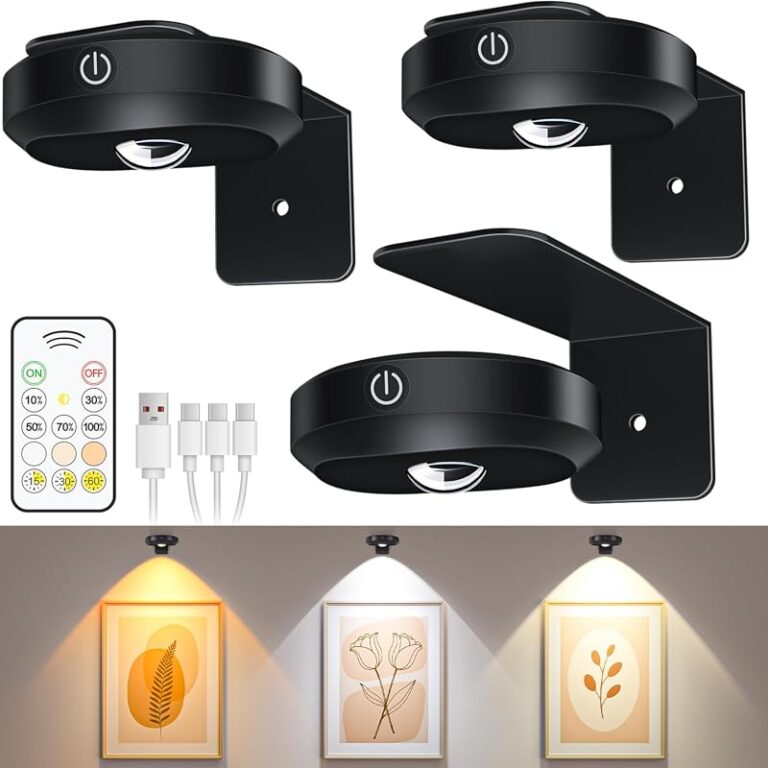
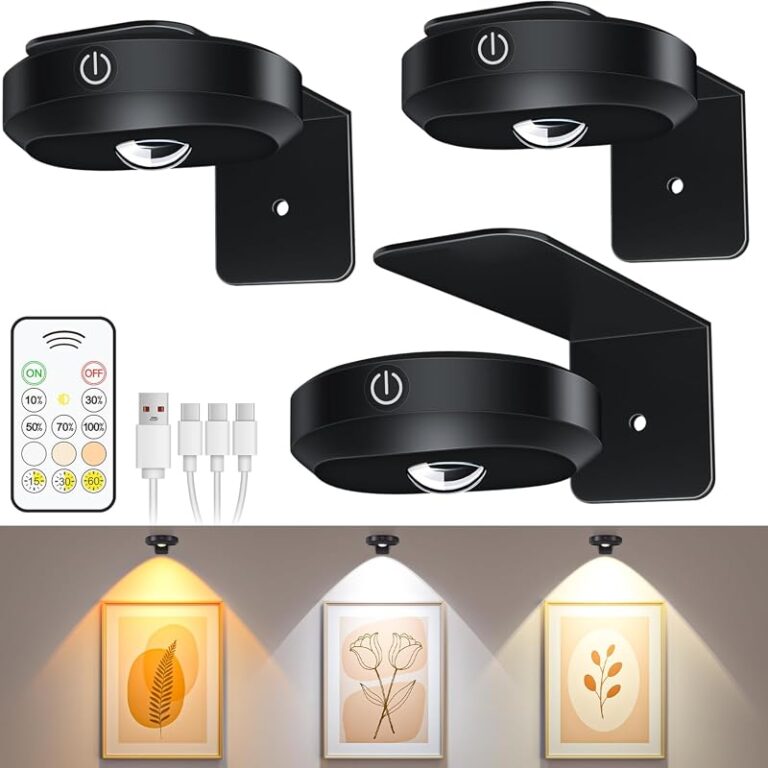
Rechargeable battery picture lights are designed for flexibility. They typically charge through a cable, then operate wirelessly for a limited runtime that depends on brightness level, timer use, and battery capacity. They are often chosen for framed prints, family photos, smaller canvases, and decorative accent lighting.
The main appeal is obvious: no trailing cable and no need to call an electrician. For many homes, that alone makes them the easiest route to a finished gallery look. If you are comparing this category more closely, our guides on whether battery picture lights need to be charged and how long battery-operated picture lights last go deeper into upkeep and runtime expectations.
Mains plug-in picture lights
Plug-in picture lights use standard household power through a visible or semi-hidden cord. They can be a smart compromise for people who want dependable brightness but do not want to open walls or commit to hardwiring. Because they draw continuous power, they are often better suited than battery models for longer evening use or for displays that stay illuminated on a routine schedule.
The downside is aesthetic rather than functional. Even a beautiful brass or bronze picture light can look less refined if the cord drops plainly down the wall. Some interiors can disguise that easily; others cannot.
Hardwired gallery lighting
Hardwired picture lights connect directly to the building’s electrical system. This is the most architectural solution and usually the cleanest visually once installed. It is often preferred for larger artworks, formal rooms, custom millwork, and homes where the art display is intended to stay in place for years.
Hardwiring is not automatically “better,” though. It is simply more permanent. If you rearrange art often, move homes regularly, or are still experimenting with scale and placement, a hardwired fixture can feel restrictive.
Hybrid options with dimming, remotes, and timers
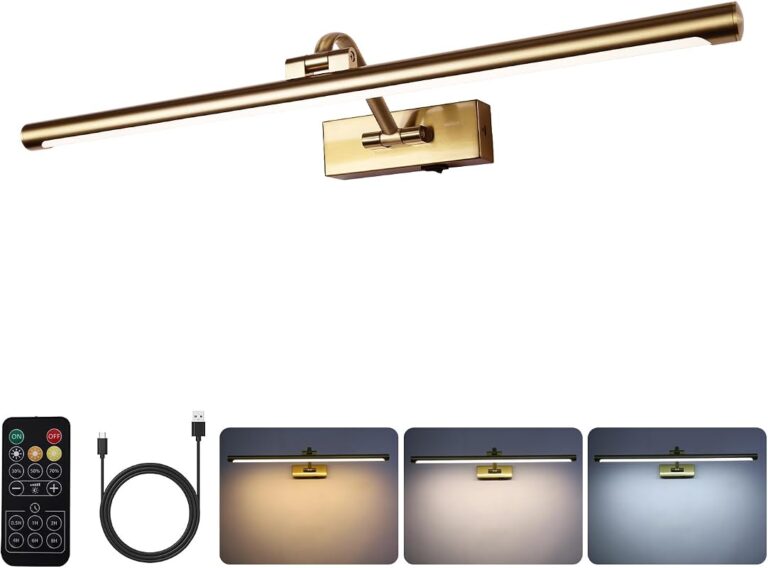
Some modern picture lights blur the lines between categories. You may see rechargeable models with remotes and preset timers, plug-in models with dimmers, or fixtures that can be adapted to different installation methods depending on the version. These convenience features can make a bigger difference in daily satisfaction than shoppers expect.
A timer can help preserve battery life. A remote can make a high-mounted light much easier to live with. Dimming matters because a light that is technically bright enough can still be visually harsh if it cannot be adjusted for evening ambiance.
What to look for before buying a picture light
Power source matters, but it is only one part of the decision. A picture light also needs to suit the artwork, the frame, the wall, and the room’s broader lighting scheme.
Brightness, beam spread, and artwork coverage
Brightness should be judged in relation to the artwork size and viewing distance, not in isolation. A compact light may be perfectly adequate for a small framed print but underpowered for a wide canvas. Beam spread matters just as much: too narrow and you get a hotspot in the center; too wide and the light spills beyond the frame.
Look for product listings that explain intended artwork width or coverage range. If the manufacturer only gives vague claims, treat them cautiously and compare the light’s width and arm design with your frame dimensions.
Colour temperature and colour rendering for art
For most homes, a warm-to-neutral white tends to flatter artwork better than an icy cool tone. Extremely cool light can make portraits, wood frames, and traditional paintings feel stark, while very warm light can mute crisp black-and-white photography or cooler-toned contemporary prints.
Color rendering also matters. A light that reveals subtle tones and surface detail more accurately will generally make art look richer and less flat. This is one area where official specifications are worth checking carefully when available.
Light quality can vary significantly by model. If color temperature or color rendering is important for your artwork, confirm the manufacturer’s specifications rather than relying on listing photos alone.
Battery life, charging time, and runtime claims
Battery runtime claims are often based on ideal conditions, lower brightness settings, or timer-based use. In real homes, runtime can feel shorter if the light is run at maximum brightness every evening. Charging time also varies, so a light that seems convenient on paper may become annoying if it is mounted high and needs frequent removal.
Before buying, check whether the battery is built in, removable, or replaceable. Also confirm how charging is handled and whether the light can be used while charging, since that varies by design.
Finish, materials, and build quality
Picture lights are highly visible decorative hardware, so finish matters. Brass, bronze, black, chrome, and painted finishes all create different moods. Build quality also affects how stable the light feels once mounted and whether moving parts hold their position over time.
Material descriptions should be read carefully. “Metal finish” and “solid brass” are not the same thing, and many listings use broad wording. If finish longevity is important, it is worth checking the official product page and care guidance.
Controls, dimmers, timers, and smart features
Controls often determine whether a picture light feels effortless or irritating. Touch controls can be simple, but they are less convenient for lights mounted high above large frames. Remotes are helpful, but replacement availability and battery needs for the remote itself are worth checking. Timers are especially useful on battery models because they reduce the chance of accidentally leaving the light on overnight.
- Match the light width and beam spread to the artwork, not just the wall.
- Check color temperature, dimming, and whether the output suits art rather than task lighting.
- Confirm charging method, claimed runtime, and whether access will be easy once mounted.
- Verify finish, included hardware, and installation requirements on the official listing.
Placement, sizing, and safety basics for picture lights
Even a good fixture can perform poorly if it is badly placed. Sizing and positioning have a major effect on glare, coverage, and the overall visual balance between the frame and the light.
Choosing the right light width for the frame size
As a general styling principle, the light should look proportionate to the frame rather than span its full width. Many people prefer a fixture that is noticeably narrower than the artwork so the light reads as a refined accent instead of a competing horizontal bar.
Very small lights can look under-scaled over broad frames, while oversized lights can dominate delicate works on paper. Manufacturer guidance on recommended artwork width is often more useful than trying to judge by product photos alone.
How high above the artwork to mount the fixture
The ideal height varies by fixture design, frame depth, and beam angle. In general, the light should sit high enough to spread illumination across the artwork but not so high that it creates spill, glare, or an awkward visual gap. A little adjustment can change the effect dramatically.
If you are unsure about placement, mock up the fixture position with painter’s tape before drilling. This helps you judge visual proportion and charging access without committing to one height too early.
Avoiding glare, hotspots, and shadowing on glass-covered art
Glass-covered art is especially sensitive to reflections. A poorly angled light can bounce directly into the room and make the artwork harder, not easier, to see. Adjustable heads and dimming help, but placement is the first line of defense.
Hotspots usually happen when the beam is too concentrated or the light sits too close to the art. Shadowing can appear when the fixture projects too far or when the frame profile is unusually deep.
Wall type, fixing hardware, and cable or charging access
Always consider the wall itself before choosing a fixture. Drywall, plaster, masonry, paneling, and built-ins all have different fixing needs. Included hardware may not suit every wall type, and heavier fixtures may require more secure support than the box provides.
Charging access is also easy to overlook. A rechargeable light mounted high above a staircase or over a large piece of furniture may look elegant but become inconvenient quickly if it needs frequent removal.
Electrical and heat safety considerations
Picture lights are generally low-risk when used as intended, but basic safety still matters. Follow the manufacturer’s installation and operating guidance, keep cables tidy and undamaged, and avoid improvising electrical modifications. If a hardwired installation involves new wiring, wall alteration, or any uncertainty about load and code requirements, consult a qualified professional.
Do not mount a fixture without confirming the wall type, anchor suitability, and the weight of both the light and any attached hardware. For hardwired setups or fragile plaster walls, professional advice is often the safest route.
Which power source suits which room and style of display?
Different rooms place different demands on a picture light. The “best” option often comes down to how formal the display is, how often the light will be used, and how much visual clutter the room can tolerate.
Living rooms, hallways, bedrooms, and dining spaces
Living rooms and dining rooms often benefit from dimmable lights because the artwork becomes part of the evening atmosphere. Hallways can be ideal for battery or plug-in models if you want to highlight a single piece without major installation work. Bedrooms usually benefit from softer, warmer light and lower intensity than dramatic statement pieces in entertaining spaces.
Rental homes, listed properties, and low-disruption installs
Battery-powered picture lights are often the easiest answer in rentals or historically sensitive homes where disruption should be limited. They reduce the need for visible cable routing or electrical changes and can usually be removed more easily when the display changes.
That makes them a strong choice for people who want a polished art-lighting effect without committing to permanent infrastructure.
Single statement artwork vs salon-style gallery walls
A single statement piece can work beautifully with one well-sized battery, plug-in, or hardwired light. A salon-style wall is more complicated. Once multiple artworks need even coverage, battery maintenance can become repetitive, and a more permanent power strategy may be easier to live with.
If you are still deciding whether wireless lighting is practical in real use, this guide on do battery-operated picture lights work is a helpful next read.
Traditional, contemporary, and mixed-material interiors
Traditional interiors often suit classic metal finishes and more formal fixture shapes, while contemporary rooms can carry slimmer black, bronze, or minimalist forms. In mixed-material spaces, the picture light should relate to nearby hardware, frame finishes, and furniture accents rather than trying to match everything exactly.
The benefits and limitations of battery-powered gallery picture lights
Battery-powered models deserve their popularity, but they are not a universal answer. Their strengths are real, and so are their compromises.
Why battery models are popular for flexibility and cleaner walls
The biggest advantage is freedom from cords. That instantly creates a neater presentation and opens up more placement options. Battery lights are also easier to reposition if you rotate artwork seasonally or refine your layout over time.
They can be especially appealing in homes where the artwork deserves attention but the wall itself should remain visually quiet.
Where battery lights can fall short on output, consistency, or upkeep
The main limitations are maintenance and performance consistency. Some battery lights dim gradually as charge drops, and some are simply not powerful enough for large or dark-toned artworks. If the fixture is used nightly, charging can become part of the routine whether you want it to or not.
That does not make them poor products; it just means they are best when their convenience outweighs the upkeep.
- No visible cord for a cleaner wall
- Usually easier installation
- Good for rentals and flexible layouts
- Often includes remotes or timers
- Needs charging or battery replacement
- Runtime varies by brightness and usage
- May be weaker for large artworks
- Less ideal for long nightly illumination
When a plug-in or hardwired light is better value long term
If the artwork is a permanent focal point and the light will be used for hours most evenings, plug-in or hardwired options often make better long-term sense. They remove the maintenance cycle and may deliver more stable output over time.
For a formal room, a custom-framed painting, or a large piece above a mantel, that added permanence can feel worth the extra effort.
Common buying and styling mistakes to avoid
Most disappointment with picture lights comes from a few predictable errors rather than from the concept itself.
Choosing a light that is too small, too cool, or too bright
A tiny fixture over a wide frame tends to look accidental. A very cool white can flatten the mood of the artwork. And excessive brightness can create glare, wash out subtle tones, or make the lit piece feel disconnected from the room’s softer ambient lighting.
Ignoring charging access and maintenance routines
It is easy to love the idea of a wireless light and forget the practical question: how will you recharge it once installed? A model that needs frequent attention may be fine over a bedside print and frustrating over a stair landing.
Mounting without considering wall material or frame proportions
Weak anchors, fragile plaster, and awkward proportions can all undermine the result. The fixture should feel visually centered and physically secure, with mounting hardware appropriate to the actual wall rather than the idealized one in the product listing.
Using picture lights that clash with existing finishes and decor
Because picture lights read like jewelry for the wall, a mismatched finish stands out quickly. The goal is not perfect matching, but intentional coordination with the frame, nearby hardware, and the room’s overall material palette.
Care, maintenance, and the final recommendation
A picture light should enhance the artwork quietly. That means caring for both the fixture and the display around it.
Cleaning finishes, protecting artwork, and preserving battery performance
Dust the fixture gently and follow the manufacturer’s care instructions for the specific finish. Avoid harsh cleaners unless they are explicitly recommended. For battery models, regular charging habits and moderate storage temperatures usually help preserve performance better than letting the battery sit fully drained for long periods.
It is also wise to review the broader question of light exposure and artwork preservation. If that is a concern, Hurrell Editions has a separate guide on whether LED lights fade pictures.
How to decide whether batteries are the right choice for your display
Choose a battery-powered picture light if you want easy installation, no visible cord, and enough flexibility to move or update the display later. It is usually the most practical option for renters, occasional-use accent lighting, and single artworks in places without convenient outlets.
Choose plug-in if you want steady power without committing to hardwiring. Choose hardwired if the artwork is permanent, the room is design-led, and you want the cleanest built-in look with the least ongoing maintenance.
A transparent verdict on the best use cases for battery, plug-in, and hardwired picture lights
Battery-powered gallery picture lights are worth considering, but they are not required. They are best for flexible, lower-disruption displays where convenience and a cordless look matter more than maximum output or all-night runtime. Plug-in lights suit shoppers who want reliability with less installation complexity, while hardwired lights are the strongest fit for permanent focal displays and the most seamless finished appearance.
In short: batteries make sense when the wall and lifestyle call for flexibility. If the art is permanent and the light will be used often, a plug-in or hardwired fixture is usually the more durable long-term choice.
Frequently Asked Questions