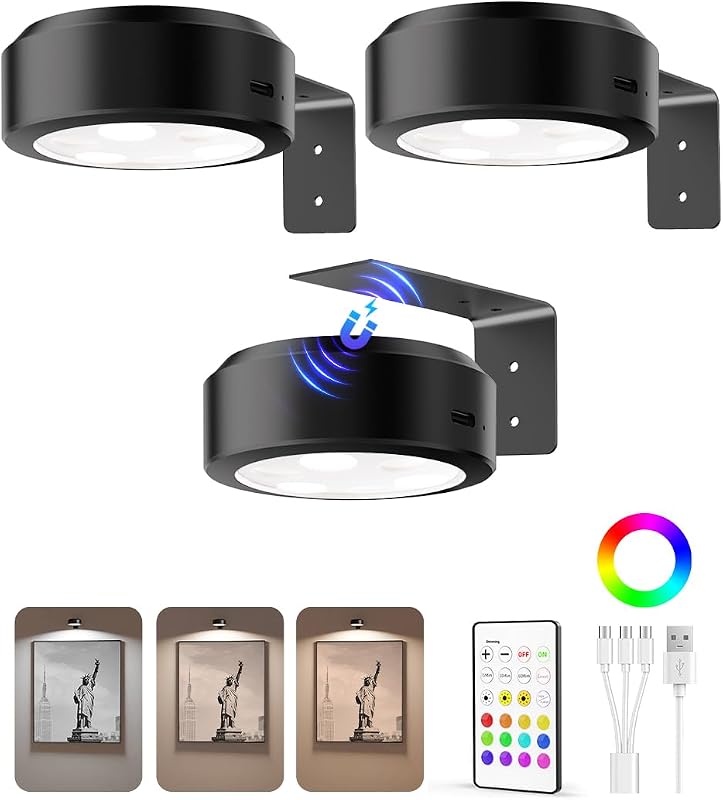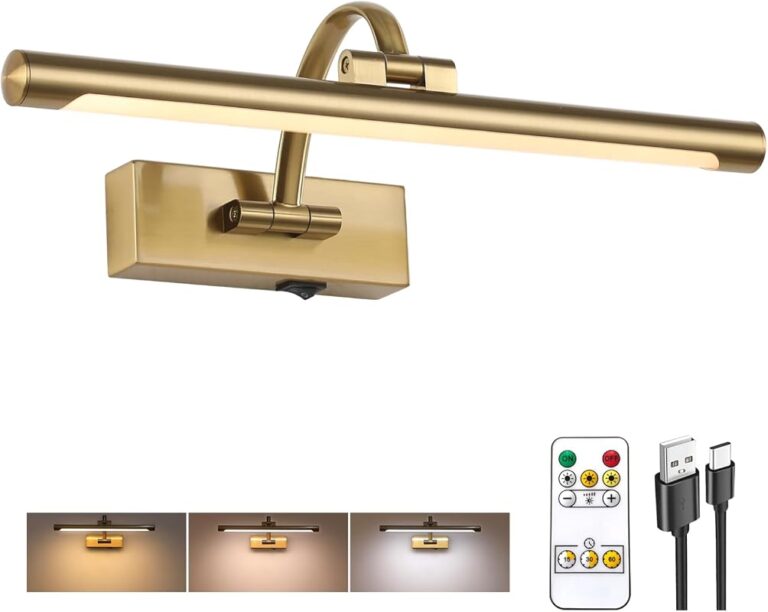
Do Battery Picture Lights Need to Be Charged

Battery picture lights usually do need some form of charging or battery replacement, but the answer depends on the exact type you buy. Some models have built-in rechargeable batteries that you top up with a USB cable. Others run on disposable batteries, which means there is no charging at all; you simply replace the cells when they run out.
That distinction matters more than many shoppers expect. A battery picture light can be wonderfully convenient for renters, older homes, gallery walls, and places where hardwiring would be excessive. But convenience only stays convenient if you understand how often the light will need attention, what affects runtime, and whether the upkeep suits the way you actually live.
If you are still deciding whether this category makes sense for your space, it helps to start with the broader question of whether battery operated picture lights work in real rooms, not just in product photos. In short, they can work very well, but only when the battery system, brightness level, and placement are realistic for the artwork you want to illuminate.
- Regular Charging: Yes, battery picture lights need recharging since they run on stored power rather than.
- Runtime Varies: Charge frequency depends on battery size, brightness level, and how many hours the light.
- Convenience Tradeoff: Battery models are easy to install and move, but they require ongoing charging or.
- Power-Saving Features: Timers, dimmers, and motion settings can help extend time between charges.
- Best Use Cases: They work well for spaces where wiring is difficult or temporary lighting flexibility is.
So, do battery picture lights need to be charged?
Yes, many do. But not all.
There are two common types:
| Type | How It Gets Power | What That Means for You |
|---|---|---|
| Rechargeable battery picture lights | Built-in battery charged by USB or similar cable | You recharge the light periodically |
| Replaceable-battery picture lights | AA, AAA, or other removable batteries | You do not charge the light; you replace batteries instead |
When shoppers ask this question, they are often really asking something more practical: Will this become annoying to maintain? That is the right question. A battery-operated light can feel low-effort in a hallway where it is turned on occasionally, but high-maintenance over a frequently used painting in a living room if you expect long nightly use.
How rechargeable battery picture lights work
Rechargeable picture lights have an internal battery pack. You charge the unit before use, then mount it and operate it until the battery runs low. Most are designed for easy charging with a cable, though the charging port location, charging time, and runtime vary by model.
This style appeals to people who want a cleaner look and do not want to keep buying disposable batteries. It can also be a good fit if you are lighting artwork in a spot where the light is used for short periods, such as evenings, dinner parties, or occasional mood lighting.
What affects how often you need to recharge?
There is no universal schedule because runtime varies by manufacturer and by how you use the light. In practice, these factors usually matter most:
- Brightness setting: Higher brightness tends to drain power faster.
- Hours of use: A light used for one hour a night behaves very differently from one used for five or six.
- Color temperature and extra features: Some models offer adjustable warmth, dimming, or remote control functions, which may affect battery performance.
- Battery size and age: Rechargeable batteries naturally lose some capacity over time.
- Room temperature and storage conditions: Extreme heat or cold can affect battery behavior.
Runtime claims are usually manufacturer estimates under specific settings. Always check the official product listing for the stated runtime, charging method, and whether the figure applies to full brightness or a lower dimmed setting.
If you dislike routine maintenance, a rechargeable light is not automatically the easiest option. It is easiest when the light is mounted somewhere accessible and used moderately. If it is installed high above a large artwork or in a stairwell, even occasional charging can become inconvenient.
What about battery picture lights that do not charge?
Some battery picture lights are powered by removable batteries. In that case, no charging is involved. You install the batteries, use the light, and replace the batteries when output weakens or the light stops working.
This can actually be simpler for some households. If the fixture is mounted in an awkward place, swapping batteries may be quicker than removing or repositioning the light for charging. It can also be helpful if you prefer not to deal with cables at all.
The tradeoff is ongoing battery replacement. Depending on the model and how often you use it, that may be occasional and painless, or it may become a recurring household chore.
- No charging cable to remember
- Quick to get running again with fresh batteries
- Useful in spots where removing the light for charging would be awkward
- Ongoing cost of replacement batteries
- More waste than a rechargeable option
- Brightness may drop as batteries weaken, depending on the model
How often will a battery picture light need attention?
The honest answer is: it depends on the light and on your habits.
A battery picture light used occasionally to highlight a favorite print may go quite a while before it needs charging or new batteries. The same light used every evening as a major source of room ambience may need attention much sooner.
Rather than trying to guess from marketing photos, think about your own use case:
- Is this an accent light or a daily-use light?
- Will it be on for minutes, or for hours?
- Do you want it bright enough to noticeably illuminate the art, or just create a soft glow?
- Can you easily reach it when the battery runs low?
If you want the least maintenance, use a battery picture light as accent lighting rather than as a primary room light. Shorter daily use usually means fewer charging sessions or battery changes.
Who should choose rechargeable vs replaceable batteries?
Rechargeable is often better for:
- People who want to avoid buying disposable batteries regularly
- Homes where the light can be reached easily for charging
- Occasional-use art lighting
- Shoppers who prefer a cleaner, more modern setup
Replaceable batteries may suit:
- People who want instant power without waiting for a recharge
- Lights mounted in less convenient spots
- Guest rooms, seasonal displays, or occasional styling areas
- Anyone who prefers the simplicity of swapping batteries and moving on
What shoppers often overlook before buying
Many frustrations with battery picture lights are predictable. They usually happen when the buyer focuses on finish and style first, and power logistics second.
- Confirm whether the light is rechargeable or uses disposable batteries
- Check the official runtime claim and whether it refers to full brightness or a dimmed mode
- Look for the charging port location and whether the cable is included
- Make sure the light can be reached safely for charging or battery replacement
- Confirm mounting method, wall compatibility, and any care or installation guidance from the manufacturer
It also helps to think about the artwork itself. A small framed print over a console table may need only a modest wash of light. A large piece over a fireplace or sofa may require a wider beam and more output, which can shorten battery life if you keep the light bright.
If you are still comparing options, our guide on how to choose a picture light for artwork goes deeper into beam spread, artwork size, finish coordination, and practical room fit.
Does charging make battery picture lights inconvenient?
Not necessarily. But it can, depending on placement.
A battery picture light feels convenient when:
- the artwork is at reachable height,
- the light has a reasonable runtime for your routine, and
- you use it as a finishing touch rather than an all-night lamp.
It feels inconvenient when:
- the light is mounted high,
- you forget to charge it until guests arrive,
- you expect it to function like hardwired lighting, or
- the brightness you want drains the battery faster than you expected.
- Match the light type to how often you actually use the room
- Choose accessible placement if the unit needs regular charging
- Read the official care and charging instructions before installation
- Assuming all battery picture lights are rechargeable
- Expecting a battery model to behave like permanent wired lighting
- Ignoring brightness settings when estimating runtime
Battery life, brightness, and artwork size are connected
One of the most useful ways to think about charging is to connect it to scale. Larger artwork often needs a larger light or a stronger beam. Stronger output generally asks more from the battery.
That does not mean battery lights are only for small pieces. It means expectations should be realistic. If you want a dramatic, gallery-like wash across a substantial framed work, verify the model’s stated coverage and runtime carefully. If those details are vague, that is a sign to pause and confirm with the seller or manufacturer before buying.
Placement tips that make charging less of a hassle
The easiest battery picture light to live with is one that is thoughtfully placed from the start. That means considering not just how it looks when lit, but how you will maintain it in a month or two.
- Mount artwork and light where you can safely reach them without strain.
- Use battery picture lights to highlight a focal piece rather than every frame in a gallery wall.
- Keep the fixture centered over the artwork for a cleaner look and more even light.
- If the art sits on a ledge rather than being wall-mounted, battery lighting can be easier to adjust and maintain.
For ledge displays, maintenance can be simpler because the artwork and light may be easier to access than a fixed installation. If that is the direction you are considering, you may also like our guide on how to style picture ledges for layered art display, especially if you want a relaxed, layered look instead of a formal single-artwork setup.
A battery picture light can make a small ledge display feel more intentional at night, especially when paired with one hero piece and a few quieter supporting frames.
Will charging or battery use affect the artwork itself?
The charging question is mostly about convenience, but art lovers often have a second concern: whether the light is safe for artwork. In general, you should check the light source type, heat output, and manufacturer guidance. Many modern picture lights use LEDs, which are often chosen because they are efficient and suitable for art display, but exact performance varies by product.
If preservation is a priority, especially for original art, vintage paper, textiles, or sentimental photographs, it is worth reading more about whether LED lights fade pictures. The short version is that lighting choice, exposure duration, placement, and environmental conditions all matter.
Avoid placing any art light too close to delicate or irreplaceable pieces without checking the manufacturer’s specifications and care guidance. For valuable artwork, consult a framing professional or conservator if you are unsure about long-term display conditions.
Signs a battery picture light may not be the right choice for you
Battery-powered options are useful, but they are not ideal in every room.
You may be happier with another lighting solution if:
- you want the light on for many hours every day,
- the artwork is very large and needs broad, strong illumination,
- the mounting spot is difficult to reach,
- you strongly dislike routine charging or battery replacement, or
- you want a permanent, architectural lighting effect.
In those cases, a plug-in or hardwired picture light may be more practical. Battery lights shine brightest, figuratively speaking, when flexibility matters more than permanence.
How to decide before you buy
Decide whether the light is for occasional ambiance or nightly use. This is the biggest predictor of whether charging will feel easy or irritating.
Read the official listing carefully to see whether the model is rechargeable or uses replaceable batteries.
If the listing only gives a broad estimate, look for details in the manufacturer specifications or user manual.
If the light is going above a tall headboard, staircase wall, or oversized artwork, consider how you will safely access it later.
Before ordering, confirm current specifications, included hardware, charging details, and warranty terms directly from the seller or manufacturer.
Final verdict
Do battery picture lights need to be charged? Many do, but some do not. Rechargeable models need periodic charging, while replaceable-battery models need fresh batteries instead.
The better question is whether that maintenance fits your room and routine. For occasional accent lighting, battery picture lights can be a smart, flexible solution. For heavy daily use or hard-to-reach placements, the upkeep may feel less charming over time.
If you remember just one thing, let it be this: do not buy based on looks alone. Check the battery type, stated runtime, brightness options, access for maintenance, and official manufacturer guidance before you commit.
- Battery picture lights may be rechargeable or may use disposable batteries.
- Rechargeable models need periodic charging; replaceable-battery models do not.
- How often the light needs attention depends on brightness, runtime, placement, and daily use.
- The easiest option is the one that matches how often you use the room and how easily you can reach the fixture.
Frequently Asked Questions