Ring Light for Wall

A ring light for wall is best when you want focused light and a clean, decorative wall feature in one fixture. It works especially well in small bedrooms, vanity areas, and content corners, but you should confirm brightness, mounting, and wall compatibility before buying.
A ring light for wall is a compact lighting choice that can add both function and visual structure to a room. It works best when you want focused light, a clean circular shape, and a fixture that feels more intentional than a loose lamp on a table or floor.
- Best use: Vanity, creator, and compact accent-lighting setups.
- Most important check: Match brightness, dimming, and color temperature to the room’s purpose.
- Installation matters: Wall type, anchors, and power source can change the best choice.
- Style value: The circular shape can work as both lighting and decor.
- Main limitation: It may not replace broader room lighting.
Ring Light for Wall: What It Is and Whether It’s Right for Your Space
A wall-mounted ring light is usually chosen for a specific purpose: to brighten a small zone while also acting as decor. That makes it appealing in rooms where every inch matters, or where the lighting needs to feel polished rather than purely practical.
Quick answer: the best uses for a wall-mounted ring light
The best uses are vanity areas, content corners, bedside accent lighting, and compact workspaces that need directed light without a bulky base. It can also work well in hallways or entry areas when the goal is to create a strong visual feature as much as to improve visibility.
How a wall ring light differs from desk and floor lighting
Desk lamps and floor lamps usually prioritize flexibility, while a wall-mounted design prioritizes space-saving and placement consistency. A wall fixture is also more likely to feel like part of the room architecture, which is useful when you want the lighting to look built-in or deliberately styled.
Exact brightness, diameter, power method, and mounting style vary widely by model. Always check the manufacturer listing and installation instructions before buying, especially if the light is meant to be wired into the wall.
Who Should Choose a Ring Light for Wall in 2026?
This type of light is not for every room, but it can be a smart choice when you need a mix of function, symmetry, and compact design. The strongest cases are spaces where the wall itself is part of the room’s visual story.
Best room types: bedroom, vanity area, home office, content corner, and hallway
Bedrooms benefit when the light is used as a reading or accent source near a mirror or headboard. Vanity areas and content corners benefit because a circular wall light can help define a zone, while home offices and hallways gain from a fixture that saves surface space and keeps the wall looking tidy.
Who benefits most: creators, makeup users, renters, and small-space decorators
Creators often like the clean, centered look of a ring-shaped fixture, especially when they need a consistent backdrop. Makeup users may value even front-facing light, renters may appreciate a compact solution that avoids floor clutter, and small-space decorators may simply want lighting that does more than one job.
What to Look For Before Buying
The best choice depends less on the ring shape itself and more on how the fixture performs in your room. Light quality, power source, finish, and mounting method all matter more than the visual style alone.
Brightness, dimming range, and color temperature
Brightness should match the task. A vanity or content corner usually benefits from dimming, so you can shift from softer ambient light to brighter task lighting without changing fixtures.
Color temperature matters too: warmer light tends to feel softer in bedrooms, while neutral to cooler light is often preferred for grooming, filming, or detail work. If the product listing does not clearly state the temperature range, check the official specifications before ordering.
If you want one fixture to handle both atmosphere and task lighting, look for a dimmable model with a wide brightness range rather than a single fixed output.
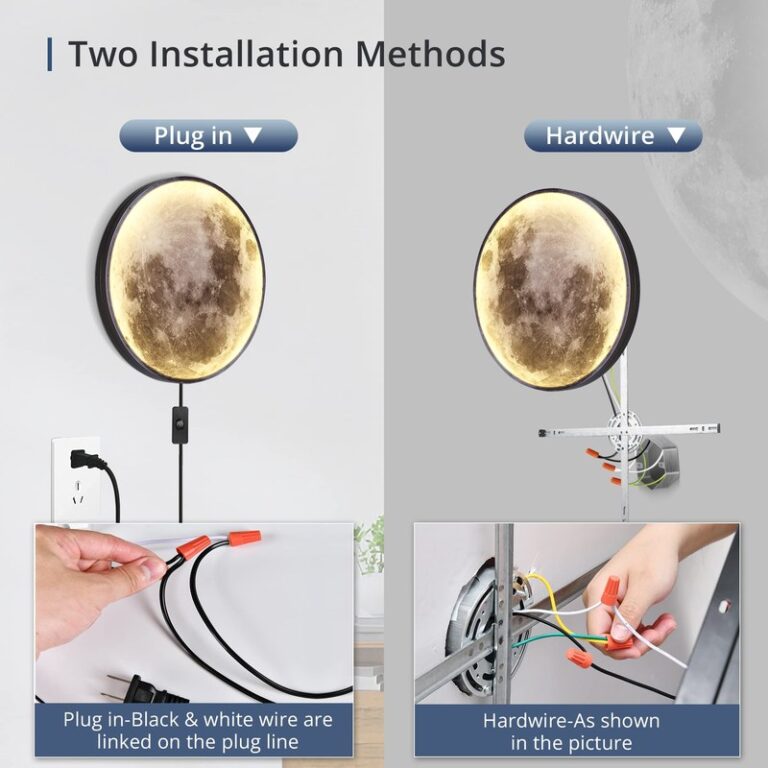
Power source: plug-in, USB, battery, or hardwired options
Plug-in models are usually easier for renters and for spaces where you want a simpler installation. USB or battery-powered versions can be useful for temporary setups, but the tradeoff is often shorter runtime or less output.
Hardwired options can look the most integrated, but they should only be considered when the wall, electrical setup, and installation plan are appropriate for the room. For anything involving new wiring or structural changes, a qualified professional is usually the safer route.
Build quality, materials, finish, and safety basics
Materials affect both appearance and durability. Metal finishes often feel more substantial, while lighter materials may be easier to mount but can look less refined depending on the design.
Safety basics matter as much as style. Check whether the fixture is intended for indoor use, whether the finish can handle humidity if it is near a bathroom vanity, and whether the manufacturer provides clear guidance on cleaning and electrical care.
Mounting style, weight, and wall compatibility
Before buying, confirm how the fixture attaches to the wall and what hardware is included. The wall type matters: drywall, plaster, masonry, and tile all require different anchors or mounting approaches.
- Confirm the fixture’s mounting method and included hardware
- Check wall type and weight compatibility
- Verify power source and cord routing
- Review brightness, dimming, and color temperature specs
Size, Placement, and Wall-Mounting Guide
Size and placement determine whether the light feels balanced or awkward. A ring that is too small can disappear visually, while one that is too large can overwhelm the wall and throw off the room’s proportions.
Choosing the right diameter and how it affects light spread
In general, a larger diameter spreads light more broadly and reads more clearly as a design feature. A smaller ring can look elegant in a tight space, but it may not provide enough coverage for makeup, desk work, or camera-facing use.
Because product dimensions vary by brand, compare the listed diameter to the wall area around it. The goal is not just to fill space, but to leave enough breathing room so the fixture looks intentional.
Recommended placement height for mirrors, desks, and seating areas
For mirrors and vanity setups, the light should usually support the face without creating harsh top-down shadows. For desks, it should sit high enough to avoid interfering with the work surface, while still providing useful forward light.
Near seating areas, the ring should feel like a visual anchor rather than a glare source. If the fixture is meant to be seen often, place it where the circle aligns cleanly with the furniture below it.
Do not rely on guesswork for wall mounting. Confirm the wall material, anchor type, and fixture weight limits, and get professional help when the installation involves electrical work or uncertain structural support.
Wall type, anchors, and hardware considerations
Mounting hardware should match the wall, not just the fixture. A light that is secure in drywall with one anchor system may need a completely different approach on tile or masonry.
If the listing does not specify hardware clearly, treat that as a sign to verify with the seller or manufacturer before purchase. That is especially important for heavier models or for any design that extends farther from the wall.
Spacing and visual balance around art, mirrors, and furniture
A wall-mounted ring light works best when it has enough negative space around it to breathe. If it sits too close to art, shelving, or a mirror frame, the composition can feel crowded even if the light itself is attractive.
For more guidance on choosing a fixture that suits a wall display, see how to choose a dimmable picture wall light and how to choose a picture light for artwork. The same spacing logic often helps a ring light feel more deliberate.
Styling Ideas: How to Make a Wall Ring Light Look Intentional
The clean circle can read as modern, glam, or even softly industrial depending on the finish and surrounding decor. Styling matters because a wall fixture is always visible, even when it is turned off.
Minimal, modern, glam, and soft-industrial room styles
Minimal rooms usually work best with a slim profile and a restrained finish. Modern spaces can handle a stronger geometric presence, while glam rooms often benefit from reflective metals or a brighter visual accent.
Soft-industrial rooms can pair the ring with matte black, brushed metal, or other understated hardware so the light feels architectural rather than decorative in a delicate way.
Matching the finish to existing decor and fixtures
Match the fixture to nearby metals when possible, but do not force every finish to be identical. A ring light can still feel cohesive if it echoes one dominant tone in the room, such as black, brass, chrome, or brushed nickel.
If the room already has strong hardware on cabinet pulls, mirror frames, or shelving, choose a ring light that complements that family of finishes rather than competing with it.
Using it as both functional lighting and a design feature
Because the shape is so recognizable, this type of light often becomes a focal point even when it is meant to be practical. That is an advantage in a content corner or vanity area, where the fixture can support both the room’s function and its visual identity.
Think of the ring as a wall sculpture that also happens to light the space. That mindset usually leads to better placement, cleaner spacing, and fewer styling regrets.
Benefits, Limitations, and Common Mistakes
A wall-mounted ring light can be a smart design choice, but it is still a specialized fixture. The best results come from understanding what it does well and where it is likely to fall short.
Key advantages: task lighting, symmetry, and space-saving appeal
The biggest advantage is targeted light without using floor or table space. The circular form also adds symmetry, which can make a room feel more composed even when the rest of the decor is simple.
For compact rooms, the space-saving benefit is often just as important as the light itself. It keeps surfaces clear and can reduce the need for multiple smaller lamps.
Common drawbacks: glare, uneven coverage, and over-styled placement
Like many decorative lights, a ring fixture can create glare if it is too bright, too close to reflective surfaces, or positioned at the wrong angle. Coverage can also feel uneven if the diameter is too small for the intended task.
Another common issue is over-styling. If the light is placed as a statement piece without considering the rest of the wall, it can look forced instead of integrated.
- Saves surface space
- Adds a strong visual focal point
- Works well for vanity and content zones
- Can feel polished and modern
- May not light a whole room evenly
- Can cause glare if placed poorly
- Installation depends on wall type and power source
- Style can feel overdone if the wall is crowded
Typical mistakes to avoid with size, height, and brightness
The most common mistake is choosing a ring that is too small for the wall or too weak for the task. Another is mounting it at a height that looks decorative but does not actually help the person using the space.
Brightness is easy to overestimate from product photos, so confirm the listing details and check whether dimming is available. If the model is meant for grooming or filming, that specification matters more than the finish.
Care, Maintenance, and Long-Term Value
A wall ring light can last well when it is chosen for the right room and maintained with basic care. Long-term value comes from durability, easy cleaning, and a mounting setup that remains secure over time.
Cleaning the ring, diffuser, and wall hardware safely
Use gentle cleaning methods and avoid harsh chemicals unless the manufacturer specifically allows them. A soft, dry or slightly damp cloth is usually safer for the finish, while diffusers and lenses should be handled carefully to avoid scratches.
Wall hardware should also be checked periodically, especially in rooms with vibration, humidity, or frequent use. If the fixture loosens, stop using it until it is properly secured.
Checking cables, mounts, and bulb performance over time
Inspect cords for wear, especially near bends or connection points. If the light uses replaceable bulbs or integrated LEDs, note whether performance changes over time and whether replacement parts are available.
For plug-in models, cord management matters as much as the fixture itself. A neat cable route keeps the wall looking finished and reduces accidental tugging.
When a wall ring light offers strong value versus other lighting options
It offers strong value when you need one fixture to do three jobs at once: illuminate, decorate, and preserve floor or surface space. That combination is especially useful in small bedrooms, vanity corners, and creator setups.
If you only need general room lighting, a ceiling fixture or a better-placed lamp may make more sense. If your priority is highlighting artwork or a framed display, a dedicated picture light may be the more precise choice; for a deeper comparison, the guide to what a dimmable picture wall light is can help clarify the difference.
Final Verdict: Is a Ring Light for Wall Worth It?
Yes, if your space needs focused light, a cleaner wall composition, and a fixture that feels like part of the decor. It is less compelling if you need broad room illumination or if the wall cannot support the installation safely and cleanly.
Best-fit recommendation by room, budget, and style preference
Choose this type of light for bedrooms, vanity areas, content corners, and compact home offices where the wall itself can become part of the design. It is most convincing when the finish matches the room, the size fits the wall, and the brightness matches the actual task.
When to choose an alternative instead
Pick another option if you need more flexible lighting, more even room coverage, or a simpler setup with fewer mounting concerns. In those cases, a desk lamp, floor lamp, or dedicated picture light may be a better fit.
- Best for small spaces that need both light and a strong visual feature
- Check brightness, mounting method, wall type, and power source before buying
- Placement and scale matter as much as the fixture’s shape
- It is a smart choice for vanity, creator, and accent-lighting setups
Frequently Asked Questions