
Where Can I Find a Craft Desk With Storage?

You can find a craft desk with storage through online furniture retailers, office and craft specialists, local furniture stores, secondhand marketplaces, and custom makers. The best option is the one that fits your room, project type, and storage workflow rather than simply offering the most drawers.
If you’re asking where can i find a craft desk with storage, the best places to start are large online furniture retailers, office and craft specialists, local furniture stores, and secondhand marketplaces. The right shopping route depends less on brand hype and more on your project type, room size, storage needs, and whether you want a ready-made, flexible, or custom solution.
A craft desk is not just a regular desk with extra drawers. For many buyers, it needs to support cutting mats, sewing machines, paper organizers, vinyl tools, paints, or shared work-from-home use without turning the room into a clutter zone. That means the smartest purchase often comes from comparing desk style, storage layout, materials, and room fit before you compare looks alone.
- Best places: Start with online retailers, then compare specialists, local stores, and secondhand options.
- Measure fully: Check depth, legroom, chair clearance, and drawer access, not just wall width.
- Match the work: Sewing, scrapbooking, drawing, and Cricut setups need different surfaces and storage types.
- Prioritize materials: Easy-clean tops and sturdy frames matter more than decorative extras.
- Avoid overbuying: A moderate desk plus smart nearby storage often works better than one oversized unit.
Where can I find a craft desk with storage today? Best places to shop in 2026
You can find craft desks with storage in more places than ever, but not every retailer serves the same kind of shopper. Some are best for compact apartment-friendly desks, some for modular studio setups, and some for low-cost secondhand finds that need patience and careful measuring.
Online furniture retailers and marketplace options
Online furniture retailers are usually the easiest starting point because they let you filter by width, depth, drawer count, finish, and configuration. That matters when you need a desk that fits a sewing corner, a spare bedroom, or a shared office wall without blocking walkways.
Large furniture sites and broad marketplaces tend to offer the biggest range of styles: writing-desk hybrids, craft tables with cubbies, desks with hutches, corner units, and fold-away designs. They are especially useful if you already know your maximum width and want to compare several layouts side by side.
The trade-off is that online listings can vary in detail. Some give clear dimensions for the desktop, leg opening, and drawer interiors, while others focus mostly on staged photos. Before buying, check the official listing for full measurements, assembly information, material description, care guidance, and return terms.
Availability, finishes, included organizers, and exact dimensions can vary by retailer and by model revision, so confirm the current product page rather than relying on older listing images or third-party summaries.
If your space is tight, it also helps to compare nearby categories such as small writing desks and compact home office desks. Hurrell Editions has a helpful guide to the best places to buy a small writing desk if your craft setup needs to stay visually light and apartment-friendly.
Office, craft, and hobby specialists worth checking
Office furniture stores can be surprisingly strong options when your craft work overlaps with laptop use, sketching, planning, or light assembly. They often carry desks with better cable management, more structured drawer systems, and finishes designed for daily wipe-downs.
Craft and hobby specialists make more sense if you need storage that matches a specific workflow. For example, scrapbookers may want paper-friendly shelving and shallow drawers, while Cricut users may prefer open cubbies for machines, mats, and vinyl rolls. Sewing-focused buyers often benefit from larger uninterrupted surfaces and sturdy support for machine weight and vibration.
Specialist retailers may also offer modular add-ons such as rolling carts, matching hutches, pegboard systems, or stackable bins. Those extras can be more useful than a desk with too many built-in compartments that do not match how you actually work.
If you are also evaluating ergonomic options for drawing or maker work, our guide to the best standing desk for artists can help you compare whether a fixed-height craft desk or an adjustable setup makes more sense.
Local furniture stores, secondhand sources, and custom makers
Local furniture stores are worth visiting when you want to judge scale and proportions in person. A desk that looks compact online can feel bulky once you see the cabinet depth, drawer faces, and side panels. In-store shopping also makes it easier to compare chair clearance and whether your knees will hit a center drawer or support rail.
Secondhand marketplaces, thrift stores, estate sales, and local resale apps can be excellent sources for solid wood desks, old library tables, and office furniture with better materials than many budget flat-pack models. The downside is that storage layouts may not be ideal for modern crafting, and you need to check drawer operation, wobble, surface wear, and missing hardware carefully.
Custom makers are the best route when your room has awkward dimensions or your projects are highly specific. A custom desk can be designed around a sewing machine lift, printer shelf, hidden charging area, or exact cubby sizes. This route costs more in most cases, but it can solve problems that ready-made furniture cannot.
How to choose the right craft desk with storage for your space and projects
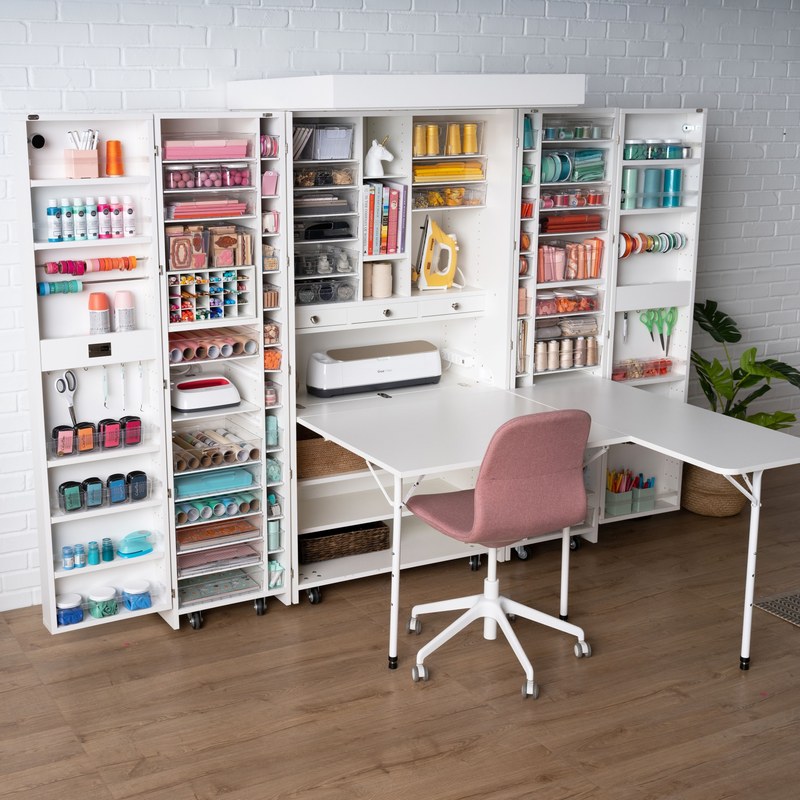
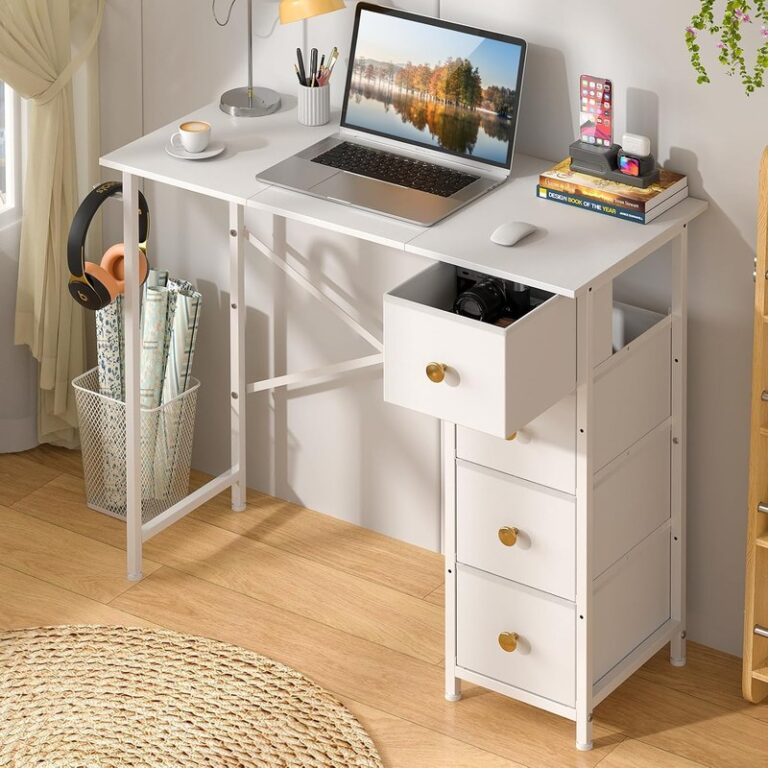
A compact craft desk with built-in storage holds neatly arranged supplies.
Choosing well starts with how you work. A desk for paper crafts behaves differently from one used for sewing, digital illustration, or mixed media. The storage that helps one person stay organized can make another feel boxed in.
Match the desk to sewing, scrapbooking, drawing, Cricut, or mixed-media work
Sewing usually needs a stable top, enough depth for fabric handling, and storage that keeps notions accessible without swallowing floor space. Scrapbooking benefits from broad horizontal work area, room for paper trimmers, and storage that separates small tools from large paper pads.
Drawing and illustration setups often need fewer bulky compartments but better legroom, task lighting, and room for tools you reach for constantly. Cricut and cutting-machine users may want a desk wide enough for mat handling, plus nearby open storage for rolls, blades, and accessories. Mixed-media crafters tend to benefit most from a flexible layout: some closed storage to hide mess, some open storage to keep active supplies visible.
If your needs overlap with art-making more broadly, our article on the best desk for an artist covers useful distinctions between general creative desks and task-specific workstations.
Measure for legroom, work surface depth, and clearance around drawers and cabinets
Most buying mistakes happen because shoppers measure only wall width. Width matters, but so do depth, seated legroom, chair pull-back distance, and clearance for drawers, doors, and side cabinets to open fully.
Think about three zones: the desk footprint, the working footprint, and the circulation footprint. The desk footprint is the furniture itself. The working footprint includes space needed to open drawers, extend leaves, or slide out a keyboard tray. The circulation footprint is the room you need to sit down, stand up, and move around comfortably.
Use painter’s tape on the floor to map the desk width and depth, then pull a chair into place and pretend to open every drawer or cabinet. This catches layout problems before delivery day.
Also measure vertical space if you are considering a hutch, upper shelf, or fold-out lid. Window trim, wall art, shelving, and outlet placement can all affect whether a desk truly fits where you want it.
Decide which storage types actually improve your workflow
Not all storage is equally useful. Deep drawers can become junk bins if you mostly use flat supplies. Open cubbies look convenient but can turn messy fast if you store many small items without bins. Cabinets hide visual clutter well, but they slow you down if you need constant access.
Ask yourself what deserves prime-access storage: scissors, pens, tape, chargers, machine tools, paper, thread, or electronics. Then match those items to storage types. Shallow drawers suit hand tools. Open shelves suit baskets and machines. File-style drawers can work for paper and vinyl sheets if dimensions allow. Hutch compartments help if you want vertical storage, but they can make a room feel heavier.
If your main challenge is organizing supplies rather than choosing the desk itself, pairing the desk with archival or labeled storage can make a bigger difference than adding more furniture. For paper-based projects, see our guide on where to buy acid free storage boxes.
What to look for before you buy: materials, build quality, and practical features
A craft desk works harder than a decorative console or occasional writing table. It may need to handle cutting, gluing, machine use, rolling carts, and frequent cleaning. Materials and construction matter more than product photos suggest.
Engineered wood, solid wood, metal frames, and laminate tops compared
Engineered wood is common in affordable and mid-range desks. It can look polished and offer useful storage at a lower cost, but durability depends on thickness, edge treatment, and how well the hardware is installed. Thin panels and weak cam-lock assembly can lead to wobble over time.
Solid wood usually offers better longevity and repair potential, especially for buyers who plan to keep the desk for years. It can, however, be heavier, more expensive, and more sensitive to moisture or finish wear depending on the topcoat.
Metal frames add rigidity and often suit modern or industrial rooms. They are particularly useful for desks that need to stay stable under cutting pressure or machine vibration. Laminate tops are practical for many crafters because they wipe clean easily and resist minor spills better than some painted surfaces.
Weight capacity, drawer slides, cable management, and adjustable components
If you use a sewing machine, printer, heat press, or stacked organizers, pay attention to stated load guidance where the manufacturer provides it. Weight capacity can vary widely by model, and not every retailer lists it clearly. If that information is missing, contact the seller or manufacturer before buying.
Drawer slides matter too. Smooth slides make a desk feel better day to day, especially if you open drawers constantly. Also look for practical details such as cord cutouts, rear cable channels, leveling feet, adjustable shelves, and removable trays. These small features often determine whether the desk feels purpose-built or frustrating.
Easy-clean finishes and surfaces that can handle glue, paint, and cutting tools
Craft projects are messy in different ways. Glue leaves residue, paint splatters, cutting tools can scratch, and vinyl or tape can pull at delicate finishes. A desk that looks refined but stains easily may not be the best long-term choice for active crafting.
Look for finishes that can be wiped regularly without special treatment. Laminate and sealed wood-look surfaces are often easier to live with than porous or lightly painted tops. If you use blades, rotary cutters, or wet media, plan to add a protective mat rather than expecting the desk surface to absorb that wear gracefully.
Always confirm the manufacturer’s care instructions before using strong cleaners, solvents, or adhesive removers. Some finishes can dull, swell, or discolor even when the desk is marketed as easy-care.
Which craft desk with storage fits best in each room?
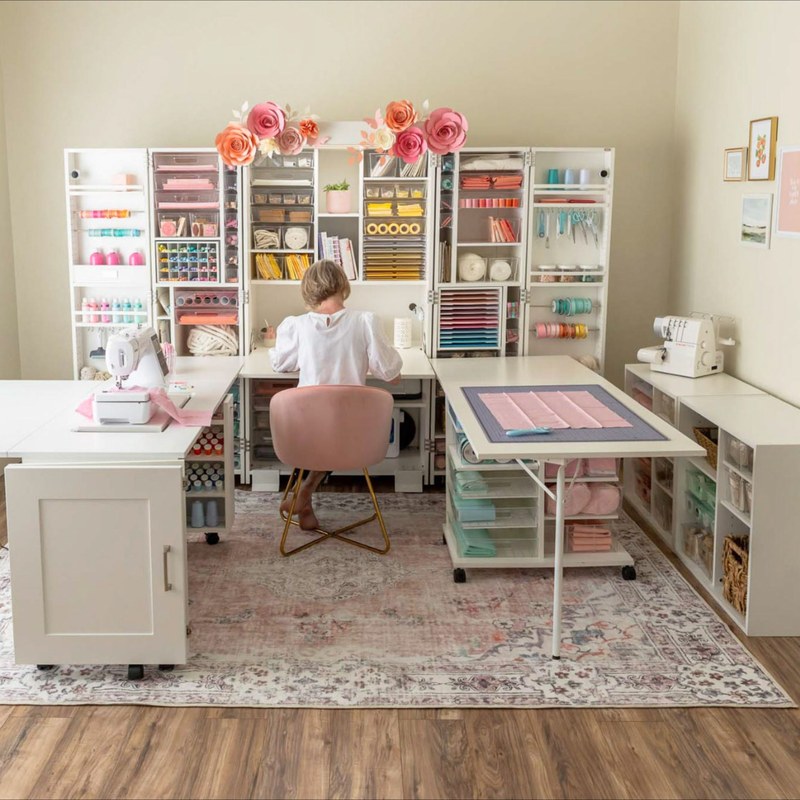
A storage craft desk shown in a bright room for room-by-room fit comparison.
The same desk can feel efficient in one room and overwhelming in another. Room context matters just as much as the desk itself.
Small apartments, spare bedrooms, and shared home office setups
In small apartments, a compact desk with a light visual footprint usually works best. Look for slimmer side drawers, open legs, or a writing-desk silhouette with a few well-placed storage zones instead of bulky cabinets on both sides. White, light wood, and simple metal-frame styles can help the room feel less crowded.
Spare bedrooms need balance. If the room also hosts guests, storage should hide supplies quickly and keep the desk from dominating the space. Shared home offices benefit from desks that can pass visually as office furniture rather than looking like a permanent craft station.
Dedicated craft rooms, studio corners, and multipurpose family spaces
Dedicated craft rooms can support larger desks, L-shaped layouts, and companion storage pieces. This is where built-in drawers, open shelving, and modular carts can work together well because the room is designed around the activity.
Studio corners benefit from zoning. A craft desk can define one side of the room while nearby shelving, lighting, and rolling storage take pressure off the desktop. In family spaces, flexibility matters more. Fold-out desks, drop-leaf styles, or desks with concealed storage are easier to live with when the room changes function throughout the day.
Styles that suit modern, traditional, minimalist, and creative interiors
Modern interiors often suit clean-lined desks with flat drawer fronts, matte hardware, and restrained storage. Traditional rooms can carry richer wood tones, paneled drawers, and furniture-like silhouettes that feel more permanent.
Minimalist spaces tend to benefit from fewer visible compartments and more closed storage. Creative interiors can handle bolder colors, mixed materials, or visible supply storage, but even then, cohesion matters. A craft desk should feel intentional, not like a pile of organizers grew around a random table.
Best craft desk with storage styles to compare in 2026
There is no single best style for everyone. The right one depends on whether you prioritize compactness, spread-out work area, flexibility, or ergonomics.
Compact writing-desk hybrids with drawers
These are ideal for buyers who want a desk that can support crafts while still looking appropriate in a bedroom or home office. They usually offer the easiest styling, the smallest footprint, and the least visual bulk. Their limitation is storage volume, so they work best when paired with nearby bins or a rolling cart.
L-shaped and corner craft desks for maximum surface area
L-shaped and corner desks give you separate zones for making, sorting, and computer work. They are especially helpful for multitaskers who need one side for a machine or monitor and another for active project space. The trade-off is that they demand careful measuring and can feel dominant in small rooms.
Fold-out, drop-leaf, and hideaway options for flexible spaces
These styles suit renters, multipurpose rooms, and anyone who cannot leave projects visible all the time. They can be excellent space savers, but always check how much usable surface remains once folded sections, hinges, or internal storage are accounted for.
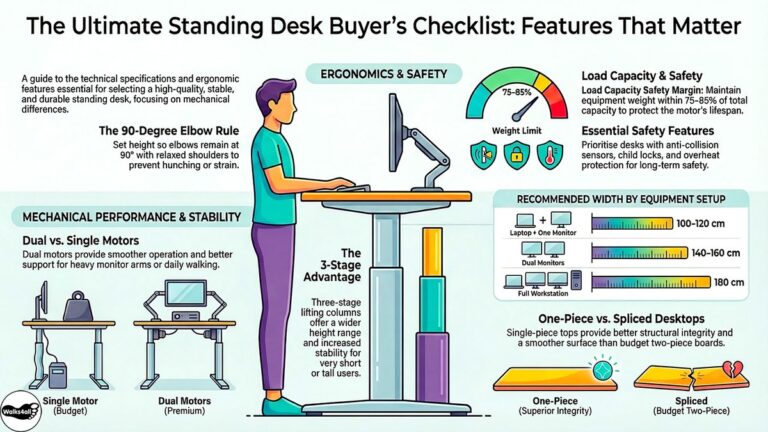
Standing or height-adjustable desks with modular storage add-ons
Height-adjustable desks are worth considering if you alternate between detailed seated work and broader standing tasks like trimming, sorting, or packaging. Because many adjustable desks have limited built-in storage, they often work best with separate drawer units, carts, or shelving added around them.
- Can reduce strain during longer creative sessions
- Flexible for mixed computer and craft work
- Easy to pair with modular storage
- Usually less built-in storage than traditional craft desks
- Cable management needs more planning
- Add-on storage can increase total cost and footprint
Benefits, limitations, and common buying mistakes to avoid
Craft desks with storage can be transformative, but only when expectations are realistic.
Why built-in storage can improve organization and reduce visual clutter
Built-in storage keeps tools close and reduces the need for extra furniture. That can make a room feel calmer, especially in shared spaces where loose bins and stacked supplies quickly become visual noise. It also helps create repeatable habits because each item has a dedicated home.
Trade-offs like assembly complexity, bulk, and limited reconfiguration
The more storage a desk includes, the more likely it is to be heavy, complicated to assemble, and difficult to move later. Built-in cabinets also lock you into one layout. If your projects change often, separate modular storage may be more adaptable than an all-in-one desk.
Mistakes shoppers make with sizing, drawer access, and unrealistic storage expectations
One common mistake is assuming all drawers are equally usable. Some are decorative-shallow, some are interrupted by support framing, and some cannot hold larger tools or paper sizes. Another mistake is ignoring how much room drawer fronts need once the chair is occupied.
Shoppers also tend to overestimate how much a desk alone can store. If you have a large supply collection, the best solution may be a moderately sized desk plus smart adjacent storage, not the bulkiest desk you can find.
How to style a craft desk with storage so it feels organized, not overcrowded
Styling matters because a craft desk often lives in spaces that also need to feel restful, professional, or guest-ready.
Color palettes, seating, task lighting, and desktop zoning ideas
Start with a restrained palette: one main desk finish, one or two storage materials, and a small accent color through bins, art, or desk accessories. This keeps supplies from becoming the room’s dominant visual story.
Choose seating that fits the desk scale and your task length. A supportive chair is important for detailed work, and good task lighting is essential if the desk sits away from natural light. Divide the desktop into zones: active work, tool access, and temporary staging. That simple structure makes even a compact desk feel more usable.
Using bins, labels, pegboards, and nearby shelving without overwhelming the room
Bins and labels work best when they reduce friction, not when they create a system so detailed that you stop maintaining it. Pegboards are useful for vertical access, but they should hold frequently used tools, not every supply you own. Nearby shelving can extend storage capacity, though closed baskets or matching boxes usually look calmer than a wall of exposed packaging.
Ways to blend a craft workstation into a polished home office
If the desk shares space with work calls or study time, keep the most colorful or irregular supplies inside drawers or opaque bins. Use one tray for daily tools, one lamp style throughout the room, and storage finishes that echo the rest of the office furniture. The goal is not to hide creativity but to keep the workstation from feeling accidental.
Care, maintenance, value, and the smartest final recommendation
A craft desk earns its value over time through daily usability, not just its first impression in photos.
Cleaning routines for wood-look, painted, laminate, and metal surfaces
Dust regularly, wipe spills quickly, and use a soft cloth with a cleaner suitable for the finish listed by the manufacturer. Laminate and sealed wood-look surfaces are often straightforward to maintain, while painted finishes may need gentler treatment to avoid dulling or chipping. Metal frames usually need only light dusting and occasional wipe-downs unless they are in humid spaces.
When a budget desk offers good value and when to invest more
A budget desk can be a smart buy if your tools are light, your storage needs are modest, and the desk will not be moved often. It can also work well in temporary spaces, first apartments, or secondary hobby rooms.
Invest more when you need better stability, heavier-duty storage, longer-term durability, or a finish that has to hold up in a visible shared room. If the desk supports expensive equipment or daily use, stronger materials and better hardware are usually worth the upgrade.
A transparent verdict on the best buying route for most shoppers today
For most buyers, the best route is to start online to compare sizes and layouts, then narrow choices by storage type, materials, and room fit before checking official specifications and local availability. A compact or mid-size desk with practical drawers, easy-clean surfaces, and nearby supplemental storage is usually a better long-term choice than the biggest all-in-one craft station you can squeeze into the room.
The smartest choice for most homes is a clean-lined craft desk or writing-desk hybrid with a durable top, a few genuinely useful drawers, and enough open legroom to stay comfortable. It suits shared home offices and spare bedrooms especially well, with the main limitation being that large supply collections will still need separate storage nearby.
Frequently Asked Questions

4 Comments