
What Is the Best Desk for an Artist in 2026

The best desk for an artist is usually a sturdy, spacious, and posture-friendly setup that matches the medium you work in most. For many home offices, an adjustable desk with a tilting surface is the most flexible choice.
What is the best desk for an artist? In most home offices, it is a desk that matches your medium, gives you enough surface area to work comfortably, and supports the posture you actually use day to day. For many artists, that means an adjustable or drafting-style setup rather than a standard shallow office desk.
- Match the desk to your medium: Drawing, digital work, painting, and craft each need different features.
- Prioritize depth and stability: These affect comfort and precision more than decorative style.
- Adjustability helps most artists: Sit-stand height and tilt can support better posture and workflow.
- Choose easy-clean materials: Artists benefit from surfaces that handle dust, spills, and regular wiping.
- Measure the room first: Desk size, chair clearance, lighting, and storage all need to work together.
What Is the Best Desk for an Artist? The Short Answer for 2026
The best desk is the one that fits how you create, not just how the room looks. A digital illustrator, watercolor painter, and mixed-media maker all need different combinations of angle, depth, cleanup, storage, and durability.
The best desk depends on your medium, posture, and space
If you mostly sketch or draw, a desk with a slight tilt can reduce neck strain and make long sessions easier. If you work digitally, a stable surface with room for a monitor, tablet, and keyboard often matters more than tilt.
For painters and crafters, the most useful desk is usually larger, tougher, and easier to wipe clean. In small apartments or shared rooms, a compact but well-organized desk can still work if you choose the right depth and storage.
A quick verdict: the most versatile artist desk setups for home offices
For most artists, the most flexible choice is an adjustable sit-stand desk paired with a tilting board or drafting surface. That combination supports drawing, laptop work, reference viewing, and posture changes without locking you into one workflow.
If you want a simpler answer, a flat drafting desk is the safest all-around pick for traditional artists, while a sturdy studio workbench is better for messy materials. If you are shopping for tools that support your setup, our guide to the best lighting for a home art desk can help you complete the workspace.
What an Artist Desk Needs to Do Well
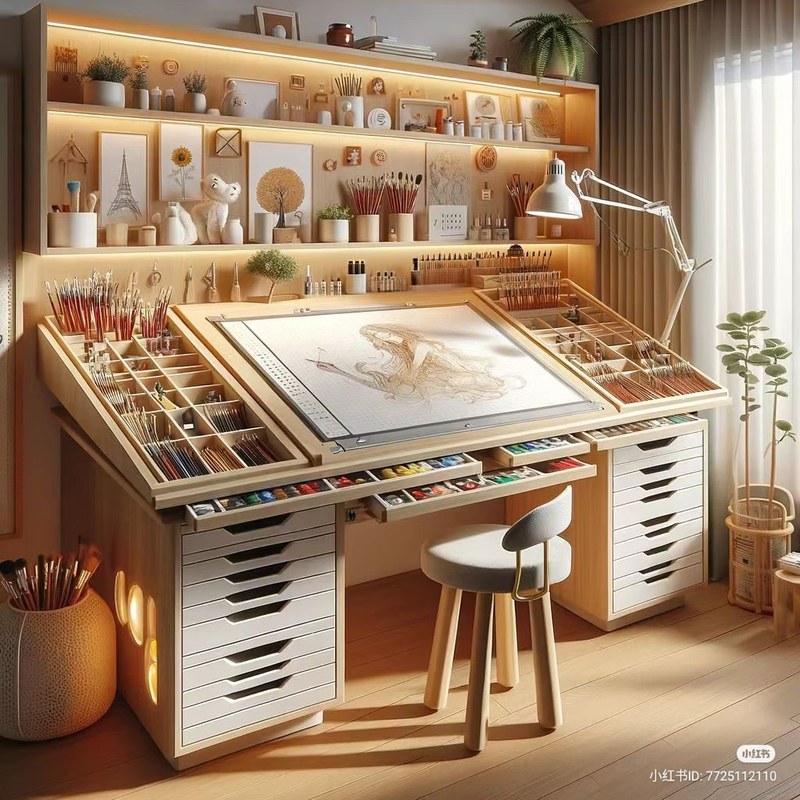
An artist desk with supplies arranged for sketching and painting tasks
An artist desk has one job that a standard office desk often does not: it has to support making, not just typing. That means the surface, height, and material all matter in a more practical way.
Surface size, depth, and height: the basics that matter most
Surface size affects how freely you can spread out paper, tools, and references. A shallow desk can feel fine for a laptop, but cramped once you add sketchbooks, paint trays, or a monitor.
Depth matters as much as width. If you draw close to the edge, you may prefer a deeper surface so your elbows and forearms have room. Height matters too, because artists often lean over their work more than office workers do.
Adjustability for drawing, painting, digital work, and mixed media
Adjustability is one of the most valuable features for artists because different tasks ask for different angles. A flat surface works well for digital tools and general studio use, while a tilt helps with drawing and illustration.
Height adjustability can also improve comfort during long sessions. If you alternate between seated and standing work, or switch between sketching and computer tasks, a flexible desk can reduce the need to buy separate furniture later.
Storage, durability, and easy-clean materials
Artists usually need more than a blank tabletop. Drawers, shelves, or accessory rails can keep pencils, brushes, paper, and cables within reach without cluttering the work surface.
Durability matters because art desks see more wear than many office desks. Paint drips, eraser dust, blade marks, water, and repeated cleaning can all take a toll, so an easy-clean finish is often worth paying for.
If you are torn between two desks, choose the one with the better surface depth first. Extra width is helpful, but depth usually makes the biggest difference in comfort and workflow.
When a standard office desk is enough—and when it is not
A standard office desk can be enough for digital art, light sketching, and occasional craft work, especially if it is sturdy and large enough. It becomes less ideal when you need tilt, easy cleanup, or room for larger paper formats.
If your art supplies regularly spill beyond a laptop-sized footprint, a purpose-built desk is usually the better long-term choice. For readers comparing desk needs with drawing habits, our guide on what size sketchbook is best for daily drawing can be a useful companion.
Best Desk Types for Artists in 2026
There is no single desk that works for every artist, but some desk types are consistently better for creative work than others. The right one depends on whether you prioritize precision, posture, cleanup, or room efficiency.
Flat drafting desks: best for precision work and long sessions
Flat drafting desks are a strong choice for artists who want a dedicated, stable surface. They are especially useful when you need a large area for sketchbooks, rulers, reference sheets, and layered materials.
Best for: illustrators, technical artists, and traditional drawers who like a fixed work zone.
- Stable and simple to use
- Usually offers a generous work surface
- Good for long drawing sessions
- Less flexible than adjustable desks
- May not suit computer-first workflows
Adjustable sit-stand desks: best for posture and flexible workflows
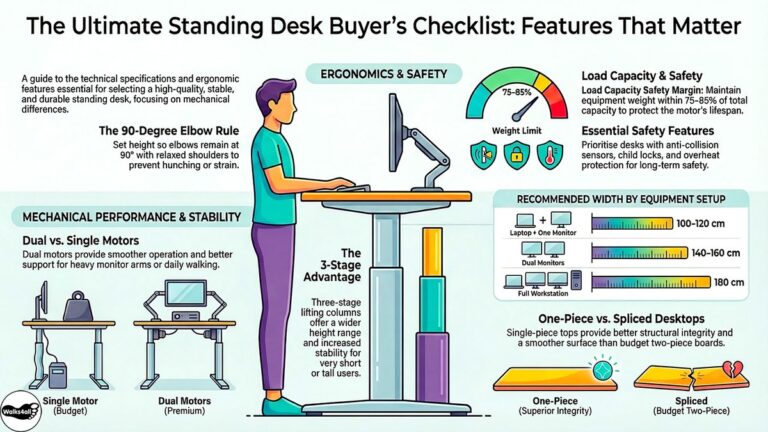
Adjustable sit-stand desks are a smart choice for artists who switch between sketching, digital work, and admin tasks. They let you change posture through the day, which can be helpful if you spend long hours at the desk.
These desks are especially useful in home offices because they can serve as both creative and work-from-home furniture. The main tradeoff is that some models prioritize office use over art-specific needs, so the surface size and stability should be checked carefully.
Tilting art desks and drafting tables: best for sketching and illustration
Tilting art desks are often the closest thing to a classic artist’s workstation. The angled surface can make sketching, inking, and layout work more comfortable because you are not constantly hunching forward.
They are a strong fit for illustrators, comic artists, and anyone who works primarily on paper. If you are building a paper-based studio, you may also want to compare your desk choice with the best paper for watercolor at home so the whole setup works together.
Compact desks for small studios and multipurpose rooms
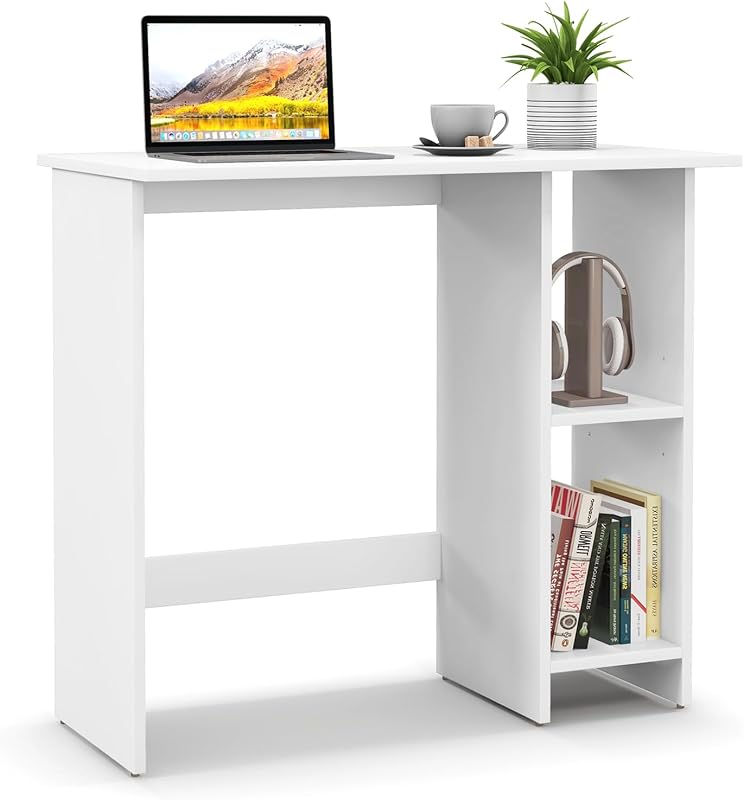
Compact desks can be a practical solution when your art area shares space with a bedroom, guest room, or living room. The key is choosing a compact desk that still has enough depth for your tools and a chair that fits comfortably underneath.
Look for hidden storage, side shelves, or a clean silhouette if the desk needs to blend into the room. A smaller desk can still be effective if you keep the workflow minimal and avoid overloading the surface.
Large studio workbenches: best for painting, craft, and mixed media
Large workbenches are ideal when your practice involves messier materials, broader movements, or multiple active projects. They give you room to spread out canvases, cutting mats, jars, and drying pieces without constantly clearing space.
These desks tend to be less elegant than office furniture, but they are often the right answer for serious studio use. If you need a desk that behaves more like a production surface than a writing desk, this category is worth considering.
For most home-office artists, the most balanced setup is an adjustable desk with a stable, wide surface and a separate tilting board or stand. It works well for mixed workflows, though it may not replace a true studio bench for heavy paint or craft use.
How to Choose the Right Desk for Your Medium and Room
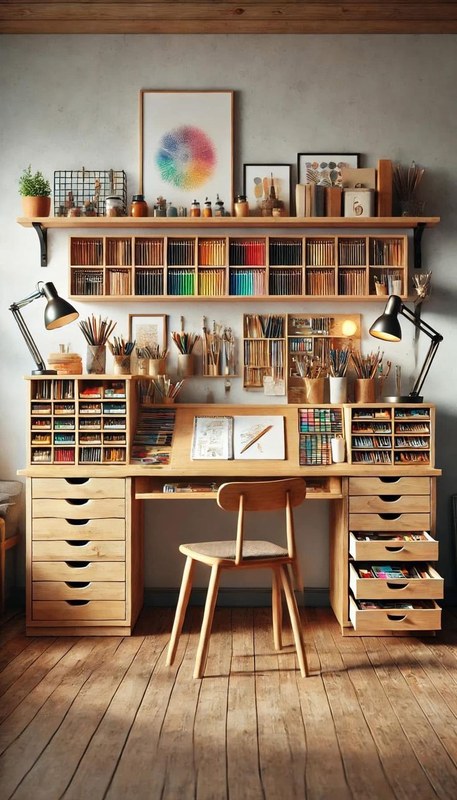
Desk setup options shown for various art tools and room sizes.
The best desk for an artist depends less on trends and more on how the desk will be used in real life. Medium, room size, and storage all shape the right decision.
For illustrators and designers: prioritizing tilt and screen placement
Illustrators and designers usually benefit from a desk that supports both paper and screen work. A slight tilt can help with sketching, while enough flat space is still needed for a tablet, keyboard, or monitor.
Screen placement matters too. If you use a monitor, make sure it does not force your neck into a constant downward angle. A desk with enough depth makes it easier to place the screen at a comfortable distance.
For painters and mixed-media artists: surface strength and cleanup
Paint and mixed media are hard on furniture, so surface strength should be a top priority. A finish that can handle wiping, moisture, and occasional spills is more useful than a delicate decorative top.
Mixed-media artists also benefit from a desk that can handle heavier tools and drying materials. If your workflow includes brushes, jars, glue, or textured papers, choose a desk that feels more like studio equipment than home decor.
For crafters and makers: storage, clearance, and tool access
Crafters often need more organized access than other artists because their tools multiply quickly. Drawers, bins, peg rails, and shelves can keep the main surface usable while still keeping supplies close.
Chair clearance matters too. If you work with cutting mats, sewing tools, or assembly projects, make sure your knees, elbows, and bins all fit without creating a cramped posture.
For apartments, bedrooms, and shared home offices: space-saving choices
In smaller rooms, the best desk is often the one that disappears visually when not in use. Clean lines, light finishes, and compact storage can help the room feel calm instead of crowded.
Wall placement is especially important in shared spaces. A desk near natural light can be appealing, but it should still leave room for circulation, sleeping, or other furniture. If you are also working on the room’s display strategy, our article on what a picture ledge is may help you style the wall without taking up desk space.
Materials, Build Quality, and Features Worth Paying For
Material choices affect how the desk looks, how it wears, and how easy it is to live with. For artists, the details often matter more than the finish photo on the product page.
Wood, laminate, metal, and glass: pros and cons for artist use
Wood can feel warm and substantial, but the exact performance depends on the construction and finish. Solid wood and well-made engineered wood can both be useful, though each model should be checked for the care instructions that apply to its surface.
Laminate is often a practical choice because it is typically easier to wipe clean and can be more forgiving for daily use. Metal frames can improve stability, while glass surfaces are usually less forgiving for art tools and may show smudges or scratches more easily.
Scratch resistance, weight capacity, and wobble control
Artists should pay attention to scratch resistance because knives, rulers, and hard tool cases can mark a surface over time. Weight capacity matters if you plan to place a monitor, printer, light, books, or storage on the desk.
Wobble control is easy to ignore until you try detailed work on a shaky surface. A stable frame and well-braced legs matter for drawing, inking, and any task that demands precision.
Drawer systems, shelving, cable management, and accessory rails
Storage features can make a desk feel much more usable without adding clutter. Drawers are good for small tools, shelving helps with books and supplies, and cable management keeps digital setups from feeling tangled.
Accessory rails and add-ons can be useful if your desk needs to evolve with your practice. They are especially helpful when you want the desk to support both creative work and everyday home-office tasks.
Lighting compatibility and monitor arm support
Good lighting is part of the desk decision, not an afterthought. If you plan to use a clamp lamp, task light, or monitor arm, check that the desk edge and frame can support the hardware safely.
For a deeper look at placement and brightness, see our guide to best lighting for a home art desk. That pairing matters because even a great desk can feel wrong if the lighting is poor.
Manufacturer specifications can vary by size, finish, or retailer listing. Before buying, confirm the exact dimensions, materials, weight limits, and care guidance for the specific model you want.
Desk Sizing, Placement, and Studio Layout Tips
A well-sized desk can make a small room feel larger and a large room feel more intentional. The goal is not simply to fit the desk in the room, but to make the room work around the desk.
How much desk width and depth most artists actually need
Most artists benefit from more width than they first expect, especially once paper, tools, and references are spread out. Depth is equally important because it supports comfortable arm movement and better screen distance.
If you work in multiple media, leave room for a “clean zone” and a “messy zone” on the same surface. That separation keeps the workspace usable during longer projects.
Ideal placement near windows, outlets, and task lighting
Natural light is useful, but desk placement should avoid glare and harsh reflections. A nearby window can be great for daytime work as long as the desk orientation does not create eye strain.
Outlets matter more than many shoppers realize. If your setup includes a monitor, lamp, charger, or tablet, plan for cable access before the desk arrives so you are not forced into awkward placement.
Room flow, chair clearance, and storage positioning
Leave enough room to slide the chair out comfortably and move around the desk without bumping storage. In tight rooms, that can matter more than buying a slightly larger surface.
Store the items you use most often within arm’s reach and keep backup supplies elsewhere. That balance helps the desk stay functional instead of turning into a storage shelf.
Styling the workspace to feel creative, calm, and organized
A good artist desk should feel inspiring, but not chaotic. A few personal objects, one or two useful containers, and a clear surface can make the space feel more inviting than a heavily decorated setup.
Think of the desk as a working still life: useful tools, one beautiful object, and enough negative space to let the work breathe.
Common Mistakes Artists Make When Buying a Desk
Many desk regrets come from choosing for looks first and workflow second. A little planning can prevent most of them.
Choosing style over ergonomics
A beautiful desk that causes shoulder tension or neck strain will not feel beautiful for long. Ergonomics should come first, especially if you spend hours drawing or painting at the same surface.
Style still matters, but it should support the room rather than override comfort.
Underestimating surface space and material wear
Artists often buy desks that are just large enough on paper, then realize the usable area disappears once tools are added. It is usually safer to buy slightly more surface than you think you need.
Material wear is another common surprise. If your practice involves water, pigment, glue, or sharp tools, choose a finish that can handle that reality.
Ignoring posture, lighting, and workflow needs
A desk is only one part of the setup. Chair height, lamp placement, and screen position all affect how comfortable the workspace feels.
If the desk does not support your posture and lighting needs, you may end up compensating in ways that make work less enjoyable.
Buying for one medium instead of future flexibility
Many artists change over time. A desk that only works for one medium may become limiting if you later add digital tools, larger paper, or more storage needs.
That is why flexible desks often age better than highly specialized ones, unless your practice is already very focused.
- Choose the desk around your main medium and posture
- Measure the room before you buy
- Check finish, stability, and cleanup needs
- Picking a desk only because it looks studio-inspired
- Assuming a shallow office desk will work for every art task
- Ignoring lighting and cable access until after setup
Care, Maintenance, and Final Recommendation
The best artist desk is one you can keep using easily. A little maintenance goes a long way when your workspace sees daily creative wear.
How to protect the desk surface and keep it studio-ready
Use mats, boards, or trays where needed to protect the surface from cutting, paint, and heat. Wipe spills promptly, and follow the manufacturer’s care instructions for the exact finish you bought.
If your desk sits near a window, keep an eye on sun exposure and humidity, especially with wood or wood-based materials. Those conditions can affect finish and long-term stability depending on the model.
Do not assume every desk finish handles paint, solvents, or moisture the same way. Check the product’s care guidance before using harsh cleaners or placing wet materials directly on the surface.
Value guide: where to spend more and where to save
It is usually worth spending more on stability, surface quality, and the features you will use every day. Those are the parts that affect comfort and durability most.
You can often save on decorative details, overly complex extras, or premium finishes that do not improve your workflow. For many artists, the smartest purchase is a well-built desk with the right dimensions, not the most expensive one.
Final recommendation: the best desk setup for most artists in 2026
For most artists working from home, the best overall choice is a sturdy adjustable desk with generous depth, paired with a tilting surface or drafting board if you draw by hand. That setup gives you room to grow, supports better posture, and works across multiple mediums.
If your work is heavily paper-based, a dedicated drafting desk may be the better single purchase. If your work is messy or large-scale, a studio workbench is the more practical answer. The right desk is the one that matches how you actually make art, not the one that only looks creative in a photo.
Frequently Asked Questions


7 Comments