
Where to Buy Small Writing Desk Best Stores Guide

The best place to buy a small writing desk depends on whether you need budget pricing, better materials, or a design-led piece for a visible room. Start with mid-range online furniture retailers for the best balance, then compare local stores or premium design shops if finish quality matters more.
If you’re wondering where to buy small writing desk options that actually fit a compact room, start by narrowing your search by budget, dimensions, and material before choosing a store. The best place to shop depends less on one “perfect” retailer and more on whether you need the lowest price, better construction, faster delivery, or a more design-led finish.
A small writing desk can solve a lot of home office problems: it fits a bedroom corner, works in a living room without looking too corporate, and often feels lighter than a bulky executive desk. But compact desks are also easy to buy badly. A listing can look elegant online while hiding shallow legroom, flimsy drawer slides, or a finish that clashes with the rest of your room. This guide breaks down which store types are worth your time, what specs matter most, and how to choose a desk that suits both your space and your work habits.
- Best starting point: Mid-range online retailers usually balance size options, finish quality, and customer support best.
- Most important measurement: Desk depth and knee clearance matter as much as width in compact rooms.
- Smart material check: Confirm whether the desk is solid wood, veneer, metal, or engineered wood before buying.
- Room match: Slim writing desks suit bedrooms and living rooms better than bulky office desks.
- Hidden costs: Review assembly, delivery, and return shipping terms before checkout.
Where to Buy a Small Writing Desk: Best Stores to Start With in 2026
The best starting point is to shop by store category rather than by brand name alone. Online retailers usually offer the widest range and easiest side-by-side comparison, while local stores and specialists can be better when finish quality, in-person inspection, or delivery support matter more.
Best online retailers for budget, mid-range, and premium small desks
For budget-friendly small writing desks, large online marketplaces and flat-pack furniture retailers are usually the easiest entry point. They tend to offer the broadest size filters, plenty of finish choices, and frequent stock updates. This is often the right route for students, renters, first apartments, and anyone furnishing a flexible work nook without committing to a forever piece.
Mid-range online furniture retailers are often a better fit when you want a cleaner silhouette, more consistent finish options, and stronger construction details. In this category, look for clearer material descriptions, better photography of drawer interiors and leg joinery, and more transparent assembly information.
Premium online design stores are worth considering if your desk will live in a visible room such as a living room, open-plan space, or guest room office. These stores usually emphasize solid wood, refined hardware, and more timeless proportions. The trade-off is that lead times can be longer, return shipping may be expensive, and some pieces require white-glove delivery.
| Store Type | Best For | Key Consideration |
|---|---|---|
| Large online marketplaces | Fast comparison shopping and lower budgets | Quality can vary sharply between models |
| Flat-pack furniture retailers | Small apartments, dorms, and easy assembly formats | Materials are often more basic |
| Mid-range furniture sites | Better finish options and everyday durability | Confirm exact materials before buying |
| Premium design retailers | Visible rooms and long-term furniture purchases | Lead times and returns may be stricter |
When to shop local furniture stores, vintage markets, and office specialists
Local furniture stores make sense when color, texture, and scale are hard to judge online. A walnut finish, for example, can read warm and rich in one listing and gray-brown in another. Seeing it in person can prevent a mismatch with shelving, flooring, or nearby case goods.
Vintage markets and resale shops are especially useful if you want a true writing desk rather than a modern compact workstation. Older desks often have slimmer profiles, shallower drawers, and more character. The main caution is that vintage sizing can be inconsistent, and some pieces need refinishing or reinforcement.
Office specialists are the practical choice when ergonomics matter most. They may not offer the most decorative desks, but they are often better about publishing weight capacity, cable access, keyboard clearance, and commercial-use details. If your small desk needs to support monitors, printers, or daily eight-hour use, specialists deserve a closer look.
Availability, finish names, delivery speed, and exact specifications vary by retailer and model. Always confirm dimensions, materials, and warranty terms on the current product listing before placing an order.
How to Choose the Right Small Writing Desk Before You Buy

A compact writing desk setup in a small home office space.
Before comparing stores, decide what “small” needs to mean in your room. A desk that looks compact in a showroom photo may still overwhelm a bedroom or block circulation in a narrow apartment.
Ideal width, depth, and height for compact home office setups
Width is usually the first filter. For a laptop-only setup, a narrow writing desk can work well, especially in bedrooms or living rooms where visual lightness matters. If you use a monitor, desk lamp, notebook, and tray or organizer, you will need more usable surface area than a styled product photo suggests.
Depth matters even more than many shoppers expect. A desk that is too shallow can force your screen too close to your face and leave no room for writing. On the other hand, too much depth can make a compact room feel crowded and reduce walking space. In tight layouts, measuring both the desk footprint and the chair pull-out zone is essential.
Height is usually fairly standard, but not every chair pairs well with every desk. Check the underside clearance, apron height, and any center drawer placement so your knees have room. This matters especially if you plan to use an upholstered dining chair or a chair with arms.
Mark the desk footprint on the floor with painter’s tape, then pull a chair in and out as you normally would. This quick test reveals whether the desk only fits on paper or truly works in daily use.
Storage needs: clean-lined writing desk vs drawer-equipped compact desk
A classic writing desk usually prioritizes an open, streamlined silhouette. That makes it ideal for living rooms, guest rooms, and design-conscious spaces where you do not want office furniture to dominate the room.
A compact desk with drawers is better if the desk will handle bills, stationery, chargers, and work tools every day. Even one shallow drawer can make a major difference in keeping the surface clear. The downside is that extra storage can reduce legroom, add weight, and make the desk look bulkier.
If you need more than minimal storage, it may be smarter to pair a clean desk with a nearby cart, filing cube, or shelf. For creative setups, Hurrell Editions also has a helpful guide on how to organise art supplies in a small space, which can be more practical than trying to force all storage into one small desk.
Materials, finishes, and build quality to compare across stores
Material quality often explains why two desks that look similar in photos feel very different in real life. Solid wood typically offers better longevity and repair potential, but it also costs more and may respond to humidity. Veneer can look refined and stable when well made, though chipped edges are harder to disguise. Metal frames often add strength and a lighter visual profile, while engineered wood can be good value if the construction is sound.
Finish is not just about color. It affects how formal, casual, warm, or modern the desk feels in the room. Matte finishes tend to look quieter and hide fingerprints better, while glossy finishes can reflect light and emphasize smudges or minor scratches.
Build quality clues include drawer glide type, back panel thickness, visible fasteners, edge treatment, and whether the desk feels designed to stand freely in a room or only against a wall. Product photos that show the back, underside, and close-up joinery are usually more trustworthy than heavily staged front views alone.
Best Places to Buy Small Writing Desks by Budget, Style, and Quality
Once you know your size and storage needs, the best store becomes easier to identify. Think in terms of use case: temporary, everyday, or long-term investment.
Affordable stores for first apartments, dorms, and flexible work corners
Affordable retailers are strongest when you need a simple desk fast and do not require heirloom-level construction. This category is ideal for dorm rooms, first apartments, occasional remote work, and temporary setups in spare bedrooms.
The best affordable options usually have uncomplicated silhouettes, open bases, and lighter materials that are easier to move. They can also work well in multi-use homes where the desk may later become a console table or vanity.
The limitations are predictable: thinner tops, more visible hardware, fewer premium finishes, and assembly that may require patience. If you are shopping at the low end, prioritize dimensions, leg stability, and return policy over decorative extras.
- Lower upfront cost
- Good for renters and temporary spaces
- Wide selection of compact sizes
- Construction can be inconsistent
- Finishes may look less refined in person
- Shorter lifespan under heavy daily use
Mid-range retailers for everyday durability and better finish options
Mid-range stores are often the sweet spot for most households. They tend to balance style, durability, and customer support better than entry-level sources, without the cost of premium design retailers.
This is where many shoppers find the best value for a bedroom office, living room workstation, or dedicated home office that needs to look polished but still practical. Expect better finish variety, sturdier drawer construction, and more cohesive collections if you want matching shelving or storage nearby.
If you are also planning the wider workspace, Hurrell Editions’ guide to the best desk for an artist can help clarify when a writing desk is enough and when a larger work surface may be the better fit.
Higher-end design stores for solid wood, craftsmanship, and timeless style
Higher-end stores are best for shoppers who want a desk to function as furniture first and workspace second. In a living room, library, or carefully designed bedroom, a premium writing desk can feel more intentional than a standard office desk.
Look here for better wood grain selection, more elegant proportions, upgraded hardware, and construction that can age well. These desks often suit buyers who prefer fewer purchases over time and are willing to spend more for a piece that blends with long-term decor plans.
Still, premium does not automatically mean practical. Some high-design desks sacrifice storage, cable management, or monitor depth for appearance. For that reason, even in the luxury tier, specs matter just as much as styling.
Which Small Writing Desk Fits Your Room Best?
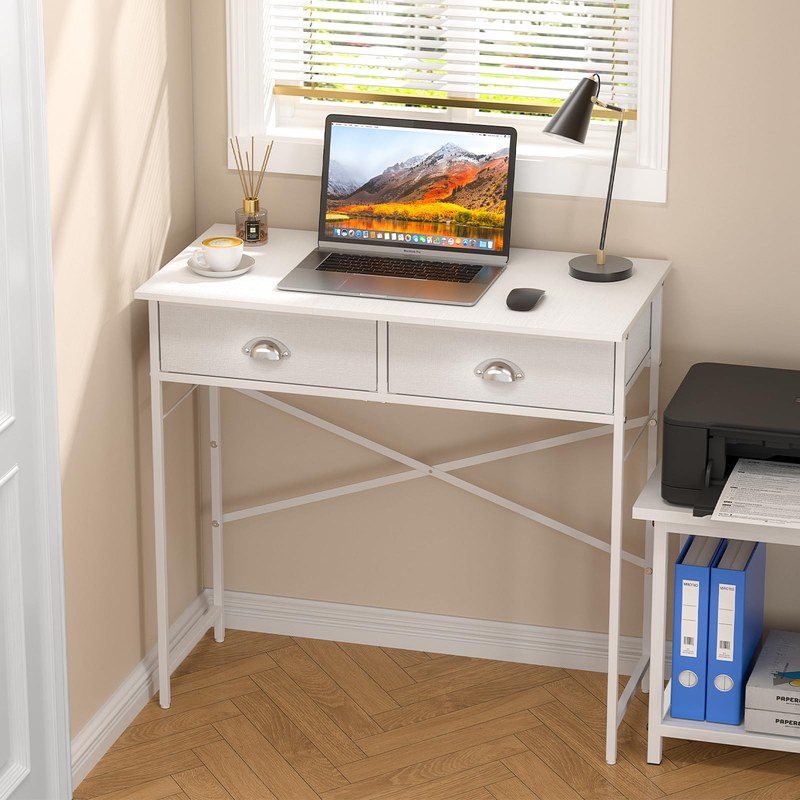
A small writing desk is arranged in a compact room with basic furnishings.
The right desk is not just about size. It also has to make sense in the room visually and functionally.
Desks for bedrooms, living rooms, entry niches, and dedicated home offices
In bedrooms, desks with soft edges, lighter finishes, and minimal storage often feel calmer and less work-heavy. In living rooms, a writing desk that resembles a console or slim table usually integrates best with residential furniture.
Entry niches and hallway alcoves benefit from very shallow desks, especially when the area doubles as a drop zone. In dedicated home offices, you have more freedom to choose a desk with drawers, a broader top, or a darker finish that feels more substantial.
If your desk will sit beneath art or shelving, keep the vertical composition balanced. A crowded wall can make even a small desk feel compressed. For styling above a desk, a slim shelf or art rail can work well; see Hurrell Editions’ guide on where to buy picture ledges if you want to build a light, layered wall arrangement nearby.
Best options for renters, small-space homes, and multi-use rooms
Renters often do best with desks that are easy to assemble, light enough to move, and neutral enough to adapt to future layouts. Open-leg designs are especially useful because they keep the room from feeling boxed in.
In small homes, the best desk is often the one that can shift roles. A writing desk can become a console, vanity, or craft station more easily than a bulky office desk. That flexibility matters if your room needs to evolve.
For multi-use rooms, avoid anything visually heavy unless the desk is the room’s main anchor piece. A slim frame, pale finish, or floating-look base usually helps the desk recede when work is done.
How to match desk scale to chairs, shelving, and surrounding furniture
A compact desk looks best when the chair does not overpower it. Thick upholstered arms, tall backs, and oversized rolling chairs can make a small desk look undersized and awkward. Armless task chairs, slim dining chairs, or compact upholstered side chairs usually pair better.
Nearby shelving should also match the desk’s visual weight. A delicate writing desk next to a massive bookcase can feel lost, while a heavy desk under tiny wall decor can feel top-heavy. Aim for balance in line, finish, and proportion.
If you tend to accumulate tools, paper, or creative supplies, surface styling matters too. Hurrell Editions’ article on how to organize a desk for an artist offers useful ideas for keeping a small work area functional without letting it become visually cluttered.
What to Look For in Store Listings and Product Specs
Good listings answer practical questions before the desk arrives. Weak listings rely on attractive photos and vague language.
Weight capacity, legroom, assembly level, and cable management
Weight capacity is especially important if you plan to use a monitor arm, desktop printer, or stacked books. Many small writing desks are designed for light office use rather than heavy equipment.
Legroom should be checked in the actual spec sheet, not guessed from photos. Drawers, support bars, and center aprons can reduce usable space more than expected. Assembly level matters too: some desks are straightforward, while others require more alignment, hardware sorting, or two-person handling.
Cable management is often overlooked on decorative writing desks. If you use chargers, lamps, or a monitor, look for rear cutouts, open backs, or enough clearance to route cords neatly.
Solid wood, veneer, metal, and engineered wood: pros, limits, and value
Solid wood is often the best long-term material, but it is heavier, pricier, and sometimes more sensitive to seasonal movement. Veneer can be a smart middle ground, especially when applied over stable core materials and finished well.
Metal frames bring strength and a slimmer profile, though they can feel colder in traditional interiors. Engineered wood is common in affordable desks and can offer decent value, but durability depends heavily on edge quality, hardware strength, and moisture resistance.
The key is not to assume one material is always superior. A poorly made solid wood desk may still disappoint, while a well-designed veneer or metal-and-wood desk can perform very well in a small home office.
- Confirm overall width, depth, and height, plus underside knee clearance.
- Check whether drawers reduce legroom or usable chair space.
- Read the materials section carefully rather than relying on finish photos.
- Verify assembly requirements, delivery method, and return terms.
- Look for current warranty and care information on the official listing.
Return policies, delivery costs, lead times, and warranty details
Return terms can matter as much as price. A desk that looks affordable upfront may become a poor value if return shipping is expensive or if assembled items cannot be returned.
Delivery method also changes the buying experience. Parcel delivery is simpler for small, flat-pack desks, while heavier premium pieces may arrive by freight or scheduled delivery. Lead times can vary significantly, especially for made-to-order finishes or imported collections.
Warranty details are worth reading in full. Some retailers cover manufacturing defects but not finish wear, misuse, or damage during self-assembly. When in doubt, review both the retailer policy and the manufacturer’s own terms.
Styling a Small Writing Desk So It Works and Looks Intentional
A small desk tends to look best when it feels integrated into the room rather than dropped into an empty corner as an afterthought.
Minimal styling ideas for modern, classic, and eclectic interiors
For modern interiors, keep styling tight: one lamp, one tray, and one small decorative object or vase. In classic rooms, a desk can support a framed print, a brass task lamp, and a leather catchall without looking crowded. In eclectic spaces, mix materials carefully so the desk still feels edited rather than busy.
The most effective styling usually starts with function. If you need a notebook, pen cup, coaster, and charging spot every day, make those pieces part of the visual plan instead of hiding them badly or letting them pile up.
- Use one vertical element, like a lamp or small vase, to add height without taking much surface area.
- Choose a tray to group everyday items so the desk looks deliberate, not cluttered.
- Repeat one finish from elsewhere in the room, such as black metal, oak, or brass.
- Keep wall decor scaled to the desk; oversized art can work, but only if the desk has enough visual presence below it.
Lighting, desk accessories, and wall decor that suit compact work zones
Lighting should be compact but purposeful. A slim task lamp, plug-in wall light, or nearby floor lamp can all work, depending on outlet access and wall layout. If your work corner also supports video calls or creative tasks, the right supplemental light matters just as much as the desk itself; Hurrell Editions has a separate guide on where to buy softbox lights for readers building a more content-focused setup.
Accessories should earn their place. A single drawer organizer, paper tray, or monitor riser may be more useful than several decorative objects. Wall decor can soften the office feel, but keep proportions in check so the area remains airy.
How to keep a small desk visually light without losing function
The easiest way to keep a desk looking light is to preserve some empty surface. Not every inch needs to be filled. Open leg space, visible floor underneath, and a limited accessory palette all help the desk feel less crowded.
Choose storage that disappears visually: a slim drawer, a matching box, or a nearby shelf in a similar finish. If the desk sits in a bedroom or living room, this restraint makes the workspace feel more intentional and less temporary.
Common Buying Mistakes to Avoid When Shopping for a Small Writing Desk
Most desk regrets come from skipping practical checks in favor of appearance. A few simple filters can prevent the most common mistakes.
Choosing the wrong depth, ignoring chair clearance, or overestimating storage
Many shoppers focus on width and overlook depth. A desk can fit the wall perfectly and still be uncomfortable if it is too shallow for writing or screen distance. Chair clearance is another frequent miss, especially with drawers or decorative stretchers.
Storage is often overestimated in compact desks. A slim center drawer may hold stationery, but it will not replace a filing cabinet or supply cart. If your workflow needs more than the desk can offer, plan supporting storage from the start.
Buying for looks alone without checking materials and construction
A stylish silhouette can hide weaker materials, thin tops, or unstable joinery. Terms like “wood finish” or “oak look” do not necessarily mean solid wood or even real wood veneer. Read the construction details carefully.
Also check whether the desk is finished on all sides. This matters if it will float in a room rather than sit against a wall.
Missing hidden costs such as assembly services and return shipping
Assembly fees, room-of-choice delivery, stair surcharges, and return shipping can change the real cost of a desk significantly. This is especially true for heavier premium pieces and items shipped by freight.
Budget shoppers should be particularly careful here. A lower list price is not always the better deal if the desk arrives damaged easily, takes hours to assemble, or cannot be returned without major cost.
Is a Small Writing Desk Worth It? Final Buying Advice and Best-Store Recommendations
For many homes, a small writing desk is absolutely worth it. It gives you a defined place to work without demanding an entire room, and it often suits modern living better than a large office desk.
Who benefits most from a small writing desk in 2026
Small writing desks make the most sense for apartment dwellers, renters, hybrid workers, students, and anyone creating a workspace in a bedroom, living room, or guest room. They also suit shoppers who want furniture that can shift roles over time.
They are less ideal for people who need multiple monitors, deep storage, large printers, or broad creative work surfaces. In those cases, a compact desk may become a compromise too far.
When to spend more, when to save, and what alternatives to consider
Spend more when the desk will be used daily, sit in a highly visible room, or need to last through multiple moves. Save when the setup is temporary, the workload is light, or the desk may later be repurposed.
If a writing desk feels too limiting, consider a compact work table, slim console-style desk, wall-mounted drop-leaf desk, or a larger studio desk depending on your workflow and room.
A transparent verdict on the best store types for different shoppers
If you want the simplest path, start with reputable mid-range online furniture retailers. They usually offer the best balance of dimensions, finish choice, durability, and support for most home office shoppers. Choose budget retailers for temporary or highly flexible spaces, and move to premium design stores when the desk needs to function as a lasting furniture piece in a visible room.
Whichever route you choose, the smartest purchase is the one that fits your room, supports your daily tasks, and comes with clear specifications you can verify before checkout.
Frequently Asked Questions


3 Comments