What Is the Difference Between a Drafting Board and a Drawing Board Explained

A drafting board is built for precision, angle control, and technical work, while a drawing board is usually simpler and better for sketching or general creative use. In a home office, the right choice depends on how much accuracy, adjustability, and space your workflow actually needs.
What is the difference between a drafting board and a drawing board? In simple terms, a drafting board is built for precision and control, while a drawing board is usually a more flexible surface for sketching, illustration, and general creative work.
- Purpose: Drafting boards suit measured work; drawing boards suit freer sketching and illustration.
- Space: Drafting setups usually need more room, while drawing boards are easier to fit into.
- Features: Tilt, locking angles, and stable edges matter more on drafting boards.
- Materials: Laminate and composite tops are often easier to maintain than unfinished wood.
What Is the Difference Between a Drafting Board and a Drawing Board?
Although the two terms are sometimes used interchangeably, they do not always mean the same thing. The difference usually comes down to how much adjustment, stability, and measurement support the board offers.
A drafting board is typically associated with technical work such as architecture, engineering, pattern-making, and design layouts. A drawing board is more often linked to art, sketching, and informal illustration, where a large flat surface matters more than exact angles or rigid controls.
Quick answer: purpose, precision, and surface design
The fastest way to separate them is by purpose. Drafting boards are made to help you work accurately, often with a tilting top, a stable edge, and features that support rulers, T-squares, or other measuring tools.
Drawing boards are usually simpler. They may be fixed or lightly angled surfaces that give artists and hobbyists a comfortable place to sketch, plan compositions, or work on paper without the extra hardware expected from a drafting setup.
Why the distinction still matters in 2026 home offices
In a home office, the difference matters because space is limited and every piece of furniture has to earn its place. A board that is too specialized can feel bulky, while one that is too simple may not support the kind of work you actually do.
It also matters for comfort. If you spend long sessions drawing, lettering, or planning layouts, the right angle and surface size can reduce strain and keep your workflow organized. For anyone building a creative corner at home, this choice affects not just function but also how the room feels day to day. If you are also deciding on tools for sketching, our guide to the difference between sketching and drawing pencils can help narrow that setup further.
How Each Board Is Used: Technical Work vs General Sketching
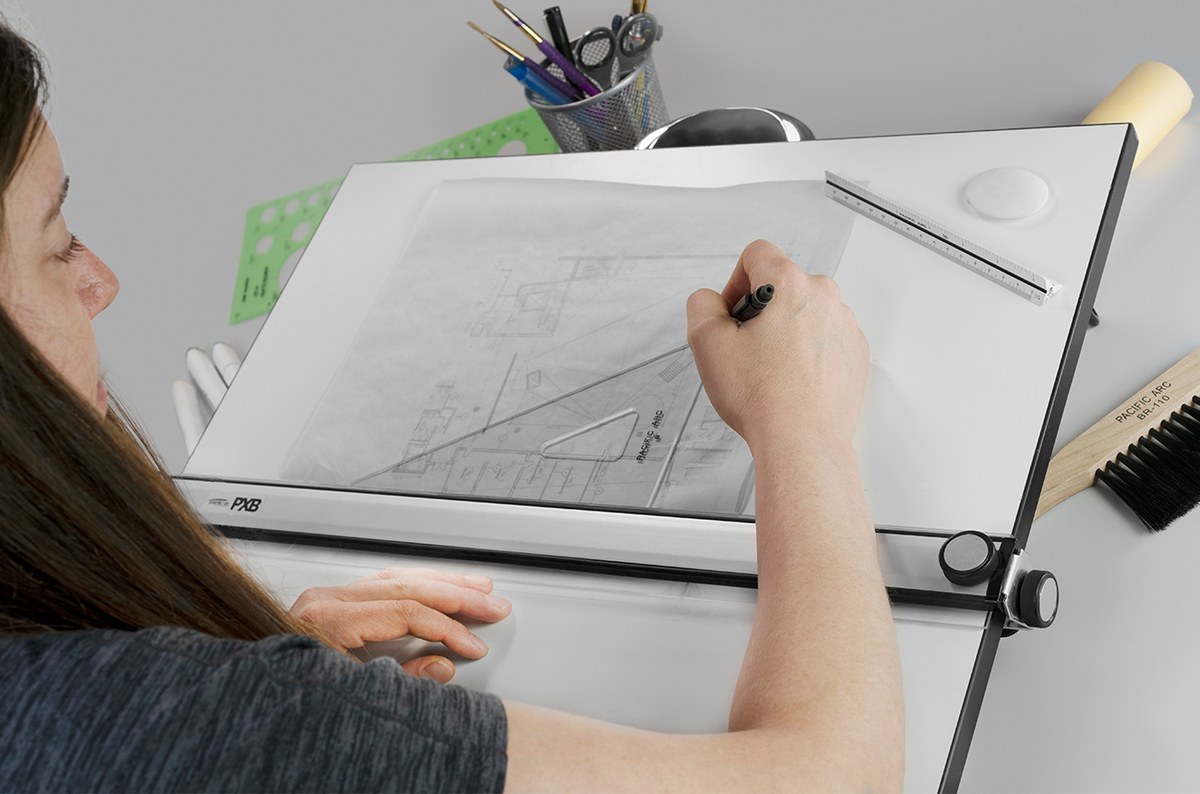
Two boards shown for technical drawing and freehand sketching.
Drafting boards for measured, angle-controlled work
Drafting boards are designed for tasks that reward accuracy. They are commonly used for plans, diagrams, technical drawings, and other work where straight lines, consistent scale, and a controlled working angle matter.
Many drafting boards include a tilting surface, which can help reduce glare and make line work easier to see. Some models also feature edge rails or clamps that keep paper in place while you measure and draw. Exact features vary by model, so it is worth checking the manufacturer’s specifications before buying.
Drawing boards for freer illustration, study, and creative use
Drawing boards are generally more open-ended. They suit sketching, figure studies, concept art, calligraphy practice, and everyday paper-based work where the goal is comfort and flexibility rather than technical precision.
Because they are often less mechanical, drawing boards can feel easier to move, store, or repurpose in a shared room. They are a practical choice for artists who want a large surface but do not need built-in angle controls or drafting accessories.
Which users benefit most from each type
Drafting boards are usually the better fit for architecture students, designers, engineers, pattern makers, and anyone who works with measured layouts. They are also useful if you regularly rely on straightedges, set squares, or other drafting tools.
Drawing boards tend to suit illustrators, hobby artists, students, journalers, and people who want a comfortable surface for sketchbooks or paper-based creative work. If your work shifts between drawing, painting, and planning, a drawing board may be more forgiving and easier to live with in a home office.
- Drafting boards support accurate, repeatable technical work
- Drawing boards are more flexible for casual and creative use
- Drafting boards can take more space and cost more
- Drawing boards may lack the precision features some users need
Key Features to Compare Before Buying
Adjustability: tilt, height, and angle-locking mechanisms
Adjustability is one of the biggest differences between the two categories. Drafting boards often provide tilt controls or angle-locking mechanisms so you can set the surface to a working position that suits your posture and task.
Drawing boards may tilt as well, but many are designed with fewer moving parts. That can make them lighter and simpler, though it also means less fine control. If you work long hours, check whether the board height and angle feel comfortable for both seated and standing use, especially if you plan to pair it with a stool or drafting chair.
Surface size, edge stability, and portability
Surface size should match the largest paper or project format you expect to use. A board that is too small can feel cramped, while one that is too large may dominate a compact room.
Edge stability matters if you use rulers or need a dependable drawing boundary. Portability matters if the board will move between rooms or be stored upright when not in use. For apartment dwellers or shared workspaces, a lighter drawing board is often easier to manage than a heavier drafting setup.
Measure the board footprint and the open clearance around it, not just the top surface. A tilting board needs extra room behind it and may sit farther from a wall than a flat tabletop.
Material choices: wood, laminate, MDF, metal, and composite tops
Materials affect both feel and longevity. Wood can look warm and classic, but it may need more care in humid rooms. Laminate is often easier to wipe clean and can be a practical choice for everyday use. MDF and composite tops are common in budget-friendly boards, though quality can vary widely by construction and finish.
Metal components usually show up in the frame, hinges, or support structure rather than the drawing surface itself. The best choice depends on how often you use the board, whether it will stay in one room, and how much wear you expect from tools, paper clips, or repeated angle changes.
Durability, cleanability, and resistance to warping
Durability is not just about the top layer. Hinges, locks, and support arms can wear out before the surface does, especially on adjustable boards. Look for sturdy joinery and smooth, reliable movement if the board will be repositioned frequently.
Cleanability matters for charcoal, graphite dust, ink, tape residue, and occasional paint splatter. A surface that wipes clean easily can save time, but avoid harsh cleaners that may dull finishes or damage coatings. Warp resistance is especially important in rooms with humidity changes or direct sun exposure. For paper-based work, it also helps to keep your supplies organized; our guide to what size sketchbook is best for daily drawing can help you match your board to the way you actually work.
- Confirm the board size fits your paper and your room
- Check whether it tilts, locks, or stays flat
- Review the surface material and cleaning instructions
- Inspect the frame, hinges, and support hardware for stability
Which Room and Setup Each Board Fits Best
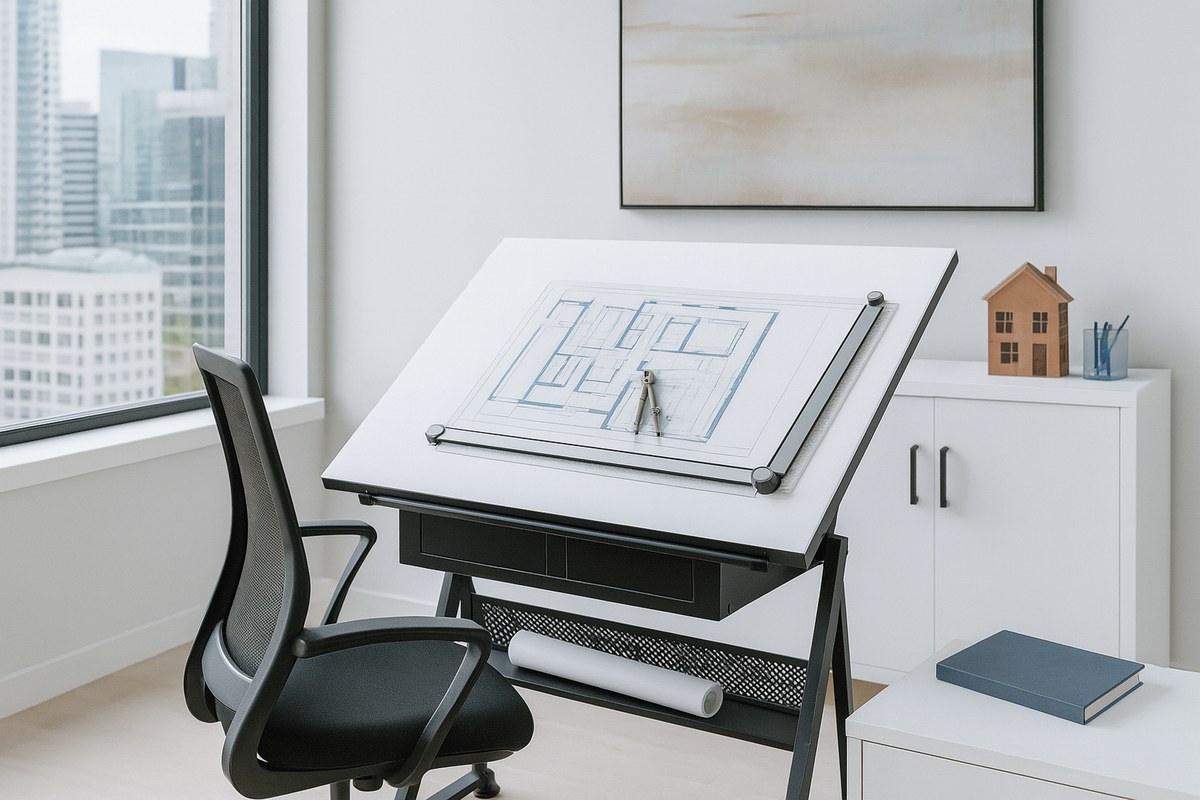
Drafting and drawing boards shown in different room setups for comparison
Home office, studio corner, and shared workspaces
A drafting board works best in a dedicated home office or studio corner where it can stay set up. Because it often has a more permanent footprint, it suits a room that is used for focused work rather than multi-purpose living.
A drawing board is easier to fit into a shared workspace, guest room, or multipurpose office. It can also be more convenient for people who need to clear the area for other activities at the end of the day.
Space requirements and placement near natural light
Both boards benefit from good light, but placement matters. Natural light from the side is often easier on the eyes than direct glare from behind or above. If the board tilts, check how the angle interacts with nearby windows so you do not end up with reflections or shadows across your page.
Leave enough room for a chair or stool, plus space to set down tools, reference books, or a tablet. In smaller rooms, a board placed near a wall or window can feel efficient, but do not crowd the working edge so tightly that you lose elbow room.
Standing desk alternatives and compact apartment considerations
For some users, a drafting board can serve as an alternative to a standing desk because it encourages upright posture and a more active working position. That said, it is not a replacement for ergonomic planning if you spend hours at the surface every day.
In compact apartments, a flatter drawing board or a foldable model may be the better compromise. It can still support creative work without overwhelming the room. If you are setting up a broader art corner, our article on how to set up a home art studio space offers useful room-planning ideas.
Styling a Home Office Around a Drafting or Drawing Board
Matching the board to modern, industrial, or classic interiors
The board you choose can either blend into the room or become a visual feature. A clean laminate or light wood surface often suits modern interiors, while black metal framing and darker finishes can work well in industrial spaces. Traditional wood tones feel more at home in classic or study-like rooms.
Try to echo one or two existing materials in the room rather than introducing too many finishes at once. That keeps the workspace from looking improvised, even if it is highly functional.
Think of the board as part of the room’s architecture: a drafting board can read like a studio tool, while a drawing board can feel like a calm creative tabletop.
Chair, stool, lamp, and storage pairings that improve workflow
The right seating matters as much as the board itself. A drafting stool or adjustable chair can make a tilted surface more comfortable, while a standard chair may be enough for a flatter drawing board. Good task lighting also helps, especially if your room does not get steady natural light.
Storage should stay within easy reach. Pencil cups, paper trays, rulers, erasers, and reference folders work best when they do not clutter the working edge. If your setup includes art display or mood lighting, you may also find our guide to what is a dimmable picture wall light useful for balancing function and atmosphere.
Keeping the workspace visually calm and practical
A board-heavy workspace can feel busy fast, so restraint helps. Use a limited palette for accessories, keep cords out of the main work zone, and avoid stacking too many tools on the surface at once. A tidy setup makes it easier to move from planning to drawing without distraction.
For artists who like a room that feels finished, the board can also be paired with framed prints or a simple ledge display away from the work zone. That keeps inspiration visible while preserving clear space where the actual making happens.
Benefits, Limitations, and Common Buying Mistakes
When a drafting board is worth the extra precision
A drafting board is worth the added complexity when your work depends on accuracy. If you create measured layouts, use drafting tools often, or need an adjustable angle for long sessions, the precision features can make daily work smoother and more consistent.
The tradeoff is that drafting boards can be less casual to live with. They may take up more room, weigh more, and feel overly specialized if your projects are mostly freehand or exploratory.
When a drawing board is the more versatile choice
A drawing board is usually the better all-round pick for people who want one surface to handle a range of creative tasks. It is often easier to move, simpler to maintain, and less intimidating in a mixed-use home office.
If you sketch for pleasure, study, or occasional commissions, a drawing board may give you exactly enough support without adding unnecessary bulk. It is also a sensible option if you are still learning what kind of work you do most often.
For most home offices, a drawing board is the more adaptable choice because it fits creative work, lighter technical tasks, and smaller rooms. Choose a drafting board only when angle control and measurement accuracy are central to your workflow.
Common mistakes: wrong size, poor ergonomics, and unstable placement
One common mistake is buying a board based only on surface dimensions and forgetting about the room around it. Another is choosing a height or angle that looks good on paper but feels awkward after an hour of use.
Stability is also easy to overlook. A board that rocks, slips, or shifts can interrupt both technical and creative work. Before buying, confirm how the board sits on the floor or desk, whether it locks securely, and whether the support design matches the surface you plan to use it on.
- Match board size to your paper and room layout
- Check tilt, lock, and support features before ordering
- Choose a finish that is easy to clean in a home office
- Assuming every board marked “drafting” has the same features
- Buying a large surface that overwhelms a small room
- Ignoring ergonomics until after the board arrives
Care, Maintenance, and Long-Term Value
Cleaning surfaces without damaging finishes
Care depends on the surface material. In general, dust the board regularly and wipe it with a soft, slightly damp cloth when needed. Avoid abrasive pads, strong solvents, or soaking the surface, especially if the board has a laminate, coated, or wood finish.
If you use graphite, charcoal, or tape, clean gently and often rather than waiting for buildup. That keeps the surface looking better and reduces the chance of residue becoming difficult to remove.
Always follow the manufacturer’s cleaning instructions for the exact finish. Some surfaces tolerate water well, while others can stain, swell, or dull if cleaned too aggressively.
Protecting hinges, angle mechanisms, and edges
On adjustable boards, the moving parts deserve as much attention as the top. Keep hinges free of dust, do not force angle changes, and avoid overloading the edge with heavy tools or leaning pressure that the frame was not designed to handle.
Edges and corners can chip if the board is moved often or stored in tight spaces. If the model has exposed hardware, inspect it occasionally so you can catch looseness before it affects stability.
Assessing value for students, professionals, and hobbyists
Value is not just about the purchase price. A board that fits your workflow, room size, and maintenance habits can be more valuable than a more expensive model with features you will never use.
Students may benefit from a simpler board that is easy to move and store. Professionals may need the precision and durability of a more robust drafting setup. Hobbyists often get the most value from a versatile drawing board that supports different projects without demanding a dedicated studio.
If you are building a broader creative toolkit, it can also help to think about surrounding supplies rather than the board alone. For example, paper choice, lighting, and storage all shape how useful the surface feels over time.
Final Recommendation: Which One Should You Choose?
Best pick for technical drafting, best pick for artistic use, and best all-round option
Choose a drafting board if your work depends on precision, repeatable angles, and a stable setup for technical drawing. Choose a drawing board if you want a simpler, more flexible surface for sketching, illustration, and mixed creative use.
For most home office readers, the best all-round option is a well-made drawing board with enough size, stability, and surface quality to handle everyday work comfortably. It gives you room to grow without committing you to a more specialized setup than you need.
Closing verdict for Hurrell Editions readers
The real difference is not just the name on the product listing; it is the way the board supports your workflow. If you need exact control, go drafting. If you want creative freedom and easier room integration, go drawing.
Before you buy, confirm the dimensions, angle options, material finish, and stability details on the official product page or manufacturer specifications so the board fits both your work and your home office.
Frequently Asked Questions