What Is Picture Frame Rabbet Depth and Why It Matters

Rabbet depth is the recessed space inside the back of a picture frame that determines how thick your art package can be. It matters because a frame can still be too shallow to hold a canvas or layered mats securely.
The simplest way to understand what is picture frame rabbet depth is to look at the frame from the side. That recessed ledge inside the back edge is the rabbet, and its depth determines how much of your artwork, mat, glazing, and backing the frame can hold. Get this measurement right, and your piece sits flush, protected, and secure. Get it wrong, and you are left with a frame that won’t close, a wobbly back, or an awkward gap between the art and the glass.
- Definition: The rabbet is the inner ledge cut into the back of a frame; its.
- Measurement: Compare your art package’s combined thickness against the frame’s stated rabbet depth, leaving a.
- Common depths: Flat paper frames often use around 1/4 inch, while canvas and layered mats need.
- Risk: A shallow rabbet can cause a bulging back, broken glass, or art pressed against.
- Decision: When unsure, choose a slightly deeper profile; extra space is easier to fill than.
The Direct Answer About What Is Picture Frame Rabbet Depth
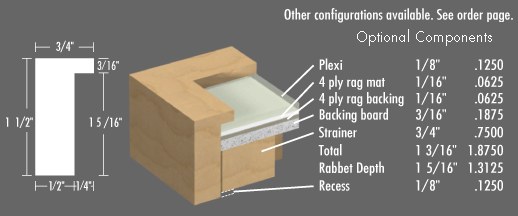
The rabbet is the cutaway lip that runs along the inside back of a picture frame. You can feel it with your fingertip when you look at the frame from behind. The rabbet depth is the vertical measurement from the back edge of the frame to the inner ledge, or lip, that holds the art package in place. In simple terms, it is the “thickness allowance” for everything you want to put inside the frame.
The art package — the sum thickness of the print or canvas, mat board, glass or acrylic glazing, backing board, and any mounting hardware — must fit into this space. If the package is too thick, the frame’s flexible points or glazing points cannot hold it securely, and the back may bulge or the frame may not hang flat against the wall. If the package is too thin, the art can rattle, shift, or slide around inside the frame.
Frames described as “standard depth” typically use a rabbet of around 3/16 inch to 1/4 inch. That suits most flat paper prints with a single mat and standard glass. Deeper frames, often called “gallery profile” or “deep rabbet” frames, offer rabbet depths of 1/2 inch to 1 inch or more, which allow room for stretched canvas, layered mats, or thicker acrylic glazing.
If you are ordering custom framing supplies or a ready-made frame, always measure the actual depth of your art package with a ruler or caliper before choosing a frame. Do not assume that a “large” frame has a deeper rabbet — rabbet depth is a separate specification and varies by frame profile.
What to Look For and Who It Suits
Close-up of a frame rabbet where glass and matting sit.
The frame style you choose should match the thickness of your art package. A shallow rabbet suits simple paper prints with thin glazing and a single mat. This setup is common for gallery-style frames in bedrooms and hallways, where lightweight hanging is a priority.
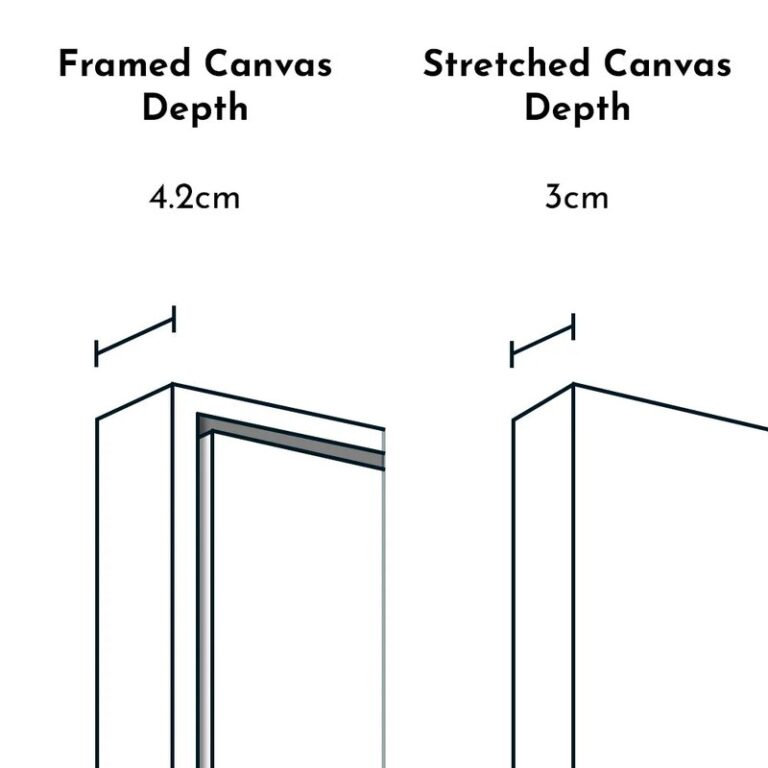
A deeper rabbet suits art with more physical structure. That includes stretched canvas, which typically has a wooden stretcher bar measuring about 3/4 inch thick, plus a few millimeters of canvas. It also suits framed items with thick mats, layered mats (often called double or triple mats), or thick acrylic glazing. If you plan to hang a shadow box frame with dimensional objects, you need a rabbet depth deep enough to hold those objects in place.
It also matters for watercolor or paper art that needs a mat to keep the artwork away from the glass. A mat creates a physical gap so the paper surface does not touch the glazing. That mat board adds roughly 1/16 to 1/8 inch of thickness, depending on the board. A frame with too little rabbet depth might still look fine while lying flat but may cause the art to press against the glass once hung, leading to condensation and sticking.
Rabbet width is a separate measurement from rabbet depth. Width is the horizontal space across the lip, while depth is the vertical space from the back edge to the lip. A frame can have a shallow narrow rabbet or a deep wide one; always verify both when selecting a frame.
Consider who will do the framing. If you are ordering a custom frame from a professional framer, they will account for rabbet depth automatically. If you are buying a ready-made frame online or in a store, you are responsible for checking the depth spec. If you are gifting a frame or photograph to someone who may not have framing tools, a deeper rabbet offers more flexibility for the recipient to eventually swap in different art.
Key Materials, Sizing, and Specifications to Check
Frames are built with a rabbet in several ways. Wood frames typically have the rabbet routed directly into the molding. Metal frames often assemble around the art package with a flat backing and clips. Acrylic and molded frames may use a snap-in back or a cut ledge. The material affects how the depth is described and how easy it is to insert the art package.
When a frame listing mentions “rabbet depth,” it is usually stated in inches or millimeters. Common values for flat art frames are 5/16 inch (about 8 mm) and 3/8 inch (about 9.5 mm). Canvas frames often specify 3/4 inch (19 mm) or deeper. Some custom frames offer a “deep profile” of 1/2 inch to 1 inch (13 to 25 mm). Always compare the total thickness of your art package against the stated depth, remembering to include the thickness of the glazing, mat, print or canvas, backing board, and any mounting hardware like hangers or tape.
| Art Package Type | Typical Thickness | Minimum Rabbet Depth to Look For |
|---|---|---|
| Paper print with standard glass and single mat | About 1/8 to 3/16 inch | 1/4 inch or more |
| Paper print with acrylic glazing and double mat | About 3/16 to 5/16 inch | 3/8 inch or more |
| Stretched canvas with wire hanging kit | About 3/4 inch plus hardware | 7/8 inch or more |
| Shadow box with dimensional objects | Varies widely | 1 inch or more |
The same picture frame can often hold both floated art and matted art. The depth of the rabbet decides which setup fits. Some artists intentionally choose a deep profile so they can switch between a matted print and a [[Gallery Chart]] floated canvas without buying a new frame.
For a quick reference, if you plan to frame a stretched canvas, check whether the listing mentions “canvas depth” or “gallery wrap.” A standard stretched canvas with 3/4 inch stretcher bars needs a frame with a depth of at least 3/4 inch, ideally more so the canvas does not press against the frame lip. To learn more about how canvas depth changes the frame profile, see our guide on canvas frame depth considerations.
When measuring the art package, measure from the front surface (facing the glass) to the very back of the backing board. Include any hanging wire or D-rings that might protrude. A good rule is to add 1/8 inch of extra depth beyond the measured package so the frame can close fully.
Styling Ideas, Benefits, and Real-World Trade-Offs

Rabbet depth determines how many layers of glass, mat, and backing fit in a frame.
Understanding rabbet depth opens up real styling choices. A deep rabbet allows you to layer multiple mats for a rich, dimensional look. Double and triple mats not only look tailored but also create a visual sense of depth that works well over a sofa or in a reading nook. A deeper frame profile also lets you use thicker glazing, which offers better protection from light and UV exposure for valuable prints.
Shallow rabbet frames, by contrast, appear slim and minimal from the front. They suit modern and Scandinavian interiors where the frame itself nearly disappears. A slim metal frame with a shallow rabbet is lightweight, easy to hang, and stacks well in gallery walls. The trade-off is limited flexibility: you cannot add thick mats or swap in heavier art later.
- Deep rabbet allows layered mats, thick acrylic, and canvas without custom framing
- Extra depth protects the art by keeping it away from the glazing surface
- More flexible if you plan to change art, add mats, or switch to mounted canvas later
- Deep-profile frames often appear bulkier and cost more
- Shallow frames may not accept a standard canvas or double-mat setup at all
- Deeper frames are heavier and may need stronger hanging hardware
The real-world trade-off for a deep rabbet is visual weight. A frame with very deep sides can look like a shadow box even with flat art. On a busy wall, that heavier look might clash with other pieces. On a clean wall, it adds architectural interest. The deeper rabbet also changes how light falls on the framed piece. A deeper recess casts a subtle inner shadow around the edges, which can be either elegant or distracting depending on the lighting in the room.
For an alternative to the traditional deep profile, consider a floating picture frame. A floating frame holds art between two sheets of glass or acrylic with a visible gap around the outer edges. It is a different visual effect from a deep rabbet and has its own depth requirements. Floating frames are especially effective for canvas or thick watercolor paper where you want the edges of the paper to be visible.
Use a deep-rabbet plain black frame for a statement piece in a hall gallery. Add a single 5-inch white mat to create an elegant museum-style presentation. The depth lets you use non-glare acrylic without stopping the frame from closing flush.
Placement, Hanging, and Common Mistakes
Once the frame is assembled, the depth of the rabbet influences how the frame sits against the wall. A frame holding a thick package and a deep backing board may sit noticeably off the wall. The top of the frame may angle forward slightly if the hanging hardware is attached to a thin lip. Check whether the frame has a sturdy hanging point, especially when hanging at eye level over a couch or in a hallway.
- Measure the art package with glazing and backing before shopping
- Add a little extra depth for hardware like D-rings or wire
- Use the frame’s stated rabbet depth and compare it with the package thickness
- Avoid buying a “standard” frame and assuming it fits a certain canvas — verify depth
- Do not force a thick package into the frame; it can bend the glass or pop the backing
- Don’t rely on the listing’s photo — check the specs or measure the actual frame
A common mistake is to purchase a frame that fits the artwork side-to-side but forgets to account for thickness. You might find a lovely frame with correct width and length but a rabbet depth of only 1/4 inch. It will look perfect until you try to slide in a matted print with acrylic glazing and the back will not sit flush. Another mistake is using the wrong hanging hardware for the extra weight. A deeper frame with thick art can be heavy, and lightweight picture hooks may fail over time.
- Quick Checks Before Hanging
- Confirm the backing board sits fully inside the rabbet and does not protrude
- Shake the frame gently — if you hear movement, the package may be too thin or not properly held
- For heavy deep frames, consider a wall anchor or a two-hook system, and check wall type first
If you plan to hang multiple pieces in a gallery wall, consider that frames with different rabbet depths create different shadow gaps on the wall. A deep frame with a thick canvas will have a prominent shadow line; a slim metal frame with a paper print will appear flat. This is not necessarily bad, but mixing several very different depths in the same row can feel visually uneven. To keep a cohesive look, choose frames with similar outside profiles even if the rabbet depth inside differs. Our guide to collage wall decor with picture frames covers spacing and how to balance different frame weights.
Care, Cleaning, and Maintenance
A properly chosen rabbet depth also makes cleaning easier. If the art package sits flush and secure, you can dust the frame and glass without worry. If the package is too thick or loose inside the frame, every movement of dusting can shift the art and eventually scratch the glass or damage the mat. Keep the frame assembled and the backing secure to prevent dust from entering the interior.
When cleaning the frame, avoid spraying liquid directly at any seam. Liquid can seep through gaps between the rabbet and the backing board, causing moisture to wick into the mat and artwork. Instead, lightly mist a clean microfiber cloth and wipe the frame’s exterior. For glazing (whether glass or acrylic), use a gentle cleaner recommended for that material, and never disassemble the frame more often than necessary to avoid loosening the backing points.
If the frame is exposed to humidity or frequent temperature changes, a too-thin package inside a deep rabbet may shift as the materials contract and expand. Check the frame every six months: if you feel the backing points clicking or the art moving, add a layer of acid-free foam board or a spacer to keep the package snug without forcing it.
Clean the inner rabbet occasionally with a dry brush or a low-suction vacuum attachment. The rabbet is an easy place for dust and tiny debris to collect, especially in older frames. If you plan to store a frame, keep it flat with the backing side down so the rabbet does not bear the weight of the artwork.
Value, Alternatives, and Final Recommendation
Rabbet depth is one of the most practical frame specifications to understand. It costs nothing to check before buying, yet it can save you from a frustrating experience of a frame that appears perfect but cannot physically hold your art. For a modest investment, a frame with a suitably deep rabbet gives you flexibility for years: you can frame a print with a museum mat, swap in a stretched canvas, or even turn it into a simple shadow box with lightweight objects.
If you already own a frame with a shallow rabbet, there are timing alternatives. For a thin art package, you can add a spacer or a foam board to make it sit snugly without requiring a deeper frame. For canvas that is thicker than the existing rabbet, you can either use a specialty floating frame that cradles the canvas from the front, or work with a custom framer who can build a profile with a deeper rabbet. Neither is as convenient as buying the right frame to begin with.
Your final decision should be based on what you are framing now and what you might frame later. If you are framing a lightweight paper print and plan to keep it in that frame indefinitely, a shallow, slim profile is the better choice visually and practically. If you are framing a valuable piece of watercolor art, a deeper rabbet with a proper mat and protective glazing is a safer investment. If you are unsure, choose a frame with slightly more depth than you need. A little extra space is easy to accommodate with a spacer or foam core; a frame that is too shallow is not.
As a final note, always verify the rabbet depth from the manufacturer’s specification sheet or by measuring the actual frame before you buy. Retail listings sometimes use “depth” to describe the overall side profile of the frame, not the usable interior space. When in doubt, contact the seller with your art package thickness and ask whether it will fit. Look for frames that list the rabbet depth explicitly, such as 1/4 inch, 3/8 inch, or 3/4 inch, and avoid relying on photos alone. The best frame for your art is one where the rabbet is not a constraint, just a quiet detail supporting the piece.
For most flat art with a mat and glass, a depth of about 3/8 inch is the most versatile. It leaves room for standard glazing, a mat, foam backing, and still closes without forcing. If you are framing a stretched canvas or a three-dimensional keepsake, move up to a 3/4 inch or deeper profile to keep the piece stable and protected.
Frequently Asked Questions