Learn How to Mix White and Wood Frames in a Gallery Wall

Pair warm wood tones with warm whites and cool woods with cooler whites, then repeat each finish at least twice across the wall. Keep spacing consistent and vary frame sizes to create a balanced, collected look.
Learning how to mix white and wood frames in a gallery wall is one of the simplest ways to make a display feel balanced, warm, and intentionally curated. The combination works because the two finishes do opposite jobs: white frames keep a wall feeling light and open, while wood frames add depth and a natural, grounded quality. When arranged thoughtfully, the result looks neither stark nor heavy — just collected.
The approach is more about restraint than rules. You do not need to match every tone perfectly or fill every inch of wall space. What matters is choosing frames that share a clear visual language, spacing them consistently, and letting the mix of finishes carry the design.
- Finish pairing: Warm woods suit warm whites; cool woods suit cool whites.
- Repetition: Repeat each finish at least twice so the mix looks intentional.
- Spacing: Two to three inches between frames keeps the composition cohesive.
- Hardware: Match fixings to your wall type and frame weight.
- Care: Protect white and wood frames from direct sunlight and humidity.
The Short Answer: Why White and Wood Frames Work Together
White and wood frames work together because they create contrast without conflict. White is neutral and recedes, so it gives the eye places to rest between busier pieces. Wood introduces warmth, texture, and a sense of permanence that an all-white arrangement can lack. Together, they suit almost any interior because neither finish dominates the other.
In practical terms, the pairing also solves a common decorating problem: you can keep a gallery wall cohesive without buying a matching set. Frames you already own in white or wood can be combined with one or two new pieces, which makes the look more affordable and more personal.
What to Look For: Choosing White and Wood Frames That Complement Each Other
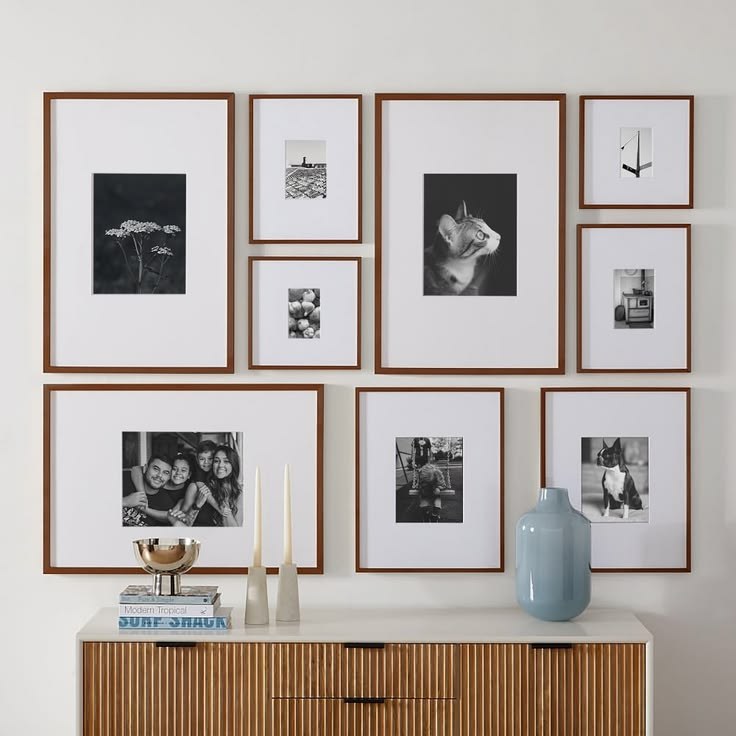
A living room gallery wall features a mix of white and wooden frames.
Before you start hanging, take a close look at the finishes. Not all whites are the same, and neither are all woods. The frames you choose should relate to one another in tone, profile, and scale.
Tones and Undertones: Warm Woods, Cool Whites
Wood frames range from pale ash and maple to deep walnut and ebony. White frames range from bright, cool gallery white to softer cream and antique off-white. The undertones matter more than the label on the box.
A simple rule: if the wood is warm, lean toward warm whites; if the wood is cool, lean toward cooler whites. That does not mean every frame must match — a single contrasting piece can be the most interesting part of the wall — but the overall palette should feel intentional.
Frame Profiles and Thickness: Building Visual Rhythm
Frame profile refers to the shape and thickness of the moulding. A slim white frame reads as modern and quiet; a chunky wood frame reads as substantial and traditional. Mixing the two creates rhythm, much like alternating sentence lengths makes writing more engaging.
Try to vary the profiles without going overboard. If every frame is the same width, the wall can feel flat. If every frame is a different width, it can feel chaotic. A good middle ground is to use two or three profile widths across the display and repeat them in different spots.
Which Rooms Suit a White-and-Wood Gallery Wall
This finish combination is versatile enough for most rooms, but it performs differently depending on the space and the light.
Living Rooms and Hallways: Making a Strong First Impression
Living rooms and hallways are natural homes for a white-and-wood gallery wall because they are the spaces people see first. The mix reads as welcoming rather than formal, which suits entryways, stairwells, and walls above sofas or consoles. If you are starting from scratch, a curated set of white gallery wall frames can provide the neutral foundation, with wood frames added afterward for warmth.
Bedrooms and Home Offices: Calm, Focused Displays
In bedrooms, the combination supports a calm, restful mood — especially when the wood is light and the white is soft. In home offices, it adds warmth without the visual noise of bold color. Keep the arrangement smaller in these rooms; a compact cluster above a desk or dresser can be more effective than a sprawling display.
Sizing, Spacing, and Layout: Getting the Composition Right<
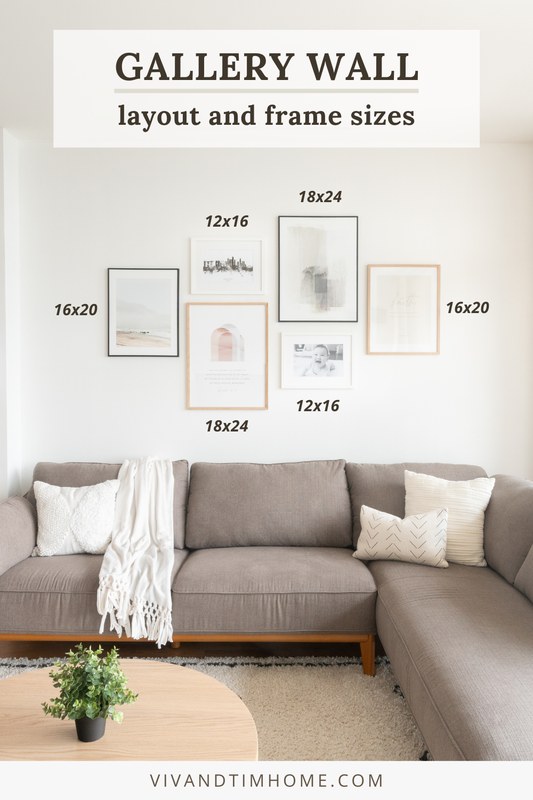
White and wood frames of different sizes arranged with even spacing on a gallery wall.
White and wood frames of different sizes arranged with even spacing on a gallery wall.
/h2>
A gallery wall succeeds or fails on composition. The finishes matter, but the proportions and gaps between frames matter just as much.
Sizing: Mixing Scales and Proportions
Large frames anchor the wall; small frames fill the gaps and add detail. A common approach is to choose one or two large anchor pieces and build the arrangement around them. If you are unsure where to begin, a guide on how to mix frame sizes for a gallery wall can help you map out proportions before you commit to holes in the wall.
Spacing and Layout: Grids, Organic Arrangements, and Focal Points
Consistent spacing is what makes a mixed-finish wall look deliberate. Two to three inches between frames is a safe starting point for most rooms; larger walls can handle slightly more breathing room, while tight clusters can work above small furniture.
Cut paper templates to the exact size of each frame and tape them to the wall before hanging. This lets you test spacing and arrangement without putting a single nail in the wrong place.
For layout, you have two main options. A grid — where frames align in neat rows and columns — looks orderly and modern, especially with a mix of white and light wood. An organic arrangement — where frames cluster around a central focal point — feels more collected and relaxed. If you want a structured starting point, browse gallery wall layout templates for frames to see which pattern suits your wall shape.
Wall Types and Hanging Hardware: Securing Your Gallery Wall
Once the layout is planned, the next step is making sure the frames stay where you put them. The right hardware depends on the wall surface and the weight of the frames.
Drywall, Plaster, and Brick: Choosing the Right Fixings
Drywall is the most common surface and the easiest to work with; a standard picture hook or wall anchor is usually sufficient for lightweight and medium frames. Plaster is harder and more brittle, so it needs a masonry bit and appropriate anchors. Brick or concrete requires masonry anchors or drilling into mortar joints.
For heavy frames, large mirrors, or walls you are unsure about, check the weight limit of the hardware and consider consulting a professional installer. A falling frame can damage both the art and the wall.
Hanging Hardware: Hooks, Rails, and Leveling Tools
On the back of each frame, look for D-rings or sawtooth hangers. D-rings with wire are more secure for larger frames; sawtooth hangers suit smaller, lighter pieces. A picture rail or ledge system is a good option if you like to rearrange frequently — it lets you move frames without adding new holes.
Use a laser level or a standard spirit level for each frame, and check both the top edge and the sides. If frames keep tilting forward or shifting out of place, adjust the hanging hardware before adding more pieces.
Styling Ideas: Matching Your Gallery Wall to Existing Decor
The same white-and-wood mix can look completely different depending on the room around it. Here is how to tailor it to two common interior styles.
Scandinavian and Minimalist Interiors
In a Scandinavian or minimalist space, choose pale woods like oak or ash and white frames with a matte finish. Keep the layout airy, with generous spacing and plenty of negative space. The frames should feel like part of the architecture, not the main event. For lighting, a plug-in or battery-powered picture light can highlight the wall without adding visible cords — see how to light a gallery wall without hardwiring for options that suit this clean aesthetic.
Mid-Century and Eclectic Interiors
For mid-century or eclectic rooms, lean into warmer woods such as walnut or teak and pair them with bright white frames for contrast. Mix frame profiles more freely and consider adding a piece with an unusual shape, such as an arch or a circular frame. The gallery wall can be the most expressive element in the room, so do not be afraid to let the wood tones carry the character.
Common Mistakes to Avoid When Mixing White and Wood Frames
Even a well-chosen set of frames can look wrong if the arrangement falls into a few common traps.
- Repeat each finish at least twice so the wall feels balanced.
- Keep spacing consistent across the whole arrangement.
- Use a focal point, such as a large wood frame, to anchor the composition.
- Test the layout on the floor or with paper templates first.
- Using only one wood frame among many white ones — it will look accidental.
- Matching every frame size and profile, which removes the visual interest.
- Hanging frames too high; eye level is a safer target.
- Ignoring undertones and pairing cool grey wood with warm cream white.
The most common mistake is treating the mix as a random assortment. A little repetition — of color, tone, or profile — is what turns a collection of frames into a cohesive gallery wall.
Care, Value, and Final Recommendation
A white-and-wood gallery wall is a long-term styling choice, so it is worth considering how the frames will age and how much maintenance they will need.
Care and Maintenance: Keeping Frames Pristine
White frames show dust and smudges more readily than dark wood, so they need a bit more attention. Dust regularly with a soft, dry cloth, and clean fingerprints with a slightly damp cloth followed by a dry one.
Avoid hanging frames in direct, prolonged sunlight. UV exposure can fade the artwork, yellow white finishes, and lighten or darken wood unevenly. In humid rooms like bathrooms, wood frames can warp; keep the display in a dry, stable environment.
Value and Final Recommendation: Is This Look Right for You?
Mixing white and wood frames is a low-risk, high-reward approach to gallery walls. It works in almost any room, suits both modern and traditional interiors, and allows you to build the display gradually with frames you already own. The main limitation is maintenance: white frames require a little more cleaning, and wood frames need protection from moisture and sunlight.
- Pair warm woods with warm whites and cool woods with cool whites for a cohesive palette.
- Vary frame profiles and sizes to create rhythm, but repeat each finish at least twice.
- Keep spacing consistent — two to three inches is a reliable starting point.
- Match hanging hardware to your wall type and frame weight.
- Protect frames from direct sunlight and humidity to keep the finishes looking their best.
If you want a gallery wall that feels warm, balanced, and easy to live with, the white-and-wood combination is a strong choice. Start with a small cluster, test the layout on the floor, and build outward as you find pieces worth adding.
Frequently Asked Questions