How Deep Should a Picture Ledge Be for Framed Art?

For most framed art, choose a picture ledge that is about 4 to 5 inches deep. This depth is usually enough for slim to medium frames, light layering, and a neat display without making the shelf feel heavy. If your frames are deep, oversized, or arranged in several layers, consider a ledge closer to 5 to 6 inches.
A picture ledge for framed art should be deep enough to hold the frame base safely, allow a slight lean against the wall, and leave room for the front lip to do its job. For most homes, 4 to 5 inches is the useful sweet spot.
I love picture ledges because they let art feel relaxed and personal. You can change a small print, add a photograph, or build a layered arrangement without making new holes for every piece. But the shelf depth matters. Too narrow, and the display can feel unstable. Too deep, and the ledge may look more like storage than a refined art feature.
In this guide, I will help you choose a picture ledge depth for your frames, your room, and the style of display you want to create. You can also explore more ideas in our framing and display collection.
What Does Picture Ledge Depth Really Mean?
Picture ledge depth is the distance the shelf projects out from the wall. It is not only about whether a frame can physically sit on the ledge. You also need space for the frame to lean back, for any overlapping frame in front, and for the raised lip that helps prevent slipping.
A slim, single photo frame needs far less space than a deep wood frame, a shadow-style moulding, or two framed prints layered together. That is why one depth does not suit every display.
An established ready-made picture ledge can be a useful measuring reference. The IKEA MOSSLANDA picture ledge is 4¾ inches deep and is designed for displaying framed pictures and artwork.
The Best Picture Ledge Depth by Display Type
| Display Type | Recommended Depth | Why It Works |
|---|---|---|
| One slim photo or art frame | 3½–4 inches | Enough for a clean, minimal display with little layering. |
| Most framed art displays | 4–5 inches | Balances support, styling freedom, and a refined look. |
| Layered small and medium frames | 4½–5½ inches | Allows one frame to sit slightly in front of another. |
| Thick wood frames or deep mouldings | 5–6 inches | Gives the base and frame profile more stable room. |
| Large or valuable framed art | Consider wall hanging | A ledge may not be the safest primary support. |
How to Measure for the Right Picture Ledge Depth
You do not need to guess. A few simple measurements can tell you whether a ledge will feel safe and useful before you buy or install it.
Measure the thickness of the bottom edge that will rest on the ledge. Include decorative moulding or protruding hardware that changes how the frame sits.
Frames normally lean gently against the wall. Allow extra front-to-back room so the frame is not balanced on a narrow edge.
If you want one small frame in front of a larger one, choose extra depth. A ledge that feels fine for one frame may become crowded when styled.
Use painter’s tape to show how far the ledge will extend. This is especially helpful in hallways, above desks, or near seating.
Depth alone does not guarantee safety. Check the shelf’s weight capacity, installation instructions, and any guidance on frame height before placing framed art on it.
If your largest frame is close to the maker’s recommended height limit, hang it on the wall and use the ledge below for smaller supporting pieces. You will get the layered look with less risk.
Why the Depth Matters for Art and Home Style
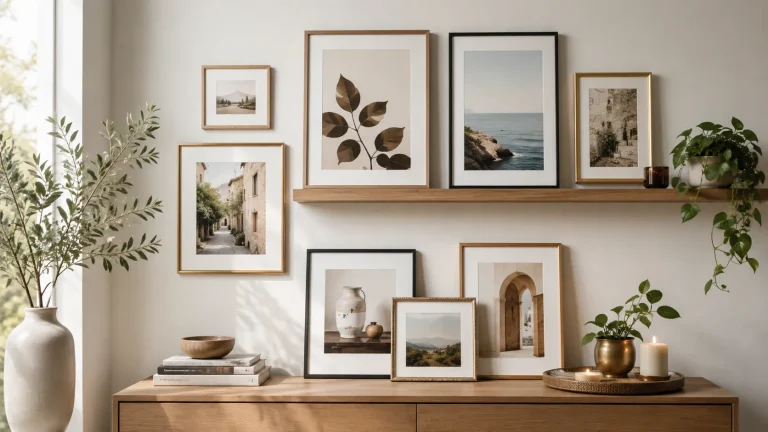
A well-sized picture ledge supports more than your frames. It helps the whole display look intentional. A shallow ledge can be graceful when you want one clean row of prints. A slightly deeper ledge can create the relaxed, collected look many art lovers want in a living room or creative workspace.
Depth also affects movement in the room. In a narrow hallway, a deep ledge may catch a shoulder or make the space feel tight. Above a sideboard or sofa, a little more depth often looks balanced and gives you space to create a fuller arrangement.
For an artful but calm display, I like one larger framed print at the back, one smaller piece overlapping slightly in front, and a single quiet accent such as a small ceramic object. The ledge should frame the art, not compete with it.
Picture Ledge Depth for Different Rooms
| Room or Location | Suggested Depth | Display Approach |
|---|---|---|
| Living room above a console | 4½–5½ inches | Layer medium frames with a small object or two. |
| Home office or creative desk | 4–5 inches | Display a few inspiring prints without taking visual focus. |
| Bedroom wall | 4–5 inches | Keep the arrangement simple, soft, and secure. |
| Narrow hallway | 3½–4 inches | Use slimmer frames and avoid protruding decor. |
| Family room with frequent movement | 4–5 inches | Secure installation and avoid heavy leaning frames. |
If you are also planning how art and objects work together in a room, our Creative Living section offers ideas for building a home that feels personal without becoming crowded.
Shallow vs. Deeper Picture Ledges
- Looks clean and minimal.
- Good for one row of slim frames.
- Projects less in narrow rooms.
- Can suit small prints and photos.
- Better for thicker or layered frames.
- Offers more styling flexibility.
- Projects farther into the room.
- May look heavy if underfilled.
The visible outside depth of a ledge is not always the same as the usable space between the front lip and the wall. Read measurements carefully, especially when your frames have a wide base.
Do’s and Don’ts for Displaying Framed Art on a Ledge
- Choose the depth using your thickest frame.
- Keep heavier pieces behind smaller ones.
- Mount the ledge into appropriate wall support.
- Check that frames sit fully behind the front lip.
- Leave breathing space so the art can be seen.
- Overload the ledge with heavy framed pieces.
- Rely on a narrow ledge for oversized art.
- Place fragile art where it can easily be knocked.
- Display sensitive works in strong direct sunlight.
- Ignore the maker’s weight and height limits.
A Simple Style Guide for Picture Ledge Displays
For most homes, I would start with a simple ledge around 4¾ inches deep in a finish that echoes one of your frame tones. It provides useful flexibility without overpowering framed art.
Common Mistakes When Choosing a Picture Ledge
Choosing only by the shelf length
A long ledge may fit the wall beautifully, but it still needs enough depth for your frames. Length determines composition; depth determines how safely and comfortably the frames sit.
Planning the display after installation
It is easy to install a very shallow ledge and later realise your favorite frame is too deep. Arrange your intended pieces on a table first. This gives you a more honest idea of the depth you need.
Over-layering a small ledge
Layering adds character, but too many frames can hide the art and increase the chance of pieces being knocked. Let each image have some room.
Forgetting light and care
A stylish ledge is not a safe place for valuable art if it receives strong direct sunlight or sits in a damp area. The Smithsonian Museum Conservation Institute’s guidance on caring for paintings is a helpful reminder that display location and careful handling matter as much as styling.
Do not place valuable original artwork, fragile glass frames, or heavy pieces on an unsecured ledge. Use suitable wall anchors or studs, follow the manufacturer’s installation guidance, and avoid display areas with direct sunlight, excess humidity, or frequent bumps.
Choosing and Installing a Picture Ledge
If you are installing a ledge yourself, gather the correct tools and take time to mount it securely. Pottery Barn’s ledge and shelf installation guidance lists basic tools such as a stud finder, drill or screwdriver, tape measure, pencil, and level.
- Measure the deepest frame you want to place on the ledge.
- Choose approximately 4 to 5 inches for a versatile everyday display.
- Choose more depth only when your frames or layering plan require it.
- Confirm the ledge has a front lip or retaining edge.
- Check maximum weight and frame-height guidance.
- Consider walking clearance in halls and small rooms.
- Plan a display location away from strong direct sunlight.
- Start with the largest artwork first and build outward with smaller frames.
- Use no more than two or three frame finishes in one small arrangement.
- Repeat one color from the artwork in a nearby object or book spine.
- Leave part of the ledge open so the display feels curated, not packed.
- Change small prints seasonally rather than rebuilding the full display.
Picture Ledge Options to Explore
A simple search can help you compare depth, length, lip height, mounting style, and finish. Focus first on measurements and safe installation rather than choosing a ledge from appearance alone.
- A 4- to 5-inch ledge depth suits most framed art displays.
- A depth close to 4¾ inches is a practical reference for standard ledges.
- Deeper ledges are helpful for thick frames or careful layering.
- Large, valuable, or heavy art is often safer when hung securely.
- Measure frames and review load guidance before installing.
For most framed art, I recommend a picture ledge around 4 to 5 inches deep. It is deep enough to feel flexible and secure for everyday styling, yet slim enough to keep the artwork as the focus. Measure your deepest frame first, install the ledge carefully, and protect special pieces from knocks and harsh light.
Frequently Asked Questions
For most framed art, a picture ledge around 4 to 5 inches deep is the most practical choice. It gives slim frames enough footing while still keeping the shelf visually light.
A 3-inch ledge may work for one slim, lightweight frame, but it leaves little room for layering or thicker mouldings. For a more flexible display, choose a deeper ledge.
Not always. A 6-inch ledge can suit large frames, deeper profiles, or layered displays, but it projects farther from the wall and can look bulky in narrow spaces.
Yes. Layering works best when the ledge has enough usable depth and a raised front lip. Keep heavier frames at the back and smaller frames in front.
Larger or valuable framed pieces should be secured or hung separately, especially in homes with children, pets, or busy walkways. Always follow the ledge maker’s weight and height guidance.
Choose a stable wall area where the art can be seen comfortably and is protected from direct sun, heat, and moisture. A ledge above a console, sofa, or desk often works well.
Final Recommendation
So, how deep should a picture ledge be for framed art? In most homes, begin with a ledge in the 4- to 5-inch range. It gives you enough room for framed prints, photographs, and gentle layering without creating a bulky shelf line.
I would choose a ledge after measuring the deepest frame I truly want to display, not after imagining an empty wall. Keep heavy or treasured pieces more securely supported, stay within the manufacturer’s limits, and let the finished arrangement feel calm, personal, and easy to enjoy. For more considered display ideas, visit Hurrell Editions.
Written by Julian Mercer for Hurrell Editions.