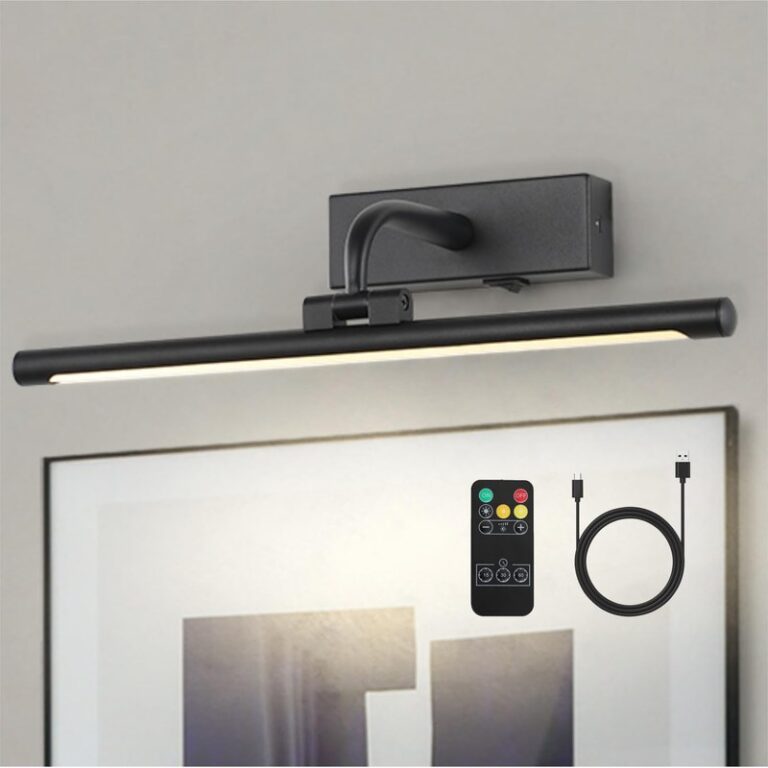
Are Gallery Picture Lights Waterproof

Most gallery picture lights are not waterproof and are best used in dry indoor rooms. For bathrooms, kitchens, basements, or sheltered outdoor walls, look for a damp-rated or outdoor-rated alternative.
Are gallery picture lights waterproof? Usually, no: most are designed for dry indoor walls, not for direct water exposure, outdoor weather, or steamy rooms unless the manufacturer clearly states a moisture-related rating. That matters because a picture light can look perfectly suitable above art while still having exposed joints, unsealed wiring points, or driver components that are vulnerable to humidity over time.
For most living rooms, hallways, bedrooms, and studies, a standard gallery picture light is completely appropriate. The confusion starts when people want the same elegant look near bathrooms, kitchens, basement walls, or covered outdoor areas. In those cases, the right answer depends less on the style name “gallery picture light” and more on the product’s IP rating, damp-location listing, finish durability, and installation conditions.
- Short answer: Most gallery picture lights are dry-location fixtures, not waterproof ones.
- Best check: Verify the official IP, damp, or wet-location rating before buying.
- Humidity risk: Steam, condensation, and exterior exposure can damage unrated lights.
- Buying focus: Compare beam spread, finish durability, power source, and adjustability.
- Safer choice: Use moisture-rated lighting when the wall is not consistently dry.
Are Gallery Picture Lights Waterproof? The Short Answer for 2026
Why most gallery picture lights are not fully waterproof
Most gallery picture lights are decorative interior fixtures. They are built to cast controlled light across framed artwork, not to resist rain, splashing, condensation, or constant humidity. Even when the metal shade and arm look sturdy, many models still have open seams, exposed pivot points, venting, or electrical connections that are not sealed against moisture.
That is especially true for classic brass, bronze, and chrome picture lights intended for formal interiors. Their design priorities are usually appearance, beam control, dimming compatibility, and easy mounting above a frame. Waterproof construction requires a different engineering approach, including gaskets, sealed housings, protected drivers, and moisture-resistant cable entry points.
Another reason for confusion is that “LED” does not mean waterproof. An LED picture light may run cooler than older bulb styles, but the presence of LED technology alone says nothing about whether the fixture can safely handle damp air or direct water contact. If you are also weighing lamp types for art safety, Hurrell Editions has a guide on whether LED lights fade pictures.
When a damp-rated or outdoor-rated light is the better choice
If the wall is in a bathroom, near a kitchen range, on a basement perimeter wall, or in any space where condensation is common, a damp-rated fixture is often the smarter category to shop. Damp-rated usually means the fixture is intended for moisture in the air, but not for direct rain or spraying water. That can make it a better fit than a standard gallery light in rooms where steam and humidity fluctuate.
For covered porches, garden rooms, pool houses, or exterior masonry walls, an outdoor-rated fixture is usually the safer path. Sheltered does not automatically mean dry. Wind-driven rain, temperature swings, and condensation can still reach the fixture body and internal components.
Terms like “waterproof,” “damp rated,” “wet rated,” and “bathroom suitable” are not interchangeable. Always confirm the exact wording on the official product page and installation documentation before buying.
How to Tell Whether a Picture Light Can Handle Moisture
Understanding IP ratings, damp ratings, and bathroom-safe terminology
The clearest sign that a light can handle moisture is an official rating or location listing from the manufacturer. For many readers, the most useful system is the IP rating. In simple terms, IP ratings describe how well an enclosure resists solids and water. A higher water-protection digit usually indicates better resistance to splashes or water exposure, but the exact meaning depends on the stated rating.
Some brands use location-based language instead. “Dry location” generally means indoor spaces without notable moisture. “Damp location” usually covers humid interiors or protected areas with moisture in the air. “Wet location” is the category to look for when a fixture may face direct water exposure.
Bathroom-safe wording can be especially vague. A retailer may describe a light as suitable for bathrooms because it matches the look of bathroom decor, not because it is certified for humid zones. That is why the official specification sheet matters more than a product title or marketing photo.
Which product details matter most: seals, finishes, wiring, and driver protection
Beyond the rating itself, a few construction details are worth checking. First, look at where the arm meets the backplate and where the shade pivots. These joints are common weak points for moisture entry on fixtures that were never designed to be sealed.
Second, pay attention to the finish. Some finishes tolerate humidity better than others, while others may spot, tarnish, or corrode faster in damp rooms. That does not necessarily make the light unsafe, but it can affect longevity and appearance.
Third, consider the wiring method and power components. Hardwired LED fixtures may contain an integrated driver that needs protection from moisture. Plug-in and rechargeable models have their own vulnerabilities, including charging ports, battery compartments, and cable connections. If you are comparing cordless options, our article on are battery operated picture lights any good can help sort out convenience versus tradeoffs.
- Confirm whether the light is rated for dry, damp, or wet locations.
- Check the official specification sheet, not just the retailer headline.
- Look for protected joints, sealed entry points, and finish care guidance.
- Verify whether the warranty excludes bathroom or outdoor installation.
What to Look for Before Buying a Gallery Picture Light
Brightness, beam spread, and colour temperature for artwork
Moisture safety matters, but so does the actual lighting performance. A picture light that is technically suitable for the room can still disappoint if it creates glare, bright streaks, or dull color. Brightness should match the artwork size, wall color, and ambient light level. Too little light makes the fixture decorative only; too much light can flatten detail and create a harsh hotspot across glass.
Beam spread is just as important. A narrow beam may work on a small portrait but leave the corners of a wide landscape in shadow. A broader spread is often better for larger frames, grouped works, or textured art surfaces.
Color temperature also shapes the look of the art. Warmer light tends to feel softer and more traditional, while neutral light often shows color and detail more clearly. The best choice depends on the room mood, frame finish, and the artwork itself.
Power source options: hardwired, plug-in, rechargeable, and battery-operated
Hardwired picture lights offer the cleanest built-in look, but they require more planning and should be installed with attention to wall type, electrical code, and manufacturer instructions. Plug-in models are easier to add later, though the visible cord may matter in formal rooms.
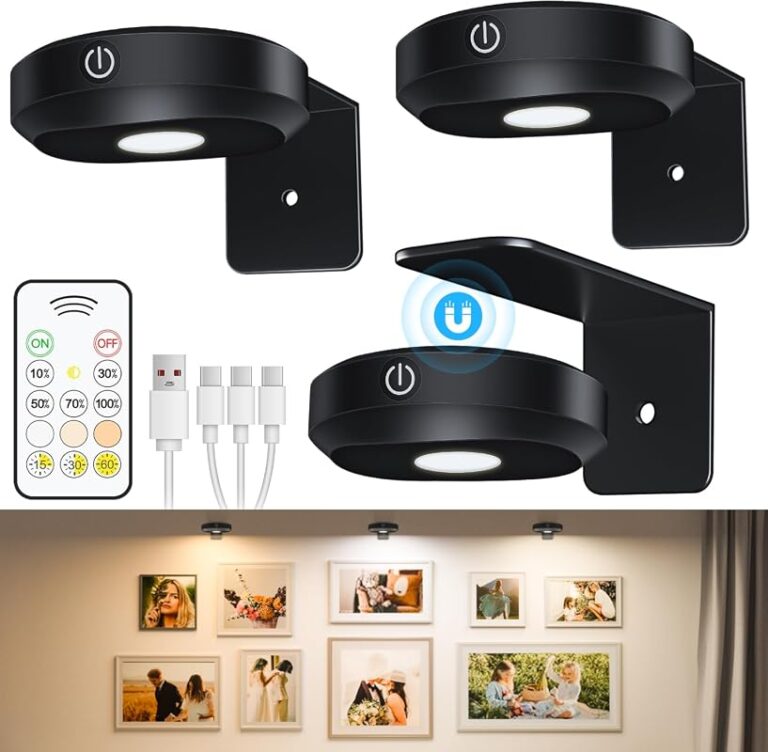
Rechargeable and battery-operated lights appeal to renters, gallery-wall builders, and anyone avoiding electrical work. They can be especially helpful where you want flexibility or a no-cord installation. Still, they are not automatically better for damp spaces. Battery compartments and charging ports can be sensitive to moisture unless the product is specifically rated otherwise.
If you are deciding between cordless formats, it helps to compare runtime expectations and charging habits. Related guides on how long battery-operated picture lights last and whether battery picture lights need to be charged can clarify the maintenance side before you choose.
Safety basics for installation near kitchens, bathrooms, and exterior walls
Any light installed near moisture should be selected and positioned conservatively. Avoid assuming that “near but not inside the shower zone” makes any decorative fixture acceptable. Kitchens raise a different issue: grease, heat, and steam can all affect finishes and internal components over time.
Exterior-facing walls can also be tricky because they may collect condensation inside the room, especially in older homes or poorly insulated spaces. If the art wall feels cool or tends to attract moisture, the fixture category deserves extra scrutiny.
Do not improvise electrical modifications, seal a non-rated fixture with household caulk, or install wall-mounted lighting in moisture-prone locations without checking the wall type, manufacturer guidance, and a qualified installer when needed.
Where Gallery Picture Lights Work Best and Where Waterproofing Matters Most
Living rooms, hallways, bedrooms, and studies
These are the rooms where standard gallery picture lights usually make the most sense. Conditions are typically dry and stable, and the fixture can do what it does best: highlight art, create mood, and add a polished architectural layer to the wall. In these spaces, your main decision points are style, size, brightness, and power source rather than waterproofing.
That is why many decorative picture lights are sold without any moisture-focused rating at all. They are intended for exactly these everyday interior settings.
Bathrooms, kitchens, basements, and other higher-humidity spaces
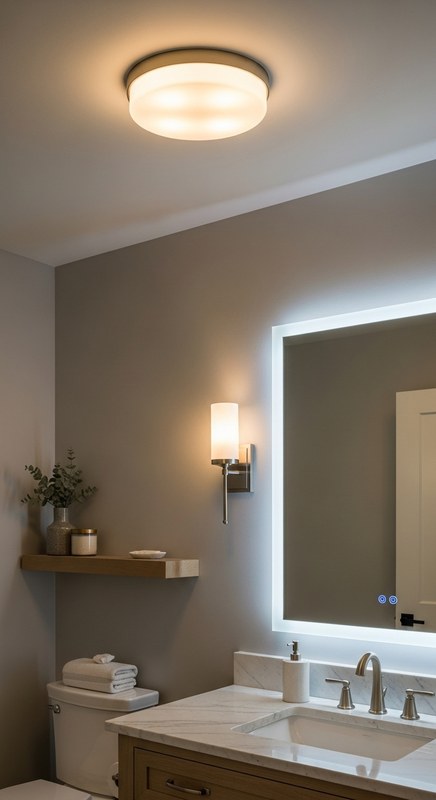
Bathrooms are the most obvious caution zone. Steam from showers, poor ventilation, and condensation on mirrors and walls can all shorten the life of a standard picture light. Kitchens can be almost as demanding, especially if the light is near active cooking areas. Basements add another challenge because even finished spaces may experience seasonal dampness.
In these rooms, a moisture-rated alternative may be more practical than a classic gallery fixture, even if the standard model better matches your decor. It is often smarter to compromise slightly on style than to risk corrosion, finish damage, or a voided warranty.
Why sheltered outdoor walls usually need a different lighting category
A covered entry, porch alcove, or enclosed veranda may seem close enough to an indoor room, but outdoor conditions behave differently. Wind can push rain farther than expected, and temperature changes can create condensation inside fixture housings. UV exposure can also affect finishes, seals, and painted surfaces.
For that reason, sheltered exterior walls usually call for a fixture that belongs to an outdoor or wet-rated category rather than a standard gallery picture light. If the goal is to illuminate art outdoors, it is usually better to start with an exterior-rated art light or wall light rather than trying to adapt an indoor product.
Placement, Sizing, and Positioning for the Best Art Lighting
How wide the light should be compared with the frame or artwork
As a general rule, the light should be proportionate to the frame width rather than nearly as wide as the artwork itself. Many people prefer a fixture that spans roughly half to two-thirds of the frame width, though this varies by beam spread and the depth of the shade.
A very small light over a wide frame can create a bright center and dim edges. An oversized light may dominate the composition and distract from the art. The best balance depends on both fixture width and optical spread, not width alone.
Ideal mounting height and distance above the picture
Picture lights are commonly mounted just above the top of the frame, but the exact spacing depends on the arm projection, beam angle, and frame depth. A little distance helps the beam spread more evenly. Too close, and you may get a harsh band of light at the top of the artwork. Too far, and the light can spill onto the wall above.
Manufacturer diagrams are especially useful here because two fixtures with similar widths can throw light very differently. If the product page does not show a recommended mounting range, that is worth noting before purchase.
If your artwork is glazed, prioritize adjustability. A light with a movable arm or shade gives you more control over reflections than a fixed bar with the same finish.
Avoiding glare, hot spots, shadows, and uneven coverage
Glare usually comes from one of three issues: mounting too high, aiming too directly at glass, or choosing a beam that is too concentrated. Hot spots happen when the center of the beam is much brighter than the edges. Shadows can appear if the frame is unusually deep or if the light is mounted too close to the top rail.
To reduce these problems, look for fixtures with some adjustability and pair the fixture width sensibly with the art size. Matte glazing, anti-reflective glazing, and careful room lighting can also help, especially in spaces with windows or multiple lamps.
Materials, Finishes, and Style Pairings for Different Interiors
Brass, bronze, chrome, painted metal, and acrylic details
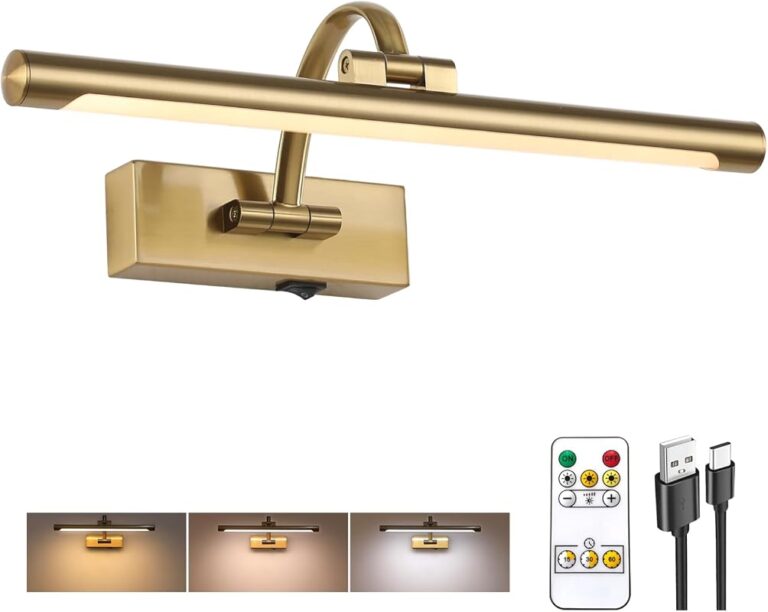
Brass and bronze picture lights often suit traditional, heritage, and library-like interiors. Chrome and polished nickel tend to feel crisper and more contemporary. Painted metal can blend more quietly into minimalist rooms, while acrylic details may lean modern or decorative depending on the silhouette.
In moisture-prone rooms, finish care matters as much as style. Some finishes may show spotting or wear sooner in humid air, so the manufacturer’s care guidance is worth reading before installation.
Matching picture lights to frames, wall colour, and existing decor
A good picture light should relate to the frame without becoming a perfect match in every case. Warm metal finishes often pair naturally with dark wood, walnut, gilt, and traditional black frames. Cooler finishes can work well with white, charcoal, silver, and modern gallery-style frames.
Wall color changes the effect too. On dark walls, a metallic picture light can read as jewelry. On pale walls, a painted fixture may disappear more elegantly. If your frames are organic or rustic, the contrast between refined lighting and textured wood can look especially strong when done intentionally.
Classic gallery, contemporary, heritage, and minimalist styling ideas
For a classic gallery look, choose a slim metal shade, restrained detailing, and a finish that echoes frame hardware or nearby sconces. Contemporary rooms often benefit from cleaner lines, lower-profile arms, and a more neutral color temperature. Heritage interiors can support richer finishes and more decorative backplates, while minimalist spaces usually look best with understated forms and fewer visible elements.
Benefits, Limitations, and Common Buying Mistakes
The value of picture lights for mood, visibility, and presentation
Picture lights can make art feel intentional rather than incidental. They improve visibility in dim corners, add depth to a room at night, and give even modest prints a more considered presentation. In layered interiors, they can also bridge the gap between practical lighting and decorative styling.
Common drawbacks: moisture risk, incorrect brightness, and poor placement
The main limitation is that many models are specialized decorative lights, not all-purpose fixtures. They may be unsuitable for wet or humid locations, underpowered for large art, or difficult to position if the beam is fixed. Some cordless models also trade output or runtime for convenience.
Another common issue is buying by finish alone. A beautiful brass bar that suits the frame perfectly can still be the wrong choice if the room is steamy, the wall is awkward, or the beam pattern is too narrow.
Mistakes to avoid when choosing lights for valuable art or prints
One mistake is assuming any light marketed for art is automatically conservation-friendly or safe for every medium. Another is ignoring glazing reflections until after installation. A third is skipping the official specification sheet and relying only on product photos or customer images.
- Match the fixture category to the room’s moisture level.
- Check beam spread and adjustability, not just width.
- Verify finish care, warranty terms, and power details.
- Assuming indoor decorative lights are fine on sheltered exterior walls.
- Choosing a light only because it matches the frame finish.
- Placing valuable art in a damp location without reviewing both lighting and preservation needs.
Care, Maintenance, and Final Recommendation
Cleaning, bulb or battery upkeep, and checking for corrosion over time
Routine care is simple but important. Dust the fixture gently, follow the finish-specific care instructions, and avoid harsh cleaners unless the manufacturer says otherwise. For integrated LED models, confirm whether the light source is replaceable or built in. For battery and rechargeable models, keep an eye on charging ports, battery compartments, and any signs of corrosion or finish wear.
If a light is installed in a room with occasional humidity, inspect it periodically for discoloration, spotting, or loosened hardware. Small cosmetic changes can be an early sign that the environment is more demanding than the fixture category allows.
When to choose a standard gallery picture light versus a moisture-rated alternative
Choose a standard gallery picture light when the room is dry, the wall is interior, and your priority is art presentation, finish, and style. Choose a damp-rated or outdoor-rated alternative when moisture is a recurring part of the environment, even if the fixture will not be directly sprayed.
If you are unsure, the safer buying decision is usually the one with the clearer rating and the more suitable installation guidance. Decorative similarity is not enough when the room conditions are challenging.
A transparent verdict on waterproof claims and practical buying value
Most gallery picture lights are not waterproof, and products that truly handle water exposure are usually sold in a different fixture category. For dry interiors, that is not a problem at all. But for bathrooms, kitchens, basements, and sheltered outdoor walls, the practical value comes from choosing a light with an official moisture-related rating rather than relying on appearance or broad marketing language.
- Standard gallery picture lights are usually meant for dry indoor rooms.
- Damp-rated or outdoor-rated fixtures are better for humidity, condensation, or exterior exposure.
- Always verify official ratings, finish care, and installation guidance before buying.
Frequently Asked Questions