How Gallery Picture Lights Work

Gallery picture lights work by directing a controlled beam of light down over framed art from a short distance above it. Their performance depends on placement, projection, beam spread, color quality, and the right power source for the room.
Understanding how gallery picture lights work makes it much easier to choose the right fixture, place it well, and avoid glare on the art you want to show off. A picture light is a focused wall-mounted fixture designed to send controlled light down and across framed artwork, using its beam spread, projection, color quality, and mounting position to create even illumination without making the room feel overlit.
- Purpose: Picture lights are made to highlight artwork, not broadly light a whole wall.
- Placement: Height and arm projection strongly affect glare, coverage, and hotspots.
- Light quality: Dimming, CRI, and color temperature matter as much as brightness.
- Power choice: Hardwired, plug-in, rechargeable, and battery models each suit different setups.
- Buying focus: Match the fixture to the art’s width, surface, and frame style before choosing finish.
How Gallery Picture Lights Work at a Glance
At the simplest level, a gallery picture light mounts above a frame and throws light downward over the face of the artwork. Unlike a ceiling spotlight that lights a broad area from farther away, a picture light is built for short-range, directional illumination. That focused job is what gives art a more intentional, curated presence on the wall.
What a picture light is designed to illuminate
Most gallery picture lights are made to illuminate framed paintings, prints, drawings, photography, and other wall-hung art. The goal is not to flood the whole wall with brightness. Instead, the fixture is meant to highlight the visible image area and, in many cases, part of the frame, so the piece reads clearly in the room.
This is why picture lights are especially popular in hallways, living rooms, dining rooms, stair landings, and studies where ambient light may be soft or uneven. They help a single piece feel important, and they can also bring rhythm and structure to a row of works.
How beam spread, angle, and distance affect the artwork
Three things largely determine the result: beam spread, aiming angle, and distance from the art. Beam spread refers to how wide the light opens as it leaves the fixture. A narrow spread can create a dramatic spotlight effect, while a wider spread is better for evenly covering larger artwork.
The angle matters because light aimed too steeply can create a bright band at the top of the frame and leave the lower section dim. If the fixture sits too close to the artwork, you may get hotspots. If it projects too far outward, the beam can spill past the frame and cause unnecessary glare.
Distance also changes intensity. Light that travels only a short distance appears stronger and more concentrated. As the fixture sits farther away from the art, the beam softens and spreads, which can improve coverage but reduce punch.
Why gallery picture lights differ from standard wall lighting
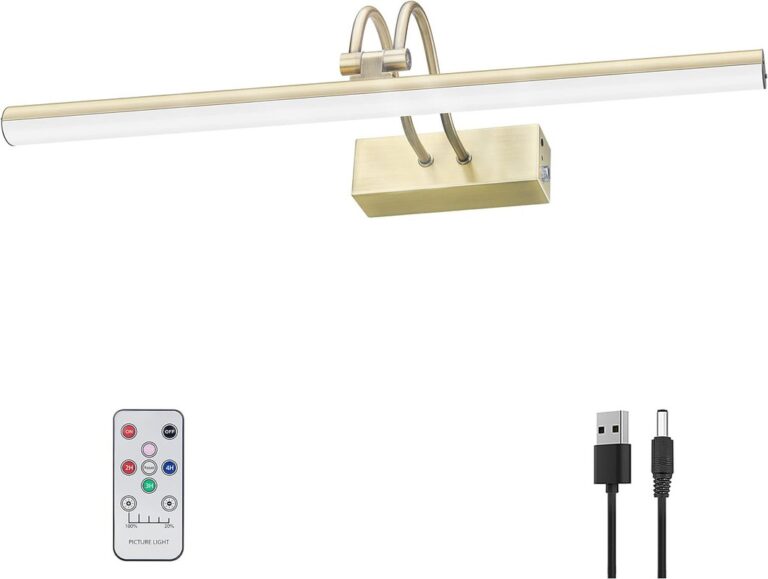
Standard wall sconces are usually designed to light a general area, create mood, or add decorative symmetry. Gallery picture lights are more specialized. They are shaped to direct light across a vertical surface at close range, often with a slim shade, a projecting arm, and adjustable joints that help fine-tune the beam.
They also tend to prioritize color rendering and visual softness. In other words, they are not just decorative hardware above a frame. They are task lighting for art.
The Core Parts That Make a Gallery Picture Light Work
Once you know the main parts of the fixture, product listings become much easier to read. Terms like integrated LED, arm projection, and dimmer compatibility are not just technical extras. They directly affect how the light performs on the wall.
Light source: LED boards, integrated modules, and lamp lifespan
Most modern gallery picture lights use LEDs rather than traditional incandescent bulbs. In many designs, the LED is integrated into the fixture as a board or module rather than a replaceable screw-in bulb. That allows slimmer profiles, lower heat, and more even light distribution.
LED picture lights are popular because they are energy efficient, compact, and available in warmer or more neutral color temperatures. Lifespan varies by model, driver quality, and usage pattern, so it is smart to confirm the manufacturer’s rated life and whether the light source is replaceable before buying. If you are comparing fixture types, Hurrell Editions also has a guide on how to choose a picture light for artwork.
Shade, reflector, and diffuser design
The shade is the visible bar or cover that directs the beam downward. Inside it, the fixture may use a reflector to steer light toward the artwork and a diffuser to soften the output. A good diffuser can reduce harsh points of light and help create a smoother wash across the art.
Some fixtures produce a crisp, more dramatic effect. Others are designed for a softer gallery-style glow. Neither is automatically better. It depends on the artwork surface, the room mood, and whether you want the frame to sparkle or the art to read quietly.
Arm projection, swivel points, and mounting plate function
The arm projection is the distance the light extends from the wall. This is one of the most overlooked specifications, but it strongly affects coverage and glare control. Too little projection can trap the light at the top of the frame. Too much can push the beam outward and create spill.
Swivel points allow the fixture head or arm to tilt and adjust. That adjustability is especially useful when frames vary in depth or when glazing reflects light back into the room. The mounting plate is the base fixed to the wall or frame area, and it supports the fixture while concealing hardware or wiring depending on the design.
Driver, dimmer compatibility, and power conversion basics
LEDs do not run directly the same way older bulbs did, so many fixtures rely on a driver to convert incoming power into the form the LED module needs. In hardwired fixtures, the driver may be built into the body or canopy. In plug-in or rechargeable designs, the power conversion may happen through an adapter, charging system, or internal electronics.
Dimming is another area to check carefully. Not every LED picture light dims the same way, and not every wall dimmer works with every fixture. Some are designed for integrated touch dimming or remote dimming rather than a standard in-wall dimmer. Always confirm the official specifications if dimming matters to you.
Integrated LEDs can look sleek and perform beautifully, but serviceability varies by model. Before buying, check whether the manufacturer explains LED lifespan, replacement policy, and compatible dimming methods.
Where to Place a Picture Light for the Best Results
Even a beautiful fixture can disappoint if placement is off. The right position depends on frame size, art surface, glazing, and wall height, but a few practical rules help narrow it down.
Ideal mounting height above framed art
A common starting point is to mount the light a short distance above the top of the frame rather than far above it. This keeps the beam connected to the artwork and reduces wasted spill. The exact gap varies by fixture size and projection, but close placement usually gives a cleaner, more intentional result than floating the light too high above the piece.
For tall ceilings, resist the temptation to center the light within a large blank wall area. The fixture should visually belong to the artwork, not to the wall field around it.
How far the fixture should project from the wall
Projection should be enough to let the beam travel down the face of the art rather than skim only the top edge. Deeper frames and shadowbox styles often need more thoughtful projection than slim glazed prints.
If reflections are a concern, a slightly adjustable fixture can help you angle the beam so it lights the image without bouncing directly into eye level. This is especially relevant for glass-covered photography and glossy prints.
If your artwork has reflective glazing, prioritize adjustability over maximum brightness. A dimmable, aimable light often solves more real-world problems than a stronger fixed bar.
Sizing the light to the width of the artwork or frame
In general, the light should look proportionate to the artwork. Many decorators prefer a fixture somewhat narrower than the frame width so the hardware does not overpower the art. A tiny fixture over a wide frame can leave dark edges, while an overly long fixture can dominate visually and spill light beyond the piece.
When comparing widths, check whether the listed size refers to the full fixture, the illuminated section, or the mounting plate. Those measurements are not always the same.
Spacing rules for single artworks, pairs, and gallery walls
For a single artwork, one centered picture light is the usual choice. For pairs, matching fixtures can create symmetry if the pieces are similar in size and hung at the same height. For a gallery wall, individual lights above every frame can look formal and architectural, but it can also become visually busy if the works are small or tightly grouped.
In many mixed gallery walls, selective lighting works better than lighting every piece. You might highlight a larger anchor artwork and let ambient room lighting support the rest. If your display is built around ledges rather than direct wall hanging, related spacing ideas can be found in this guide on how to arrange frames on a picture ledge without clutter.
Brightness, Colour Temperature, and Finish Quality Explained
Once placement is sorted, the next question is usually output. Brightness alone does not determine quality. The character of the light matters just as much.
How many lumens are usually enough for paintings, prints, and photography
There is no single lumen number that suits every artwork because room darkness, wall color, frame finish, and fixture distance all change the result. Small and medium pieces often need less output than shoppers expect, especially in intimate rooms with layered ambient lighting. Larger works, darker paintings, and wide mats may need more coverage or a longer fixture rather than simply more intensity.
When comparing products, it is better to look for balanced output, dimming options, and beam quality than to chase the highest lumen figure. High brightness without control can flatten the artwork and make the wall look harsh.
Warm white vs neutral white for different art styles and room moods
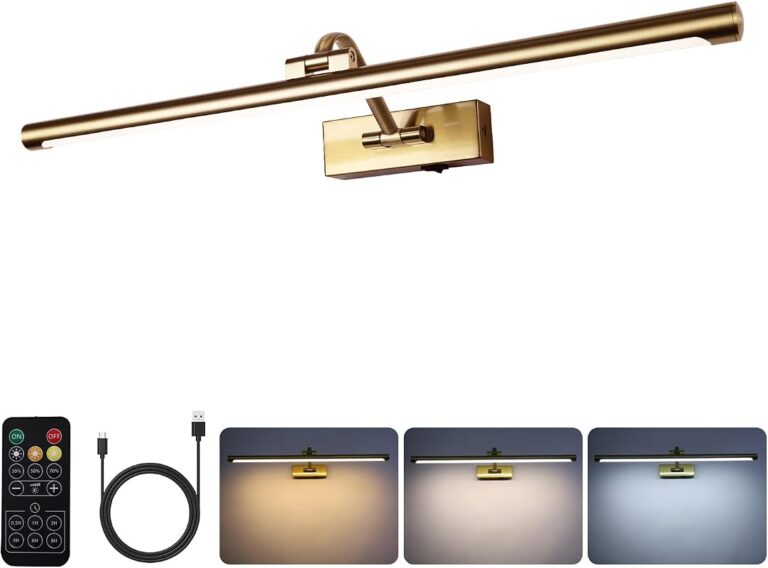
Warm white light usually feels softer, more residential, and more flattering in traditional interiors, dining rooms, and spaces with wood tones, brass, or warm paint colors. Neutral white often feels cleaner and crisper, which can suit contemporary art, black-and-white photography, and modern interiors.
Neither is universally right. A warm-toned oil painting may look rich under a warmer light, while a graphic print can benefit from a slightly cleaner white. The best choice depends on both the artwork and the room atmosphere you want.
CRI and why colour accuracy matters for artwork
CRI, or color rendering index, describes how accurately a light source reveals colors compared with a reference standard. For artwork, stronger color rendering usually means reds, blues, skin tones, neutrals, and subtle tonal transitions appear more natural and less dull.
This matters because art is often chosen for its color relationships. A fixture with poor color rendering can make a beautiful print look flat or slightly off. If the manufacturer provides CRI information, it is worth checking.
How glare, hotspots, and shadowing can affect the viewing experience
Glare happens when the light is visible in a distracting way or reflects strongly off glazing. Hotspots appear when one section of the artwork is much brighter than the rest. Shadowing can occur if the fixture angle, frame depth, or nearby architectural elements interrupt the beam.
These issues are why a polished product listing photo does not guarantee the same result in every home. Wall color, finish sheen, and the surface of the art all influence what you actually see.
- Choose dimming and adjustability if your artwork is glazed or glossy.
- Match color temperature to both the art and the room mood.
- Check CRI when color fidelity matters.
- Assuming the brightest fixture will look the most premium.
- Using a cool white light on every art style by default.
- Ignoring reflections from glass, acrylic, or metallic finishes.
Choosing the Right Power Source and Understanding Safety Basics
Power source affects both appearance and flexibility. It also changes what kind of installation effort the fixture requires.
Hardwired picture lights for permanent installations
Hardwired picture lights are often the cleanest-looking option because there is no visible cord and power is built into the wall connection. They make sense for permanent art placement, renovated spaces, and rooms where a polished architectural finish matters.
Because wall wiring and electrical codes vary, installation details should be confirmed with a qualified electrician when needed. Always check the official instructions, wall suitability, and included hardware.
Rechargeable and battery-powered options for flexible placement
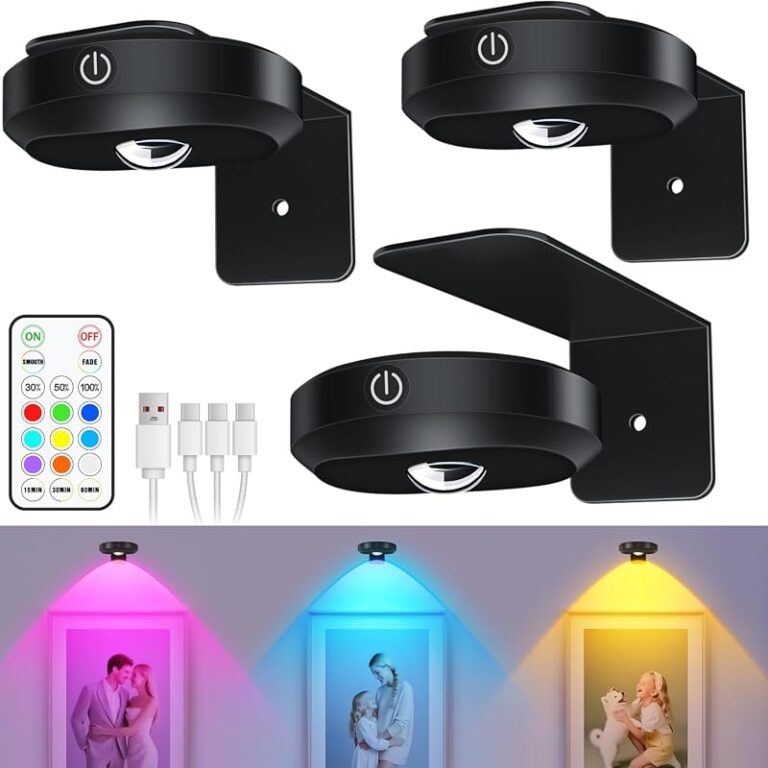
Rechargeable and battery-powered lights are popular with renters, anyone avoiding rewiring, and people who like to move art around. They offer flexibility and can look surprisingly refined, but runtime, charging frequency, and output vary widely by model. If you are considering this category, these related guides explain do battery operated picture lights work and how long battery operated picture lights last.
Plug-in designs and cable management considerations
Plug-in picture lights sit between hardwired and battery options. They can provide steady power without opening the wall, but the cord needs thoughtful routing. In some rooms that is easy to disguise; in others it becomes a visual compromise.
Before buying, consider outlet location, cord length, and whether the cable path will cross trim, wallpaper, or a highly visible section of wall.
Safety basics for wall type, fixings, heat, and electrical installation
Always confirm that the wall type can support the fixture and that the supplied fixings are appropriate for your surface. Plaster, drywall, masonry, paneling, and built-in millwork can all require different hardware. For hardwired fixtures, electrical installation should follow the manufacturer’s instructions and local requirements.
Modern LED picture lights generally run cooler than older bulb types, but heat can still vary by model. That matters for delicate surfaces, enclosed shades, and maintenance access.
Do not assume one set of wall anchors suits every installation. Check wall type, fixture weight, and manufacturer guidance, and use a qualified installer when wiring or wall condition is uncertain.
What to Look for Before Buying a Gallery Picture Light
Shopping becomes much easier when you judge the fixture by fit, finish, and function rather than style alone.
Matching fixture scale, finish, and style to existing decor
A traditional brass picture light can feel elegant over oil paintings, antique maps, and classic portraiture. Matte black often works well with modern frames and graphic art. Bronze, nickel, and painted finishes can bridge transitional interiors.
The key is proportion. The fixture should support the artwork and room rather than compete with either one. If the frame is delicate, a heavy decorative light may feel top-heavy. If the room already has strong metal finishes, matching or intentionally contrasting them usually looks more cohesive than introducing a random third tone.
Best options for hallways, living rooms, dining rooms, staircases, and studies
Hallways often benefit from slimmer fixtures and controlled output because viewers pass close by. Living rooms can handle more decorative presence and dimming flexibility. Dining rooms usually favor warmer, softer light that complements evening ambiance. Staircases may need careful glare control because sightlines change as you move. Studies tend to suit focused, color-accurate lighting that supports detailed viewing.
Room use matters as much as style. A dramatic fixture in a formal dining room may be perfect, while the same light could feel too intense in a narrow corridor.
Materials, build quality, and finish durability in 2026
In 2026, many buyers are paying closer attention to finish consistency, touchpoint quality, and long-term serviceability rather than just the look of the product photo. Metal construction, smooth joint movement, clean welds or seams, and a finish that resists obvious wear all tend to matter more over time than trend-driven styling alone.
Durability claims vary by brand and finish, so it is wise to confirm official care instructions, warranty terms, and whether replacement parts or support are available.
Dimming, adjustability, and maintenance access
Dimming helps a picture light adapt to daytime, evening, entertaining, and seasonal changes in ambient light. Adjustability helps when art is glazed, textured, or repositioned. Maintenance access matters because even a long-life LED fixture may eventually need service, charging, cleaning, or battery attention depending on the design.
- Confirm the fixture width, projection, and mounting style fit your artwork.
- Check color temperature, CRI, and dimming method in the official specifications.
- Verify whether the light is hardwired, plug-in, rechargeable, or battery-powered.
- Review wall compatibility, included hardware, and care instructions before installation.
Benefits, Limitations, and Common Mistakes to Avoid
Picture lights can be transformative, but they are not a cure-all. Knowing both the strengths and the tradeoffs leads to better decisions.
Why picture lights can elevate both art and room atmosphere
A good picture light gives artwork presence after dark, adds depth to the wall, and helps a room feel layered rather than flat. It can make a modest print feel intentional and can turn a hallway or study into a more gallery-like space.
They also create a visual pause. Instead of the eye drifting across a dim wall, the artwork becomes a focal point.
When a picture light may not be the best solution
Not every artwork needs one. In very small rooms, a picture light can feel fussy if the art is casual or the wall already has strong overhead lighting. Some gallery walls look cleaner with track lighting or ceiling-mounted accent lighting instead of many separate fixtures. Highly reflective glazing can also make certain fixed, non-adjustable lights frustrating.
Mistakes with sizing, placement, colour temperature, and over-lighting
Common mistakes include choosing a fixture that is too short for the artwork, mounting it too high above the frame, selecting a color temperature that clashes with the room, and using more brightness than the art actually needs. Another frequent problem is ignoring projection depth, which can lead to uneven coverage or reflections.
Many of these errors happen because shoppers focus on finish first and beam behavior second. The better order is performance, proportion, then style.
Evidence limits: why results vary by artwork surface, glazing, and wall colour
Results vary because no two installations are exactly alike. Matte canvas, glossy photography, textured oil paint, acrylic glazing, dark walls, and pale walls all respond differently to the same fixture. Manufacturer photos and room scenes can be useful, but they cannot fully predict your own setup.
That is why it is best to treat published specifications as a starting point and verify dimensions, power details, and finish information directly with the seller or manufacturer before buying.
- Adds focused light exactly where artwork needs it.
- Improves evening visibility and room atmosphere.
- Available in hardwired, plug-in, battery, and rechargeable formats.
- Can feel decorative as well as functional.
- Poor placement can create glare, hotspots, or uneven coverage.
- Not every model dims or works with every dimmer.
- Battery and rechargeable options require ongoing maintenance.
- Performance varies with glazing, wall color, and artwork surface.
Care, Long-Term Value, and a Final Recommendation
A picture light is a small detail, but it has outsized impact when chosen well. Long-term value comes from consistent performance, finish durability, and the ability to make your artwork look intentional night after night.
Cleaning finishes, preserving performance, and checking fittings over time
Routine care is usually simple: dust the fixture gently, keep the shade and diffuser clean, and periodically check that screws, joints, and mounting points remain secure. Always follow the manufacturer’s care instructions, especially for plated, painted, or lacquered finishes that may react poorly to harsh cleaners.
Rechargeable or battery-powered models also need occasional checks for charging condition, battery health, and remote function where applicable.
When a premium picture light is worth the investment
A premium fixture is often worth it when the artwork is important to you, the room is used heavily in the evening, or the light will become part of the room’s visible design language. Better build quality, smoother adjustability, stronger finish consistency, and more refined light output can justify the higher spend in those situations.
For temporary displays, rentals, or casual art arrangements, a simpler battery or plug-in option may be the smarter choice.
Who gallery picture lights suit best and how to choose with confidence
Gallery picture lights suit anyone who wants framed art to read clearly and beautifully after dark, especially in rooms where ambient lighting alone feels flat. The safest buying approach is to start with the artwork’s width, surface, and glazing, then choose the right projection, output, color temperature, and power source to match.
If you want one practical recommendation, prioritize a dimmable, well-proportioned fixture with good color rendering and some aiming flexibility. That combination gives the best chance of a polished result across a wide range of artworks and interiors.
2026 refresh: choose the power source before the finish
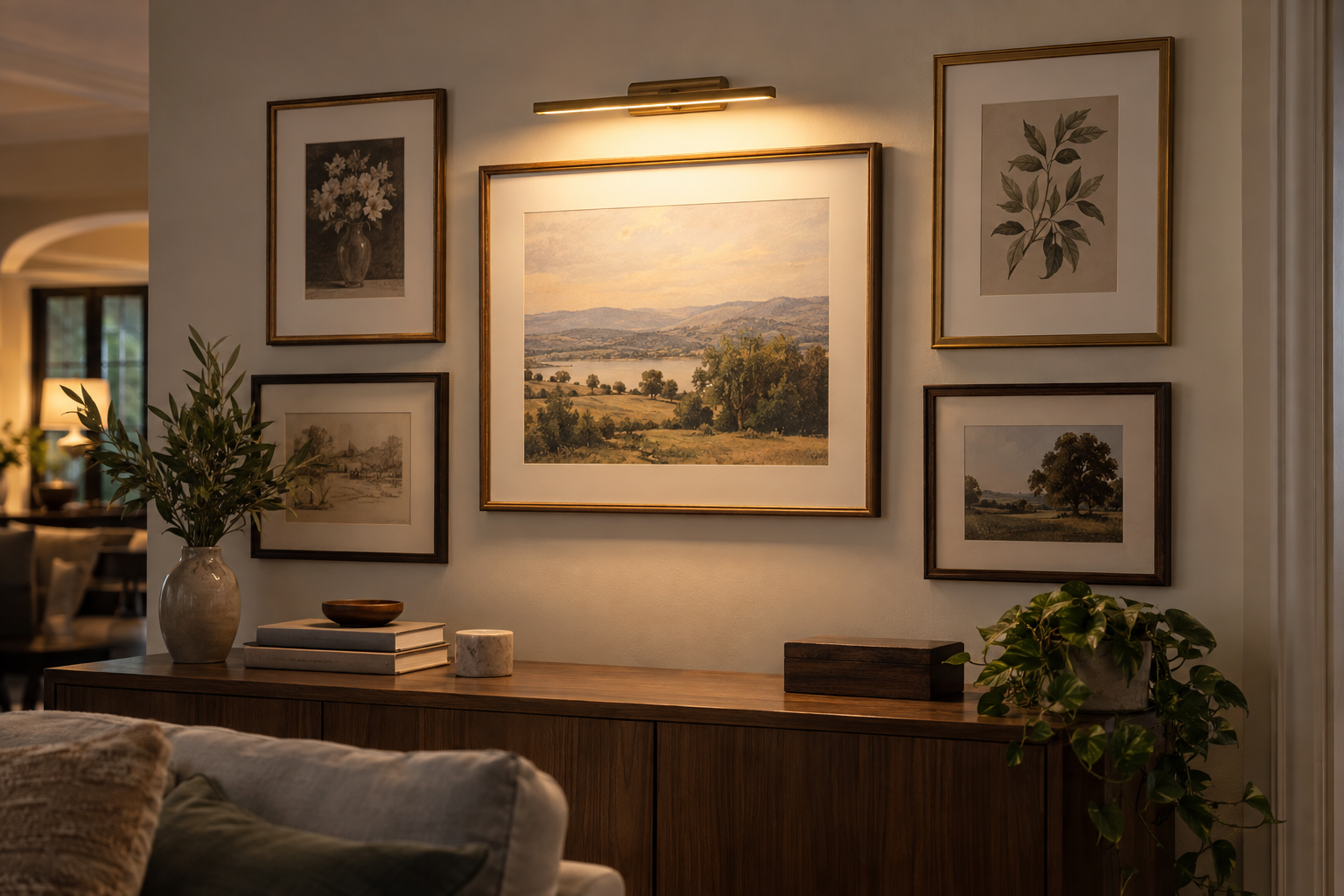
The biggest practical choice is not brass, black, chrome, or bronze. It is how the light gets power. Hardwired picture lights look the cleanest, rechargeable lights are easiest for renters, and plug-in styles can work well when cable routing is hidden by furniture or shelving.
- Hardwired: best for permanent artwork positions and renovation projects, but use a qualified electrician where wiring is involved.
- Rechargeable: best for rentals, seasonal gallery walls, and places where you want no visible cable.
- Plug-in: useful near outlets, especially when the cord can run behind a console, bookcase, or frame grouping.
Before buying, decide the artwork position first, then match fixture width, projection, beam angle, and color temperature. For placement help, see how to position a wireless picture light above artwork.
Frequently Asked Questions