Will Led Lights Fade Pictures

LED lights can fade pictures over time, but they are usually far safer than incandescent or halogen bulbs. The bigger risks are direct sunlight, excessive brightness, heat, and leaving the light on too long every day.
Will led lights fade pictures? Usually, not in the way people fear. Compared with older bulb types, LEDs are generally a lower-risk choice for framed art because they produce very little heat and typically emit negligible UV, but pictures can still fade over time if the light is too bright, left on too long, or paired with poor placement and non-conservation framing.
For most homes, the real goal is not avoiding light entirely. It is choosing a sensible LED picture light, placing it carefully, and reducing the bigger threats like direct sun, excess exposure hours, humidity, and low-quality glazing or backing materials.
- Safer choice: LEDs usually emit less heat and negligible UV compared with older bulb types.
- Main risk: Fading is cumulative, so brightness and daily exposure hours matter.
- Best setup: Choose a dimmable fixture with even coverage and good color rendering.
- Placement matters: Keep artwork away from direct sun and moisture-prone rooms.
- Extra protection: UV-protective glazing and conservation framing help sensitive pieces last longer.
Do LED Lights Fade Pictures? The Short Answer and What Actually Causes Damage
LED picture lights can contribute to fading over very long periods, but they are usually much gentler on artwork than incandescent or halogen bulbs. Light damage is cumulative, which means every hour of exposure matters. Even so, the type of light matters a lot, and LEDs are typically the safer indoor option for displaying pictures in everyday rooms.
Why LEDs are usually safer than incandescent and halogen bulbs
Traditional incandescent and halogen bulbs generate more heat at the source, and heat is one of the things that can accelerate deterioration in delicate materials. LEDs run cooler, which helps reduce stress on paper, inks, dyes, and adhesives inside a frame. Many LED products are also designed with little to no UV output, and UV is one of the most damaging parts of the spectrum for fading.
That does not mean every LED fixture is automatically “art safe.” Quality varies by brand and model, and some products provide better light control, dimming, and color consistency than others. Still, if you are comparing common household lighting options, LED is generally the most preservation-friendly choice for picture lighting.
The bigger risks: UV exposure, heat, brightness, and long daily run times
The biggest mistake is assuming that because LEDs are cooler, exposure no longer matters. It does. A very bright LED placed too close to a photo and left on all day can still increase fading risk over time. Damage usually comes from a combination of intensity and duration rather than one dramatic event.
Direct sunlight remains the bigger enemy in most homes because it combines visible light, UV, and heat. But indoor factors count too: a fixture mounted too near the frame, a beam that creates hot spots, and lights that stay on from morning until bedtime all add up.
How Picture Fading Happens: Light, Heat, Humidity, and Framing Materials
Picture fading is rarely caused by lighting alone. It is usually the result of several conditions working together: light exposure, room temperature, humidity swings, and the materials touching the artwork inside the frame. Paper can yellow, inks can weaken, dyes can shift, and adhesives can dry out or fail.
Humidity is especially overlooked. A room that gets damp, then dry, then damp again can stress paper and textiles even if the light source is relatively gentle. Cheap mats, acidic backings, and standard glass without UV protection can also leave artwork more vulnerable than many owners realize.
Which types of pictures are most vulnerable: photographs, prints, watercolors, and textiles
Original photographs, vintage prints, watercolors, pastel works, and textiles tend to be more sensitive than mass-produced modern reproductions. Water-based media and dyed fabrics can be especially reactive to prolonged light. Older family photos and sentimental pieces also deserve extra caution because replacement may be impossible even if the market value is low.
If you are displaying a signed print, heirloom needlework, or an old wedding photo, it is worth treating that piece as light-sensitive even if you do not know the exact materials used. In those cases, lower brightness, shorter daily run times, and better glazing matter more than decorative impact.
Why sunlight often causes more fading than indoor LED lighting
Sunlight is broad-spectrum, intense, and hard to control. A picture hanging opposite a bright window may receive far more damaging exposure than one lit by a modest LED picture light for a few evening hours. That is why people are sometimes surprised to see fading on art that was never directly under a strong lamp.
Window orientation, season, and time of day all change the risk. South- and west-facing rooms often need the most caution, especially if the artwork sits where the sun crosses the wall. If you are comparing risks, sunlight usually deserves your attention before indoor LED lighting does.
If a piece is archival, irreplaceable, or highly sentimental, keep it out of direct sun and consider conservation framing. A low-heat LED helps, but it does not cancel out poor room placement.
What to Look for in LED Picture Lighting in 2026
When shopping for an LED picture light, focus on control rather than raw brightness. The best fixture for artwork is not the one that blasts the wall with the most output. It is the one that gives even coverage, good color rendering, and enough flexibility to suit the size and sensitivity of the piece.
Brightness levels, beam spread, and dimmability
Brightness should match the artwork and the room. A small family photo in a dim hallway needs far less output than a large framed poster in a living room. Dimmability is one of the most useful features because it lets you lower exposure while still creating visual focus.
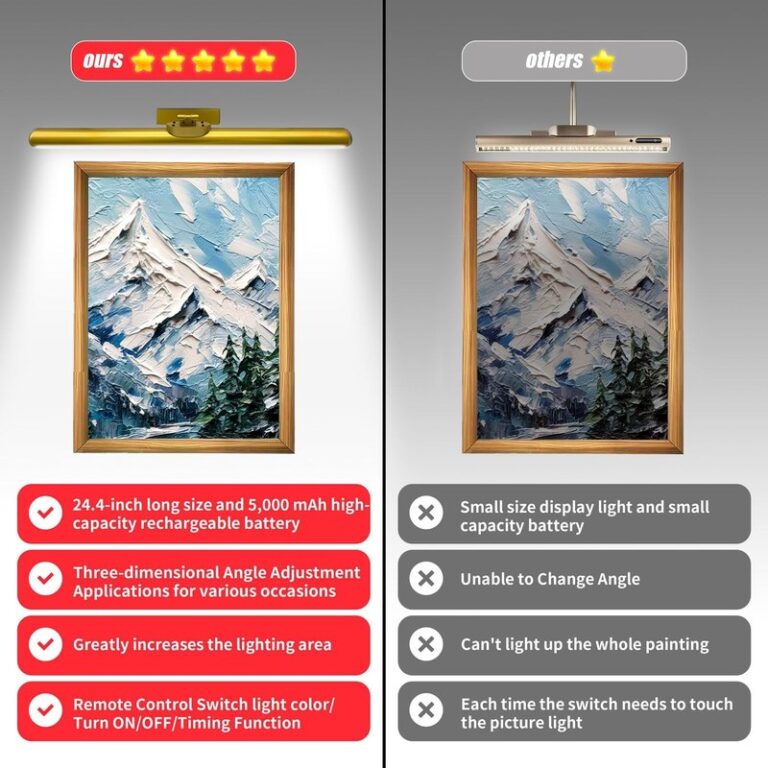
Beam spread matters too. A narrow beam can create bright stripes or glare, while a wider spread gives more even illumination across the frame. For larger art, look for a fixture length and beam pattern that can cover the full piece without leaving corners in shadow.
Color temperature and CRI for accurate artwork viewing
Color temperature affects how the art feels. Warmer light can make traditional oils and wood frames feel inviting, while a more neutral white often suits photography, black-and-white prints, and contemporary interiors. Very warm light is not always ideal for delicate paper pieces if it encourages people to over-brighten the fixture just to see detail.
CRI, or color rendering index, tells you how accurately colors appear under the light compared with a natural reference. For art display, a higher CRI is generally preferable because it helps preserve the intended look of the picture rather than flattening tones or shifting subtle hues.
UV-free claims, low-heat performance, and certification basics
Many brands describe their LEDs as UV-free or low-UV. That can be a useful sign, but it is still smart to verify the manufacturer’s specifications, product listing, and care guidance before buying. If a fixture is marketed for artwork, look for clear information about LED type, dimming compatibility, and any relevant safety certifications listed by the maker.
Low-heat performance is another practical advantage, especially for smaller frames where the fixture sits relatively close to the art. Cooler operation reduces one source of stress, though it should be paired with sensible mounting and limited run time.
Power source options: hardwired, plug-in, rechargeable, and battery-powered
Power source affects both appearance and day-to-day convenience. Hardwired fixtures can look the cleanest but may require professional installation depending on the wall and existing wiring. Plug-in options are simpler for many homes but need thoughtful cord management.
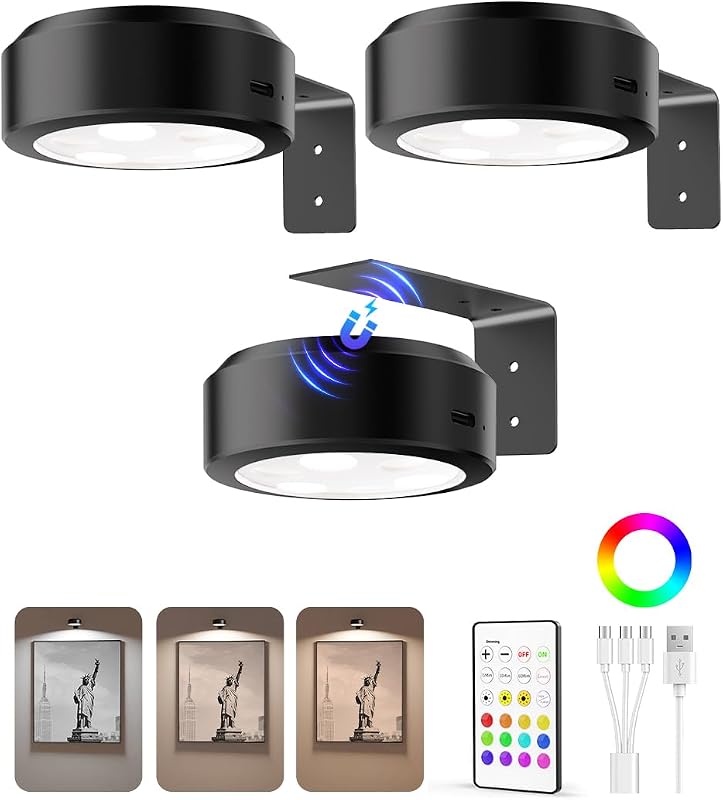
Rechargeable and battery-powered picture lights are popular for renters and for walls without nearby outlets. They can be convenient, but runtime, charging frequency, and brightness consistency vary by model. If you are comparing portable options, Hurrell Editions also has guides on whether battery-operated picture lights are any good and how long battery-operated picture lights last.
- Check whether the fixture is dimmable and whether the dimmer is included or compatible.
- Match the light length and beam spread to the artwork width, not just the frame style.
- Confirm the power source, charging method, and installation requirements before ordering.
- Review the manufacturer’s specs for color temperature, CRI, and care guidance.
Best Placement for LED Picture Lights Without Harming Artwork
Placement influences both the look of the art and the long-term exposure it receives. A well-chosen fixture can still disappoint if it is mounted too high, too low, too close, or at the wrong angle. Good placement reduces glare, spreads light more evenly, and avoids unnecessary intensity.
How high above the frame to mount the fixture
Many picture lights are installed just above the top of the frame, but the ideal gap varies by fixture size, beam shape, and artwork depth. As a rule, the light should feel visually connected to the frame without crowding it. Too close, and the top edge may become overly bright; too far, and the beam can spill onto the wall.
Because dimensions vary by model, it is best to follow the manufacturer’s placement guidance first. If the wall surface is delicate, uneven, or historic, confirm the fixing method before mounting anything permanent.
Choosing the right distance, angle, and coverage for different artwork sizes
Small frames usually need softer, tighter lighting. Large art often benefits from a longer fixture or a broader beam to avoid a spotlight effect. The angle should illuminate the picture face rather than bounce glare directly back into the room.
Try to think in terms of even coverage, not drama. A little shadow around the frame can look elegant, but harsh bright bands across glass are distracting and can make viewers increase brightness unnecessarily.
- For a single statement piece, keep the fixture centered to the frame rather than the wall section.
- For reflective glazing, prioritize angle control and dimming over maximum brightness.
- For oversized art, compare fixture width with artwork width so the light does not look undersized.
Wall type, fixing method, and safe hanging hardware around framed art
Wall type matters. Plaster, drywall, masonry, and paneling all have different fixing needs, and a picture light adds both visual weight and installation complexity above the frame. Heavy framed art or hardwired fixtures may call for a qualified installer, especially if you are uncertain about anchors, wiring, or wall condition.
The same goes for the frame itself. Secure hanging hardware, stable hooks, and appropriate weight support are part of protecting the artwork. If you are also rethinking the frame, our guide to wood frames for pictures can help with style and material considerations.
Which Rooms Suit LED Picture Lights Best and When to Avoid Them
LED picture lights work best in rooms where you can control exposure and maintain relatively stable conditions. They are most successful when they add atmosphere in the evening rather than serving as an all-day task light.
Living rooms, hallways, dining rooms, studies, and bedrooms
These are usually the easiest spaces for picture lighting. Living rooms and dining rooms benefit from layered light, so a picture light can act as an accent rather than the main source. Hallways and studies also suit framed art well because the lighting can create focus without overwhelming the room.
Bedrooms can work nicely for softer art lighting, especially if the piece is decorative rather than highly sensitive. In all of these rooms, dimmers and timers make it easier to limit exposure hours.
Bathrooms, kitchens, and other spaces with heat, steam, or moisture concerns
Bathrooms and kitchens are trickier. Steam, grease, temperature swings, and moisture can affect both the fixture and the artwork. Even if the LED itself runs cool, the room may still be a poor environment for paper-based art, vintage photos, or textile pieces.
If you do use picture lighting in these spaces, choose artwork that is easier to replace and verify that the fixture is suitable for the room conditions listed by the manufacturer. For delicate originals, another room is usually the better choice.
Matching picture lighting to traditional, modern, and gallery-style interiors
Traditional interiors often suit warm metallic finishes and classic bar-style picture lights. Modern rooms may look better with slimmer silhouettes and cleaner lines. Gallery-style spaces usually benefit from restraint: neutral light, minimal fixture bulk, and an emphasis on the artwork rather than the hardware.
If you want to browse related lighting ideas, Hurrell Editions keeps a broader LED lights category with more picture-lighting content and room-specific inspiration.
Common Mistakes That Make Pictures Fade Faster
Most fading problems come from small choices repeated every day. The good news is that these are often easy to correct once you know what to watch for.
Using bulbs that are too bright or too warm for delicate works
Over-lighting is common. People often choose a fixture for visual impact, then discover the art looks harsh or reflective. Delicate works do better with moderate brightness and good control rather than a dramatic beam.
Leaving lights on continuously instead of using timers or dimmers
Exposure time is cumulative. A modest light used for a few evening hours is very different from the same light running all day, every day. Timers, remote shutoff, and dimmers are practical ways to reduce unnecessary exposure.
Ignoring glazing, matting, and backing quality
Lighting gets most of the attention, but framing materials can quietly make a big difference. UV-protective glazing, acid-free mats, and conservation-quality backing help buffer artwork from common indoor risks. If the frame package is low quality, even a careful lighting setup may not be enough.
Placing framed pictures opposite windows or in direct sun
This is one of the most damaging placement mistakes. Even if the picture light is gentle, direct or repeated sun exposure can fade colors much faster than most indoor LEDs. If a wall gets strong daylight, move the art, add window treatments, or reserve that spot for less sensitive decor.
- Use dimmers or timers to limit daily exposure.
- Choose moderate brightness with even coverage.
- Protect sensitive pieces with better glazing and backing.
- Running a picture light all day by habit.
- Mounting artwork where sunlight crosses the wall.
- Assuming any LED is automatically safe for delicate originals.
Care, Maintenance, and Long-Term Preservation Tips
Even a good fixture needs occasional care. Dust on the light or frame can dull the presentation and encourage over-brightening. Simple maintenance also helps you spot issues like condensation, loose fittings, or frame warping before they become bigger problems.
Cleaning fixtures and frames safely
Turn the fixture off and let it cool before cleaning. Use a soft dry cloth for most dusting, and avoid spraying liquid cleaner directly onto the light, frame, or glazing. Moisture can seep into frame edges and backing materials, especially on older pieces.
Rotating sensitive artwork and limiting exposure hours
If a piece is especially delicate, consider displaying it seasonally rather than permanently. Rotation lowers cumulative exposure and gives you flexibility to enjoy sentimental works without leaving them lit year-round. This is particularly useful for watercolors, vintage photos, and textiles.
When to upgrade to UV-protective glass, museum acrylic, or conservation framing
If the artwork is valuable to you financially or emotionally, better framing is often the smartest upgrade. UV-protective glass or museum-grade acrylic can reduce one major source of damage, while conservation framing materials help protect the piece from acids and environmental stress. For exact options, confirm specifications with a reputable framer or the frame manufacturer rather than relying on generic product descriptions.
Are LED Picture Lights Worth It? Benefits, Limitations, and a Clear Recommendation
For most homes, yes. LED picture lights are usually worth it because they offer attractive accent lighting with lower heat and lower UV risk than many older bulb types. They can make art feel more intentional, improve evening ambiance, and work especially well in living rooms, hallways, dining rooms, and studies.
Where LEDs offer the best value for art display and everyday interiors
They offer the best value when you want a decorative, efficient, low-maintenance way to highlight framed art without major heat output. Renters often appreciate battery or rechargeable options, while homeowners may prefer hardwired or plug-in designs for a cleaner long-term setup.
Limitations to keep in mind for archival or highly sentimental pieces
LEDs reduce risk; they do not remove it. If the artwork is archival, rare, antique, or deeply sentimental, the safest approach is still a combination of low exposure, careful placement, conservation framing, and limited display hours. In some cases, displaying a reproduction and storing the original may be the better preservation choice.
Final verdict: how to light pictures beautifully while minimizing fade risk
If your goal is to show off framed art without accelerating damage, LED picture lights are generally the smart choice. Pick a dimmable, low-heat fixture with good color quality, keep it out of direct sun, avoid excessive daily run time, and invest in better framing materials when the piece truly matters.
Frequently Asked Questions