Do Gallery Picture Lights Need to Be Charged

Only rechargeable gallery picture lights need to be charged. Plug-in and hardwired models do not, while some battery-powered lights use replaceable batteries instead of charging.
Do gallery picture lights need to be charged? Only some do: rechargeable battery-powered models need regular charging, while plug-in and hardwired picture lights draw power continuously and do not need to be charged at all. That distinction matters more than many product listings suggest, especially when terms like wireless, cordless, LED, and battery-operated are used loosely.
If you are choosing a light for framed art, a mirror, a photo wall, or a single statement painting, the real question is not just whether it charges. It is whether the power source fits your room, your tolerance for maintenance, and the look you want on the wall. A rechargeable light can be ideal in a rental or anywhere you want a clean, cable-free setup, but it may feel inconvenient if the artwork is large, mounted high, or switched on every evening.
- Power source matters: Rechargeable lights need charging, but plug-in and hardwired lights do not.
- Wireless can mislead: Always verify whether the light is rechargeable or uses replaceable batteries.
- Daily use counts: Frequent evening use often makes wired lights more convenient long term.
- Placement affects results: Fixture width, mounting height, and beam spread matter as much as brightness.
- Art safety matters: Check color quality, glare control, and official care guidance for delicate artwork.
Do gallery picture lights need to be charged? The short answer depends on the power source
Picture lights fall into a few main power categories, and each one behaves differently in daily life. Rechargeable battery lights need charging. Replaceable-battery lights need fresh batteries rather than charging. Plug-in and hardwired lights use household electricity, so there is no charging routine.
Rechargeable battery picture lights
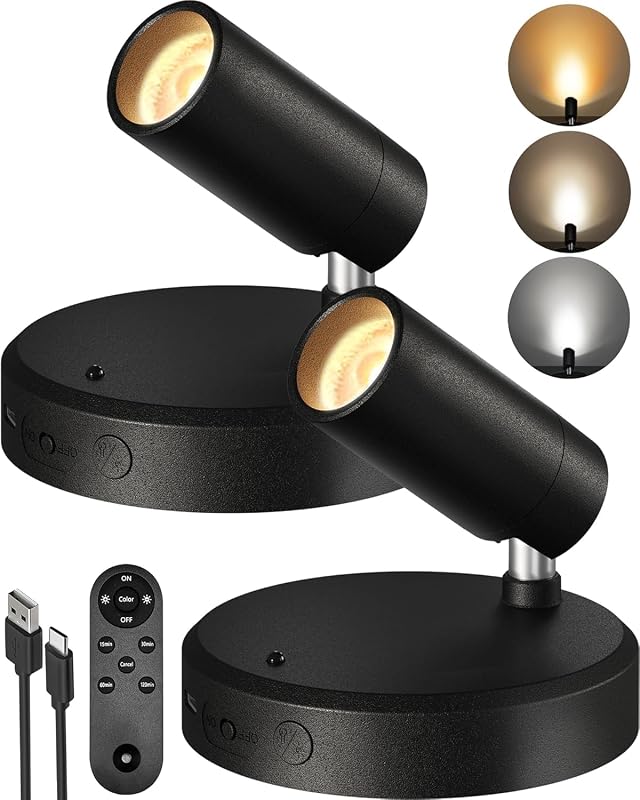
Rechargeable picture lights have an internal battery, usually paired with LED illumination. Once the battery runs down, the fixture needs to be recharged with a cable or charging dock, depending on the design. How often that happens varies by brightness setting, timer use, battery size, and how many hours the light is on each day.
These models are popular because they avoid visible cords and often require less wall disruption than wired options. For renters, temporary displays, and rooms without convenient outlets, that can be a major advantage. If you want a deeper look at charging expectations, Hurrell Editions also covers whether battery picture lights need to be charged in more detail.
Hardwired and plug-in picture lights
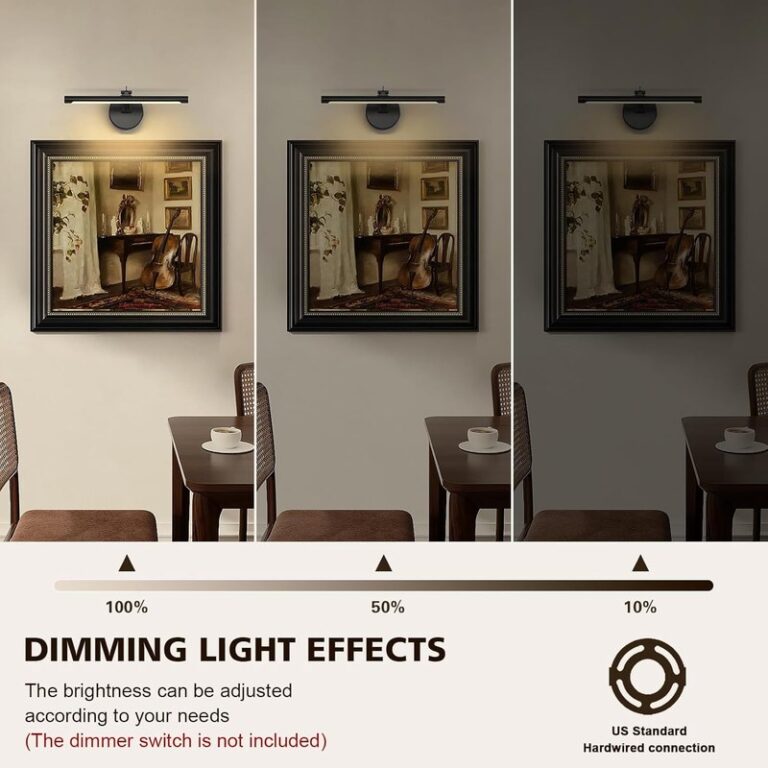
Plug-in picture lights connect to an outlet, while hardwired models connect to the home’s electrical system. Neither type needs charging because they receive continuous power. That makes them a stronger fit for art that is lit for long stretches, such as a main hallway gallery wall or a formal living room focal piece.
The trade-off is visual and practical. A plug-in fixture may leave a visible cord unless cable routing is handled neatly, and a hardwired fixture usually involves more planning, wall work, and sometimes a licensed electrician. For many homeowners, though, wired power offers the most seamless long-term solution.
Why “wireless” does not always mean the same thing
Wireless is one of the most confusing labels in this category. Some brands use it to mean no hardwiring. Others use it to mean no visible cord. A wireless picture light might be rechargeable, might take disposable batteries, or might simply be controlled by remote while still being powered another way.
Before buying, check the product listing for the exact power method: rechargeable battery, replaceable batteries, plug-in, or hardwired. “LED” and “wireless” alone do not tell you whether charging is required.
How gallery picture lights work and which type suits your space
At a basic level, picture lights direct a controlled beam downward and outward across the face of the artwork. The goal is even illumination without harsh glare, hot spots, or deep edge shadowing. The power source affects convenience, but the fixture shape, arm projection, beam angle, and dimming features affect how the art actually looks.
Rechargeable, replaceable-battery, plug-in, and hardwired options compared
Rechargeable lights suit people who want a cleaner look and are willing to maintain a charging routine. Replaceable-battery lights avoid charging downtime, but ongoing battery replacement can become less convenient and less economical over time. If you are comparing battery formats, it helps to review what batteries picture lights use before ordering.
Plug-in lights are often the easiest wired option because they do not require electrical work, but they work best where an outlet is placed sensibly in relation to the artwork. Hardwired fixtures usually give the most built-in, architectural look. They are often chosen for permanent art installations, larger frames, and rooms where visible cords would undermine the styling.
| Option | Best For | Key Consideration |
|---|---|---|
| Rechargeable battery | Rentals, flexible decor, no-cord look | Needs regular charging |
| Replaceable battery | Occasional use, easy backup power | Needs battery replacements |
| Plug-in | Frequent use near an outlet | Cord management matters |
| Hardwired | Permanent art walls and formal rooms | More installation planning |
Best uses for rentals, period homes, and dedicated art walls
Rentals often favor rechargeable or replaceable-battery lights because they minimize wall intervention. They are especially useful if you expect to rearrange frames or move home within a year or two. In older homes, the choice depends on the room: a rechargeable light can preserve delicate plaster walls from extra electrical work, while a hardwired fixture may better match the home’s more traditional architecture if a permanent installation is possible.
Dedicated art walls usually benefit from wired lighting if the display is stable and used often. That is especially true for larger framed works, matching pairs, or a hallway sequence where consistency matters. If your wall display is still evolving, battery-powered fixtures can buy flexibility before you commit to wiring.
What to look for before buying a gallery picture light in 2026
In 2026, the market is broad, but the smartest buying criteria are still the fundamentals: brightness, coverage, color quality, controls, materials, and realistic upkeep. Fancy marketing terms matter less than whether the light suits your specific frame and room.
Brightness, beam spread, and artwork size
A light can be technically bright but still perform poorly if the beam is too narrow for the artwork. Smaller frames may look crisp under a compact fixture, while wider paintings need broader coverage to avoid a bright center and dim edges. Check whether the manufacturer gives guidance on recommended artwork width, beam angle, or fixture width.
If those details are vague, use caution. Large art often needs either a wider picture light or multiple coordinated fixtures. For a broader selection framework, see how to choose a picture light for artwork.
Colour temperature and colour rendering for accurate art display
Color temperature affects mood. Warm light tends to feel softer and more traditional, while neutral light often shows detail more clearly and can suit contemporary spaces. Color rendering matters too, because poor color quality can flatten tones in paintings, dull textiles, or make black-and-white photography look lifeless.
When available, check the manufacturer specifications for color temperature and CRI or color rendering information. If the listing does not mention them at all, that may be a sign the light is being sold more as decor than as serious art lighting.
Battery life, charging time, dimming, timers, and remote controls
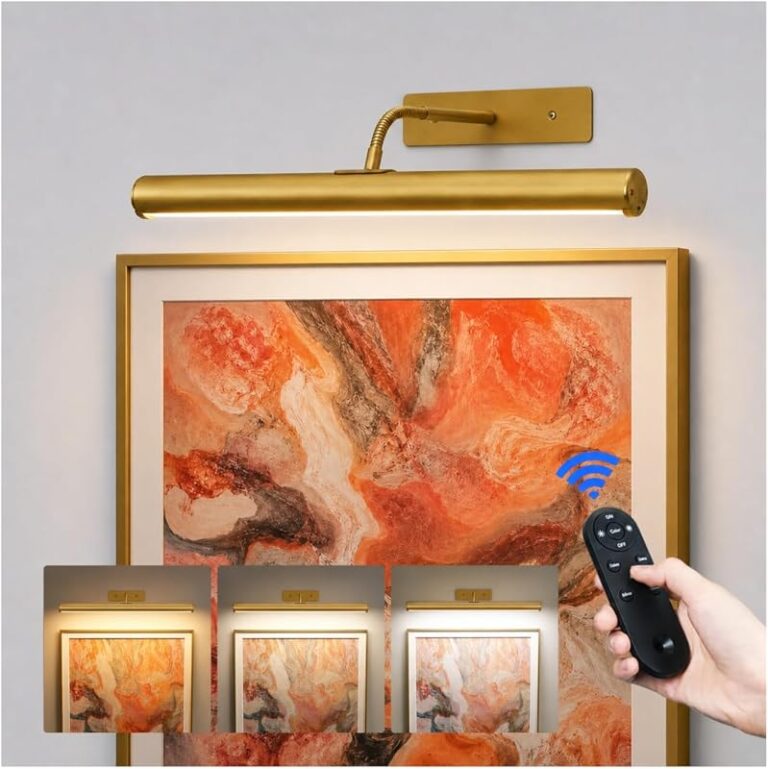
These features shape day-to-day convenience more than many buyers expect. A dimmer helps adapt the light to dark evenings, reflective glazing, and different artwork finishes. A timer can preserve battery life on rechargeable models. A remote is useful when the fixture is mounted above a tall frame or stair landing.
Battery life claims should always be read carefully because they often depend on low brightness settings or intermittent use. Confirm charging time, expected runtime, and whether the light can operate while charging if that matters to you. Hurrell Editions also explains how long battery-operated picture lights last, which is helpful when comparing convenience against upkeep.
Materials, finish, and build quality
The fixture should complement both the frame and the room. Brass-toned finishes can suit traditional art and warmer interiors, while black, bronze, chrome, or painted finishes may feel more modern or understated. Beyond style, look for a stable arm, a well-finished shade, and hardware appropriate for the wall type.
- Confirm the exact power source rather than relying on “wireless” wording.
- Check the recommended artwork width or beam coverage.
- Look for color temperature, dimming, and runtime details.
- Verify mounting method, included hardware, and care instructions.
Placement and sizing guide for picture lights above framed art and gallery walls
Even a good fixture can look disappointing if it is the wrong size or mounted in the wrong place. Picture lighting works best when the fixture feels visually proportional and the beam reaches the artwork evenly.
How wide the light should be compared with the frame
As a general rule, the light should usually be narrower than the frame, but not so narrow that it looks undersized or creates a spotlight effect. Many decorators aim for a fixture that is roughly between one-half and two-thirds of the frame width, though the ideal proportion varies with beam spread, matting, and frame depth.
Very ornate or heavy frames can visually support a slightly larger fixture. Minimal frames often look best with a slimmer profile. Always compare the fixture width with the visible art area as well as the outer frame dimensions.
How high above the artwork to mount it
The right height depends on the arm projection and the angle of the beam. Mounting too high can throw light unevenly and create a dim lower half. Mounting too low can feel cramped and may intensify glare on glass.
If the product listing includes a projection depth and beam angle, use those measurements to judge likely coverage before drilling. When guidance is limited, err on the side of careful planning and consider professional help for valuable or oversized art.
Spacing and layout tips for single works, pairs, and salon-style walls
A single statement piece is usually easiest: one well-sized light centered above the frame often gives the cleanest result. For matching pairs, keep the fixture style, mounting height, and spacing consistent so the arrangement reads as intentional. Salon-style walls are more complex, and not every frame needs its own light.
In some gallery walls, lighting the anchor pieces works better than trying to illuminate every item equally. That keeps the wall from feeling busy and reduces visual clutter. If your display sits on ledges rather than fixed hooks, related layout advice in how to style a picture ledge can help you think through layering and focal balance.
Wall type, fixing hardware, and cable-routing considerations
Wall material matters. Drywall, plaster, masonry, and paneling each call for different fixing approaches, and the correct hardware depends on both the wall and the fixture weight. Product packaging does not always include the ideal fixings for every wall type, so verify before installation.
For plug-in lights, plan the cable path before buying. A beautiful fixture can look unresolved if the cord hangs awkwardly across molding or interrupts the frame arrangement. For hardwired models, consult a qualified installer when needed, especially in older homes or where concealed wiring is involved.
Brightness, colour temperature, and safety basics that affect the final look
Power source tells you how the light is fueled, but brightness, tone, and safety determine whether the artwork actually looks good over time.
Warm versus neutral light for paintings, prints, and photography
Warm light can flatter oil paintings, antique frames, and classic interiors by adding softness and depth. Neutral light often suits modern prints, black-and-white photography, and cleaner contemporary spaces where you want sharper visual clarity. Neither is universally better; the best choice depends on the artwork palette, room mood, and surrounding finishes.
Avoiding glare, hotspots, and shadowing on glass-covered frames
Glare is one of the most common disappointments with picture lighting, especially on glazed prints and photographs. A dimmable fixture helps, but placement is just as important. Too much direct reflection can make the art harder to see than if it were left unlit.
- Choose a beam spread that suits the frame width.
- Use dimming or timers to adapt the light to evening viewing.
- Check reflections from normal standing and seated positions.
- Assuming brighter always means better display.
- Mounting a narrow beam over a wide frame.
- Ignoring reflections on glass or glossy varnish.
Heat, electrical safety, and protecting delicate artworks
Modern LED picture lights generally run cooler than older bulb types, but cooler does not mean risk-free. Delicate papers, textiles, photographs, and light-sensitive pigments still benefit from sensible exposure levels and quality framing materials. If conservation is a concern, confirm the manufacturer guidance and consult a framing professional for valuable works.
Do not treat art lighting as purely decorative when the artwork is valuable or fragile. Check official care guidance, avoid excessive brightness at close range, and use a qualified installer for electrical work or uncertain wall conditions.
Where rechargeable gallery picture lights fit best and where they fall short
Rechargeable picture lights can be an excellent solution, but they are not the universal best choice. Their strengths are strongest in flexible, style-led spaces. Their weaknesses show up when use becomes frequent, demanding, or hard to maintain.
Ideal rooms and styling scenarios
Rechargeable models work especially well in bedrooms, reading corners, rental apartments, home offices, and smaller living spaces where a visible cord would distract from the decor. They also suit seasonal rearranging, giftable art displays, and rooms where the artwork is more decorative than archival.
Benefits of rechargeable models for flexible decorating
The biggest benefit is freedom. You can place the light where it looks best rather than where an outlet or wiring point already exists. That opens up more options for centered placement, symmetrical styling, and cleaner walls.
They are also useful when you want to test a picture-light look before committing to a permanent wired fixture. For shoppers unsure whether battery-powered fixtures are practical enough, Hurrell Editions also discusses whether battery-operated picture lights are any good.
Limitations, maintenance trade-offs, and when wired lighting offers better value
The downside is ongoing maintenance. If the light is mounted high, used nightly, or installed above a large frame that needs strong output, charging can become a repeated chore. Runtime can also drop over time as batteries age, depending on model quality and usage patterns.
Wired lighting often offers better long-term value when the art wall is permanent and heavily used. It reduces routine upkeep, avoids charging interruptions, and can feel more integrated in formal interiors. Rechargeable models win on flexibility; wired options often win on consistency.
Common mistakes, charging habits, and ongoing care
Most frustration with picture lights comes from buying the wrong type for the room or underestimating maintenance. A little planning can prevent that.
Overlooking battery routine and access for recharging
A rechargeable light above a staircase, tall fireplace, or oversized frame may look elegant but be awkward to recharge. Think about access before buying. If taking the light down is inconvenient, features like long runtime, a remote, and a timer become much more important.
Choosing the wrong finish for existing decor
Finish is not a small detail. A polished metal fixture can stand out sharply against matte black frames or soft traditional woods, while an overly dark fixture may disappear in a room where you wanted a decorative accent. Compare the light with the frame hardware, nearby sconces, and furniture finishes rather than viewing it in isolation.
Cleaning, battery care, and preserving performance over time
Dust the fixture gently and follow the maker’s care instructions for the finish. Rechargeable batteries typically perform best when treated according to the manufacturer’s guidance rather than charged randomly without a routine. If a model has a removable battery pack, confirm replacement availability before buying if long-term use matters to you.
Are charged picture lights worth it? Final recommendation for Hurrell Editions readers
Charged picture lights are worth it when convenience means no wiring, no visible cord, and easy styling flexibility. They make the most sense for renters, lighter-use rooms, evolving gallery walls, and shoppers who prioritize a clean look and can realistically keep up with charging.
Who should choose rechargeable models
Choose rechargeable if you want a cordless look, do not want electrical work, and plan to use the light for a moderate number of hours rather than all evening every day. They are also a smart fit when you are still experimenting with placement or expect to move the artwork later.
Who should choose plug-in or hardwired alternatives
Choose plug-in or hardwired if the artwork is large, mounted high, displayed in a formal room, or illuminated regularly for long periods. Wired options are usually the better match when you want dependable daily use with less maintenance.
The best balance of convenience, appearance, and long-term value
The best choice is the one that matches your habits as much as your decor. If you will resent recharging, skip rechargeable models. If you will resent visible cords or wall work, rechargeable lighting may be exactly the right compromise.
- Only rechargeable picture lights need charging; plug-in and hardwired models do not.
- “Wireless” does not reliably tell you the power source, so verify the product specs.
- Rechargeable lights suit flexible, lower-maintenance installations best when access for charging is easy.
- For larger, permanent, or frequently lit art displays, wired lighting often offers better long-term convenience.
Frequently Asked Questions