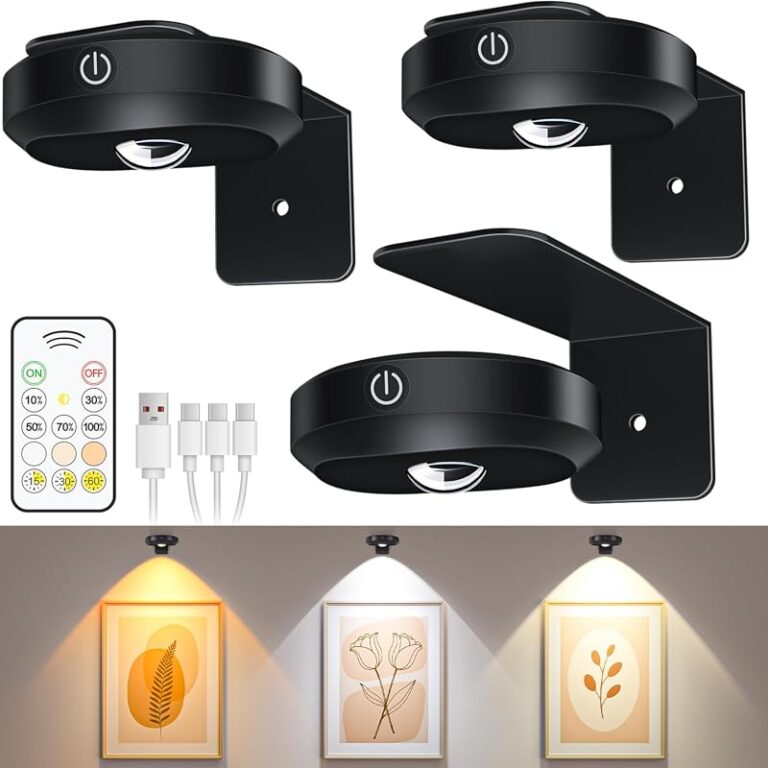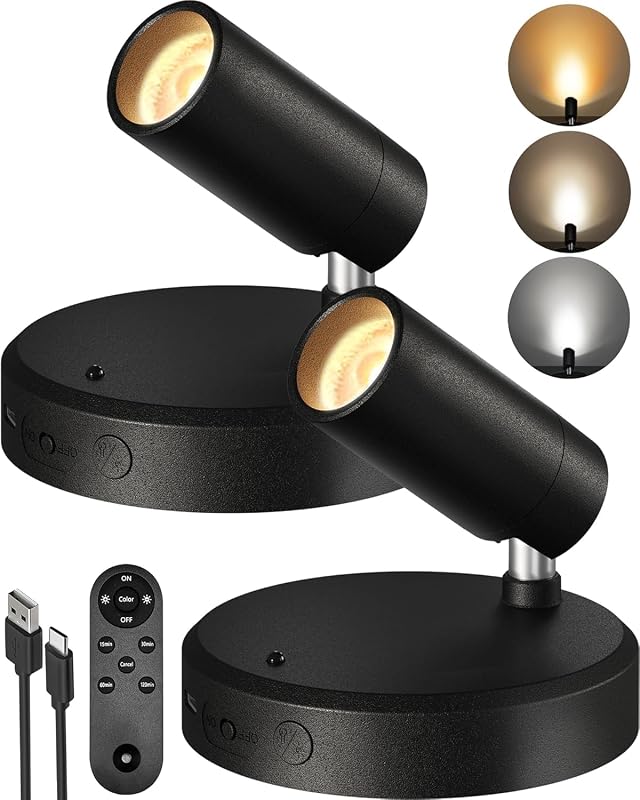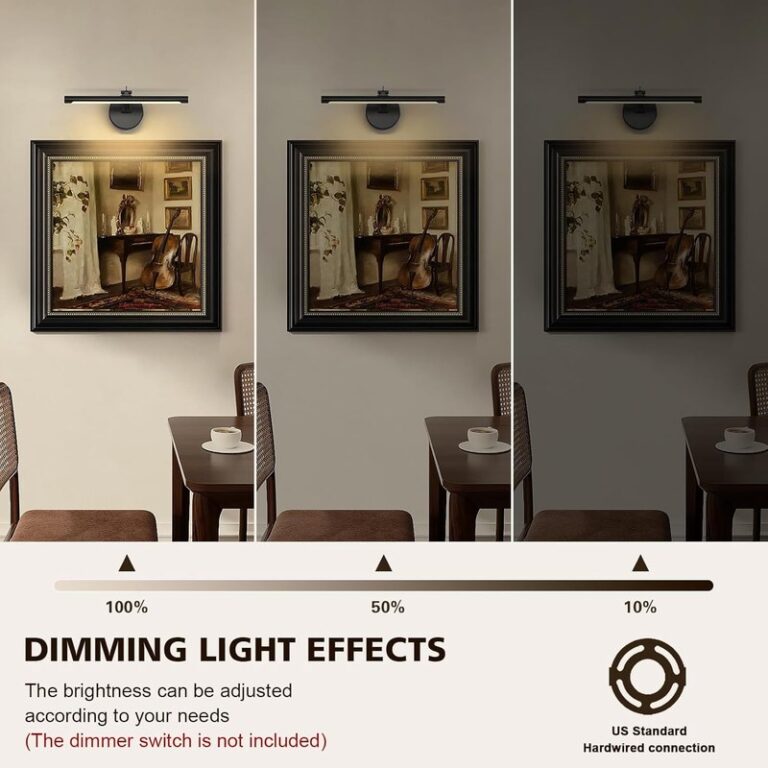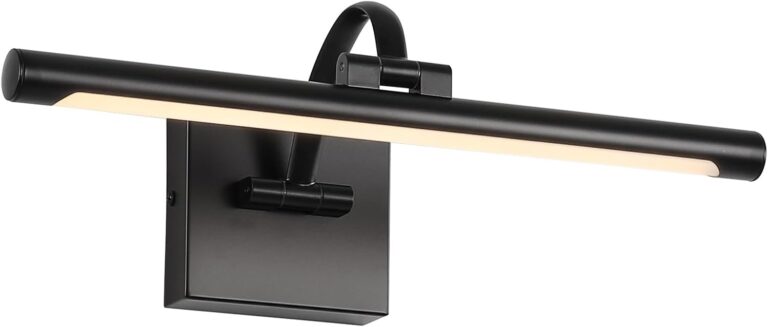
Dimmable Picture Wall Light with Switch

A dimmable picture wall light with switch is a practical choice if you want adjustable art lighting without relying only on a remote or wall dimmer. It works best when the fixture is properly sized, safely mounted, and matched to your artwork, room style, and power setup.
A dimmable picture wall light with switch gives you direct, adjustable control over how artwork, mirrors, and decorative walls look throughout the day. It sits in a useful middle ground between a standard fixed-output picture light and a remote-dependent model, making it especially appealing if you want a cleaner daily routine, more mood control, and less guesswork when lighting framed pieces at home.
- Best use: Ideal for highlighting framed art, mirrors, and focused wall features in lived-in rooms.
- Main buying factor: Beam spread and glare control matter as much as finish and size.
- Control advantage: A built-in switch is often simpler than remote-only operation for daily use.
- Power choice: Plug-in is easier to add, while hardwired usually looks cleaner.
- Avoid mistakes: Do not ignore wall type, moisture limits, or the switch’s actual reach.
What Is a Dimmable Picture Wall Light with Switch, and Who Is It Best For?
A picture wall light is a fixture designed to cast even light across artwork or a decorative wall feature. When that fixture is dimmable and includes its own switch, you can turn it on and adjust brightness at the light itself rather than relying only on a wall dimmer, app, or remote. If you want a broader overview first, see what a dimmable picture wall light is.
How switched dimming changes art lighting in everyday rooms
In practical terms, switched dimming makes art lighting feel more livable. Bright, direct light can help a painting or print stand out in daytime or when entertaining, but that same intensity may feel harsh at night. A built-in switch lets you lower the output without changing the entire room’s lighting plan.
This is particularly useful in homes where artwork serves more than one purpose. A hallway piece may need stronger illumination for visual impact, while a bedroom print often looks better under a softer glow. A dimmable fixture helps one wall feature adapt to both display and atmosphere.
When this style suits framed art, mirrors, shelves, and gallery walls
This style works best for framed paintings, prints, photography, and wall-mounted mirrors that benefit from a focused wash of light. It can also work above shallow display shelves or ledges where the goal is to highlight objects rather than flood the whole room.
For gallery walls, a switched dimmable light can be effective when one fixture is used to emphasize a central grouping or hero piece. If your wall arrangement is spread wide, however, one picture light may not cover the entire composition evenly. In those cases, multiple smaller fixtures or a different lighting approach may be more balanced.
It is especially well suited to homeowners and renters who want a decorative lighting feature that feels intentional, not purely functional. The built-in switch also appeals to anyone who dislikes keeping track of remotes or managing rechargeable accessories.
What to Look for Before Buying a Dimmable Picture Wall Light with Switch
Before buying, focus on how the fixture will light the piece, how easy it will be to operate, and whether the power setup fits your wall. Many disappointing purchases come down to choosing by finish alone and overlooking beam behavior, dimming quality, or installation constraints.
Brightness, beam spread, and glare control
Brightness should match both the size of the artwork and the room’s ambient light. A light that is too weak can make the fixture feel decorative but ineffective. One that is too strong can create hotspots, reflections on glass, and an overlit strip at the top of the frame.
Beam spread matters just as much. A narrow spread may work for a small portrait or compact mirror, while a wider spread is usually better for landscape art or broader frames. If the fixture has a shade, diffuser, or directional design that helps soften the output, that can improve visual comfort significantly.
Glare control is especially important in rooms where you view art while seated. If the bulb or LED source is visible from below, the fixture may become distracting. Look for designs that conceal the light source and direct illumination toward the art rather than outward into the room.
Colour temperature and colour rendering for artwork
Color temperature changes the mood of both the fixture and the art. Warmer light generally feels softer and more traditional, while cooler light can feel cleaner and more contemporary. For most homes, the most pleasing result comes from a color temperature that complements the room’s other lighting rather than fighting it.
Color rendering is also important because it affects how accurately tones in artwork appear. Rich paint colors, skin tones in portraits, and subtle photographic shadows all look better under a light source with good color quality. Specifications vary by model, so it is worth checking the manufacturer listing for color temperature options and color rendering details before buying.
Artwork behind reflective glass is usually less forgiving than canvas or textured paper. Even a well-sized fixture can produce visible reflections if the beam angle and mounting height are not right.
Integrated switch type, dimming range, and ease of use
Not every switched dimmable light works the same way. Some use a simple rocker or push switch, while others use a touch control or a small in-line dimmer on a plug-in cord. The best choice depends on how often you plan to adjust it and whether the switch will be easy to reach once mounted.
Dimming range matters too. Some fixtures offer a smooth transition from bright task-like illumination down to a soft evening glow, while others have only a few preset levels. If subtle mood control is important, confirm whether the light dims gradually or in steps.
Ease of use is often overlooked. A beautifully finished fixture loses appeal if the switch is awkwardly placed or requires stretching over furniture to reach it. For many buyers, a built-in switch is most useful when the light is mounted at a height that remains comfortably accessible.
Hardwired vs plug-in power options
Power type affects both appearance and installation planning. Hardwired models usually look cleaner because no visible cord runs down the wall, but they may require an existing junction box or professional electrical work. Plug-in versions are often simpler to add, especially in rentals or rooms where rewiring is impractical.
If you are comparing formats, Hurrell Editions has a helpful guide on how to choose a picture light for artwork that covers broader selection factors. Buyers who want less wiring commitment may also want to compare plug-free alternatives such as battery operated picture lights with remote, though those involve charging or battery management instead of a switched wall fixture.
Size, projection, finish, and overall visual balance
A picture light should look proportional to the frame and the wall around it. A fixture that is too short can look underscaled and leave the art unevenly lit, while one that is too long may dominate the piece.
Projection, or how far the fixture extends from the wall, affects both coverage and visual weight. More projection can improve light spread, but it also makes the fixture more noticeable in profile. In narrow hallways or above furniture, that extra depth can matter.
Finish is where style and practicality meet. Brass, bronze, black, chrome, and painted finishes each set a different tone. The right choice usually relates to the frame finish, nearby hardware, and the room’s overall palette rather than the light in isolation.
Placement, Sizing, and Safety Basics for Picture Wall Lighting
Good placement is what turns a nice fixture into flattering art lighting. Even a high-quality model can disappoint if it is mounted too high, too low, too wide, or on a wall that cannot support it properly.
How wide the light should be compared with the frame
As a general rule, the fixture should usually be narrower than the artwork or frame. Many decorators aim for a light that spans a meaningful portion of the frame width without matching it edge to edge. This tends to look balanced and helps keep the fixture from visually overpowering the piece.
Very small artworks often look best with compact lights that feel tailored rather than oversized. Larger statement pieces can support longer fixtures, but the exact proportion varies with beam spread, frame depth, and whether the artwork is glazed.
If you are choosing between two sizes, compare not just fixture width but also beam spread and projection. A slightly shorter light with better distribution can outperform a longer fixture with a narrow throw.
How high above the artwork to mount it
The mounting height should allow the light to wash the face of the art evenly without creating a harsh bright band at the top. Too close, and the effect can feel cramped and glaring. Too high, and much of the light may spill onto the wall instead of the artwork.
Because frame depth, wall texture, and fixture design vary, there is no single perfect measurement for every room. The safest approach is to review the manufacturer’s mounting guidance and, when possible, mock up the position before making permanent holes.
Spacing rules for single pieces, pairs, and gallery wall layouts
For a single artwork, the fixture should align with the center of the frame. For pairs, symmetry matters: the two lights should be mounted at the same height and distance above each piece so the wall reads as intentional rather than uneven.
Gallery walls require more planning. If one light is used above a grouping, it should relate to the visual width of the composition, not just one frame. If the arrangement is broad or irregular, separate fixtures may create a more even result. Readers planning a larger art arrangement may also find guidance in this article on hanging a picture wall.
Wall type, fixing hardware, and cable-routing considerations
Wall material affects how straightforward installation will be. Drywall, plaster, masonry, and paneled walls all present different fixing considerations, and not every included screw or anchor suits every surface. Always confirm what hardware is supplied and whether it is appropriate for your wall type.
For plug-in lights, think through cord routing before choosing a position. A visible cable can be acceptable if it runs neatly and does not cut awkwardly across the composition, but in some rooms it may undermine the refined look that picture lighting is meant to create.
Heat, moisture, and electrical safety points to check
Modern LED picture lights generally run cooler than older bulb-based designs, but heat output still varies. That matters when lighting delicate artwork, prints behind glazing, or pieces mounted in tighter spaces.
Moisture also matters. Bathrooms, damp entry zones, and poorly ventilated spaces require extra caution, and not every picture light is suitable there. Check the official product listing and safety rating before using one near humidity, and review broader room-specific guidance such as whether gallery picture lights can be used in a bathroom.
Do not guess on anchors, wiring, or moisture suitability. For heavy mirrors, hardwired fixtures, uncertain wall conditions, or damp locations, confirm weight limits and consider a qualified installer.
Which Rooms and Interior Styles Benefit Most from a Dimmable Picture Light?
Picture lights are not limited to formal art walls. They can add structure, warmth, and a finished look in many everyday rooms, especially where overhead lighting feels flat.
Living rooms, hallways, dining rooms, bedrooms, and home offices
Living rooms benefit because art often competes with windows, lamps, and television glare. A dimmable picture light helps a key piece hold its own visually without forcing the whole room brighter.
Hallways are another strong fit, especially if they lack natural light or need more visual interest at eye level. Dining rooms often suit picture lighting because the dimming function supports both daytime display and softer evening mood. Bedrooms and home offices can also benefit, particularly when a framed print, mirror, or shelf arrangement needs gentle definition rather than strong overhead light.
Traditional, modern, classic, and layered eclectic schemes
Traditional rooms often pair naturally with brass or bronze picture lights, especially above oil-style paintings, portraits, or dark wood frames. Modern interiors may lean toward slimmer black, white, or brushed metal fixtures with cleaner lines and less ornament.
Classic interiors sit comfortably between the two, using picture lighting as a quiet architectural detail. In layered eclectic spaces, a picture light can help unify mixed frames and collected objects by giving the wall one visual focal point.
Matching metal finishes, frame tones, and surrounding decor
The finish does not need to match every metal in the room exactly, but it should feel related. Brass can echo warm frame tones, bronze can support deeper woods, and black often works well with graphic frames or gallery-style arrangements.
It is also worth looking at nearby sconces, cabinet hardware, curtain rods, and mirror frames. A picture light that repeats one of those finishes usually feels more integrated than one chosen only to contrast.
Materials, Build Quality, and Technical Specifications That Matter
Once the overall style is right, build quality becomes the deciding factor. The fixture should feel durable, stable on the wall, and technically suited to the role you need it to perform.
Brass, steel, aluminium, and painted finishes
Brass is often chosen for its warmth and decorative character. Steel can feel sturdier and more architectural, while aluminum is common in lighter modern designs where a slimmer profile is preferred.
Painted finishes can be striking, especially in black or white, but they may show chips or wear differently over time depending on the environment and handling. Manufacturer descriptions should clarify the base material and finish treatment, since appearance alone does not always tell you how substantial a fixture is.
LED lifespan, wattage, energy efficiency, and maintenance expectations
Most current picture lights use integrated LEDs or LED-compatible systems. These tend to be energy efficient and lower maintenance than older bulb-heavy designs, but exact lifespan and replacement options vary by model.
Wattage by itself does not tell the full story of performance. It is more useful to consider the overall light output, dimming behavior, and whether the LED system is serviceable or fully integrated. If long-term maintenance matters to you, check whether the manufacturer explains replacement expectations, warranty terms, and care instructions.
Adjustable arms, shade design, and directional control
Adjustable arms and pivoting heads can make a fixture more versatile, especially when lighting textured art, deep frames, or mirrors. The ability to fine-tune the angle helps reduce glare and improve coverage.
Shade design also plays a practical role. A well-designed shade can hide the light source, soften the beam, and keep the fixture from becoming visually harsh. Directional control is particularly valuable if the wall surface is uneven or the artwork sits under other light sources that create competing reflections.
Styling Ideas: How to Use a Dimmable Picture Wall Light for a More Collected Look
Beyond function, picture lighting can make a room feel more layered and intentional. It gives framed pieces a sense of importance and can help a wall arrangement read as curated rather than simply filled.
Creating a focal point above art, photography, and mirrors
One of the simplest styling moves is to place a picture light above the piece you most want people to notice first. That could be a painting over a mantel, a photograph in a hallway, or a mirror above a console.
The fixture does not need to be dramatic to create impact. Even a restrained design can signal that the object below is meaningful and worth pausing at.
Layering with ambient and task lighting for depth
Picture lighting works best as part of a layered scheme. It is not a substitute for ambient room lighting, but it adds depth that ceiling fixtures alone usually cannot provide.
In a living room, for example, a picture light can sit alongside table lamps and floor lamps to create visual rhythm around the room. In a home office, it can define the art wall while task lighting handles practical work surfaces.
- Use a picture light to highlight one anchor piece before adding them to every wall.
- Repeat the fixture finish in at least one nearby detail, such as a frame, lamp base, or hardware.
- Keep surrounding decor slightly quieter if you want the lit artwork to read as the focal point.
Using dimming to shift from daytime display to evening atmosphere
Dimming is what makes this category especially flexible. During the day, brighter output can help art stay visible against natural light. In the evening, lowering the brightness can turn the same wall into a softer atmospheric feature.
This shift is useful in dining rooms, bedrooms, and living spaces where the mood changes over the course of the day. Instead of one fixed look, the wall can move from display lighting to background glow with a quick adjustment.
Benefits, Limitations, and Common Buying Mistakes to Avoid
A switched dimmable picture light can be a smart, elegant solution, but only if its strengths line up with your room and your habits.
Why a built-in switch can be more practical than remote-only lighting
A built-in switch removes one common friction point: having to locate, store, and maintain a separate remote. For readers already weighing control options, Hurrell Editions also covers whether gallery picture lights should be dimmable, which helps explain why adjustable output matters in real rooms.
Switched control can also feel more intuitive for guests or family members. If the fixture is visible and reachable, anyone can understand how to use it without setup instructions.
Potential drawbacks, including wiring constraints and limited reach
The main drawback is that the switch still has to be physically accessible. If the light is mounted high above large art or furniture, using the switch may be less convenient than it sounds. Hardwired versions can also involve more planning and installation cost than portable or battery-powered alternatives.
Another limitation is coverage. One picture light has a defined reach, and trying to stretch it across an oversized frame or sprawling gallery wall often leads to uneven illumination. In some rooms, two coordinated fixtures or a different lighting type will simply work better.
Mistakes with scale, brightness, colour temperature, and placement
Common mistakes include choosing a fixture solely for its finish, picking a size that is too small for the artwork, and underestimating the effect of glare on glass-covered pieces. Another frequent issue is selecting a color temperature that clashes with the room’s other lighting, making the art look disconnected from the rest of the space.
Placement errors are just as common. A fixture mounted too high may light the wall more than the art, while one mounted too low can create harsh hotspots and visible glare.
- Check beam spread, dimming behavior, and mounting guidance before buying.
- Match the fixture to the frame width and the room’s overall lighting mood.
- Confirm wall type, power setup, and whether the switch will be easy to reach.
- Choosing by finish alone without checking coverage.
- Assuming every dimmable model offers a wide, smooth dimming range.
- Using a standard indoor fixture in damp or uncertain conditions without verification.
Care, Long-Term Value, and Final Recommendation
A good picture light should continue to look refined and function smoothly long after installation. Long-term value depends less on trend appeal and more on whether the fixture suits the wall, the artwork, and the way you actually live with the room.
Cleaning finishes, protecting artwork, and checking fittings over time
Routine care is usually simple: dust the fixture gently, avoid abrasive cleaners, and follow the manufacturer’s finish-specific instructions. Fingerprints tend to show more on polished metals, while darker painted finishes may reveal dust sooner under direct light.
It is also worth checking fittings periodically, especially in high-traffic hallways or homes where doors create vibration on nearby walls. If the fixture angle is adjustable, make sure joints remain secure and the beam still falls where intended.
To protect artwork, keep an eye on heat, reflections, and prolonged exposure to strong direct light. The official care notes for both the light and the framed piece should guide any room-specific decisions.
When a dimmable picture wall light with switch offers strong value
This type of fixture offers strong value when you want a decorative lighting feature that is easy to operate, visually polished, and flexible enough for changing moods. It is especially worthwhile for rooms where one important artwork, mirror, or framed grouping deserves more attention than overhead lighting can provide.
Value is weaker when installation is awkward, the switch will be hard to reach, or the wall feature is too large for a single fixture to light properly. In those cases, a different format may be more practical.
How to decide if this is the right choice for your room in 2026
For 2026, the strongest buying approach is still the simplest one: confirm the fixture’s true dimensions, beam behavior, power type, and control method before ordering. Then compare those details against your frame width, wall condition, room style, and daily routine.
If you want art lighting that feels more intentional than a standard accent light and more straightforward than a remote-only setup, this category is a smart place to look. The best choice is usually a model with a concealed light source, a usable dimming range, a finish that relates to the room, and manufacturer guidance clear enough to verify before purchase.
Frequently Asked Questions