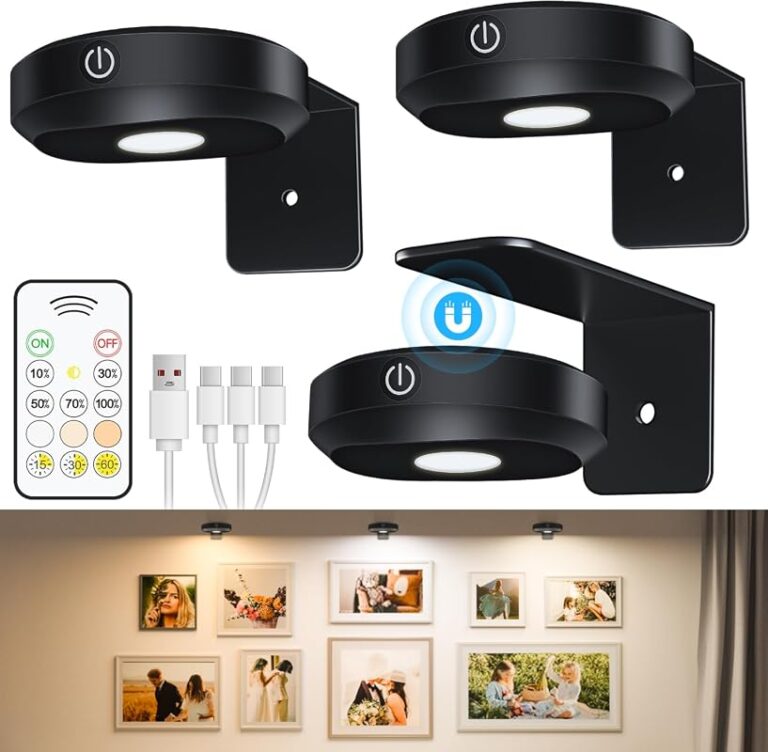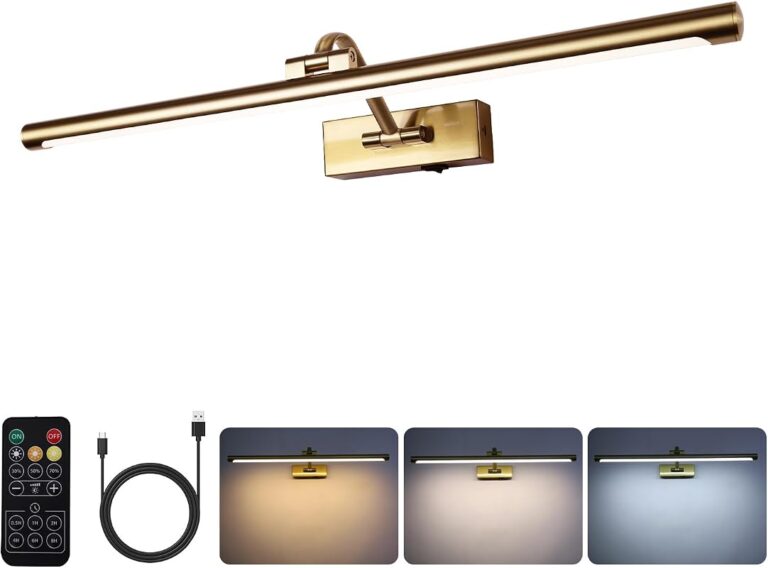
Hardwired Vs No Wiring Dimmable Picture Wall Light

Hardwired picture lights are usually best for permanent, polished interiors, while no-wiring options are better for flexible layouts, rentals, and easier installation. The right choice depends on how fixed your artwork placement is and how much maintenance you want day to day.
Hardwired vs no wiring dimmable picture wall light is really a question of permanence versus flexibility. If you want a clean built-in look for a finished room, hardwired usually wins; if you rent, move art often, or want a simpler update, a no-wiring option is often the smarter fit.
Picture lights can make framed art feel more intentional, but the right choice depends on more than appearance. Power source affects installation, dimming behavior, maintenance, wall planning, and even which rooms feel easiest to live with day to day. This guide breaks down what actually changes between hardwired and no-wiring dimmable picture lights so you can choose with fewer surprises.
- Best long-term look: Hardwired lights usually feel cleaner and more built-in.
- Best flexibility: No-wiring lights are easier to move when art or room layouts change.
- Most overlooked factor: Brightness, beam spread, and color temperature matter as much as finish.
- Daily-use difference: Cordless models need charging or batteries, while hardwired models do not.
- Before ordering: Verify wall type, mounting method, dimmer compatibility, and official specifications.
Hardwired vs no wiring dimmable picture wall light: which is better in 2026?
Neither option is universally better. Hardwired picture lights suit finished interiors where the artwork position is unlikely to change, while no-wiring models suit spaces that need convenience, mobility, or lower installation disruption. The better choice comes from matching the light to the room, the wall, and your tolerance for upkeep.
When hardwired lighting is the stronger long-term choice
Hardwired picture lights are usually the stronger long-term choice when you want the fixture to feel like part of the architecture rather than an accessory. They work especially well above a primary artwork in a living room, hallway, dining room, or stair landing where the frame placement is settled and the room already has a considered lighting plan.
The main advantage is consistency. You do not need to think about charging cycles, battery depletion, or whether the light will be noticeably dimmer as power runs down. Many shoppers also prefer the cleaner visual result: no visible charging cable during maintenance and no need to remove the light for routine power management.
Hardwired fittings can also integrate more naturally into layered lighting schemes, especially when paired with wall dimmers or planned alongside sconces, ceiling lights, and accent lighting. If you are still comparing the category itself, Hurrell Editions’ guide to what a dimmable picture wall light is gives helpful baseline context.
When a no wiring picture light makes more sense
No-wiring picture lights make more sense when installation restrictions are real, not theoretical. Renters, apartment dwellers, and anyone avoiding electrical work often find them easier to live with. They are also practical for gallery walls that evolve over time, because relocating the light is usually far simpler than relocating a wired fitting.
This category includes battery-operated and rechargeable styles, and in some cases plug-in options that avoid in-wall wiring but still need access to an outlet. The appeal is speed and adaptability: you can light a frame in a bedroom, office, or reading corner without opening the wall or planning around electrical points.
For shoppers specifically focused on cable-free options, our overview of wireless LED picture lights explores where cordless designs are most useful.
The short verdict for style, flexibility, and installation
For style, hardwired usually looks more polished and permanent. For flexibility, no-wiring wins clearly. For installation simplicity, no-wiring is usually easier, but “easy” still depends on wall type, fixture weight, and how securely the light mounts above the frame.
If your artwork is a long-term focal point, hardwired often justifies the extra planning. If your art rotates seasonally, your lease limits alterations, or you want a lower-commitment upgrade, no-wiring is often the more realistic choice.
- Clean, built-in appearance
- No charging or battery routine
- Well suited to permanent room schemes
- Often better for formal focal walls
- Easier for rentals and quick updates
- Simpler to reposition with changing art
- Less wall disruption during installation
- Useful where wiring access is limited
How to compare dimmable picture wall lights before you buy
Before choosing a power source, compare the lighting quality itself. A picture light that fits your wall but casts harsh glare, uneven brightness, or the wrong color tone will not improve the artwork.
Brightness, beam spread, and how evenly the artwork is lit
Brightness should match the size of the frame and the mood of the room. Too little output can make the light feel decorative rather than useful, while too much can flatten detail and create glare on glass. Because brands present output differently, it is wise to check official specifications carefully rather than assuming a larger fixture is always brighter.
Beam spread matters just as much. A narrow beam can create a spotlight effect with darker corners, while a wider beam usually gives more balanced coverage across art, photography, or prints. This becomes especially important with panoramic pieces, wide mats, and reflective glazing.
If you want a broader framework for evaluating models, see our guide on how to choose a picture light for artwork.
Colour temperature, CRI, and how light affects art, photography, and prints
Color temperature changes how artwork feels. Warmer light tends to flatter traditional interiors, oil-style imagery, and wood frames, while cooler or more neutral light can feel cleaner with photography, black frames, and modern spaces. Neither is automatically right; the best choice depends on the room and the art.
CRI, or color rendering index, is worth checking when available because it indicates how accurately colors appear under the light. Higher color accuracy is especially helpful for artwork with subtle tonal shifts, skin tones, botanical detail, or saturated pigments. Not every listing provides this clearly, so confirm with the manufacturer when it matters.
Dimming performance, controls, and memory functions
Dimmable does not always mean equally refined. Some picture lights offer smooth dimming across multiple levels, while others have only a few preset steps. Control style also varies: touch controls on the fixture, handheld remotes, wall dimmers, or app-based systems depending on the model.
Memory functions can be surprisingly useful in daily life. A light that returns to the last brightness setting feels far more seamless than one that resets every time it is turned on. Remote access can also matter in taller spaces, especially over stair landings or large console arrangements. If remote control is a priority, Hurrell Editions has a dedicated guide to picture lights with remote control.
Battery, plug-in, or mains power: what changes in daily use
Mains-powered hardwired lights are the most hands-off once installed. Plug-in models avoid electrical work but need thoughtful cable management. Battery-operated and rechargeable lights reduce installation friction, but they add an ongoing maintenance routine that can feel minor in an occasional-use room and annoying in a heavily used one.
Daily use changes the equation. A bedroom accent light switched on for short evening periods may work well as a rechargeable unit, while a hallway focal light used every day may be better hardwired. Always confirm runtime, charging method, and whether brightness drops as the battery depletes, since that varies by model.
Hardwired dimmable picture lights: benefits, limitations, and best-fit rooms
Why designers choose hardwired fittings for permanent schemes
Designers often choose hardwired picture lights because they visually anchor the artwork and reduce visual clutter. In a formal room, the absence of charging concerns and exposed cords helps the lighting feel deliberate. This can be particularly effective in symmetrical layouts, over fireplaces, and in rooms where art is part of the overall architectural composition.
Hardwired fittings also tend to suit homeowners who are already planning electrical updates, custom millwork, or a full room refresh. When the wall finish, frame size, and art placement are all being decided together, hardwired lighting can feel less like an add-on and more like part of the room’s structure.
Safety, wall type, and installation considerations to know before ordering
Before ordering, confirm whether your wall can support the fixture and whether the planned location is realistic for electrical access. Plaster, masonry, drywall, and paneled walls all present different mounting considerations. It is also important to verify the fitting’s mounting method, the wall plate size, and whether the electrical box location will line up with the artwork placement.
This is not a category where guessing is helpful. Manufacturer instructions, wall conditions, and local electrical requirements matter, and a qualified installer may be the safest route for many homes.
Do not assume any picture light can be mounted on any wall in the same way. Check wall type, fixture weight, mounting hardware requirements, and whether a licensed electrician is appropriate before making permanent changes.
Best rooms for hardwired picture lights, from hallways to formal living spaces
Hardwired picture lights often make the most sense in hallways, formal living rooms, dining rooms, stair landings, and entry spaces with a stable layout. These are the rooms where a polished finish matters and where the same artwork may stay in place for years.
They are especially compelling in long sightline areas, where a permanently lit artwork helps define the room from a distance. In narrow circulation spaces, they can also create a gallery-like effect when planned carefully with the rest of the lighting scheme.
No wiring dimmable picture lights: benefits, limitations, and best-fit rooms
Why cordless and low-install options suit renters and evolving gallery walls
Cordless and low-install picture lights suit renters because they reduce commitment and can often move with you. They also work well for people who rotate art, rearrange family photos, or build gallery walls gradually rather than all at once.
That flexibility is not only practical but aesthetic. If you are still working out spacing, frame grouping, or whether a wall will remain a gallery wall long term, a no-wiring light lets you experiment without tying the design to one fixed electrical point.
Battery life, charging routines, and practical maintenance expectations
The trade-off is maintenance. Battery life varies widely depending on brightness level, sensor features, runtime per day, and battery type. Rechargeable models can be convenient, but only if the light is easy to remove or the charging port is accessible once mounted.
Think about routine, not just specifications. A light over a bedside frame may be simple to recharge every so often; a light mounted high above a large artwork may become inconvenient quickly if it needs frequent attention. If you are comparing cordless formats, our guide to the best rechargeable picture light styles may help narrow the field.
Best rooms for no wiring picture lights, including bedrooms, studies, and occasional-use spaces
No-wiring picture lights are often strongest in bedrooms, studies, home offices, guest rooms, reading corners, and occasional-use spaces. They are also useful in apartments where wall access is limited or where you want to avoid calling in an electrician for a relatively small decor update.
They can be especially effective in intimate rooms where the light is used for mood rather than all-evening illumination. In these spaces, the convenience of easy installation may outweigh the need for maximum permanence.
Placement, sizing, and spacing: how to choose the right picture light for your wall art
How wide the light should be compared with the frame
As a general styling rule, the light should look visually related to the frame width rather than oversized or too tiny to feel intentional. Many shoppers prefer a fixture that spans a meaningful portion of the frame without matching it edge to edge. The right proportion depends on whether the look is classic, minimal, or more decorative.
Very small lights above wide frames can look under-scaled, while very long lights above narrow pieces can dominate the composition. Always compare the fixture width with the visible frame, not just the artwork opening.
How high above the artwork to mount it for balanced coverage
Mounting height affects both coverage and glare. Too high, and the light may spill upward and miss the lower part of the art; too low, and the fitting can crowd the frame visually or create harsh reflection on glass. Manufacturer guidance is the best starting point because arm depth and beam angle vary by model.
Before making any permanent holes, mock up the frame and light placement with painter’s tape. This helps you judge proportion, sightlines, and whether the fixture will interfere with existing hanging hardware.
Single artworks, pairs, and gallery wall layouts
A single centered artwork is usually the easiest layout for a picture light. Pairs can also work beautifully, especially when the lights mirror each other in height and finish. Gallery walls are more complex: one light per frame can look busy, while one larger light may only suit a tightly grouped arrangement.
If your wall includes multiple frames, first decide whether you are lighting an individual piece or the composition as a whole. That distinction often determines whether a no-wiring setup is easier to adapt over time.
Matching the fitting to wall type, frame depth, and hanging hardware
Wall type affects mounting security, but frame depth matters too. A thick frame can visually support a more substantial fixture, while a slim metal frame may look better with a lighter, more restrained light. Also check whether the light’s position will conflict with hooks, wires, anti-tip hardware, or a picture ledge arrangement.
On layered walls with shelves or ledges, picture lighting may need more clearance than expected. If your art display is still evolving, it can help to plan the hanging method before choosing the light.
Materials, finishes, and styling ideas for a cohesive interior look
Brass, bronze, black, and painted finishes in classic and contemporary rooms
Finish changes the mood almost as much as the light itself. Brass often feels warm and traditional, bronze can read richer and more grounded, black tends to feel graphic and modern, and painted finishes can blend more quietly into the wall. The best choice depends on whether you want the fixture to stand out or recede.
In classic rooms, a warmer metallic finish often complements wood frames and antique-inspired decor. In contemporary rooms, black or muted painted finishes can feel cleaner and less ornamental.
How to match a picture light to existing decor, frames, and other wall lighting
Matching does not have to mean identical. A picture light usually looks best when it relates to nearby metal finishes, frame colors, or sconces without creating a rigid one-finish-only rule. Repetition in tone matters more than perfect duplication.
If your frames are varied, choose the finish that best supports the room rather than trying to echo every frame. In mixed-metal interiors, the picture light can bridge finishes by picking up one dominant note from the hardware or surrounding lamps.
Styling picture lights in period homes, minimalist spaces, and layered reading corners
In period homes, picture lights can emphasize architectural character when the scale and finish feel appropriate to the room. In minimalist spaces, they work best when the lines are simple and the beam is controlled. In layered reading corners, a small picture light can help an art grouping feel finished without competing with task lighting.
Try pairing a warm-finish picture light with a textured frame, a small side chair, and a nearby table lamp to create a quiet gallery-meets-reading-nook effect.
Common buying mistakes, care needs, and long-term value
Choosing the wrong brightness or colour temperature for the artwork
One of the most common mistakes is buying based on finish alone and ignoring light quality. A beautiful fixture cannot compensate for output that is too harsh, too dim, or too cool for the room. This is especially noticeable on glazed art, black-and-white photography, and richly colored prints.
When possible, verify official specs for brightness range, color temperature, and beam design before buying. If those details are vague, ask the retailer or manufacturer directly.
Ignoring wall access, charging convenience, or dimmer compatibility
Another frequent mistake is underestimating the practical side. Hardwired buyers sometimes overlook electrical box placement or wall access. No-wiring buyers sometimes overlook how awkward charging becomes once the light is mounted high above furniture or stairs.
Dimmer compatibility also deserves attention. Not every hardwired light works with every wall dimmer, and not every cordless light offers the same dimming smoothness or memory behavior. Confirm compatibility in the product listing and manufacturer documentation before ordering.
Cleaning finishes, checking fixings, and protecting artwork over time
Long-term value comes from both durability and suitability. Clean finishes according to the maker’s care guidance, avoid harsh chemicals, and periodically check that mounting points remain secure. Dust buildup on the shade or bar can also affect how clean and even the light appears.
- Confirm official specs, mounting method, and power type before buying.
- Match brightness and color tone to both the art and the room mood.
- Check care instructions and warranty terms on the manufacturer listing.
- Choosing only by finish or trend appeal.
- Assuming rechargeable models are maintenance-free.
- Treating all dimmable lights as equally compatible with every control setup.
Final recommendation: who should choose hardwired vs no wiring dimmable picture wall lights
Best for permanent, polished interiors
Choose hardwired if the artwork is staying put, the room is design-led, and you want the most integrated look. It is the better fit for homeowners refining a lasting scheme and for rooms where visible compromise would stand out.
Best for flexible styling, rentals, and low-disruption updates
Choose no-wiring if flexibility matters more than permanence. It is often the right answer for renters, changing gallery walls, secondary rooms, and anyone who wants a faster decor upgrade with less installation disruption.
What offers the best value for different budgets and room priorities
Best value is not just about purchase price. A less expensive cordless light may offer excellent value in a guest room or bedroom, while a hardwired fixture can offer better long-term value in a heavily used main room because it removes the ongoing effort of charging or battery replacement.
Always verify current specifications, included hardware, finish details, and warranty terms before buying, since these vary widely across brands and retailers.
A transparent verdict on where each option performs best
Hardwired picture lights perform best where permanence, visual polish, and daily convenience matter most. No-wiring picture lights perform best where adaptability, easier installation, and lower commitment are the priority.
- Choose hardwired for settled layouts, formal rooms, and the cleanest built-in look.
- Choose no-wiring for rentals, changing art arrangements, and simpler installation.
- Compare light quality, dimming behavior, and maintenance needs before finish alone.
Frequently Asked Questions