Gallery Wall With 6 Frames: Layout and Buying Guide

A gallery wall 6 frames set is ideal when you want a wall to feel complete, balanced, and personal without becoming crowded. The best results come from thoughtful layout, consistent framing, and artwork that shares a clear mood or palette.
Updated buying note: This guide now focuses on practical checks for six-frame layouts: frame size, mat opening, finish, wall spacing, hanging hardware, and whether the set fits real photo or art sizes. Product availability and seller details can change, so check the Amazon listing before buying.
For layout planning, see gallery wall layout templates, how to mix frame sizes, and picture frame bumpers.
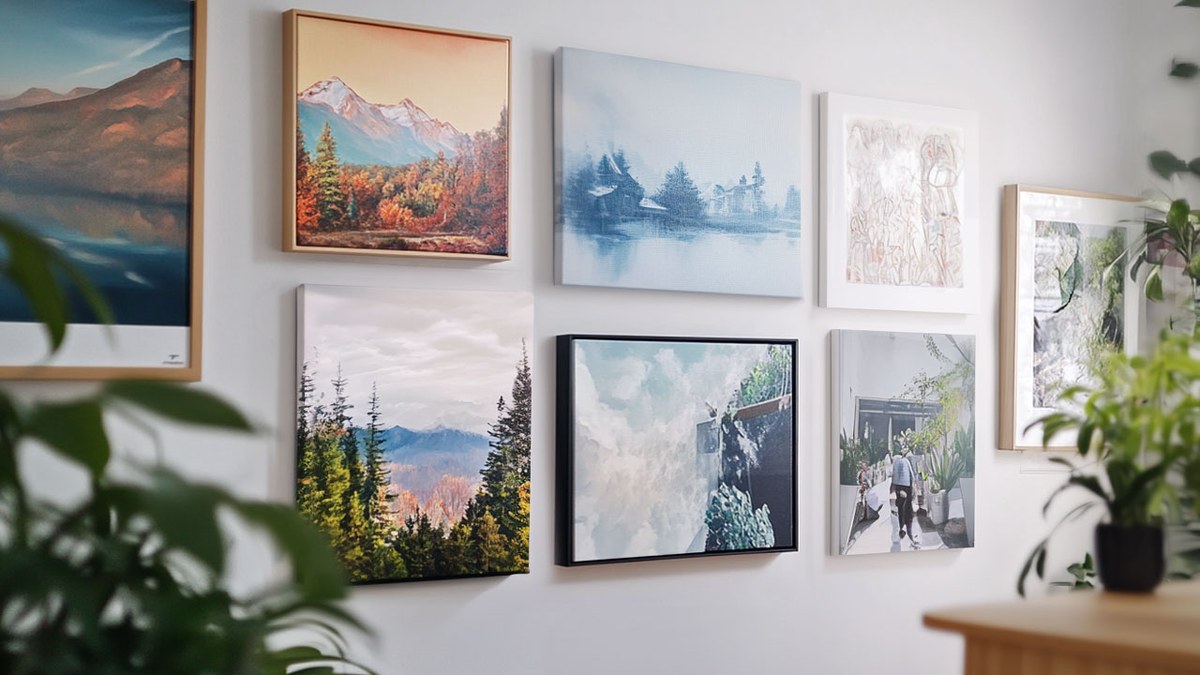
A gallery wall 6 frames set is one of the easiest ways to make a room feel considered without overwhelming it. It offers enough structure to look intentional, while still leaving room for personality, memory, and a little visual breathing space.
- Balanced size: Six frames give enough structure for a finished look.
- Flexible styling: Works with prints, photography, sketches, and mixed media.
- Frame choice matters: Finish, matting, and color shape the mood.
- Lighting counts: Protect art from glare, fading, and humidity.
- Gift-friendly: A thoughtful option for housewarmings and weddings.
Gallery Wall 6 Frames: What This Format Does Best in Modern Interiors
Six frames sit in a sweet spot between a small pair of prints and a larger, more demanding wall installation. The format feels complete, but not crowded, which is why it works so well in modern homes that value clarity, warmth, and edited detail.
Why six frames create balance without feeling overdone
Six frames naturally suggest rhythm. Even before you choose the artwork, the number itself creates a sense of order that feels calm and satisfying to the eye.
Unlike a larger gallery wall, a six-frame arrangement can remain readable from across a room. That makes it especially useful in homes where the wall is important, but not the only visual feature competing for attention.
Reader intent: styling a compact wall with a curated, finished look
Most people searching for this format are trying to solve a specific problem: how to fill a wall elegantly when a single print feels too sparse and a large gallery wall feels too busy. Six frames answer that need beautifully.
This format suits apartments, hallways, bedrooms, dining nooks, and home offices where the goal is a collected look rather than a maximal one. It also suits people who like the idea of a gallery wall but want a more manageable starting point.
The best six-frame arrangement depends on wall width, furniture height, and the visual weight of the artwork. A compact wall may need smaller frames and tighter spacing, while a wider wall can carry larger proportions more comfortably.
Choosing the Right 6-Frame Gallery Wall for Art, Photos, and Mixed Media
The strength of a six-frame set is versatility. It can hold a coherent series of prints, a family photo story, or a layered mix of images that feels more editorial than matchy.
Best content pairings: prints, family photography, sketches, quotes, and bookish imagery
Prints are the most obvious choice, especially when they share a palette or subject matter. Botanical studies, still lifes, architectural sketches, and abstract forms all work well because they already feel visually structured.
Family photography can be equally effective, especially when the images are edited with restraint. Black-and-white portraits, softly toned candid shots, or a mix of travel memories can create a deeply personal wall without feeling overly casual.
Sketches and line drawings bring a quieter, more literary mood. They are especially appealing in reading corners, studies, and bedrooms where the wall should feel thoughtful rather than loud.
Quotes and bookish imagery can work too, but they benefit from moderation. One or two text-based pieces usually feel stronger than six, because too much typography can flatten the visual rhythm.
- Do the images share a mood, color family, or theme?
- Will the wall feel more personal or more decorative?
- Do you want the set to read quickly from afar or reveal detail up close?
- Will any pieces need UV protection or reduced light exposure?
How to decide between a cohesive theme and an eclectic editorial mix
A cohesive theme works best when you want calm and simplicity. For example, six botanical prints in similar tones can make a bedroom or hallway feel quietly polished.
An eclectic editorial mix works best when you want personality. Think of it as curating a page from a magazine spread: a portrait, a landscape, a sketch, a text piece, and two supporting images that share a visual language.
If you are unsure, start with one unifying element. That might be frame color, paper tone, subject matter, or a consistent level of contrast.
When mixing styles, repeat at least one visual cue three times—such as black frames, warm neutrals, or thin black linework—to keep the arrangement from feeling accidental.
Layout Ideas for a Gallery Wall 6 Frames in Real Rooms
The layout matters as much as the artwork. With six frames, you can create symmetry, gentle movement, or a more relaxed composition depending on the room and the mood you want to build.
Symmetrical grids for calm, tailored spaces
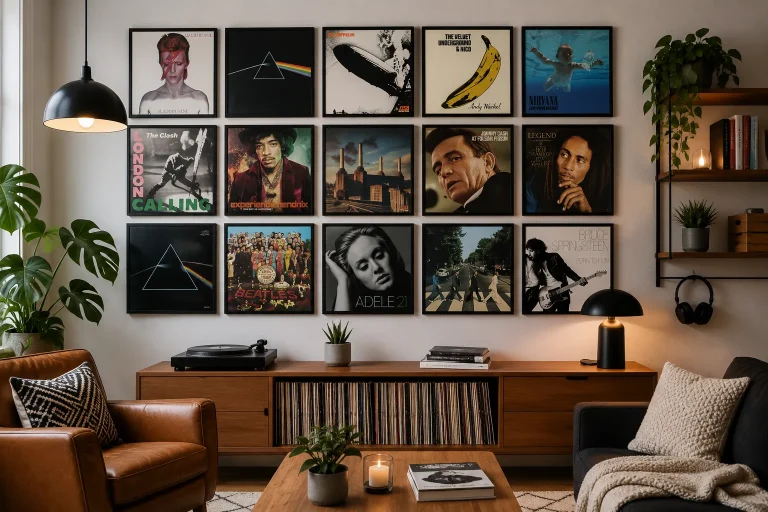
A grid is the most polished option. Two rows of three frames, or three rows of two, creates a tailored look that feels especially suited to dining rooms, formal living rooms, and clean-lined interiors.
This approach works best when the frames are close in size and the artwork has a shared palette. It gives the wall a sense of discipline, which can be very beautiful in spaces that already have strong furniture or architectural lines.
- Creates instant order and visual calm
- Works well with matching frame sizes
- Feels elegant above consoles, sideboards, and sofas
Linear and stacked arrangements for hallways, stair landings, and above furniture
Linear layouts are excellent for narrow walls. A single row of six smaller frames can guide the eye through a hallway or along a stair landing without interrupting the flow of the space.
Stacked arrangements are useful above furniture, where the wall height is limited. Two rows of three can echo the shape of a sofa, bench, or sideboard and make the whole composition feel anchored.
If you are hanging above furniture, leave enough breathing room so the wall does not feel trapped. The arrangement should relate to the piece below it, not sit on top of it.
Think of a six-frame wall as a visual sentence: each frame contributes a word, but the spacing is what gives the sentence rhythm and meaning.
Asymmetrical styling for creative studios, reading corners, and relaxed living rooms
Asymmetry can feel wonderfully alive. It works best when the room already has a relaxed character, such as a studio, a reading nook, or a living room with layered textures and informal seating.
You might cluster smaller frames on one side and balance them with larger pieces on the other, or offset the arrangement so it feels collected over time. This style is less precise, but often more expressive.
If you prefer a less rigid look, a six-frame set can still feel curated without being perfectly mirrored. The key is to keep the visual weight balanced, even if the shapes are not identical.
Interior designers often use repetition in groups of six because it gives enough variation for interest while still reading as a unified set from a distance.
Style Trade-Offs: Frame Finish, Matting, and Color Palette
Frame choice changes the mood of the whole wall. The same images can feel crisp, rustic, gallery-like, or intimate depending on finish, matting, and color balance.
Black, oak, walnut, and white frames: when each feels most intentional
Black frames are the most graphic. They sharpen linework, photography, and monochrome art, and they tend to work well in modern, minimal, or editorial interiors.
Oak feels lighter and more relaxed. It is a strong choice for Scandinavian-inspired rooms, warm neutrals, and spaces that need softness rather than contrast.
Walnut brings depth and a more classic, collected feel. It often suits traditional interiors, book-lined rooms, and walls that need visual richness.
White frames can disappear beautifully when the artwork is the focus. They are especially useful in bright rooms, airy bedrooms, and spaces where you want the wall to feel quiet and open.
| Option | Best For | Note |
|---|---|---|
| Black | Photography, bold prints, modern interiors | Creates strong contrast and a gallery-like edge |
| Oak | Warm, natural, relaxed rooms | Softens the wall and pairs well with neutral palettes |
| Walnut | Classic, moody, bookish spaces | Adds depth and a more substantial presence |
| White | Bright rooms and subtle artwork | Keeps the arrangement light and understated |
Matte versus glossy presentation for artwork, photography, and gift-worthy displays
Matte presentation usually feels more refined and less distracting. It reduces glare and allows the eye to settle on texture, line, and tone, which is especially helpful for drawings and fine art prints.
Glossy finishes can suit vibrant photography or statement pieces, but they are more reflective. In rooms with strong daylight or lamps, that reflection can become part of the design challenge.
For gifting, matte often feels safer because it reads as timeless and versatile. It is also easier to place in a range of interiors without clashing with existing decor.
How to keep a six-frame set cohesive without making it feel repetitive
The trick is variation within a clear framework. You might keep the frame finish the same while changing the artwork scale, or keep the subject matter linked while varying color intensity.
Another option is to repeat one element in a slightly different way. For instance, six travel photographs can feel cohesive if they share tone, but more interesting if a few are landscapes, one is architectural, and one is a close-up detail.
That balance is what gives a six-frame wall its charm. It should feel designed, not duplicated.
Paper prints, photographs, and original works may fade or warp in direct sun, humid rooms, or poorly sealed frames. If your wall gets strong light, choose UV-protective glazing and avoid placing sensitive pieces near radiators, bathrooms, or damp exterior walls.
Curator Recommendations from Hurrell Editions for a More Collected Look
At Hurrell Editions, the most successful six-frame walls tend to feel gathered rather than purchased in one gesture. A collected look usually has more warmth, more personality, and more staying power.
Building visual rhythm through scale, spacing, and image sequencing
Rhythm comes from how the eye moves across the wall. Alternate stronger and quieter images so the arrangement has a natural pulse, rather than six equally loud pieces competing at once.
Spacing matters just as much. Tight spacing creates intimacy and structure, while wider spacing feels more relaxed and gallery-like. The right choice depends on whether you want the wall to read as a set or as a sequence.
Lay the six pieces on the floor first and step back several times. If one image keeps drawing your eye too aggressively, move it into a supporting position rather than forcing it into the center.
Using one hero image and five supporting works for editorial impact
One strong image can anchor the whole wall. This might be a larger print, a more saturated photograph, or the piece with the strongest composition.
The other five should support it rather than compete with it. Think of them as the surrounding cast: they add texture, context, and pace, but they do not need to be equally dramatic.
This approach is especially effective in living rooms and entryways, where you want the wall to make a memorable first impression without becoming visually noisy.
A six-frame wall built around one architectural print, two soft-toned photographs, two line drawings, and one text-based piece often feels especially balanced. It gives the room both structure and a subtle narrative.
When to choose subtle coordination over perfect matching
Perfect matching can be satisfying, but subtle coordination often feels more sophisticated. A slight variation in tone, scale, or subject can make the wall feel less showroom-like and more lived in.
This is particularly true in homes with books, natural textures, and handmade objects. Those environments usually benefit from a little irregularity, because it echoes the warmth of the rest of the room.
If your room already has a strong focal point, choose a quieter six-frame set. If the wall is meant to be the focal point, allow for stronger contrast, bolder subject matter, or more distinct sequencing.
Lighting, Placement, and Wall Care for Long-Lasting Display
Good styling is only part of the story. Placement, lighting, and care determine whether a gallery wall remains beautiful over time or starts to look tired and reflective.
How natural light, lamps, and picture lights affect artwork visibility
Natural light can make art feel alive, but it can also create glare and increase fading risk. If the wall receives direct sun, consider positioning it on a different wall or using protective glazing.
Lamps and picture lights can add a lovely evening mood, especially in reading rooms and dining spaces. The key is to avoid harsh hotspots that flatten the image or reflect too much off the surface.
Warm, even light usually flatters a six-frame wall best. It helps the arrangement feel intentional and welcoming rather than overly bright.
Protecting prints and photographs from glare, fading, and humidity
Use quality framing materials where possible, especially for pieces you want to keep for years. Acid-free backing and proper sealing can make a meaningful difference to longevity.
Humidity is another quiet risk. Bathrooms, kitchens, and poorly ventilated rooms may not be ideal for delicate paper works unless the framing and placement are carefully considered.
Even well-framed artwork can suffer in rooms with repeated moisture or direct heat. If you are displaying sentimental photographs or original art, check the wall periodically for condensation, warping, or dust buildup behind the glass.
Simple care tips for dusting frames and refreshing the arrangement over time
A six-frame wall does not need frequent reinvention, but it does benefit from light upkeep. Dust the frames gently with a soft cloth and check that each piece remains level and secure.
Over time, you may want to rotate one or two images to keep the wall feeling fresh. This is a lovely way to evolve the display seasonally without rebuilding the whole arrangement.
Use a dry microfiber cloth on frame edges and a soft, lint-free cloth on glazing.
Make sure the frames still feel evenly aligned after seasonal cleaning or furniture movement.
Swap one or two images if you want a new mood without changing the whole wall.
Price Context, Gifting Potential, and Why Six Frames Feels Complete in 2026
In 2026, six-frame gallery wall sets continue to feel especially relevant because they match how many people decorate now: with intention, flexibility, and a preference for pieces that feel personal rather than excessive.
What shoppers typically expect at entry, mid, and premium price points
Entry-level sets usually prioritize convenience and a cohesive look. They can be a smart option for renters, first homes, or anyone testing a new wall before investing more heavily.
Mid-range options often improve frame finish, material quality, and presentation details. This is where many shoppers find the best balance between style and longevity.
Premium or investment-level sets may focus on stronger materials, better glazing, archival-minded construction, or a more distinctive curated feel. Pricing varies widely by size, finish, and whether the set includes art or only frames.
Why a 6-frame set makes a thoughtful housewarming, wedding, or creative gift
A six-frame set makes a particularly thoughtful gift because it carries both beauty and utility. It gives the recipient something they can personalize, which is often more meaningful than a purely decorative object.
For housewarmings, it helps turn blank walls into something lived in. For weddings, it can become a frame story for shared memories. For creative friends, it offers a ready-made structure for art, photography, or a rotating visual journal.
- Housewarming gifts
- Wedding or anniversary presents
- Creative, memory-based displays
- The recipient prefers one large statement piece
- The wall is extremely narrow or unusually tall
- You need a fully custom archival presentation
Final creative recap: how to turn six frames into a polished personal story
The best gallery wall 6 frames arrangement is not the one with the most expensive art or the most perfect symmetry. It is the one that feels like it belongs to the room and to the person living there.
Whether you choose photographs, prints, sketches, or a mixed editorial set, six frames give you enough space to tell a story with clarity. That is what makes the format so enduring: it is structured, expressive, and just generous enough to feel complete.
- Six frames create a balanced wall that feels curated without looking crowded.
- They work well with prints, photography, sketches, and mixed-media styling.
- Frame finish, matting, and spacing shape the mood more than the number alone.
- Good lighting and careful placement help the arrangement stay beautiful over time.
Recommended Products
SHOP THIS SETUP
MCS Industries 6 Piece Gallery Wall Frame Set, Black
This set is a strong pick for a polished gallery wall because it gives you six coordinated frames that are easy to arrange in a balanced layout. The clean black finish works with art prints, family photos, or a mix of both, making it a versatile choice for a modern gallery wall of 6 frames.
Frequently Asked Questions
A symmetrical grid is the easiest way to make six frames feel calm and polished. Linear, stacked, or asymmetrical layouts can work well too, depending on the room and furniture below it.
Prints, family photos, sketches, quotes, and mixed media all work well. The key is to keep a shared mood, palette, or frame finish so the wall feels unified.
Not necessarily. Subtle variation often feels more collected and interesting than perfect matching, as long as there is one clear visual thread connecting the set.
Black is the most graphic and versatile for modern interiors, while oak and white feel lighter and softer. Walnut works well when you want warmth and a more classic, bookish mood.
Leave enough space so the wall does not feel crowded by the furniture below it. The arrangement should relate to the piece underneath while still breathing visually.
Yes, it is a thoughtful gift for housewarmings, weddings, and creative friends because it is personal and flexible. The recipient can fill it with photos, prints, or memories that suit their home.