How to Light a Gallery Wall Without Hardwiring

A gallery wall can look flat at night if the room depends only on ceiling lights. The good news is that you can learn how to light a gallery wall without hardwiring by using battery picture lights, rechargeable sconces, plug-in lighting, or hidden LED strips. The best setup depends on the size of the wall, whether you rent, how often you want to recharge batteries, and whether the artwork needs focused light or a softer decorative glow.
This guide focuses on practical no-wire lighting for real homes: living rooms, hallways, bedrooms, rental apartments, and small creative spaces. It explains where to place lights, which type works best, what to avoid, and how to make the result look intentional instead of like a temporary workaround.
Start with the look you want
Before buying lights, decide whether the gallery wall needs display lighting or mood lighting. Display lighting points toward the art and makes the frame, mat, and image easier to see. Mood lighting creates a warm glow around the wall but may not highlight each piece clearly. Many homes need a mix: one or two picture lights for the main frames, plus soft ambient light nearby.
| Goal | Best no-wire option | Best place to use it |
|---|---|---|
| Highlight one hero artwork | Battery or rechargeable picture light | Above the largest frame |
| Light several small frames | Two-pack wireless picture lights | Over a grouped gallery wall |
| Create soft background glow | Warm LED strip lights | Behind picture ledges or shelves |
| Brighten a hallway wall | Rechargeable wall sconces | Between frame groups or at both ends |
| Rental-friendly setup | Adhesive or screw-light mounting with no hardwire | Apartments and temporary homes |
Battery picture lights are the easiest starting point
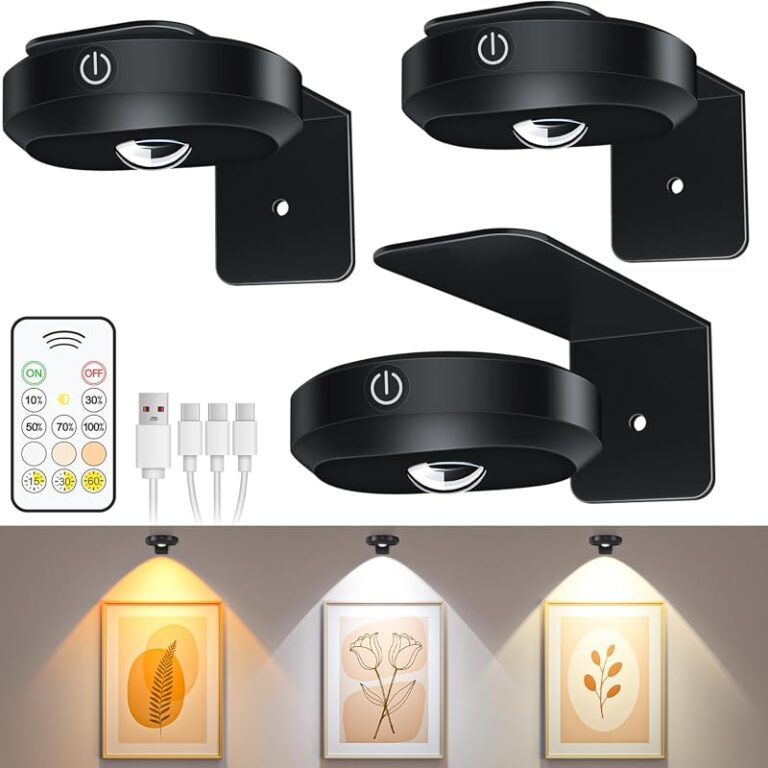
For most people, the cleanest no-hardwire option is a battery picture light above the most important frame. It gives the wall a designed look without cutting into drywall, fishing wires, or hiring an electrician. Choose a light with a warm color temperature, dimming control, and a width that matches the frame. A tiny light above a large piece looks accidental, while an oversized light can overpower a small print.
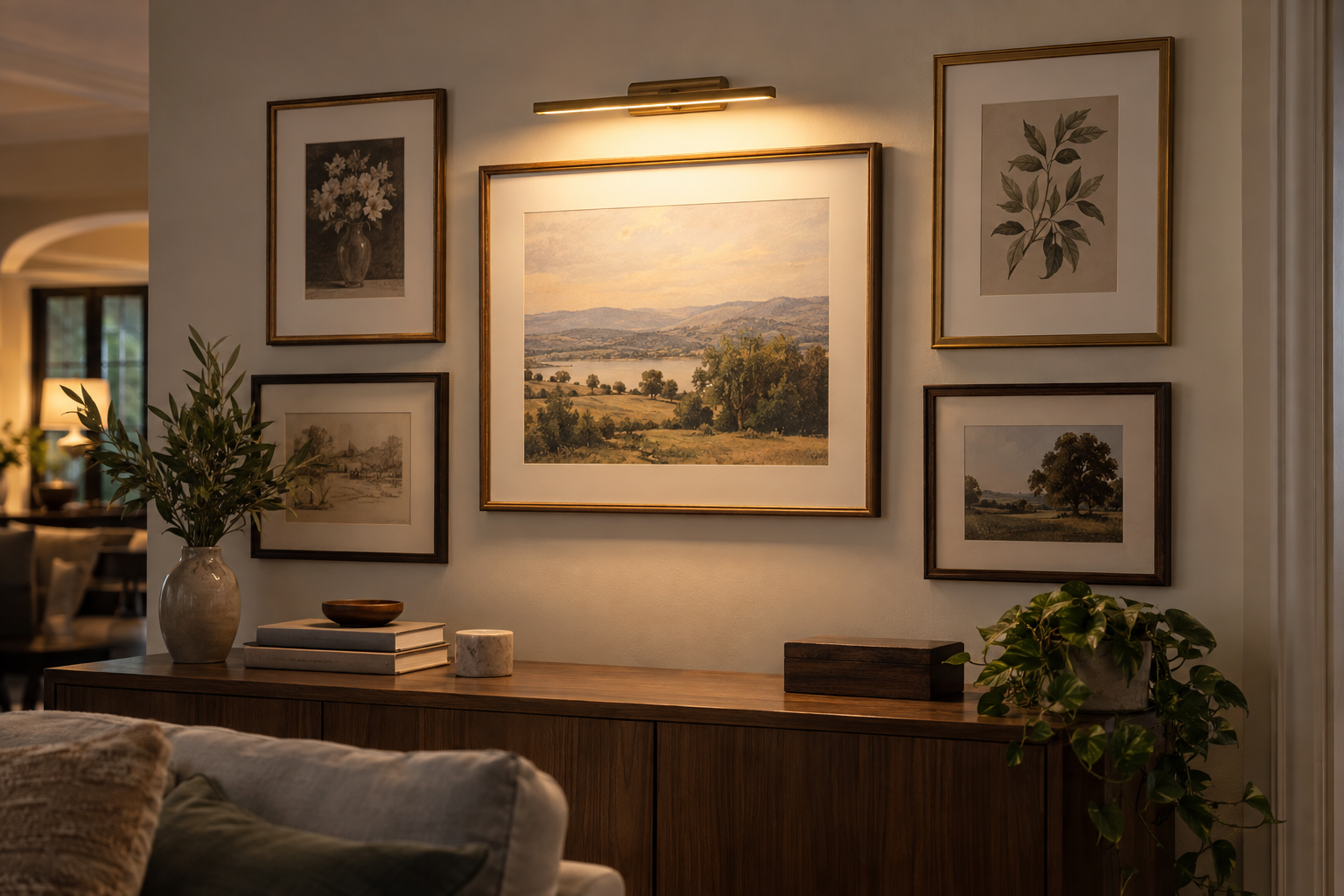
Mount the light so the beam lands on the center of the artwork rather than the wall above it. If the light has an adjustable head, tilt it slightly downward and test it at night before making the final placement. For framed art under glass, avoid aiming the light directly toward the viewer because it can create glare. A soft downward angle usually looks better and makes the artwork easier to see.
Use rechargeable lights when you want less maintenance
Rechargeable picture lights and wall sconces are useful when you do not want to keep replacing batteries. They are especially good for gallery walls in bedrooms, offices, and hallways where the light is used for a few hours at a time rather than all day. Look for a fixture that can be removed from the mounting plate easily, because awkward charging makes even a beautiful light annoying to live with.
The tradeoff is that rechargeable lights still need a charging routine. If the gallery wall is in a high-use living room, choose a model with remote control, dimming, and a realistic battery-life claim from the listing. Keep expectations practical: a brighter setting drains faster, and a warm dim setting usually lasts longer.
LED strips work best as hidden glow, not spotlighting
LED strip lights can be a good choice when the gallery wall includes picture ledges, floating shelves, or deep frames. They are not ideal for lighting individual art like a museum spotlight, but they can create a soft glow that makes the wall feel warmer at night. Use warm white strips rather than harsh blue-white lights, and hide the strip so the viewer sees the glow, not the dots of the LEDs.
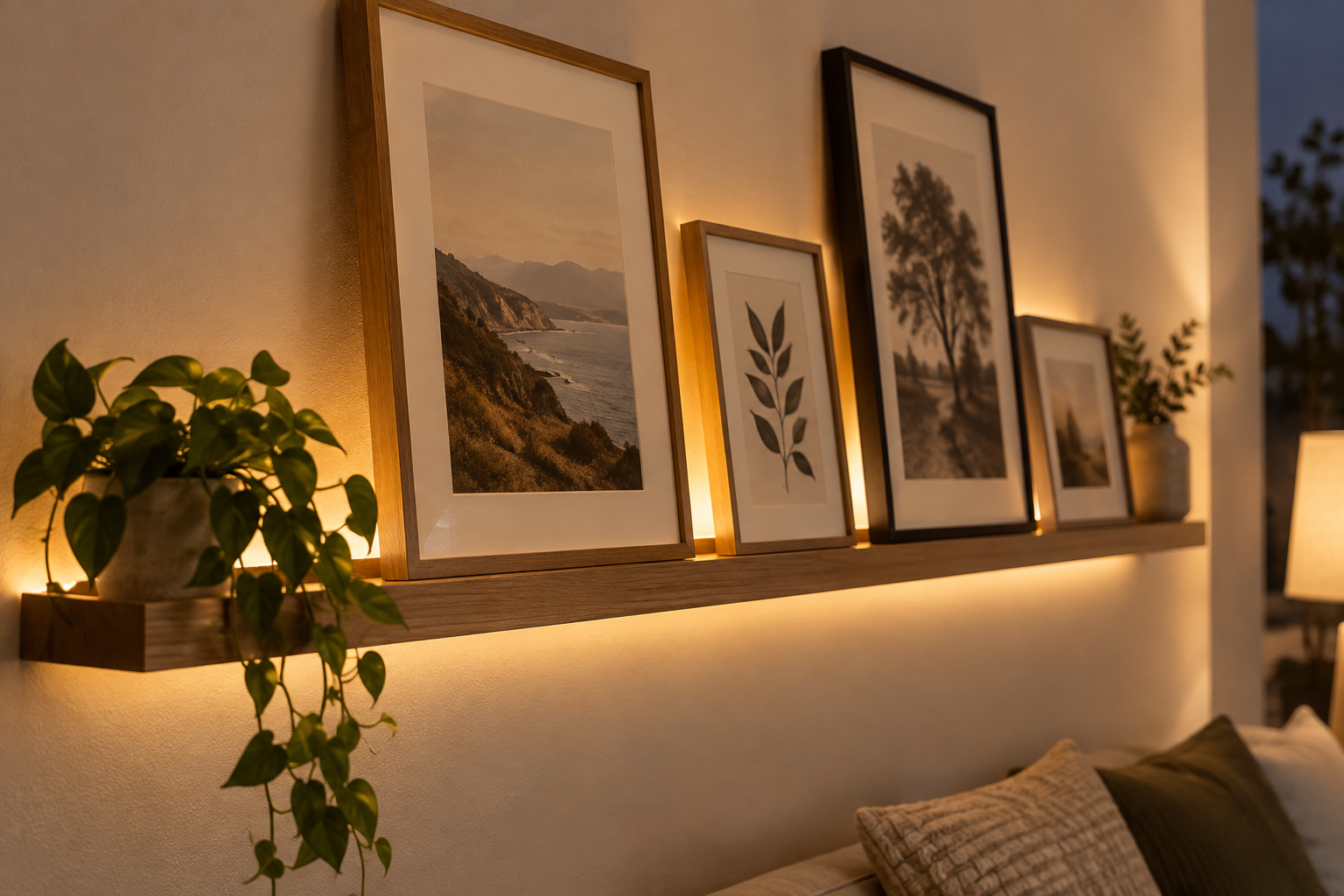
If you use strips behind a picture ledge, run the strip along the back edge so it washes the wall behind the frames. If you use strips behind a single large frame, make sure the frame has enough depth to hide the strip. Exposed strips can look messy in daylight, so test the placement with the room lights on before sticking anything permanently.
Plug-in lights can still look clean
Plug-in sconces and picture lights are not technically cordless, but they avoid hardwiring and can work well when an outlet is nearby. The key is cord management. Run the cord straight down, use paintable cord covers, and place furniture or a console table so the lower part of the cord is less visible. This setup often gives more consistent brightness than battery lights, which makes it useful for a main living room wall.
Plug-in lights are also a better choice if you want the gallery wall lit every evening. Battery lights are great for occasional use, but plug-in lighting is easier when the wall is part of your daily room lighting. Choose this route when function matters more than a perfectly cordless look.
Placement rules that make no-wire lights look intentional
No-wire lighting can look polished when the placement is consistent. Center a picture light over the frame or over a balanced group of frames. Keep the distance between the top of the frame and the light visually even across the wall. If you use two lights, align them at the same height. Small inconsistencies are more noticeable at night because the beams reveal uneven spacing.
- Use warm white light for living spaces and bedrooms.
- Use dimmable fixtures when the art includes glass or glossy photos.
- Avoid mixing very cool and very warm lights on the same wall.
- Keep lights proportional to the frame width.
- Test beam angle at night before final mounting.
- Use removable mounting only when the fixture is light enough for it.
Best setup by wall type
A large symmetrical gallery wall usually looks best with two matching wireless picture lights placed above the main frame groups. A casual mixed gallery wall can use one larger light above the anchor piece, then let the surrounding frames stay softer. A picture ledge wall works well with hidden LED strips because the shelf already gives you a place to hide the lighting.
For a narrow hallway, avoid lights that stick out too far from the wall. Low-profile rechargeable sconces or slim picture lights are easier to live with. For a bedroom wall, dimming matters more than brightness. You want enough light to give the art presence, not enough to make the wall feel like a display case.
Color temperature, glare, and artwork safety
Gallery wall lighting should make the art feel better, not colder. For most homes, warm white light around 2700K to 3000K looks more natural with wood frames, brass picture lights, neutral walls, and cozy living spaces. Very cool light can make prints look harsh and can clash with warm lamps in the rest of the room. If the product listing offers several color modes, start with warm white and dim it before trying brighter settings.
Glare is the other detail that separates a polished wall from a distracting one. Framed photos, acrylic glazing, and glass-front frames can reflect the fixture if the beam points straight outward. Stand where people normally sit or walk, then adjust the light angle until the artwork is visible without a bright reflection. If the light is not adjustable, mount it slightly farther from glossy frames or use a lower brightness level.
For valuable prints, avoid strong light running for long hours every day. No-wire LEDs are usually cooler than old halogen lights, but brightness and exposure still matter. Use dimmers, timers, or motion settings when available. The safest setup is enough light to enjoy the art in the evening, not maximum brightness for the whole night.
Renter-friendly mounting tips
If you rent, check the light’s weight before trusting adhesive mounting. Lightweight LED strips and small plastic fixtures may work with removable adhesive, but heavier metal picture lights usually need screws for a stable finish. When screws are not allowed, choose lighter rechargeable options or place plug-in lamps nearby instead of forcing a heavy fixture onto weak adhesive.
Before mounting anything, mark the center line of the main frame with painter’s tape. Hold the light in place, step back, and check whether the beam covers the artwork evenly. This small test prevents crooked fixtures and helps avoid extra holes. If the gallery wall is still changing, use one portable or rechargeable light first, then add matching fixtures once the layout feels settled.
What to buy and what to avoid
Useful no-hardwire supplies include battery picture lights, rechargeable wall sconces, warm LED strip lights, adhesive cord clips, paintable cord covers, and a small level for mounting. If you are comparing options, look for battery picture lights and no-hardwire gallery wall lighting on Amazon with warm white settings, dimming, and a mounting style that matches your wall.
Avoid ultra-blue LEDs, oversized fixtures on small frames, lights with visible charging ports facing the room, and adhesive-only mounting for heavy metal fixtures. Also be careful with strong light on delicate prints. If the artwork is valuable or sensitive to fading, use lower brightness and avoid direct sunlight during the day.
Related guides: how to position a wireless picture light above artwork, battery operated LED picture frame lights, and LED strip lights for backlighting pictures.
Common mistakes to avoid
The biggest mistake is treating every frame the same. A small black-and-white photo, a large canvas, and a glossy framed print all react differently to light. Another mistake is placing the fixture too high. The light should make the artwork easier to see, not create a bright patch above the frame. Over-lighting is just as distracting as under-lighting.
Do not ignore daytime appearance either. A wireless light that looks beautiful at night can look bulky during the day if it is too large for the frame. Choose finishes that match the room hardware, frame color, or nearby lamps. Brass, black, and warm white fixtures usually blend better than shiny chrome in cozy gallery-wall settings.
Final recommendation
The best way to light a gallery wall without hardwiring is to use battery or rechargeable picture lights for focused artwork lighting, LED strips for hidden glow, and plug-in fixtures when you need dependable daily brightness. Start with the main artwork, keep the light warm and dimmable, and make every fixture look intentionally placed. That gives the gallery wall presence at night without cutting into the wall.
FAQ
Can you light a gallery wall without an electrician?
Yes. Battery picture lights, rechargeable wall lights, plug-in sconces, and low-profile LED strips can light a gallery wall without opening the wall or adding hardwired electrical boxes.
What is the easiest no-wire gallery wall lighting option?
The easiest option is usually a battery or rechargeable picture light mounted above the main frame. It keeps the light focused on the art and avoids visible cords.
Are LED strip lights good for gallery walls?
LED strip lights can work well behind ledges, shelves, or frames when you want a soft glow. They are less ideal when you need a focused museum-style beam on individual artwork.