What Art Supplies Do Beginners Actually Need? An Honest Starter Guide

Beginners actually need very little to start making art: a small set of paints (acrylic is the most forgiving), two or three brushes, a sketchbook or canvas pad, a pencil, and an eraser. That is a complete starter kit. Everything else comes later — once you know what you enjoy painting and how you like to work.
The most common mistake beginners make is buying too much before they know what they need. A small, well-chosen set of supplies will teach you more in a month than a full professional kit sitting unused in a drawer.
I’m Julian Mercer, and I’ve watched so many beginners spend $150 on an art haul — then feel overwhelmed before they even open the first tube. The question isn’t what you could use. It’s what you actually need to start painting well, enjoy the process, and keep going.
This guide cuts through the noise. I’ll tell you exactly what to buy first, what to skip entirely, and how to build your kit as your skills grow.
Why Most Beginners Buy Too Much
Art supply stores and online hauls make everything look essential. That’s by design. The truth is that professional artists spend years narrowing down to a small set of tools they trust completely.
As a beginner, you don’t yet know what medium you love, what brush sizes feel natural, or what surfaces suit your style. Buying a huge kit before you have that knowledge is like buying a full professional kitchen before you’ve learned to cook a single meal.
Many of the most beloved works in art history were created with incredibly limited materials. Rembrandt’s early sketches used just brown ink and a reed pen. Picasso’s Blue Period paintings used a narrow palette of fewer than six colours. Constraint often produces better art than abundance.
The 5 Things a Beginner Actually Needs
Start here. These five items give you everything you need to explore painting, drawing, or mixed media — without spending more than you should before you know what you love.
Acrylic is the best beginner medium. It dries fast, cleans up with water, works on almost any surface, and is forgiving enough to paint over mistakes. A 12-colour student-grade set gives you enough range to mix any colour you need. You don’t need 24 colours or 48 — 12 is plenty and forces you to learn colour mixing, which is one of the most valuable skills in painting.
A large flat brush for blocking in colour, a medium round brush for general painting, and a small round brush for detail. That’s it. Three brushes will handle 95% of what a beginner needs to paint. More brushes don’t make better paintings — they just create more decisions. Buy decent quality — not the $1 craft store set, but not expensive artist brushes either. Mid-range synthetic brushes are perfect.
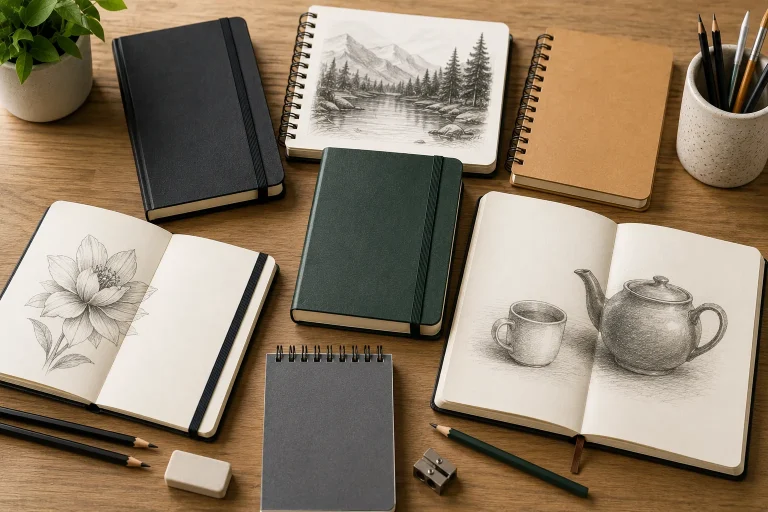
For drawing practice, a 9×12 inch sketchbook with 90 lb / 163 gsm paper works perfectly. For acrylic painting, a canvas pad — sheets of canvas-textured paper bound like a notebook — is affordable, easy to store, and gives you a proper painting surface without the commitment of stretched canvas. Buy a pad of 10 sheets and use every page.
A standard HB pencil for sketching compositions before you paint, and a soft eraser to correct them. These two items are the foundation of almost every painting — you sketch lightly, check proportions, then paint over the pencil lines. Simple and essential.
You don’t need a fancy palette. A dinner plate, a sheet of glass, or a cheap plastic palette from any art store works perfectly for mixing acrylic paint. A glass jar or plastic cup holds your brush-rinsing water. That is your complete workspace setup.
If I had to give one beginner a single kit recommendation, it would be this: a 12-colour student acrylic set, a three-piece synthetic brush set, and a canvas pad. Everything you need is there. Everything else can wait until you’ve filled the first pad.
What Medium Should Beginners Choose?
The medium you choose shapes everything — how long paint stays workable, how you clean up, how forgiving mistakes are. Here is an honest comparison of the four main options.
| Medium | Beginner Friendliness | Clean-up | Drying Time | Best First Use |
|---|---|---|---|---|
| Acrylic | ⭐⭐⭐⭐⭐ Excellent | Water only | Fast — 20 min | First choice for beginners |
| Watercolour | ⭐⭐⭐ Moderate | Water only | Fast — 10–30 min | Gentle, relaxing practice |
| Oil paint | ⭐⭐ Harder | Solvents needed | Slow — days to weeks | After learning colour mixing |
| Gouache | ⭐⭐⭐⭐ Good | Water only | Fast — 10–20 min | Illustration and flat colour work |
Start with acrylic. Once you can mix colours confidently, understand light and shadow, and feel comfortable with a brush — then explore watercolour or oil. The skills transfer. The fundamentals don’t change. Master one medium before you start another.
Why Starting Simple Actually Makes You Better Faster
Constraint is one of the most powerful teaching tools in art. When you have only three brushes, you learn to use each one well. When you have only twelve colours, you learn to mix. When you have only a canvas pad, every page matters.
Abundance creates distraction. A beginner with 40 colours spends more time choosing paint than painting. A beginner with 12 colours spends more time learning.
There is something deeply satisfying about filling an entire sketchbook or canvas pad from the first page to the last. When you hold that finished pad in your hands, you can see your progress page by page. That experience — impossible if you jump between ten different surfaces and mediums — is what keeps beginners coming back to their desk.
What Beginners Do NOT Need (Yet)
This is equally important. The art supply industry markets heavily to beginners because beginners haven’t learned yet what they don’t need. Here is what to skip on your first purchase.
- 12-colour student acrylic set
- 3 synthetic brushes — flat, medium round, small round
- 9×12 canvas pad or sketchbook
- HB pencil and soft eraser
- Plastic palette or old dinner plate
- Glass jar for brush rinsing
- 24 or 48 colour paint sets
- Brush sets of 12 or more
- Expensive stretched canvases before you know what you enjoy
- Mediums and varnishes (learn paint first)
- Easels before you know if you prefer desk or floor painting
- Palette knives before you understand paint consistency
- Gesso, retarder, or texture paste on day one
Building Your Kit Over Time
Once you’ve filled a canvas pad and used your first paint set, you’ll know much more about what you actually want. That’s the right time to expand.
Art Supplies by Budget — What to Expect
| Budget Tier | What You Get | Who It’s Right For |
|---|---|---|
| Under $30 | Student-grade paints, basic brushes, canvas pad | Total beginners — just exploring |
| $30–$60 | Better brushes, larger paint set, quality canvas pad | Beginners who are committed to learning |
| $60–$100 | Mid-range paints, artist brushes, stretched canvases | Beginners ready to invest in the hobby |
| $100+ | Artist-grade paints, quality brushes, mixed surfaces | Only after 3–6 months of regular painting |
What You’ll Need — Complete Beginner Starter List
Pro Tips for Getting Started With Your First Kit
- Buy the smallest canvas pad first. Finishing a pad of 10 pages feels like a real achievement and shows you exactly how your technique is improving.
- Do not skip the pencil sketch. Lightly sketch your composition before you paint. It takes two minutes and saves you from major corrections later.
- Keep a rag beside you at all times. Wiping your brush before switching colours keeps your colour mixing clean and prevents muddy results.
- Buy an extra tube of titanium white acrylic separately. White mixes into almost every colour and runs out faster than anything else in the kit.
- Let each layer dry before adding the next one. Acrylic dries fast — patience at this stage prevents colours from muddying.
- Use cheap paper for colour mixing experiments. Keep a scrap sheet beside your work to test colours before applying them to your painting.
- Clean brushes immediately after every session. Dried acrylic ruins brushes permanently. Rinse under warm water while the paint is still wet.
Common Mistakes Beginners Make When Buying Supplies
Buying the Cheapest Possible Brushes
Budget brushes from craft stores often shed hairs onto the canvas, hold very little paint, and lose their shape within a few uses. Spend a few dollars more on synthetic brushes from an art supply brand — Princeton, Artify, or similar. They last longer and make painting much more enjoyable.
Choosing Oil Paint as a First Medium
Oil paint is beautiful but unforgiving for beginners. It requires solvents for clean-up, takes days to dry between layers, and demands more knowledge of paint chemistry to use well. Start with acrylic — it teaches the same fundamentals without the complications.
Buying Expensive Supplies Before You Know What You Like
Artist-grade paints are significantly more vibrant and lightfast than student-grade, but they cost three to five times more per tube. Start with student-grade. Once you know your favourite colours and how you like to paint, upgrade those specific tubes to artist-grade — not the whole set.
Using Printer Paper or Thin Sketch Paper for Paint
Standard printer paper buckles, tears, and pills immediately when wet paint touches it. Always use paper or a surface made for your chosen medium. A canvas pad or a 140 lb / 300 gsm mixed media pad is the right choice for acrylic beginners.
Do not leave acrylic paint drying on brushes. Once acrylic hardens on bristles — even partially — it is almost impossible to remove without damaging the brush. Rinse brushes in warm water immediately after every session and reshape the bristles before leaving them to dry flat. For stubborn dried acrylic, soak in rubbing alcohol for 30 minutes before rinsing.
According to guidance published by MoMA’s conservation team, acrylic paints form a flexible polymer film when dry — which is why dried acrylic on bristles cannot be dissolved by water alone once cured. Prevention is the only real solution.
How to Set Up Your Beginner Art Space at Home
You don’t need a dedicated studio. A small corner of a table, good natural light, and a few square feet of clear surface is enough to start. Cover your desk with old newspaper or a silicone mat, set your palette to one side and your water jar to the other, and put your canvas pad in the centre. That is a complete home art setup.
For ideas on creating a beautiful, functional creative corner at home, our Creative Living section covers everything from lighting to organisation — helping your art space feel as good as it works.
Where to Buy Beginner Art Supplies
Amazon is the most convenient and affordable source for student-grade art supplies, especially for beginners who aren’t sure exactly what they want yet. Read the product descriptions carefully — look for the words “student grade,” “synthetic bristles,” and “acid-free” where relevant. Avoid sets marketed primarily as “kids’ craft kits” — the pigment quality is too low for learning proper painting.
If art-related gifts are on your list, our gift guide for art lovers features beautifully curated picks at every budget level — from beginner starter kits to thoughtful creative gifts for established artists.
For advice on how to display and frame your finished work, our Art & Frames guide covers everything from choosing the right frame to hanging your first pieces at home.
Recommended Products for Beginners
For more inspiration on how art supplies fit into a creative home lifestyle, Apartment Therapy and Smithsonian Magazine’s arts section are both excellent resources for seeing how working artists and creative home dwellers organise their spaces and tools.
- Beginners need 5 things: acrylic paints, 3 brushes, canvas pad, pencil, eraser
- Acrylic is the best first medium — forgiving, fast-drying, water clean-up
- 12 colours is enough — it forces you to learn colour mixing
- Skip everything else for the first 2 months
- Spend $25–$60 on a complete starter kit — not more
- Clean brushes immediately after every session — dried acrylic ruins them
- Expand your kit only after filling your first canvas pad
What art supplies beginners actually need is far less than the industry wants you to think. A 12-colour acrylic set, three brushes, a canvas pad, and a pencil is a complete, capable starter kit for under $40. Buy only this. Use all of it. Then buy more based on what you actually enjoyed and what wore out first. That is how experienced artists build their kits — and it is the fastest path from beginner to confident painter.
Frequently Asked Questions
An absolute beginner needs five things: a 12-colour acrylic paint set, three synthetic brushes (large flat, medium round, small round), a canvas pad or sketchbook, an HB pencil, and a soft eraser. Add a plastic palette and a jar of water and you have a complete working setup for under $40.
Acrylic is generally better for most beginners because it dries fast, cleans up with water, works on many surfaces, and is forgiving — you can paint over mistakes easily. Watercolour is more technically demanding because it requires understanding how water moves pigment across wet paper. Both are excellent, but start with acrylic if you’re unsure.
Twelve colours is the ideal starting set. It gives you a full range — warm and cool versions of the primary colours, plus black and white — while keeping your palette manageable. A 12-colour set also forces you to learn colour mixing, which is one of the most important painting skills you can develop.
No. Student-grade supplies are ideal for beginners and cost significantly less than professional or artist-grade materials. The difference in quality matters more when you already understand what you’re doing. Starting with a $25–$40 student kit is the right choice. Upgrade specific colours or brushes later, once you know what you actually use most.
A canvas pad — canvas-textured sheets bound like a notebook — is the best beginner surface for acrylic painting. It is affordable, easy to store, gives you a real canvas feel, and comes in practical sizes like 9×12 inches. Avoid printer paper and thin sketch paper, which buckle and tear when wet paint is applied.
Three brushes cover almost everything a beginner needs: a large flat brush for blocking in areas of colour, a medium round brush for general painting, and a small round brush for detail. More brushes create more decisions without improving results. Learn these three tools well before adding more.
Yes. Many beginners paint flat on a desk or table, especially on canvas pads and sketchbooks. An easel is helpful for larger canvases and for standing while you work, but it is not essential for a beginner. Wait until you know whether you prefer painting at a desk or standing before investing in an easel.
Upgrade when you’ve used up or worn out your starter supplies — not before. If you’ve filled a canvas pad, used through most of your paint, and worn out a brush or two, you now know what colours you reach for most, what brush sizes feel natural, and what surfaces you prefer. That knowledge makes every upgrade decision much smarter.
Conclusion
So — what art supplies do beginners actually need? Far less than most beginner hauls suggest. A 12-colour acrylic set, three brushes, a canvas pad, a pencil, and an eraser. That is a complete, capable starter kit that will last two to four months of regular painting.
Resist the urge to overbuy. Every extra supply you purchase before you’ve learned the basics is a distraction from the practice that will actually make you better. Fill your first canvas pad. Use your first paint set. Learn what runs out, what you reach for most, and what kind of work you enjoy making.
Then — and only then — buy more.