What Paper Is Best for Watercolor at Home? A Simple Beginner Guide

The best paper for watercolour at home is cold press, acid-free watercolour paper in 140 lb / 300 gsm weight. For better results, choose 100% cotton paper. For practice, a good student-grade cellulose watercolor pad is fine.
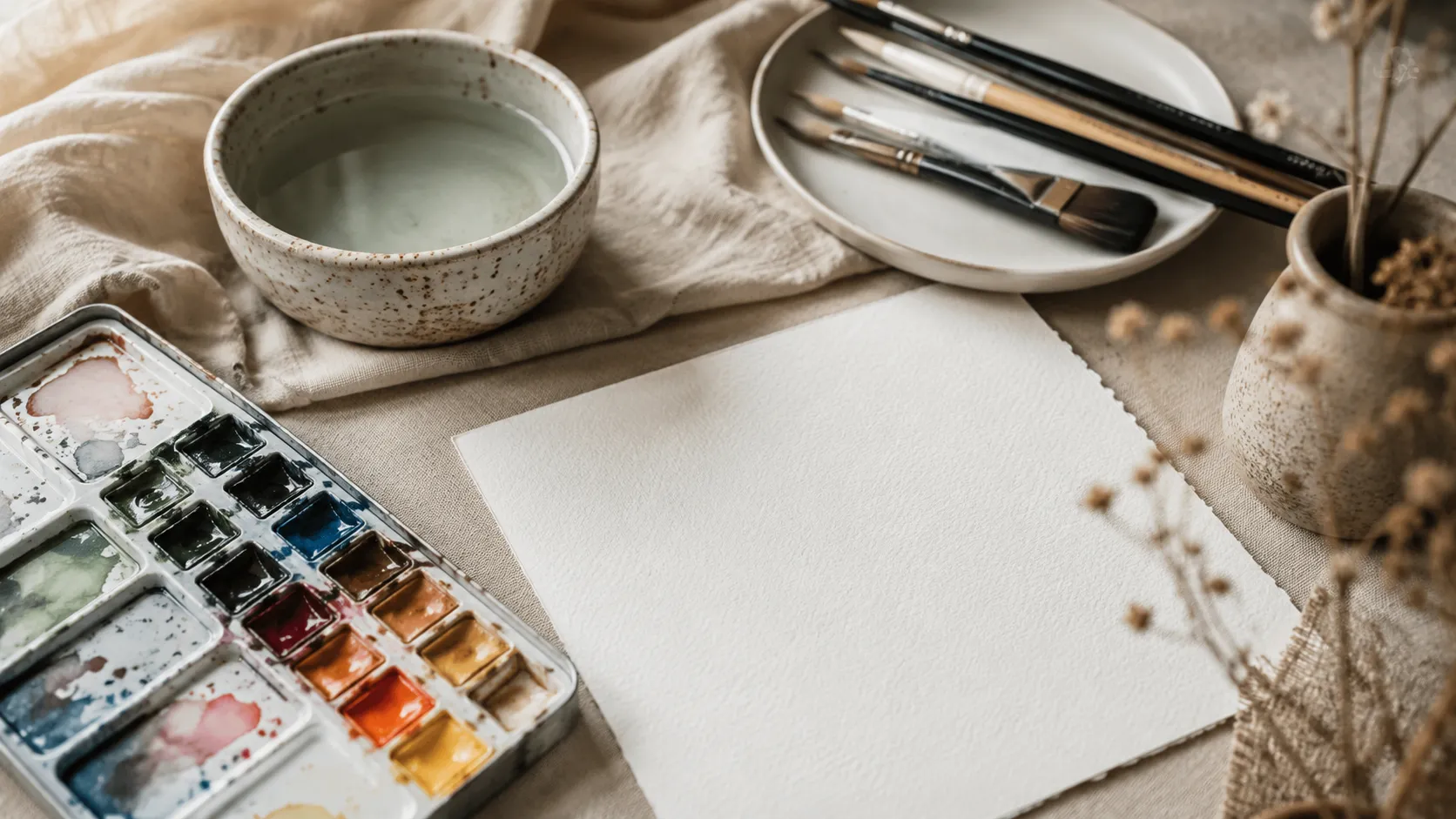
If you are asking what paper is best for watercolour at home, start with cold press 140 lb / 300 gsm paper. It is strong enough for most beginner washes, textured enough for beautiful colour movement, and easy to use on a small home desk.
I’m Julian Mercer, and I believe watercolour becomes much easier when the paper works with you. Good paper holds water, keeps colour fresh, and gives your brush room to move.
Many beginners think their painting looks weak because they lack skill. Often, the real problem is the paper. Printer paper, thin sketch paper, and poor mixed media paper can buckle, pill, and make watercolour feel much harder than it should.
This guide explains watercolour paper weight, texture, cotton content, pads, blocks, sketchbooks, and budget choices in a simple way.
Why Watercolour Paper Matters
Watercolour is controlled by water. That means the paper is not just a surface. It is part of the painting process.
Good paper absorbs water evenly. It lets paint spread softly. It also lets you layer colour without the surface breaking down too fast.
Bad paper can buckle, tear, pill, or make colour look dull. You may find smooth washes difficult even if your paint and brush are good.
If you are building a calm home painting corner, our Creative Living section has more ideas for practical and beautiful creative spaces.
Watercolour paper is treated with sizing. This helps water and pigment stay workable on the surface instead of sinking in too fast.
What Paper Is Best for Watercolour at Home?
For most home painters, the best all-around choice is cold press, 140 lb / 300 gsm, acid-free watercolour paper. Choose 100% cotton if your budget allows.
This type of paper gives a strong balance of texture, absorbency, and control. It is forgiving for beginners and good enough for frameable work.
My best starting choice is a 9×12 inch cold press 140 lb / 300 gsm watercolour pad. Pick 100% cotton for better results, or student-grade cellulose paper for everyday practice.
How to Choose Watercolour Paper Step by Step
Look for paper clearly labeled watercolour paper. Avoid printer paper and thin sketch paper.
This weight is thick enough for most home painting and performs better than thin paper.
Cold press has a light tooth. It works for florals, landscapes, loose washes, and studies.
100% cotton paper handles wet techniques, lifting, and layering better than most wood-pulp paper.
A 9×12 inch pad is easy to store and gives enough room without feeling wasteful.
Watercolour Paper Types Explained
| Paper Texture | Best For | Beginner Rating |
|---|---|---|
| Hot press | Fine detail, botanical art, ink and wash | Good, but less forgiving |
| Cold press | Everyday painting, landscapes, florals, loose washes | Best beginner choice |
| Rough | Texture, expressive landscapes, granulating paint | Better after practice |
Hot Press Watercolour Paper
Hot press paper is smooth. It is good for fine lines, detailed drawing, botanical work, and ink with watercolour.
Cold Press Watercolour Paper
Cold press paper has a gentle texture. This is the paper I recommend most often for home watercolour painting because it works for many subjects.
Rough Watercolour Paper
Rough paper has a stronger texture. It is lovely for expressive landscapes, skies, trees, stone, and texture, but it can feel uneven for fine detail.
If you paint at home to relax, cold press paper gives you the most freedom. You can make colour studies, soft skies, flowers, and small frameable pieces without a formal studio.
Cotton vs Cellulose Watercolour Paper
100% cotton paper is more absorbent, stronger, and more forgiving. It handles wet techniques better and lets you lift colour more easily.
Cellulose paper is cheaper and fine for practice. It may dry faster, buckle more, and make colour look less luminous.
- Best for finished work
- Handles water well
- Good for layering and lifting
- Colours often look richer
- Costs more
- Good for practice
- Usually cheaper
- Fine for simple studies
- Can buckle more easily
- Less forgiving with heavy water
What Weight Watercolour Paper Should You Use?
Paper weight tells you how thick and sturdy the paper is. The most useful beginner weight is 140 lb / 300 gsm.
| Paper Weight | Best Use | Home Painting Notes |
|---|---|---|
| 90 lb / 190 gsm | Light practice | Buckles easily |
| 140 lb / 300 gsm | Most home watercolour painting | Best all-around beginner choice |
| 200 lb / 425 gsm | Heavier washes | Sturdier but less common |
| 300 lb / 640 gsm | Professional heavy wet techniques | Excellent but expensive |
Even 140 lb / 300 gsm paper can buckle with heavy water. Tape the sheet down or use a watercolour block for better control.
Pads, Blocks, Sheets, and Sketchbooks
| Format | Best For | Why It Helps |
|---|---|---|
| Pad | Beginners and everyday practice | Easy to buy, store, and use |
| Block | Wet washes and cleaner results | Edges are glued to reduce buckling |
| Loose sheets | Custom sizes and serious work | Can be cut or torn to size |
| Sketchbook | Daily painting and travel | Keeps studies together |
Why Paper Quality Matters for Home Painting
At home, you may not have perfect lighting, a large table, or a studio sink. Good paper helps reduce frustration and gives you more time to move water and colour.
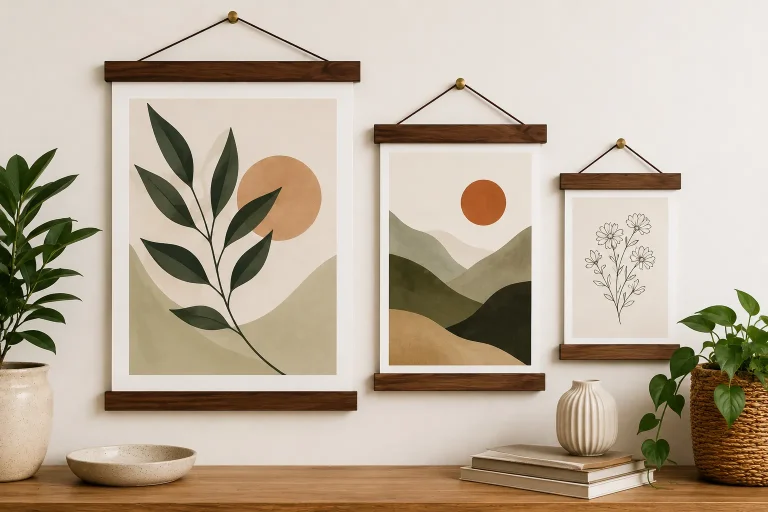
For finished pieces, you may also want to think about framing. Our Art & Frames guide can help you plan how to display your work at home.
Do’s and Don’ts for Buying Watercolour Paper
- Do choose real watercolour paper.
- Do start with cold press texture.
- Do use 140 lb / 300 gsm for everyday painting.
- Do try 100% cotton when your budget allows.
- Do test small sheets before buying a large supply.
- Don’t use printer paper for watercolour.
- Don’t judge your skill only by results on poor paper.
- Don’t buy the cheapest pad if you want smooth washes.
- Don’t soak thin paper with heavy water.
- Don’t store paper in damp rooms.
Style Guide: Choosing Paper for Your Home Art Space
Budget Estimate for Watercolour Paper
Pro Tips for Better Watercolour Results at Home
- Use cold press 300 gsm paper if you are unsure where to start.
- Tape the edges of your sheet to reduce buckling.
- Keep one cheaper pad for practice and one better pad for finished work.
- Try both cotton and cellulose paper so you can feel the difference.
- Store paper flat in a dry place.
- Use a scrap sheet to test colours before painting.
- Do not overwork the same wet area again and again.
Common Mistakes Beginners Make
Using Paper That Is Too Thin
Thin paper buckles quickly. It can also tear or pill when you use more water.
Buying Rough Paper Too Early
Rough paper is beautiful, but it can feel hard to control when you are learning basic washes and details.
Expecting Cheap Paper to Behave Like Cotton Paper
Budget paper is useful for practice, but it may not handle lifting, glazing, or wet-on-wet painting as well as cotton paper.
Storing Paper Near Moisture
Humidity can affect paper. Keep it flat, dry, and away from damp areas.
Do not store watercolour paper in a damp room, near a sink, or in direct sunlight. Moisture can warp the sheets, and strong light can affect paper colour over time.
Shop This Look
Before You Buy: Checklist
- Is it clearly labeled watercolour paper?
- Is it at least 140 lb / 300 gsm?
- Is the texture suitable for your style?
- Is it acid-free?
- Is it cotton or cellulose?
- Is the size practical for your home workspace?
- Will you use it for practice or finished work?
If you want to build a beautiful beginner art setup, our Books & Gifts section has related art book and gift ideas. For artful room mood and lighting, visit our Lighting & Ambience guide.
For visual inspiration and art material context, I also enjoy browsing collections from The Met Museum, MoMA, and creative home ideas from Apartment Therapy.
Quick Recap
- The best watercolour paper for home use is cold press 140 lb / 300 gsm.
- 100% cotton paper gives the best control and colour quality.
- Cellulose paper is fine for practice and budget learning.
- Hot press is smooth, cold press is balanced, and rough is highly textured.
- A pad is easiest for beginners, while a block helps reduce buckling.
- Store watercolour paper flat, dry, and away from direct sun.
The best paper for watercolour at home is cold press, acid-free, 140 lb / 300 gsm paper. Choose 100% cotton for finished artwork and better water control. Choose student-grade cellulose paper for low-cost practice.
Frequently Asked Questions
Cold press 140 lb / 300 gsm watercolour paper is best for most home painters. Choose 100% cotton if you want better water control and richer colour.
No. Printer paper is too thin and not made for water. It will buckle, tear, and make watercolour difficult to control.
Cold press is usually better for beginners because it has a balanced texture and works well for many watercolour techniques.
Yes. 300 gsm paper is a strong everyday choice for watercolour. It handles water much better than thinner paper.
You do not need it for basic practice, but 100% cotton paper gives better results for wet washes, lifting, layering, and finished artwork.
A pad has sheets attached on one side. A block is glued around the edges, which helps keep paper flatter while painting with water.
Use 300 gsm paper, tape the edges down, use less water, or paint on a watercolour block. Heavier paper also helps reduce buckling.
Conclusion
So, what paper is best for watercolour at home? For most people, the answer is cold press 140 lb / 300 gsm watercolour paper. It is strong, flexible, and beginner-friendly.
If you want the best results, choose 100% cotton paper. If you are still learning, use a good student-grade pad for practice and save cotton paper for pieces you want to frame or gift.
Good paper does not need to be fancy, but it does need to be made for watercolour. Once you find the right surface, painting at home becomes calmer, cleaner, and more enjoyable.