Best 3D Printer Filament Storage Boxes for Dry Spools

3D printer filament storage boxes keep spools dry, dust-free, and ready to print. Filament absorbs moisture from the air, which makes prints brittle, stringy, or prone to warping, so storing spools in a sealed container with desiccant extends filament life and improves print quality. Users choose between simple dry boxes, multi-spool cases, and large enclosures with built-in humidity gauges and vacuum seals depending on how much filament they own and how often they print.
When picking a filament storage box, the most important things are airtightness, capacity, and humidity control. A box that seals well and includes space for desiccant or a built-in hygrometer will protect filament better than an unsealed tote. Size matters for spool diameter and width, and durable materials and easy access make daily use simpler, so buyers should match the box features to their workflow and filament types.
Which Filament Storage Box Should You Choose?
The right 3D printer filament storage box depends on your material, humidity level, and how many spools you keep open at once. PLA is more forgiving than nylon, but even PLA can print poorly after sitting in a damp room. PETG, TPU, ABS, nylon, and specialty filaments usually benefit from tighter seals, fresh desiccant, and a hygrometer so you can see when the box needs attention.
| Use case | Best storage type | What to check first |
|---|---|---|
| PLA storage box for casual printing | Clear airtight container with desiccant | Seal quality, spool fit, and easy labeling |
| PETG, TPU, or ABS storage | Sealed box with hygrometer | Humidity reading, latch strength, and desiccant access |
| Large filament collection | Multi-pack stackable filament boxes | Shelf footprint, visibility, and consistent box size |
| Printing directly from storage | Dry box with feed port | Filament path, roller support, and cable/tube clearance |
| Very moisture-sensitive filament | Dedicated dryer plus storage box | Drying temperature, storage humidity, and spool compatibility |
If you are choosing material for a DIY storage setup, also read what filament to print storage boxes with. For most buyers, the safest first upgrade is an airtight filament storage box with room for silica gel and a visible humidity reading.
9 Best 3D Printer Filament Storage Boxes
Below is a curated list of the best 3D printer filament storage boxes. It helps keep filament dry, organized, and ready to print.
YOOPAI Filament Box 6-Pack
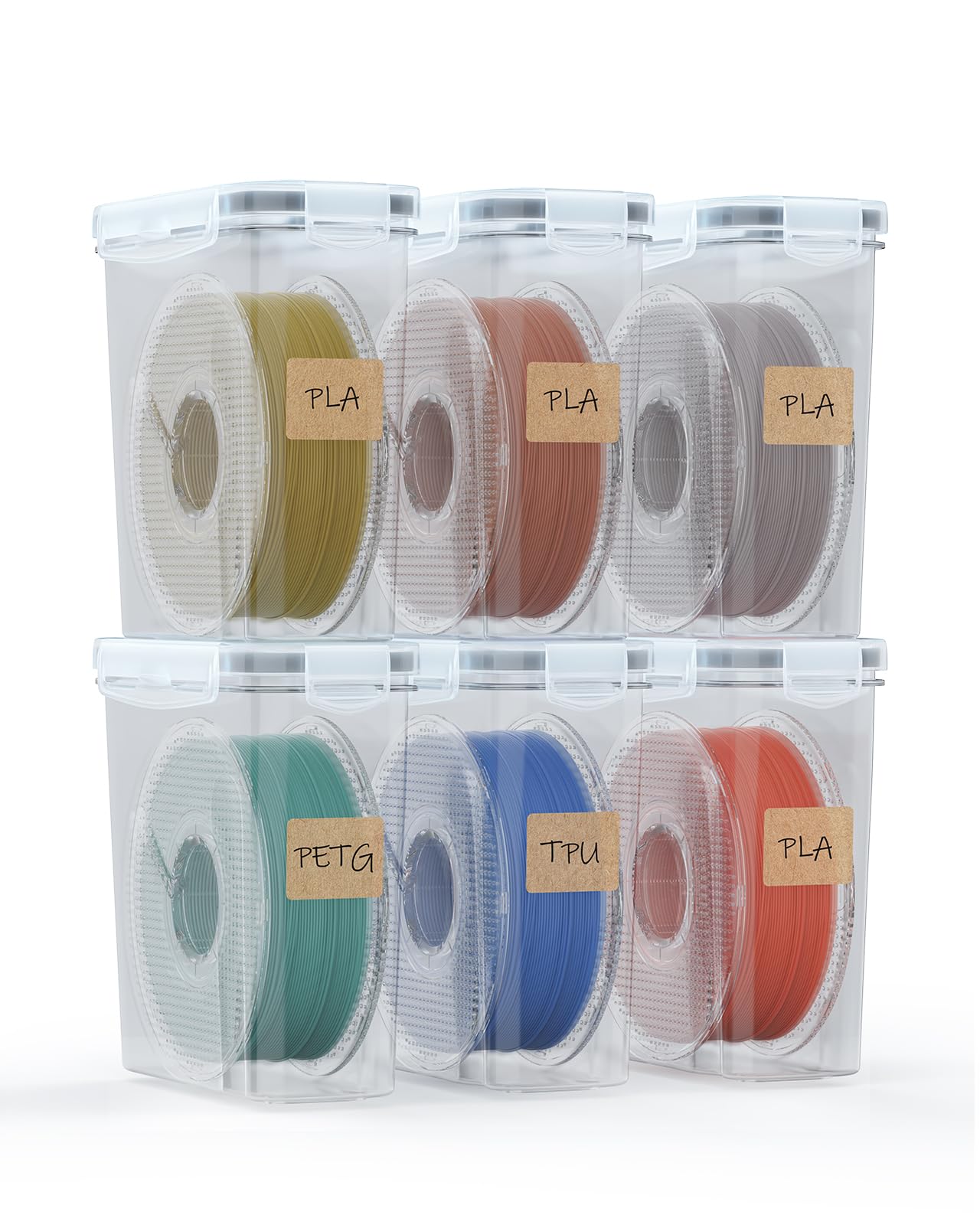
They should buy this if they want simple, clear, and mostly airtight storage for several 1kg spools at a low cost.
Pros
- Clear containers make filament easy to identify.
- Comes with desiccants and labels so it’s ready to use.
- Sturdy plastic and silicone seals help cut dust and moisture.
Cons
- Lids can be a little tricky to snap on firmly.
- May not fit nonstandard or wider spools.
- Plastic feels utilitarian rather than premium.
The set offers six transparent boxes sized for common 1kg spools. Each box has a silicone-sealed flip lid and room for a desiccant packet, which helps keep PLA, ABS, PETG, and TPU drier between prints.
They get labels and mesh bags included, so organizing colors and materials is quick. The hard plastic looks durable and stands up to regular handling, but the lids sometimes need extra pressure to close fully.
This kit suits hobbyists who want a compact, visible storage system without buying extra parts. It won’t replace a dedicated filament dryer for very wet filament, but it improves day-to-day protection and makes spool management neater.
YOOPAI Pro Filament Box
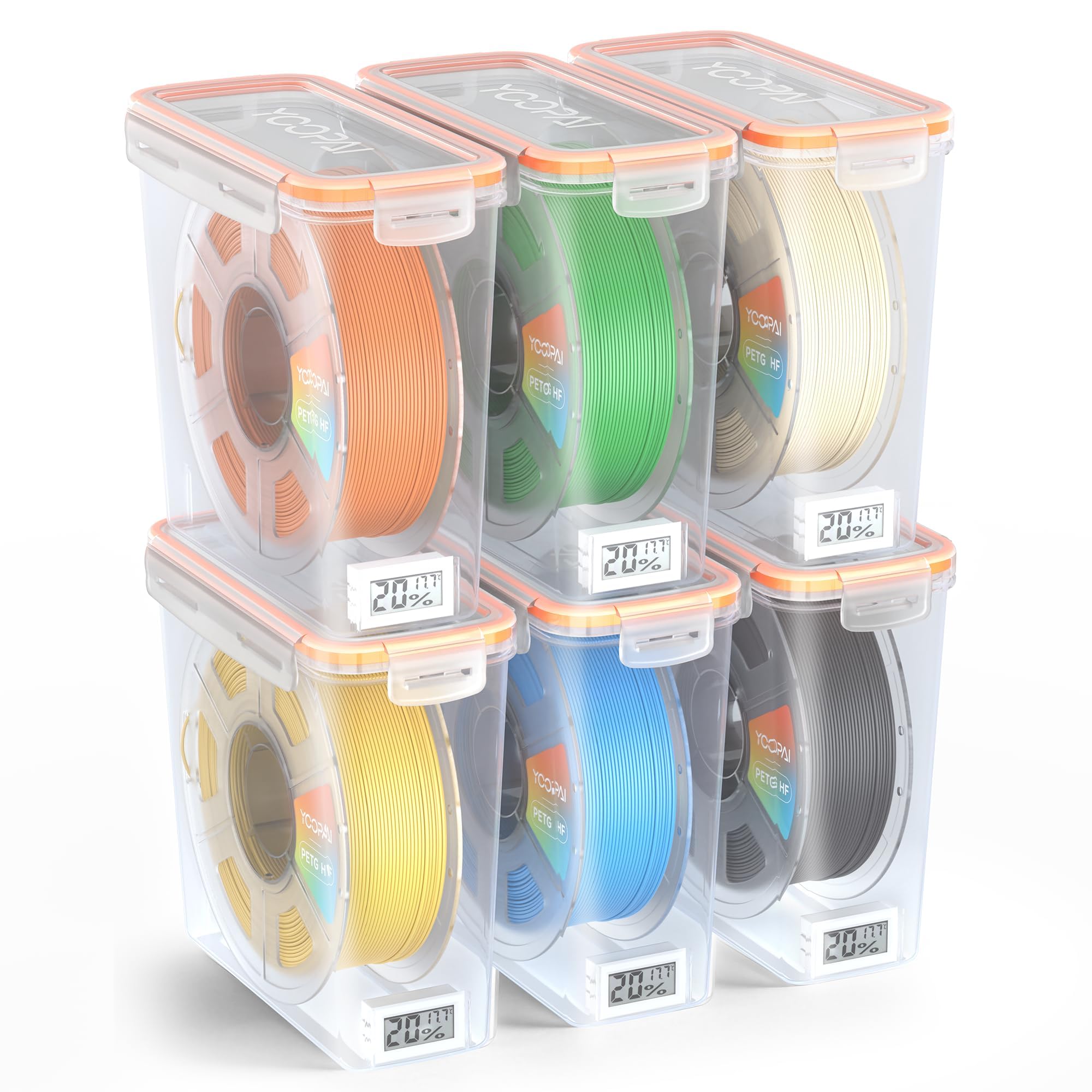
This box is worth buying for users who want clear humidity/temperature feedback and airtight storage for single 1kg spools.
Pros
- Built-in temp/humidity display for quick condition checks
- Airtight seal with desiccant to cut moisture and dust
- Clear, stackable design that saves shelf space
Cons
- Holds only one standard 1kg spool, so multiple boxes may be needed
- Plastic body may scratch or yellow over time
- Monitor uses small batteries and adds cost to replace
The visible temperature and humidity readout helps users decide when filament is ready to print. It removes guesswork and keeps storage conditions visible without opening the box.
Airtight seals and included desiccants reduce moisture issues for PLA, ABS, PETG, and TPU. The shape fits standard 1.75mm spools closely, which keeps the spool stable and reduces wasted space.
Label slots and the clear case make it faster to find the right color or material. Stacking the flat tops saves bench and shelf space when someone stores several spools in the same area.
Fuitnerd Filament Storage Box 4-Pack

It is a good buy for someone who needs airtight, stackable storage for multiple 1kg spools and wants hygrometers, desiccant packs, and a tube cutter included.
Pros
- Airtight seal and flexible hygrometer placement help keep filament dry.
- Includes reusable color-changing desiccant packs and labels for organization.
- Comes with a tube cutter and multiple boxes for storing several spools.
Cons
- Plastic latches and hinges can feel fragile and may break with rough use.
- Some hygrometers arrive loose or nonfunctional and need repositioning.
- Boxes are basic plastic and may not suit users wanting heavy-duty cases.
The set gives four clear dry boxes sized for one 1kg spool each. It aims to solve moisture and dust problems with silicone gaskets, spare desiccant packs, and a visible hygrometer.
They provide small extras that matter: color-changing silica packs that can be regenerated, adhesive hygrometers that stick where needed, and a cutter for clean filament tips. This reduces clogging risk and helps feeding in Bowden setups.
Users should handle the latches gently and check hygrometers on arrival. The plastic construction keeps costs down but may not hold up to rough transport or heavy stacking.
YOOPAI Filament Box 4-Pack
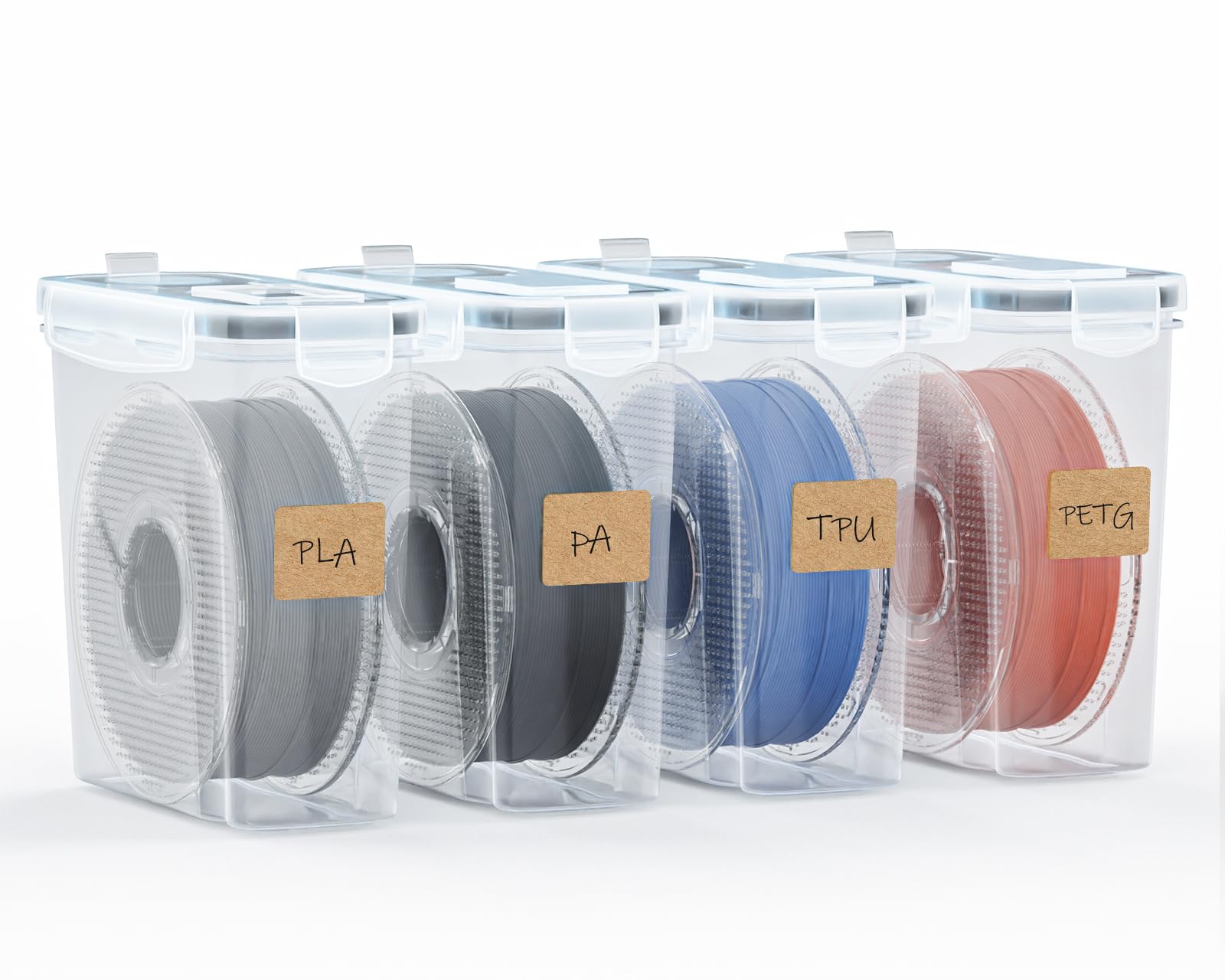
This is a solid option for buyers who want tidy, moisture-resistant storage for multiple 1 kg spools at a budget-friendly price.
Pros
- Keeps spools visible and organized with clear boxes.
- Silicone-sealed lids and desiccants cut down on moisture and dust.
- Comes ready to use with labels and extra packs.
Cons
- May not fit nonstandard or larger spools.
- Plastic could be scratched or cloud over time.
- Not a sealed vacuum system for very long-term storage.
The clear plastic boxes make it simple to spot colors and materials without opening every container. Each box has its own lid and included desiccant, so makers can separate filaments by type or project.
The silicone seal and flip lid help reduce humidity during normal use, which is useful for PLA, PETG, ABS, and TPU between prints. The set includes labels so users can mark filament type, color, or print dates.
Buyers should check spool diameters before buying to avoid fit issues. The boxes look sturdy but may show wear after heavy handling or workshop use.
YOOPAI Filament Storage Box
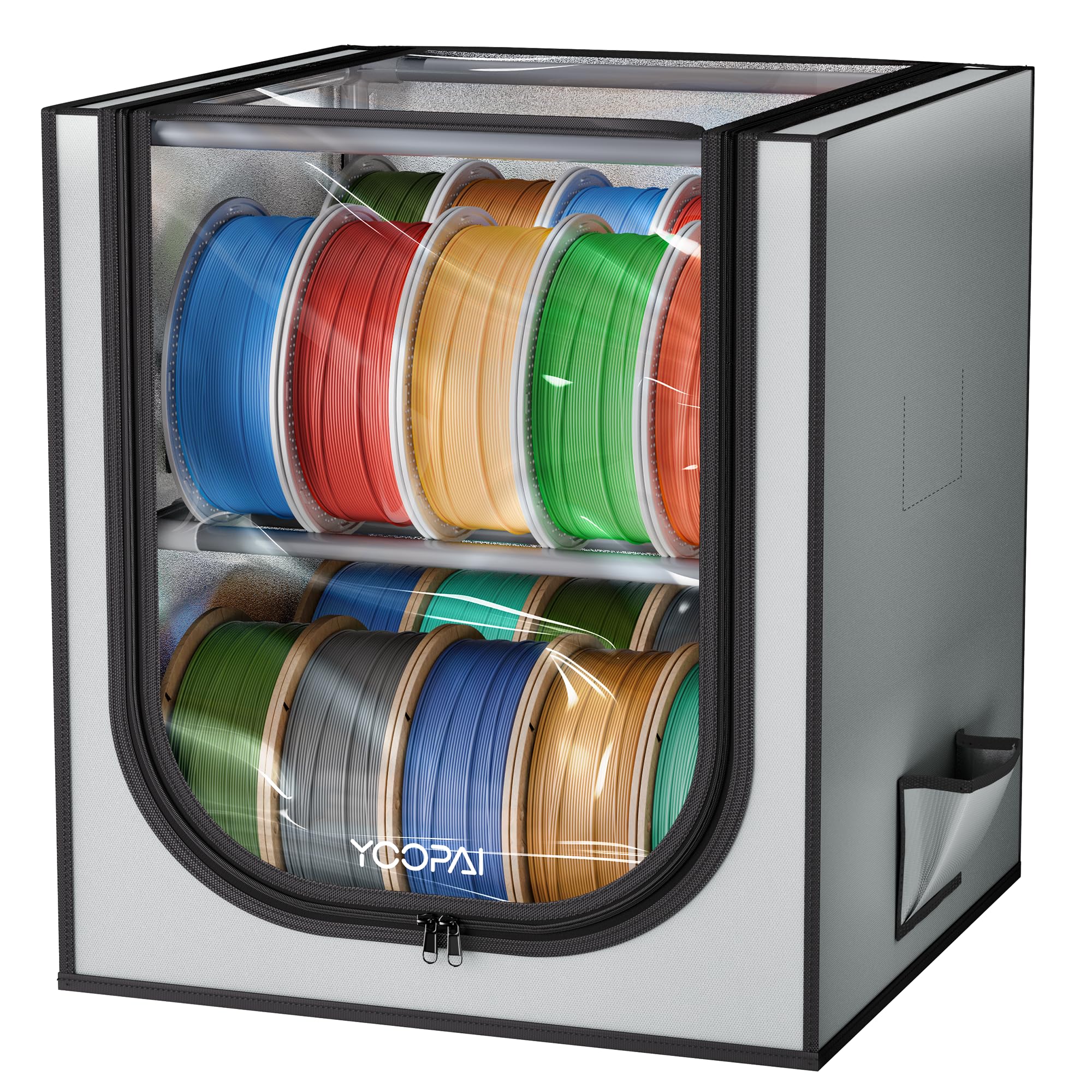
It is a good choice for someone who needs organized, visible storage for many 1kg spools but not for active filament drying.
Pros
- Holds a large number of standard 1kg spools.
- Metal frame gives stable support for heavy rolls.
- Fabric cover with zipper makes access quick and visible.
Cons
- Not a sealed or heated drying box; only short-term moisture control.
- Connectors are plastic, which may feel less durable over time.
- Zipper can be tight if assembly or alignment is off.
The box stores up to two tiers of spools and keeps them visible and organized. It fits well in a home workshop or studio where easy spool changes matter.
Assembly uses metal rods and upgraded connectors to reduce tight fitting issues. They say it goes together easily, though careful alignment helps the zipper close smoothly.
It includes space for desiccants to lower brief moisture exposure, but it does not replace a true drying solution. Buyers who print frequently and swap spools will like the convenience and capacity.
Find more details and buy it on Amazon: YOOPAI 3D Printer Filament Storage Box
YOOPAI Filament Storage Box
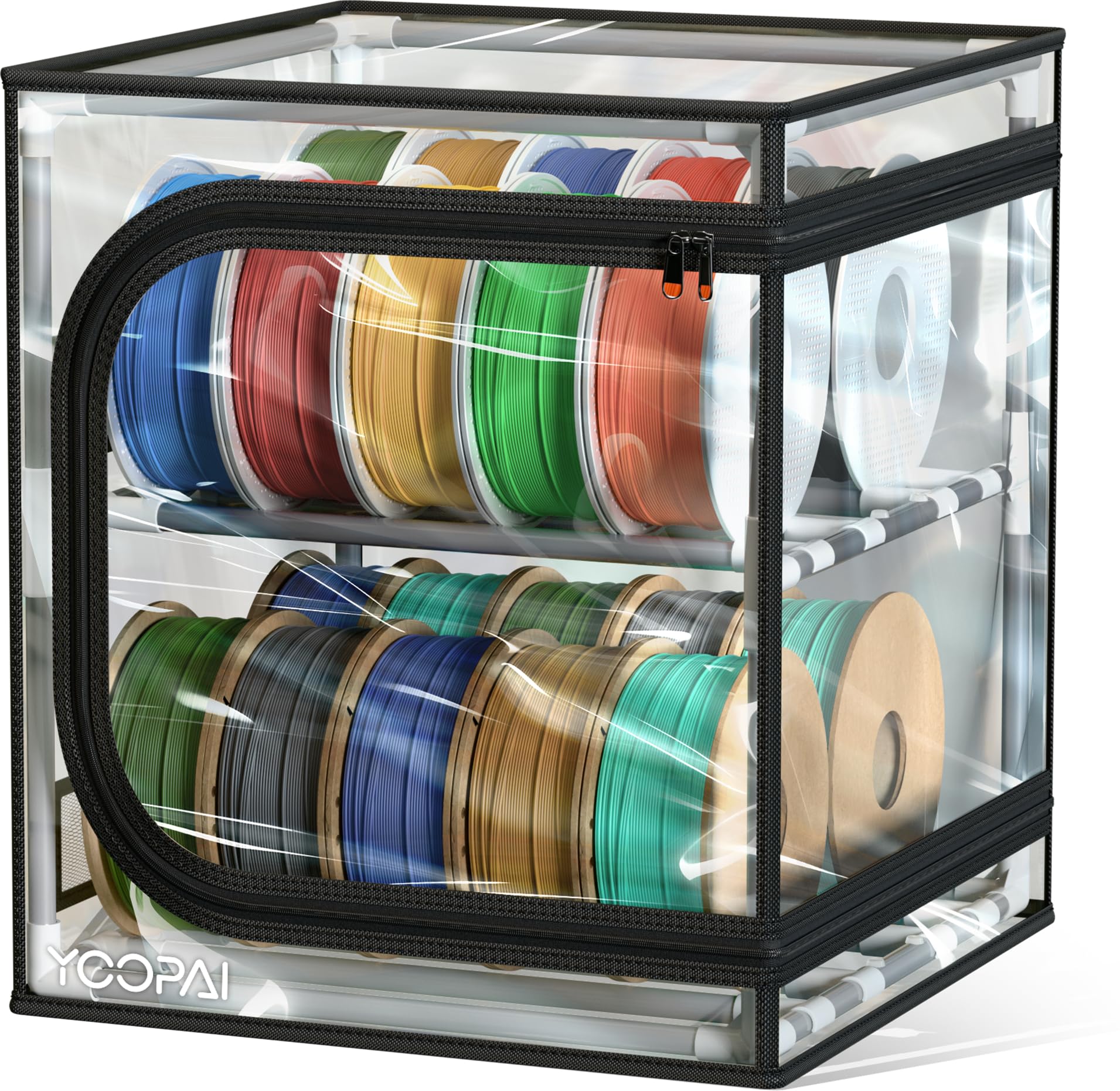
They should buy this if they want a low-cost, organized way to store many spools for frequent use but do not need active drying.
Pros
- Holds many 1 kg spools in a compact two-tier layout.
- Transparent cover lets users see colors and access spools quickly.
- Metal rods and improved connectors make assembly easier and more stable.
Cons
- Not a sealed drying box — desiccants only help short-term moisture control.
- Zipper closure can be tight for some setups and may limit cable pass-through.
- Some connectors are plastic, which could wear faster than metal parts.
The box organizes up to two dozen spools and keeps them tidy on a shelf or in a studio. It favors easy access and frequent filament changes over long-term airtight drying.
Assembly looks straightforward and the reinforced iron frame supports heavy spools without wobble. Users who swap filaments often will appreciate the visible layout and quick unzip access.
It will not replace a filament dryer for moisture-sensitive materials like nylon or PVA. Buyers should plan to use desiccant packs and, if needed, a separate drying solution for storage between long prints.
AMZPro Filament Box (4-pack)
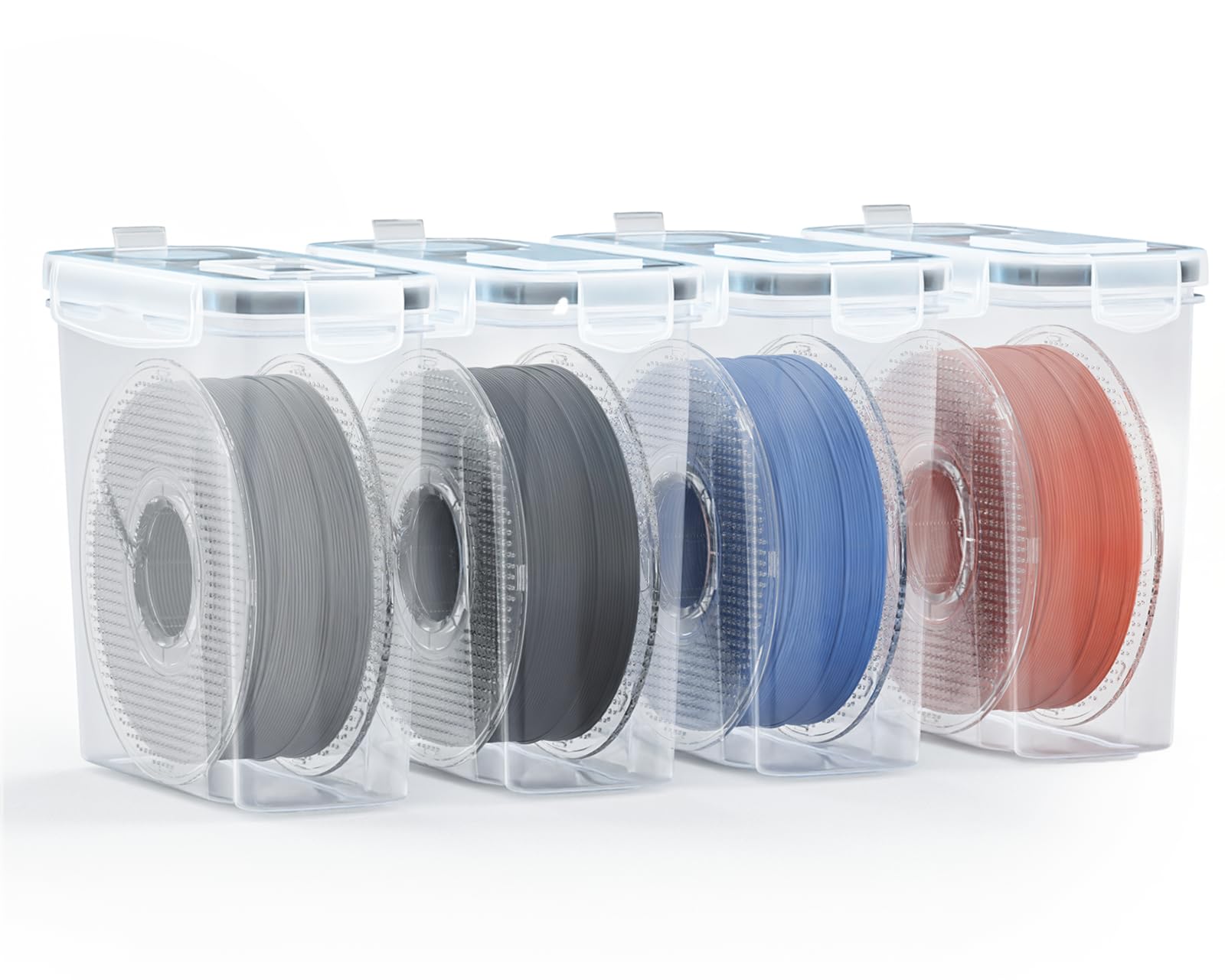
It is a good buy for someone who needs simple, airtight storage for multiple 1.75mm, 1kg spools at a low price.
Pros
- Clear lids let users see spool color without opening.
- Includes desiccant and a silicone-sealed flip lid for moisture protection.
- Pack of four saves space and stores several spools at once.
Cons
- Not made specifically for filament feed-through—no dedicated filament port.
- Some buyers note shipping delays or generic packaging.
- Uses generic plastic — durability may vary by unit.
The boxes fit most standard 1.75mm, 1kg reels and keep dust and moisture out. They work well if someone wants a cheap, see-through way to store spools on a shelf.
The silicone seal and included desiccant help lower humidity inside. They do not claim active drying, so users should swap or recharge silica if needed.
Some people repurpose them by adding a hygrometer or creating a feed hole. The boxes are inexpensive compared with dedicated filament enclosures, so they suit hobbyists who want simple protection without a big cost.
YOOPAI Pro Filament Box
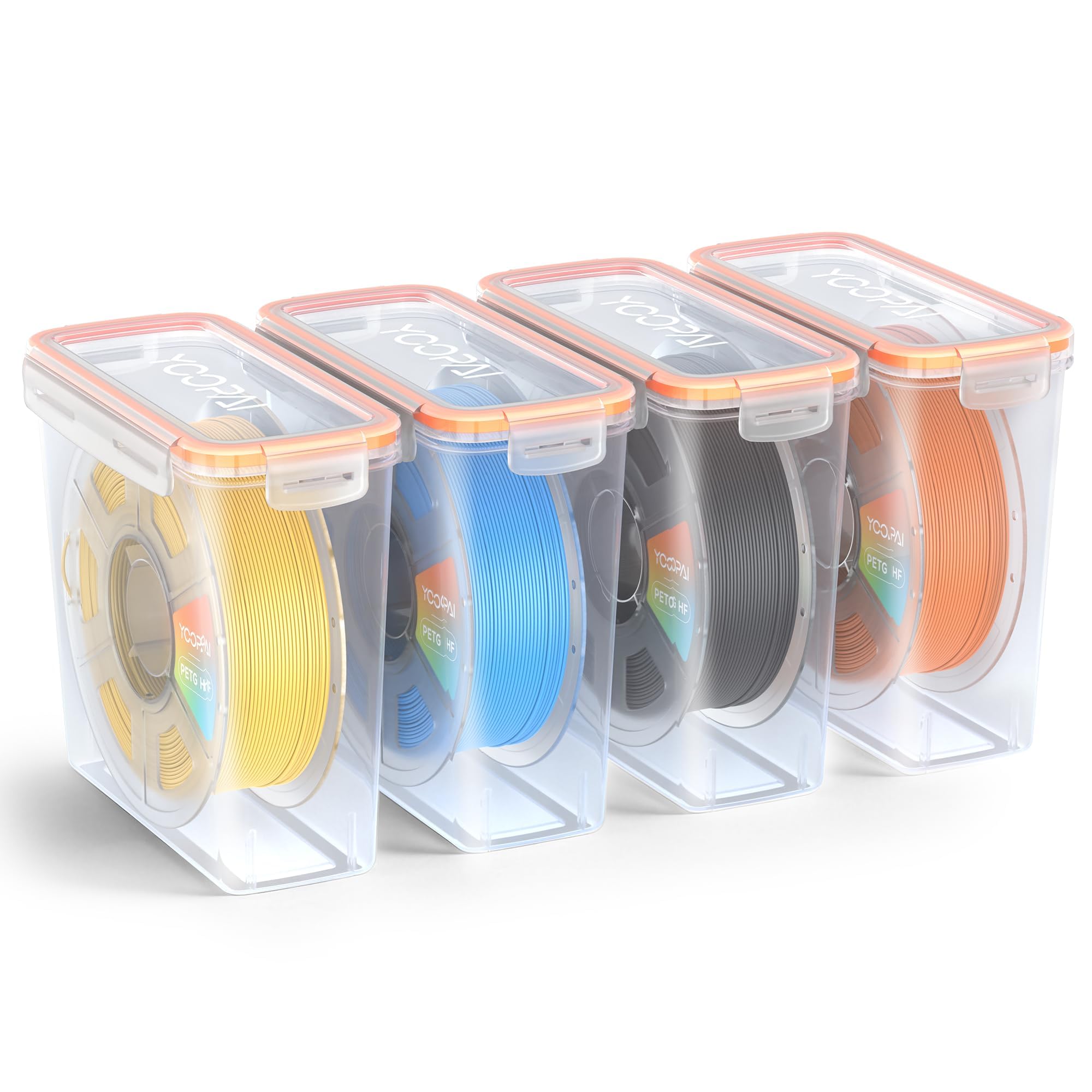
It is a solid choice for buyers who want airtight, stackable storage made for standard 1kg 1.75mm spools.
Pros
- Good airtight seal with reusable desiccant for moisture control.
- Flat-top lids stack neatly and save shelf space.
- Clear body and label slot make sorting fast.
Cons
- Made for standard 1kg spools only, so odd-sized spools may not fit well.
- Boxes add some bulk compared to original spool packaging.
- Not designed to act as an active filament dryer.
The box fits one standard 1kg spool and keeps dust and humidity out with a silicone gasket and desiccant. The clear sides and printable label slot help users find colors and materials quickly.
Its flat-top lids let multiple boxes stack cleanly on shelves or workbenches. The thicker plastic aims to be durable for everyday use, though the boxes are a bit larger than some original spool cases.
Buyers with nonstandard spool sizes or those who need drying capability should look elsewhere, but people who want tidy, long-term airtight storage for common filaments will find this a practical option.
Qozary Filament Storage Box (4-Pack)
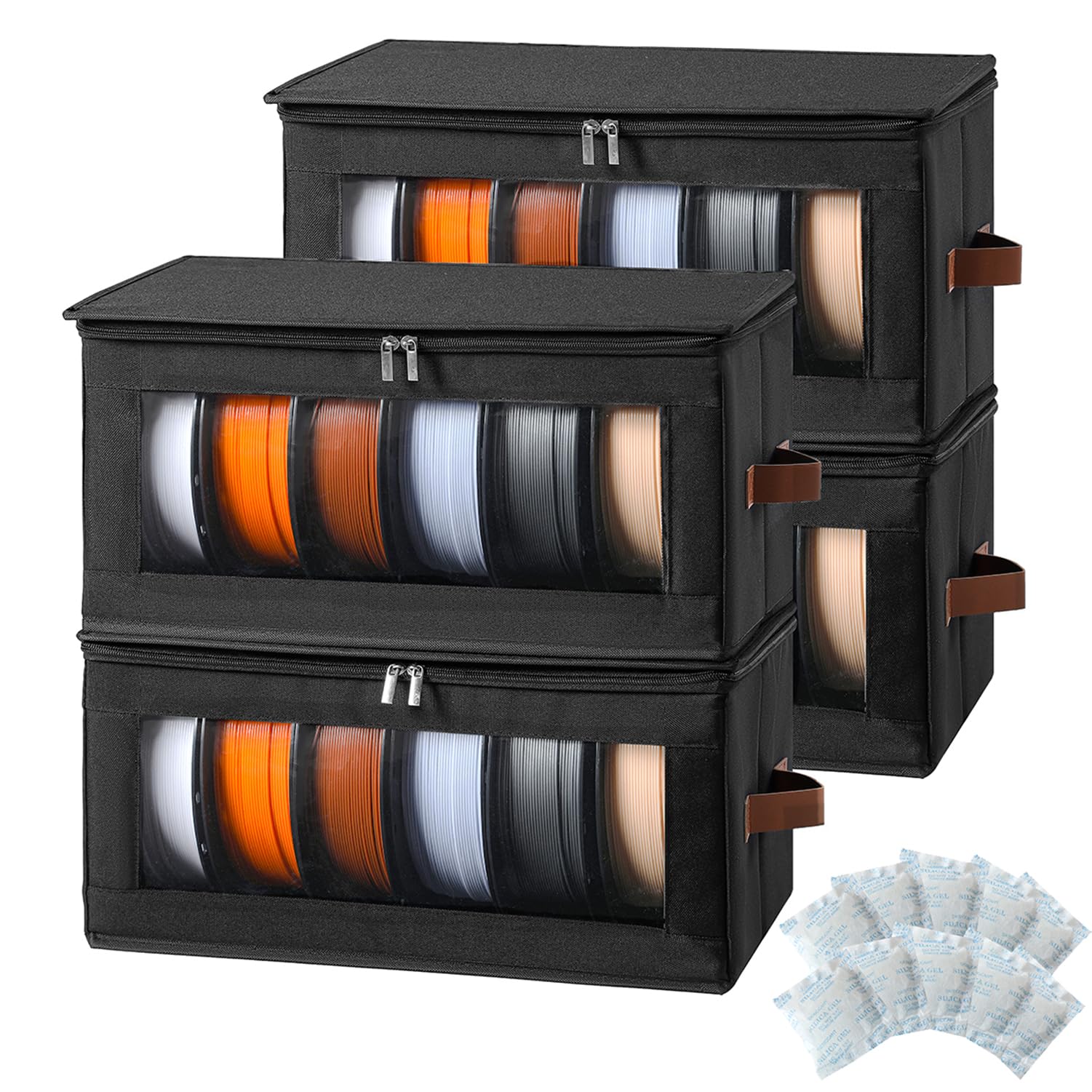
This set is worth considering for buyers who want a compact, moisture-resistant way to store many spools without tools or extra setup.
Pros
- Holds many standard spools and lets users sort by material or color.
- Water-repellent fabric, zippered lid, and desiccants help reduce moisture risk.
- Folds flat and assembles fast for small workspaces.
Cons
- Fabric construction may not feel as sturdy as hard cases.
- Desiccants need replacing over time to stay effective.
- May not fit very large or nonstandard spool sizes.
The boxes aim to keep filament tidy and dry with a simple plug-and-play design. They work well where space is limited and organization matters.
They include pockets and space for desiccant packs to help control humidity. Users can group PLA, PETG, ABS, and TPU separately to reduce filament mix-ups.
Assembly takes about a minute and no tools are required, making them easy to move or stash flat when not in use. They also serve for general home storage like yarn or craft supplies.
3D Printer Filament Storage Box Buying Guide
Choose a storage box that keeps filament dry and dust-free. Look for airtight seals and a humidity indicator so users can tell when to replace desiccant.
Check size and spool fit. Ensure the box fits common spool diameters and allows room for filament paths if users want to print directly from the box.
Consider material and durability. Hard plastic resists crushing and is easy to clean. Transparent panels let users see filament color and remaining supply.
Look for built-in features that make use easier. Features like removable trays, spool holders, and feed-through ports reduce handling. Simple latches and stable feet make the box easier to move and stack.
Evaluate moisture control options. Desiccant packs, reusable silica gel, or integrated dehumidifiers each work. The box should allow easy replacement or recharging of these items.
Assess portability and storage layout. Lightweight boxes suit transport; heavier, sturdier boxes work better for long-term storage. Stacking ability saves space in workshops.
Compare price against expected lifespan. Cheaper boxes may save money at first but may not protect filament well. Investing in a well-sealed, durable box prevents filament waste and printing problems.
Use a quick checklist before buying:
- Airtight seal and humidity indicator
- Correct spool size and feed ports
- Durable, cleanable material
- Easy desiccant access
- Portability and stacking design
Editor’s picks
They chose five storage boxes that match common needs: compact, budget, airtight, multi-spool, and travel-ready. Each pick lists strengths and a key trade-off.
| Pick | Best for | Key feature | Trade-off |
|---|---|---|---|
| Compact Case | Small shops | Holds 1–2 spools in a space-saving shell | Limited humidity control |
| Budget Box | Tight budgets | Simple plastic with desiccant pocket | Less durable construction |
| Airtight Tub | Moisture control | Sealed lid + hygrometer window | Bulkier and heavier |
| Multi-Spool Rack | Large collections | Holds 4–6 spools, stackable | Takes more shelf space |
| Travel Carry | Printing on the go | Padded shell, latch locks | Smaller spool capacity |
They recommend checking internal dimensions and port holes before buying. Fit matters: spools must turn freely when feeding filament.
They advise adding a silica gel pack and a hygrometer to any box. That helps monitor and keep humidity below 20–30% for PLA and 10–20% for nylon.
They note material and seal quality determine long-term performance. Plastic boxes are light; metal or reinforced cases last longer but cost more.
3D Printer Filament Storage Box FAQs
What does a filament storage box do?
It keeps 3D printer filament dry and organized. It protects spools from dust, moisture, and UV light to reduce printing problems.
How much humidity is safe for filament?
Most filaments stay good below 20%–30% relative humidity. Nylon and PVA need the driest storage; PLA and ABS tolerate slightly more.
Can a storage box dry filament?
Some boxes include a desiccant or a built-in dehumidifier that helps reduce moisture. Others only protect filament and need separate drying tools like a filament dryer or oven.
How many spools fit in one box?
Capacity varies by model. Typical home boxes hold 2–6 standard 1 kg spools. Measure spool diameter and box dimensions before buying.
Is a vacuum seal needed?
A vacuum seal helps but is not always required if the box is airtight and contains fresh desiccant. Regularly check desiccant and humidity indicators.
How to check filament humidity?
Use a small hygrometer or humidity card inside the box. Signs of moisture include brittle filament, steam during printing, or poor layer adhesion.
Can different materials share one box?
They can if moisture needs match and spools are individually sealed or separated. Storing sensitive materials like nylon alone is safer.
Is it safe to store filament near sunlight or heat?
No. Sunlight and high heat can warp spools and degrade filament. Keep boxes in a cool, dark place.
What maintenance is needed?
Replace desiccant when it’s saturated and test humidity periodically. Clean dust and check seals for cracks.
2026 Refresh: Dry Storage Checks Before You Buy
A 3D printer filament storage box should solve two problems at once: keeping spools dry and keeping the workspace easier to manage. Before choosing a box, count how many open spools you actually use in a normal week. A single-spool dry box is useful for active printing, while a larger storage bin makes more sense for backup colors and materials.
- Prioritize sealing over size. A large container that leaks air is less useful than a smaller box with a better gasket.
- Leave room for desiccant. Dry packs or reusable desiccant need space where they can work without crushing the spool.
- Label material and date. PLA, PETG, TPU, and specialty filaments age differently once opened.
- Keep the workspace organized. If the craft area is crowded, pair storage planning with art supply organizer cart ideas or home studio organization ideas.
Conclusion
A good filament storage box keeps spools dry, dust-free, and easy to use. It protects prints by preventing moisture and tangles, and it extends filament life.
He should pick a box that fits his space and budget. Look for airtight seals, reliable desiccants, and clear spool mounts to make changes fast.
They can add simple sensors to monitor humidity and temperature. Small tools like spool holders, cutters, and labels make the setup more useful.
Italics and labels help organize many filament types. Use clear labeling for material, color, and print temperature to avoid mistakes.
A mix of ready-made boxes and DIY solutions works well. Choose based on how many spools he stores and how often he prints.
Bold the most used filaments and keep them in the most accessible slots. Rotate stock so older spools get used first and waste is reduced.