Learn How to Protect Paper Art from Humidity at Home

Keep paper art between 45 and 55 percent relative humidity by monitoring with a hygrometer, avoiding high-moisture rooms, and using sealed, acid-free framing. Move pieces away from exterior walls and use a dehumidifier when indoor humidity climbs above 60 percent.
If you’ve been wondering how to protect paper art from humidity at home, the short answer is to keep it in a stable environment between roughly 45 and 55 percent relative humidity — but the practical steps matter just as much as the number. Paper is hygroscopic, meaning it constantly absorbs and releases moisture from the air, and that invisible exchange is what causes prints, drawings, and posters to warp, ripple, and develop stains over time.
- Target range: Aim for 45–55% relative humidity; stability matters more than the exact number.
- Monitor: Use a digital hygrometer placed near the artwork, not in the center of the.
- Placement: Avoid bathrooms, kitchens, basements, and exterior walls for valuable pieces.
- Framing: Choose sealed, acid-free frames with UV glazing; consider micro-climate frames for high-value works.
- Seasonal care: Run a dehumidifier in humid months and a humidifier in dry winters; inspect frames.
Why Humidity Is the Silent Enemy of Paper Art
Unlike a cracked frame or a faded print, humidity damage builds up slowly. You rarely notice it in a week or a month, which is why it earns the “silent enemy” label. By the time the waviness or discoloration is obvious, the paper fibers have already been stressed in ways that are difficult to reverse.
What Happens to Paper When Moisture Levels Rise
Paper is made of plant fibers that swell when they take on moisture and shrink when they dry out. When humidity rises, the fibers expand unevenly — especially if the artwork is stretched, mounted, or framed under tension. That uneven movement creates cockling, the gentle rippling you see along the edges or center of a print. In more severe cases, the paper can buckle permanently against the glazing.
High humidity also creates the conditions for mold and mildew. Fungal spores are always present in household air; they only need moisture and a food source to germinate. Paper, being organic, is an ideal food source. Once mold takes hold, it leaves dark spots — often called foxing — that cannot simply be wiped away. Professional conservation treatment may be the only option, and it is not always successful.
Never try to flatten a humid, wavy print with an iron or heavy weight while it is still damp. Pressing moisture into paper can crush the fibers and drive stains deeper. Let the piece acclimate in a dry room first, then consult a professional framer or conservator if the distortion persists.
The Ideal Relative Humidity Range for Paper Artwork
Most conservators point to a relative humidity range of 45 to 55 percent as the safest zone for paper art. Within that range, the fibers stay flexible without absorbing enough moisture to swell visibly. The target matters less than the stability: a steady 48 percent is far better for your collection than a room that swings between 35 and 65 percent over the course of a day.
Sudden swings are what cause the most damage. Paper can adapt to a consistent environment, even one slightly outside the ideal range, but it cannot adapt gracefully to rapid changes. That is why a bathroom that steams up every morning and a kitchen that heats up every evening are both far harder on art than a room that stays boringly constant.
How to Measure and Monitor Humidity in Your Home
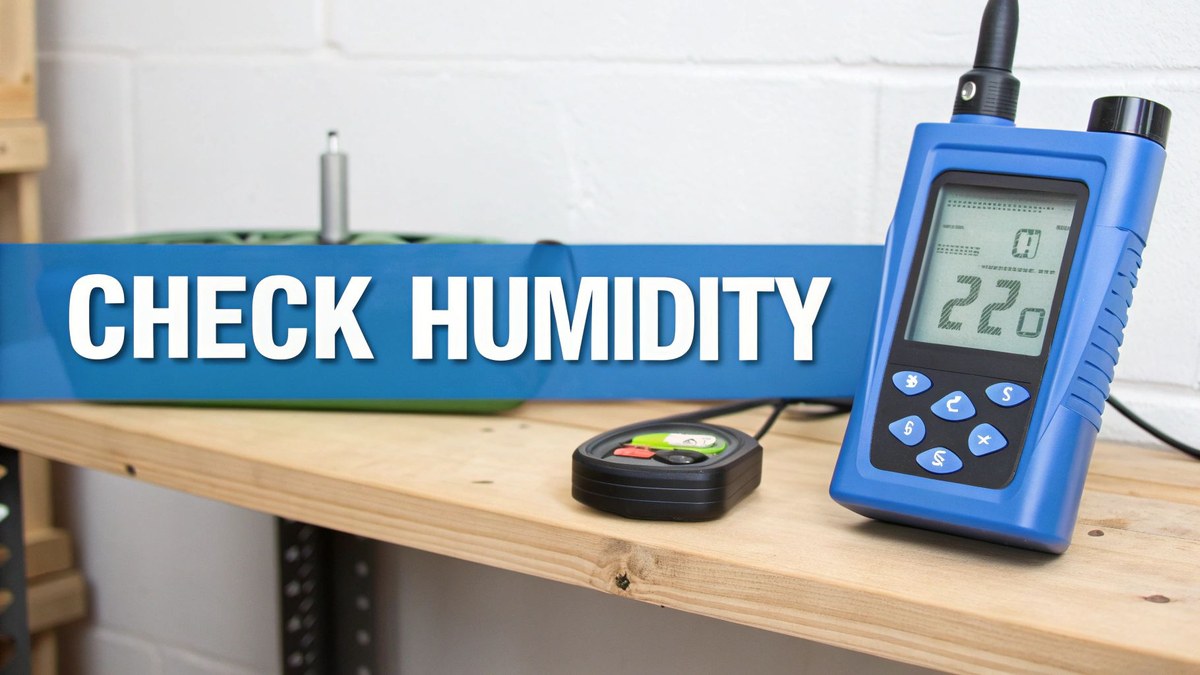
A hygrometer measures humidity in a room with framed paper art on the wall.
You cannot manage what you cannot measure. A basic hygrometer gives you a real-time read on the conditions your art is actually experiencing, rather than a guess based on how the room feels.
Choosing a Reliable Hygrometer for Your Collection Space
Digital hygrometers are the easiest option for most homes. They are inexpensive, readable at a glance, and many include a memory function that shows the high and low readings since you last reset them. That high/low history is genuinely useful because it reveals the daily swings a single glance would miss.
Accuracy varies significantly between models, so it is worth checking the product listing for the stated tolerance. Some budget units claim accuracy within a few percentage points, while others drift noticeably over time. If you want to verify a new hygrometer, the salt-test method — sealing the sensor in a container with a salt slurry, which produces a known humidity level — is a well-known way to check calibration, though the exact procedure varies by source.
Place the hygrometer near your artwork, not in the middle of the room. A wall beside a window or an exterior door gives you a more honest reading of what the art itself experiences than a sensor sitting on a bookshelf across the room.
Understanding Seasonal Humidity Fluctuations
Indoor humidity tracks the seasons even in climate-controlled homes. Summer often brings higher indoor moisture, especially in regions with humid summers. Winter, by contrast, can dry the air out dramatically, and that dryness has its own risks — paper becomes brittle and more prone to cracking at the edges.
The practical takeaway is that you need a different strategy in different seasons. A dehumidifier might carry you through July, but a humidifier could be the right tool in January. Monitoring across a full year gives you the data to know which one your collection actually needs.
Framing Strategies That Shield Your Art from Moisture
The frame is your first line of defense. A well-made frame does more than look good — it creates a buffer between the paper and the room’s shifting air.
Sealed Frames, UV Glass, and Acid-Free Mounting Materials
Framing materials matter enormously. Acid-free mounting boards and mats prevent the paper from coming into contact with acidic compounds that cause yellowing and brittleness. The backing board should also be acid-free, and ideally the frame should be sealed at the back so that humid air cannot flow freely in and out.
UV-protective glazing is worth mentioning in the same breath, though it addresses a different problem: sunlight and indoor light. If you are investing in a frame anyway, choosing UV glass now saves you from a separate upgrade later. For a deeper look at this related issue, our guide on how to protect framed art from sunlight at home covers the specifics of glazing choices and light exposure.
When to Consider a Micro-Climate Frame
For valuable or sentimental works, a micro-climate frame is worth knowing about. These frames use sealed glazing and backing with a desiccant built into the frame package, creating a small, stable environment around the artwork. They are a common solution in galleries and archives, and some professional framers offer them for private collectors.
The trade-off is cost and complexity. Micro-climate frames are noticeably more expensive than standard framing, and the desiccant may need periodic replacement. For a beloved family heirloom or a significant investment piece, though, the protection can be worth every penny.
Room Placement: Where to Hang Paper Art and Where to Avoid<
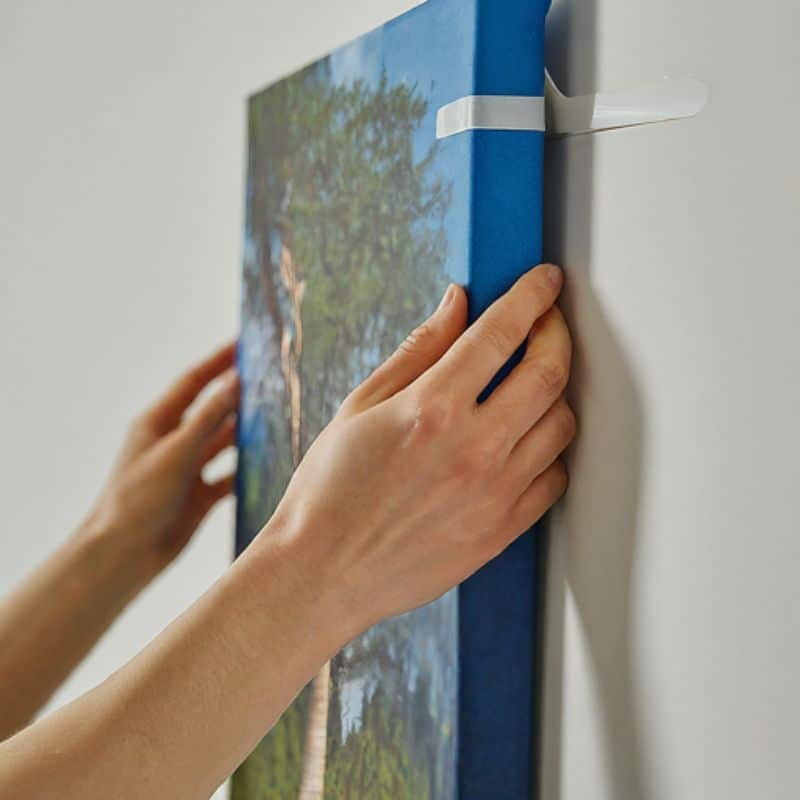
Framed paper art hung on an interior wall, positioned away from windows and moisture-prone areas.
Framed paper art hung on an interior wall, positioned away from windows and moisture-prone areas.
/h2>
Where you hang a piece is just as important as how it is framed. The same print that thrives in a quiet hallway can develop problems within months in a steamy bathroom.
High-Risk Rooms: Bathrooms, Kitchens, and Basements
Bathrooms are the obvious danger zone. Every shower sends steam directly into the air, and that moisture condenses on the coolest surfaces — including framed art on the wall. Unless a piece is sealed in a completely waterproof frame, it should not live in a bathroom.
Kitchens are nearly as risky. Cooking generates steam, grease, and heat, and the airborne grease can settle on glazing and paper alike. Basements combine high humidity with poor air circulation and are prone to damp walls, which makes them a poor choice for anything you care about. If you have no choice but to display art in one of these spaces, expect to monitor it far more closely.
Best Wall Conditions and Interior Rooms for Display
Interior walls in living rooms, bedrooms, studies, and hallways are the safest bets. These rooms have the steadiest temperature and humidity, and they are far less likely to have moisture problems behind the wall.
If you are planning a display, our guide on how to display art at home like a designer offers practical thoughts on layout, scale, and wall placement. When it comes to humidity specifically, the golden rule is simple: keep art off exterior walls whenever possible. Exterior walls are closer to the outdoors, which means they run cooler in winter and can develop condensation behind the frame.
Leave a small gap between the back of the frame and the wall — a couple of centimeters is enough — so air can circulate behind the frame. This simple habit prevents moisture from becoming trapped between the frame and a cold wall.
Controlling Humidity with Devices and Desiccants
Sometimes rearranging the room is not enough, and you need active tools to keep humidity in check.
Dehumidifiers and Air Conditioners for Whole-Room Control
A dehumidifier is the most effective tool for a persistently humid room. It pulls moisture out of the air continuously, which helps keep the entire space — not just the art — at a healthier level. Air conditioners also remove moisture as they cool, which is why a room with AC often feels less sticky in summer.
Both devices need regular maintenance. Dehumidifier filters and water reservoirs must be cleaned, and the unit should be sized to the room. A small portable unit may struggle in a large open-plan space, so check the manufacturer’s coverage guidance before buying.
Silica Gel and Other Desiccants for Enclosed Spaces
For enclosed spaces like display cabinets, flat files, or storage boxes, silica gel is a practical option. It absorbs moisture from the air in the immediate area, and most types can be dried out and reused. The key is to use enough of it: a single small packet will not protect a large cabinet, so follow the manufacturer’s guidance on how much is needed for the volume of the space.
If you store prints flat rather than framed, a flat file or archival storage box is the better long-term home. Our guide to the best flat file storage for art prints at home explains what to look for in terms of size, material, and stackability.
Common Mistakes That Worsen Humidity Damage
Most humidity damage is not caused by a single dramatic event. It is the result of small, repeated mistakes that compound over time.
Hanging Art on Exterior Walls and Cold Spots
Exterior walls are the most common mistake. In winter, the wall surface is colder than the room air, and warm indoor air condenses on it. A frame hung on that wall acts like a trap, holding the moisture against the back of the artwork. The same logic applies to walls behind radiators, near air vents, or beside windows.
If you must hang art on an exterior wall, check the back of the frame regularly for condensation. A simple touch test — running your hand behind the frame on a cold morning — will tell you whether moisture is collecting there.
Ignoring Condensation, Damp Smells, and Warping
The warning signs are easy to dismiss. A musty smell near a framed piece, a subtle ripple in the paper, or foggy condensation inside the glass are all early indicators that moisture is winning. Catching these signs early gives you a chance to move the piece to a safer spot before permanent damage sets in.
Condensation inside the glass is especially telling. It means moisture is entering the frame package itself, and at that point the art is essentially sitting in a damp chamber. Remove the piece from the wall, let it acclimate in a dry room, and consider having it reframed with better sealing.
A Seasonal Care Checklist for Paper Art Collectors
A simple seasonal routine keeps humidity problems from sneaking up on you. Set reminders at the start of each season and work through the relevant checks.
Spring and Summer Maintenance Tasks
Spring is the time to check for damage that may have developed over winter. Inspect the backs of frames for condensation, look for new ripples or spots on the paper, and dust the frame gently to keep the surface clean.
Summer calls for active humidity monitoring. If indoor humidity climbs above 60 percent, run a dehumidifier in the room where your art lives, and keep an eye on the hygrometer’s high reading. This is also a good season to rotate pieces if you have more art than wall space, giving each piece a break from the wall.
Autumn and Winter Checks to Prevent Moisture Build-Up
Autumn is the time to prepare for the heating season. As homes are sealed up and heating comes on, indoor humidity often drops sharply. If your hygrometer shows the room falling below 40 percent, consider a humidifier to keep the paper from drying out and becoming brittle.
Winter brings the exterior-wall condensation problem. Check the back of every frame on an exterior wall at least once a month, and move any piece that shows signs of moisture. If you are moving art between rooms or storing it for the season, our guide on how to store canvas paintings at home without damage covers similar principles for unframed works.
Long-Term Value: Why Humidity Protection Is Worth the Effort
All of this monitoring, measuring, and rearranging can feel like a chore. But the payoff is measured in decades, not days.
Preserving Condition, Provenance, and Resale Value
A print that has been kept in a stable environment retains its condition far better than one that has been through years of humidity swings. That condition directly affects resale value — collectors and dealers pay a premium for pieces that have not been damaged, and they discount heavily for foxing, mold, or permanent warping.
Provenance matters too. A documented history of careful storage and handling adds to a piece’s story and credibility. If you ever sell or pass down a work, the ability to say it was kept in a controlled environment is genuinely meaningful.
Final Recommendation for the Home Collector
The most important investment is not an expensive frame or a high-end dehumidifier — it is a habit of awareness. Buy a hygrometer, learn the seasonal patterns of your home, and check your art a few times a year. Those small habits cost almost nothing and protect everything.
- Keep paper art in a stable environment around 45 to 55 percent relative humidity.
- Monitor with a digital hygrometer placed near the artwork, not in the middle of the room.
- Avoid bathrooms, kitchens, basements, and exterior walls for valuable pieces.
- Use sealed, acid-free framing and consider a micro-climate frame for high-value works.
- Run a dehumidifier in humid seasons and a humidifier in dry winters, checking frames regularly.
Frequently Asked Questions