Learn How to Organize Archival Storage Boxes at Home

Start by choosing acid-free, lignin-free boxes and matching the box type to the room and the items inside. Then sort, label, and store everything in a cool, dry, dark place, checking your boxes twice a year.
Learning how to organize archival storage boxes at home is one of the most valuable habits you can build if you care about preserving family photographs, important documents, and artwork. The right boxes slow the damage caused by light, humidity, and acidic materials, while a clear organization system keeps those items findable decades from now. This guide walks through the materials, room-by-room choices, and step-by-step system you need to set up — and maintain — an archival storage setup that actually works.
- Material matters: Acid-free, lignin-free boxes protect documents and photos from chemical damage.
- Match box to room: Use file boxes for office records, photo boxes for keepsakes, and book-style boxes for.
- Label everything: A clear spine label and a simple inventory sheet save hours of searching later.
- Store smart: Keep boxes off the floor, away from exterior walls, sunlight, and humidity.
- Check twice a year: Regular inspections catch mold, pests, and box deterioration early.
How to Organize Archival Storage Boxes at Home: The Core Principles
Before you buy a single box, it helps to understand what “archival” really means in a home context. Preservation professionals talk about the agents of deterioration: light, heat, humidity, pests, and pollutants. Archival storage boxes address several of these at once. They create a stable micro-environment, block light, buffer against humidity swings, and keep pests away from your items.
But a box is only part of the system. The core principles of home archival organization are:
- Protection: Use materials that will not damage your items over time.
- Stability: Store boxes in a cool, dry, dark place with minimal temperature swings.
- Accessibility: Label everything so you can find what you need without rummaging.
- Maintenance: Check your boxes regularly and replace them when they wear out.
Keep these four principles in mind as you work through the rest of this guide. They will help you make better decisions than any single product recommendation.
What Makes a Storage Box Truly Archival? Key Materials and Specifications
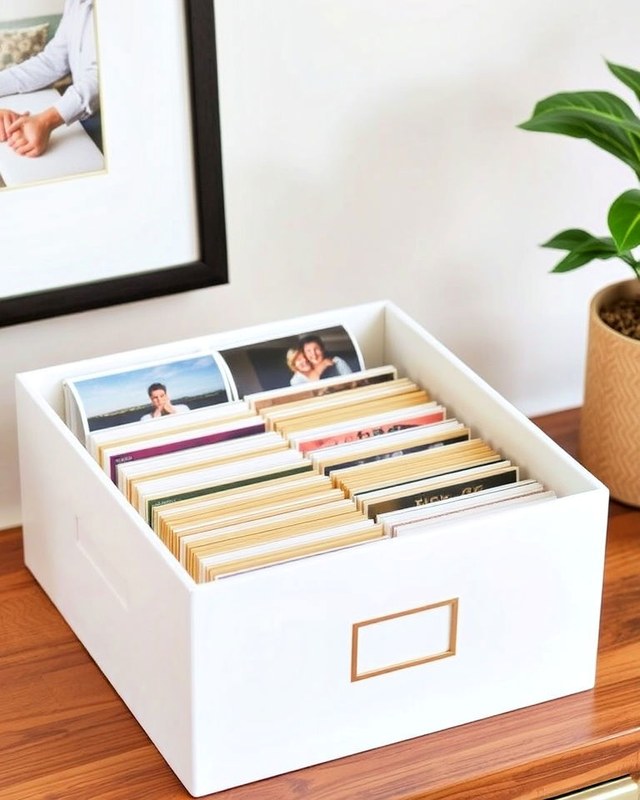
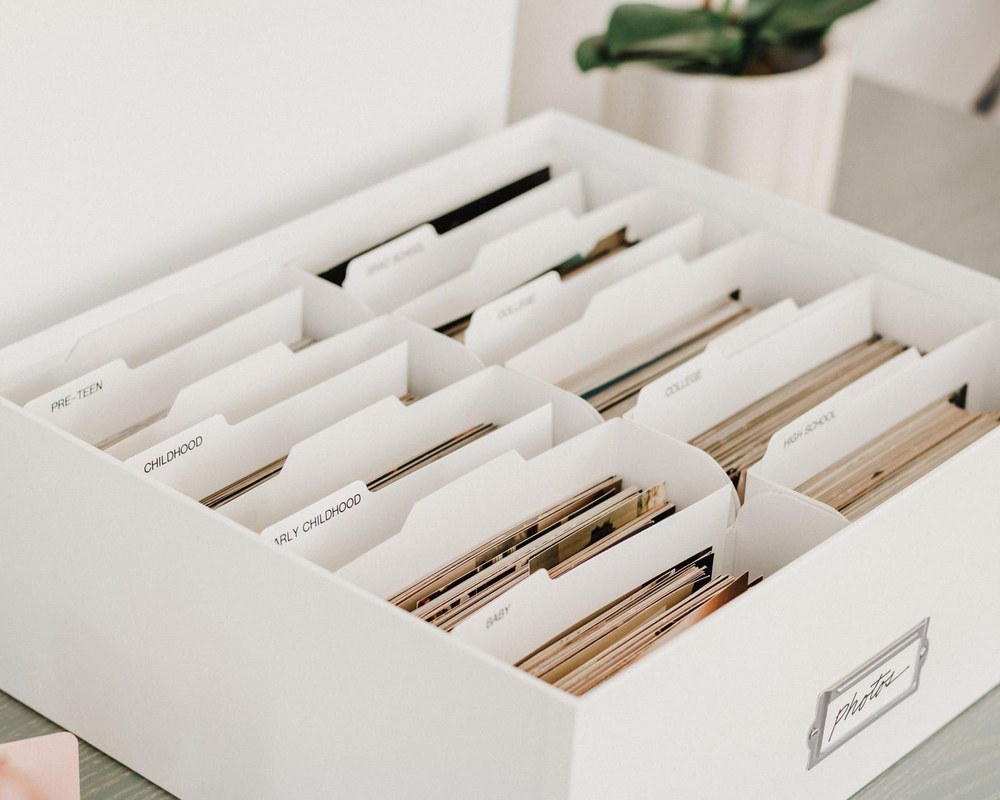
Open archival storage box revealing acid-free buffered paperboard interior.
The word “archival” gets thrown around loosely, so it pays to know what to look for on a product label or listing. The two most important terms are acid-free and lignin-free. Paper products naturally contain acids and lignin, a compound that breaks down over time and produces acids. When those materials touch your documents or photographs, the damage migrates. Archival boxes are made from paperboard or plastics that have had these reactive compounds removed or neutralized.
For paperboard boxes, you will also see the terms buffered and unbuffered. Buffered boxes contain an alkaline reserve — usually calcium carbonate — that neutralizes acids as they form. Unbuffered boxes do not. For most documents, buffered is fine. For photographs, especially older or color prints, many preservation guidelines recommend unbuffered or PAT-approved materials, because the alkaline reserve can interact with certain photographic emulsions.
If you prefer plastic boxes, look for polypropylene, polyester (often sold as Mylar), or polyethylene. These are considered stable for archival use. Avoid PVC, which off-gasses and can damage items over time. Always confirm the specific material and any certifications with the manufacturer before buying, because packaging can be vague.
The Photographic Activity Test, or PAT, is an international standard used to determine whether storage materials are safe for photographs. Products that pass this test are often labeled “PAT approved,” but the test applies to specific materials and configurations, so it is worth checking the product’s own documentation.
For a closer look at what acid-free really means and how to spot it on packaging, our guide to acid-free archival storage boxes walks through the key terms and what to verify before you buy.
Choosing the Right Archival Box for the Right Room
Not every room needs the same kind of box. Matching the box to the room — and to what you are storing — makes the system easier to use and more likely to survive real life.
Home Office: Documents, Tax Records, and Contracts
For paperwork, choose letter-size or legal-size document boxes that can hold hanging files or standard file folders. These boxes are designed to protect flat documents from dust and light while keeping them organized. Sort contracts, tax records, and receipts into labeled folders inside the box, and keep only the documents you actually need — check with your tax authority or legal advisor about how long to retain different records.
Place these boxes on a sturdy shelf or in a filing cabinet in a climate-controlled room. Avoid the floor, where spills and pests are more likely to cause problems.
Bedroom and Wardrobe: Photographs, Letters, and Keepsakes
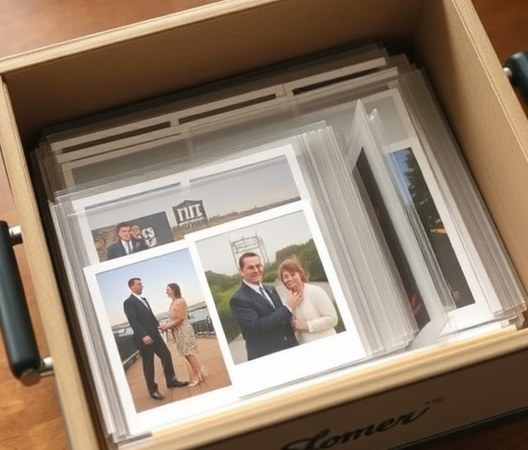
Photographs and letters need gentler treatment. Look for photo-specific archival boxes in sizes that fit your prints — 4×6, 5×7, or 8×10 are common. Store prints flat, ideally with acid-free tissue paper between them to prevent sticking and surface scratches. Keep letters in archival folders or sleeves inside the box, unfolded if possible. Store photo boxes flat rather than on their side, since prints can slide and curl when boxes are stored vertically.
If photographs are the main thing you want to protect, our roundup of the best archival photo storage boxes compares the common formats and sizes worth considering.
Living Room and Entryway: Displaying Heritage Pieces
Not everything needs to be hidden away. Many manufacturers make book-style archival boxes — rigid, cloth-covered boxes that look like decorative books on a shelf. These work beautifully in living rooms and entryways, where you want to keep heirloom items accessible without turning your home into a filing cabinet.
Use them for family history materials, children’s artwork, or photo albums you like to pull out when guests visit. The trade-off is that display areas tend to have more light, so keep these boxes away from direct sunlight and consider rotating what you display.
A Step-by-Step System for Organizing Your Archival Storage Boxes<
Labeled archival boxes on shelves show a clear step-by-step system for organizing home storage.
Labeled archival boxes on shelves show a clear step-by-step system for organizing home storage.
/h2>
Once you have the right boxes, the organizing system itself is what makes the difference between a tidy shelf and a black hole. Follow these three steps.
Step 1: Sort and Declutter Before You Store
Start by emptying everything you want to store onto a clean, dry surface. Sort into broad categories: documents, photographs, letters, artwork, and keepsakes. Within each category, discard or recycle items you do not need — duplicates, outdated paperwork, and damaged items that are beyond saving. Digitize anything you want to keep but do not need in physical form; scanning documents and photos now means you can access them even if the originals degrade.
Step 2: Label Clearly and Build a Simple Inventory
Label each box on both the spine and the top. Use a soft pencil or an archival-quality marker, and write the category, date range, and box number — for example, “Family Photos, 1990–2005, Box 3.” Then create a simple inventory sheet, either on paper taped to the inside of the storage area or in a spreadsheet, listing each box number and its contents. This small step saves hours of searching later.
Use a numbering system that lets you add boxes without renumbering everything. Instead of “Box 3 of 4,” which becomes outdated the moment you add a box, try “Box 3 — Family Photos 1990–2005” and keep the total count only in your inventory sheet.
Step 3: Position, Stack, and Store for Long-Term Safety
Where you place the boxes matters as much as what is inside them. Store boxes off the floor — on shelves or in cabinets — and away from exterior walls, where temperature and humidity fluctuate more. Keep them out of direct sunlight. If you stack boxes, keep the stacks low and stable, with the heaviest boxes at the bottom. Do not overfill boxes; a bulging lid weakens the structure and makes stacking unsafe.
Attics, basements, and garages are risky for archival storage. High heat accelerates chemical breakdown, while dampness encourages mold and warping. If you have no other option, use a sealed plastic tote inside those spaces, but understand that it offers less protection than a climate-controlled room.
Styling Ideas: Integrating Archival Boxes Into Your Home Decor
Archival storage does not have to look like a storage room. Book-style archival boxes, in particular, are designed to sit on shelves alongside real books and framed objects. Group them by height and color, mix them with a few framed photographs or small sculptures, and the shelf reads as intentional decor rather than clutter.
If you prefer a more minimal look, choose boxes in a single neutral tone — linen, kraft, or white — and arrange them symmetrically. Add a small plant or a stack of coffee table books to break up the repetition. The same principles that make a display of art at home feel designed apply to a shelf of archival boxes: balance, rhythm, and a clear visual anchor.
Common Mistakes to Avoid When Storing Documents and Photographs
Even with the right boxes, a few habits can undo your efforts. Here are the most common mistakes and what to do instead.
- Use acid-free, lignin-free boxes and folders for anything you want to keep long term.
- Store boxes in a cool, dry, dark place with stable temperatures.
- Keep photographs flat and separated with acid-free tissue.
- Check your boxes twice a year for mold, pests, or wear.
- Reusing regular cardboard shipping boxes, which contain acid and lignin.
- Storing in attics, basements, or garages where heat and humidity swing wildly.
- Overpacking boxes or stacking them so high they risk collapsing.
- Leaving paper clips, staples, rubber bands, or tape in contact with documents and photos.
Canvas paintings follow different rules than flat documents, and our guide to storing canvas paintings at home without damage explains why they need ventilation and proper support rather than a sealed box.
Care and Maintenance: Extending the Life of Your Archival Boxes
Archival boxes are not set-and-forget. Plan a quick inspection twice a year — for example, when you change your clocks in spring and fall. Open a few boxes at random, check for discoloration, mold, or pests, and confirm that labels are still legible. Replace any box that shows signs of wear, warping, or water damage.
Keep the area around your boxes clean and dust-free. Vacuum or wipe shelves regularly, and avoid placing boxes near heating vents, radiators, or windows. If you live in a humid climate, a dehumidifier in the room can help maintain a stable environment, though the specific equipment you need depends on your home’s conditions.
Value, Limitations, and a Final Recommendation
Archival storage boxes are one of the most cost-effective preservation tools available to a homeowner. They protect against light, dust, pests, and the slow chemical decay caused by acidic materials. But they have limits: they cannot stop all degradation, and they cannot protect against major events like flooding or fire. For irreplaceable items, digitization is a wise complement, not a replacement.
If you are just starting out, do not try to organize your entire home at once. Begin with one category — family photographs or important documents — and one room. Set up the boxes, label them, and build the inventory. Once the system is in place, it becomes easier to add new items and expand to other rooms.
- Choose acid-free, lignin-free boxes and confirm materials with the manufacturer.
- Match the box type to the room: document boxes for the office, photo boxes for the bedroom, book-style boxes for display areas.
- Sort, label, and inventory everything before you store it.
- Keep boxes off the floor, away from sunlight and exterior walls, and inspect them twice a year.
Frequently Asked Questions