Are Picture Ledges Still in Style

Yes, picture ledges are still in style in 2026, especially in art-led and curated interiors. They feel most current when styled with restraint, good lighting, and a clear visual hierarchy.
Picture ledges are still very much in style in 2026, but the look has matured. What once read as a casual decor shortcut now feels more considered: a flexible, gallery-informed way to display art, books, and objects with ease.
For Hurrell Editions, the answer is simple. Yes, picture ledges still belong in beautiful homes — especially when they’re styled with restraint, good lighting, and a clear sense of intention.
- Still relevant: Picture ledges remain a flexible, modern display choice.
- Best styling: Fewer pieces, better spacing, and a limited palette.
- Room fit: They work well in living rooms, hallways, bedrooms, and studios.
- Buying focus: Prioritize depth, finish quality, and load-bearing strength.
Are Picture Ledges Still in Style in 2026?
Picture ledges have not disappeared; they’ve evolved. In art-led interiors, they now feel less like a passing trend and more like a practical display format that supports changing collections, seasonal rotation, and a more relaxed kind of curation.
The reason they remain relevant is that they solve a real design problem. Many people want the atmosphere of a gallery wall without committing to fixed placements, repeated nail holes, or a rigid arrangement that becomes hard to edit over time.
Why this once-trendy display idea still feels current in art-led interiors
Picture ledges work because they allow art to breathe. A few carefully chosen frames leaning against the wall can feel softer and more contemporary than a dense grid, especially in homes that value texture, negative space, and a collected rather than overly decorated look.
They also suit the way many people live now. Collectors rotate prints, readers display art books, and decorators like to refresh a room without fully restyling it. That adaptability keeps ledges feeling current rather than fixed in one era.
What changed: from “decor trend” to a more curated, gallery-informed look
The older version of the picture ledge trend often leaned casual and a little generic. Today’s version is more edited: fewer pieces, better spacing, stronger framing choices, and a clearer relationship to the room’s architecture.
That shift matters. A picture ledge now works best when it feels like part of the room’s visual language, not an afterthought. For a deeper look at the format itself, see picture ledge shelves vs hanging individual frames.
Picture ledges became especially popular because they borrowed the relaxed logic of studio display and gallery storage, where art can be moved, layered, and reconsidered without a full rehang.
How Picture Ledges Work in Modern Rooms
In modern interiors, picture ledges are less about storage and more about visual rhythm. They create a low-profile stage for art and objects, which makes them especially useful in rooms that benefit from softness and flexibility.
Living rooms, hallways, bedrooms, and creative studios
In living rooms, ledges can anchor a sofa wall without making the room feel heavy. In hallways, they bring interest to narrow spaces where a full gallery wall might feel too busy or permanent.
Bedrooms often benefit from their quiet, layered effect, while creative studios and home offices use them as an evolving display surface for references, inspirations, and works in progress.
Using ledges for rotating art, framed photographs, small objects, and books
Picture ledges are ideal for rotation. You can switch prints by season, mix framed photographs with drawings, or place one or two small objects alongside books to create a more personal display.
They are especially appealing for people who enjoy collecting over time. Limited-edition prints, zines, and small-format books can all live comfortably on a ledge without feeling overexposed.
Picture ledges are best treated as a display surface, not a dumping ground. The more intentional the arrangement, the more elevated the room will feel.
Where they outperform traditional shelves for visual flexibility
Unlike deeper shelves, picture ledges keep the focus on the front plane of the objects. That makes them visually lighter and often more elegant in rooms where bulkier storage would interrupt the architecture.
They also allow easy changes without rebuilding the whole composition. If you want to experiment with art placement, how to style picture ledges for layered art display offers a practical starting point.
The Style Trade-Offs: When Picture Ledges Look Elevated vs. Overdone
Like any design feature, picture ledges can look beautiful or bland depending on how they’re used. The difference usually comes down to editing, proportion, and restraint.
Minimal, architectural, and museum-inspired styling
Picture ledges feel most elevated when they echo museum display logic: a small number of pieces, good spacing, and a calm relationship between frame, wall, and surrounding furniture.
Architectural rooms often suit this approach particularly well. A narrow ledge in oak, painted wood, or matte metal can read as a quiet line rather than a decorative interruption.
Common pitfalls: clutter, mismatched frame sizes, and shallow visual depth
The easiest way for a ledge to look dated is overcrowding. Too many small frames, too many competing finishes, or too many decorative objects can flatten the composition and make it feel accidental.
Mismatched frame sizes can work, but only if there is a clear visual hierarchy. Without that, the eye has nowhere to rest, and the display loses its sense of depth.
How to keep the look intentional rather than dated
Choose a limited palette and repeat it. That might mean black, oak, and paper-white; or warm walnut, cream, and one accent tone repeated across prints and objects.
Also leave some breathing room. Negative space is not emptiness here — it is what makes the arrangement feel contemporary.
- Small collections that change often
- Relaxed gallery-style layering
- Rooms that need visual lightness
- You want hidden storage
- You prefer very formal symmetry
- Your display needs deep object support
Curator-Approved Ways to Style Picture Ledges
The strongest ledge displays feel edited by eye, not packed by habit. Think in terms of scale, tone, and texture rather than simply “filling the shelf.”
Layering art by scale, tone, and frame finish
Start with one or two larger pieces and build around them with smaller works. This gives the eye a focal point and prevents the ledge from becoming visually noisy.
Frame finish matters too. A consistent finish can unify mixed art, while a deliberate contrast — such as matte black beside pale oak — can sharpen the composition if used sparingly.
When styling a ledge, step back often. If each piece looks good only up close, the arrangement may be too busy for the room as a whole.
Mixing prints, small sculptures, ceramics, and books without crowding
A good rule is to mix only one or two object types at a time. For example, prints plus one ceramic vessel, or books plus a small sculpture, usually feels more refined than combining every collectible category at once.
If you want a more detailed method, how to arrange frames on a picture ledge without clutter is a useful companion guide.
A slim art book with a linen or cloth spine can be a beautiful anchor object on a ledge. It adds scale, texture, and a sense of culture without overpowering smaller prints.
Using negative space to create a calm, edited display
Negative space is what gives ledges their modern edge. Instead of lining every inch with objects, leave room between groupings so each piece can register clearly.
This approach works especially well in homes that already have layered textures, patterned rugs, or strong furniture silhouettes. The ledge then becomes a calm visual pause rather than another busy surface.
Picture Ledges in Art, Books, and Creative Living Spaces
For art lovers and book collectors, picture ledges are especially appealing because they support change. They create a home for things that are too beautiful to hide but too varied to frame into a single fixed wall.
Displaying limited-edition prints, zines, sketchbooks, and art books
Limited-edition prints and zines look particularly good on ledges because they can be rotated without commitment. Sketchbooks and art books also work well when their covers contribute to the display’s palette or mood.
This is where ledges feel less like decor and more like a living archive. They can hold the evolving story of a collector’s taste.
Making ledges feel personal in home offices, reading corners, and studios
In a home office, a ledge can hold references, postcards, and small framed works that keep the space inspiring without becoming distracting. In a reading corner, a few carefully chosen books and a print can make the nook feel quietly literary.
Studios benefit from the same principle. A ledge can function as a rotating visual board for mood, composition, and material ideas.
Think of a picture ledge as a small exhibition that changes with your life: a place for new prints, old favorites, and objects that carry memory as much as style.
Seasonal rotation ideas for collectors and gift-givers
Seasonal rotation keeps a ledge fresh. In spring, you might favor lighter paper tones and botanical imagery; in autumn, deeper colors, darker frames, and more tactile books.
For gift-givers, ledges are a thoughtful way to present art books, small prints, or framed photographs that can be updated over time rather than tucked away.
Lighting, Wall Color, and Placement: What Makes Them Feel Current
Even a beautiful ledge can fall flat if the surrounding conditions are wrong. Lighting, wall color, and placement all influence whether the display feels crisp and contemporary or dull and overlooked.
How natural light, picture lights, and warm ambient lighting affect the display
Natural light is lovely, but too much direct sun can fade paper and stress delicate works. Soft ambient lighting usually makes a ledge feel warmer and more inviting, especially in the evening.
Picture lights can add a more gallery-like finish, but they should be used carefully so the display feels polished rather than theatrical. For lighting guidance, see how to choose a picture light for artwork.
Paper art, photographs, and some prints are sensitive to sunlight, heat, and humidity. If a ledge sits near a window, rotate pieces regularly and avoid exposing delicate work for long periods.
Best wall colors and finishes for a contemporary gallery feel
Warm whites, soft clay tones, muted stone, and quiet greys tend to support the ledge without competing with it. Matte or eggshell finishes usually work best because they reduce glare and keep the wall surface calm.
Dark walls can also be striking, especially when the art has strong contrast or pale mats. The key is consistency: the wall should feel like a backdrop, not a rival.
Placement tips for above sofas, beds, consoles, and narrow corridors
Above a sofa or bed, a ledge should relate to the furniture width and not float awkwardly too high. Over a console, it can help create a layered vertical composition that feels polished but not stiff.
In narrow corridors, a slim ledge can add interest without reducing the sense of space. If you’re considering a larger format for a living room, best long picture ledges for living room art walls is worth exploring.
Buying and Budgeting for Picture Ledges in 2026
Picture ledges are available across a wide range of budgets, and the right option depends on where it will live, what it will hold, and how refined you want the finish to feel.
Price context: entry-level, mid-range, and handcrafted or designer options
Entry-level ledges are usually the simplest choice for light displays or temporary styling. Mid-range options often offer better finishes, sturdier construction, and more pleasing proportions.
Handcrafted or designer-led ledges can be worth considering if the shelf is highly visible, part of a larger interior scheme, or expected to support a more substantial collection.
Material choices: painted wood, oak, walnut, metal, and matte finishes
Painted wood is versatile and can disappear into the wall for a quieter look. Oak and walnut bring warmth and are especially appealing in homes with natural textures or mid-century influence.
Metal ledges can feel sharper and more architectural, while matte finishes usually read more contemporary than glossy ones. If you’re comparing wall-mounted formats, best picture ledge shelves for framed art display can help narrow the field.
What to look for in quality, load-bearing strength, and finish durability
Look for solid construction, a stable lip, and a finish that can stand up to repeated handling. If you plan to use heavier frames or books, load-bearing strength matters as much as appearance.
Also consider how the ledge will age. A durable matte finish, well-sealed wood, and clean joinery often matter more in daily use than a trendy profile.
- Wall weight capacity and fixing method
- Depth for frames and small objects
- Finish durability and cleaning ease
- Room lighting and sun exposure
- Whether the ledge suits your frame sizes
Care Tips and a Creative Recap: Are Picture Ledges Still Worth It?
Picture ledges are still worth it when you want beauty with flexibility. They are not the right answer for every wall, but for many art-loving homes, they remain one of the most graceful ways to display changing collections.
Dusting, repainting, and refreshing displays without damaging art or walls
Because ledges collect dust more visibly than closed storage, regular gentle cleaning helps them stay crisp. When refreshing the display, lift frames carefully and avoid rubbing delicate surfaces against the wall or shelf edge.
If the ledge is painted, touch-ups may be needed over time, especially in high-traffic areas. Keep art protected from moisture, and use backing or spacers if the pieces are especially precious.
Final verdict for style-conscious readers: when picture ledges are timeless, and when to choose an alternative
Picture ledges feel timeless when they are used with restraint, good proportions, and a clear visual idea. They are less successful when the goal is maximum storage, deep layering, or a very formal, symmetrical wall.
If your style leans collected, creative, and changeable, a ledge is still a strong choice. If you want a more permanent, tightly structured display, individual frames or a more traditional hanging system may suit you better.
A closing creative recap for collectors, decorators, and gift buyers
For collectors, picture ledges offer room to grow. For decorators, they provide a light, architectural way to soften a room. And for gift buyers, they make art, books, and framed memories feel present rather than stored away.
So, are picture ledges still in style? Yes — but the best versions now feel less trendy and more thoughtfully lived with. That is exactly why they continue to belong in contemporary homes.
Recommended Products
SHOP THIS SETUP
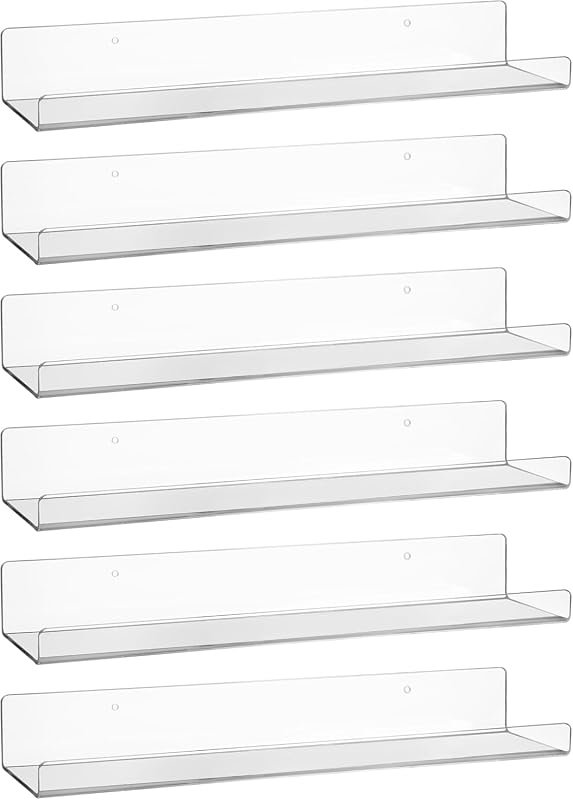
Wallniture Denver 24 Inch Picture Ledge Shelf, White Floating Wall Shelf
This is a strong pick because it delivers the classic picture-ledges look that still feels current in modern, layered interiors. The clean white finish works in living rooms, bedrooms, and hallways, while the narrow profile is ideal for swapping framed art, leaning prints, and small objects without committing to a full gallery wall.
Frequently Asked Questions
Yes. Picture ledges still feel current because they offer a flexible, gallery-inspired way to display art, books, and objects. They work especially well in art-led interiors that value change and curation.
A modern picture ledge display usually uses fewer pieces, stronger spacing, and a limited palette. Matte finishes, calm wall colors, and intentional negative space also help.
They work well in living rooms, hallways, bedrooms, home offices, and studios. Any space that benefits from flexible display and visual lightness is a good fit.
Yes, many picture ledges can hold books, small sculptures, and ceramics, but the display should stay balanced and not overcrowded. Always check the shelf’s load-bearing strength before adding heavier items.
They can be safe for framed art when the ledge is properly installed and the frames are stable. For more detail, it helps to review guidance on frame depth, wall fixing, and placement.
Focus on material quality, finish durability, shelf depth, and load-bearing strength. The best choice depends on your room size, frame types, and how often you plan to change the display.