
What Is a Small Writing Desk Called A Simple Guide

A small writing desk is most often called a writing desk. Depending on storage and style, it may also be listed as a secretary desk, bureau, laptop desk, or compact study desk.
If you are wondering what is a small writing desk called, the most common name is simply a writing desk, but the right term can also be secretary desk, bureau, laptop desk, or compact study desk depending on the design. In home office shopping, the label usually changes based on storage, scale, and whether the desk is meant for handwriting, laptop work, or occasional admin.
A lot of shoppers assume all small desks are interchangeable, but naming matters more than it seems. The term on a product listing often hints at how much surface space you will get, whether drawers are included, how formal the style looks, and where the piece will fit best in the home.
- Main term: “Writing desk” is the most common name for a small desk with a simple.
- Storage matters: More drawers or a fold-down front often means the desk is called a secretary.
- Use matters: Laptop desk and compact study desk are common labels for casual or space-saving workstations.
- Measure carefully: Check depth, legroom, and chair clearance, not just overall width.
- Best fit: Small writing desks suit bedrooms, living rooms, and light-use home office setups.
What Is a Small Writing Desk? The Short Answer
Writing desk, secretary desk, bureau, laptop desk, and compact study desk explained
The clearest answer is that a small writing desk is usually called a writing desk. Traditionally, a writing desk is slimmer and lighter than a full office desk, with a straightforward top for paper, a laptop, or light daily tasks.
That said, retailers and furniture makers use several overlapping names:
- Writing desk: A simple desk with an open work surface and little or no storage.
- Secretary desk: A compact desk with drawers, cubbies, or a fold-down writing panel, often in a more traditional style.
- Bureau: A classic term, sometimes used for a desk with stacked storage or a hinged writing front.
- Laptop desk: A smaller, modern desk sized mainly for computer use rather than paperwork-heavy work.
- Compact study desk: A broad retail term for small desks designed for homework, reading, or general home office use.
In other words, several names may describe nearly the same footprint, but they suggest different uses and aesthetics. A “writing desk” usually reads as minimal and versatile, while “secretary” or “bureau” suggests more built-in storage and a more decorative profile.
How the name changes by size, storage, and intended use
Furniture categories are not perfectly standardized, so two brands may describe a similar piece differently. Still, there are a few patterns that help decode listings quickly.
Size is the first clue. Small desks generally have a narrower width and shallower depth than executive or standard office desks. If the design is slim and visually light, “writing desk” is the most likely label.
Storage is the second clue. Once a desk includes multiple drawers, pigeonholes, a hutch, or a closing top, listings often shift toward “secretary desk,” “bureau,” or “student desk.”
Intended use is the third clue. If the desk is marketed for a laptop, occasional emails, journaling, or decorative placement in a bedroom or hallway, it will often be called compact, small-space, or laptop-friendly rather than office-grade.
This matters because the same shopper searching for a “small writing desk” may also want to search “narrow desk with drawers,” “secretary desk,” or “wall-mounted fold-down desk” to see the full range of suitable options.
How to Identify the Right Type of Small Desk for Your Space

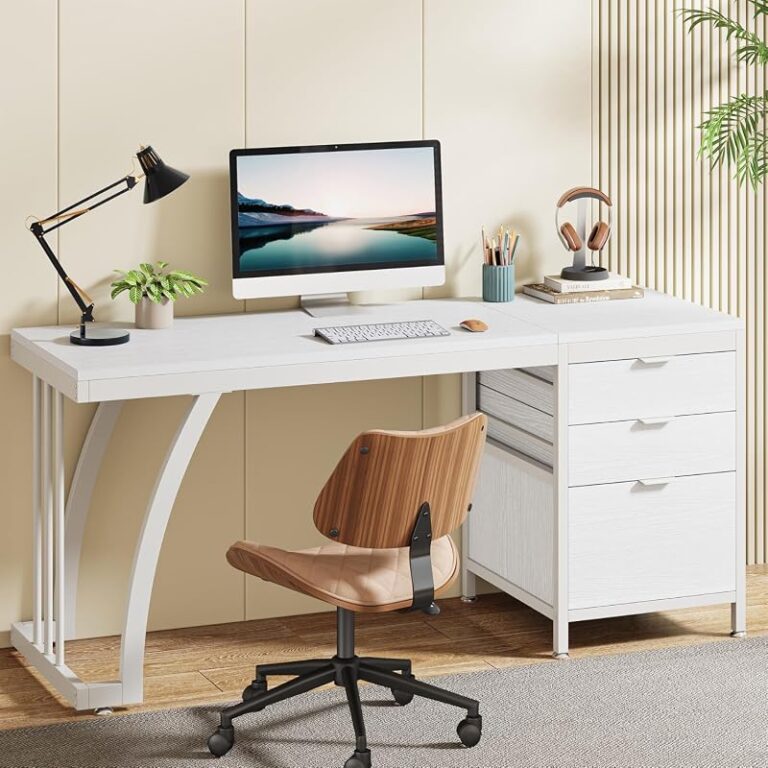
A compact writing desk is shown in a small, organized workspace.
Minimal writing desks for clean, open worktops
If you want a desk that feels visually calm, a minimal writing desk is usually the best fit. These desks often have four legs, a rectangular top, and either no storage or one very shallow drawer.
This style works well when your routine is simple: laptop work, bill paying, note taking, journaling, or light creative planning. Because the silhouette is open, it tends to suit living rooms, bedrooms, and multipurpose spaces better than bulky office furniture.
A minimal desk also leaves more room for a comfortable chair and can make a compact room feel less crowded. The tradeoff is obvious: if you need to hide chargers, files, notebooks, and stationery every day, the clean look can quickly become a cluttered one.
Small desks with drawers for everyday paperwork and stationery
If your desktop always collects pens, sticky notes, envelopes, or charging cables, a small desk with drawers may be more practical than a plain writing table. Even one center drawer can make a noticeable difference in day-to-day usability.
Look closely at drawer depth and placement. Some drawers are decorative and only useful for slim items, while others can hold notebooks, tech accessories, or paperwork. Side drawers add storage, but they can reduce legroom if the desk is especially narrow.
For creative households, storage can matter more than desk width. A slightly smaller top with a useful drawer is often easier to live with than a larger top that forces every item to stay visible. If your setup includes sketchbooks or tools, Hurrell Editions also has a practical guide on how to organize art supplies in a small space.
Retail photos can make a desk look more functional than it is. Always confirm whether drawers are full-depth, whether the back is finished, and whether the listed dimensions include handles or raised storage sections.
Wall-mounted and fold-down options for very tight rooms
In very compact homes, the best “small writing desk” may not look like a traditional desk at all. Wall-mounted shelves with worktop depth, floating desks, and fold-down secretary-style panels are often the smartest answer when floor space is limited.
These options can work well in hallways, guest rooms, studio apartments, or awkward alcoves where a standard desk would block circulation. A fold-down style is especially useful if the workstation only needs to appear during certain hours of the day.
However, buyers should be realistic about limitations. Wall-mounted options usually offer less legroom flexibility, less weight capacity, and less enclosed storage than freestanding desks. Before buying, check wall type, mounting requirements, and the manufacturer’s installation guidance. If you plan to style the area vertically as well, a companion shelf can help; our guide to what is a picture ledge explains why shallow ledges are useful in small rooms.
Secretary and bureau styles for traditional interiors
If you like classic furniture, a secretary desk or bureau may be the most appealing version of a small writing desk. These pieces often combine drawers below with cubbies, shelves, or a drop-front writing surface above.
They are especially good in traditional, cottage, or collected interiors where a plain modern desk would feel too stark. Another advantage is visual containment: many secretary desks allow papers and smaller items to be tucked away when not in use.
The downside is that some traditional designs prioritize charm over workspace. The writing surface may be shallower than expected, and upper compartments can make the whole piece feel taller or heavier in a small room. Measure carefully before assuming a bureau will save space.
What to Look for When Buying a Small Writing Desk
Dimensions, legroom, and comfortable working height
Start with measurements before style. Width matters, but depth and leg clearance are just as important in daily use. A desk can look compact in photos yet still feel awkward if your knees hit a drawer apron or if the chair cannot slide in properly.
Comfortable desk height varies slightly by chair and body size, but standard desk proportions generally work best when your forearms can rest naturally without your shoulders lifting. If you already own a chair, measure from the floor to the seat and compare that with the desk’s underside clearance, not just the overall height.
Also think about movement around the desk. You need enough room to sit down, pull the chair back, and walk past when the chair is occupied. In a hallway or bedroom, that circulation space can be the difference between a clever nook and a frustrating obstacle.
Use painter’s tape on the floor to mark the desk footprint and chair clearance before ordering. It is one of the easiest ways to see whether a “small” desk will actually feel small in your room.
Surface area for laptops, lamps, notebooks, and decor
A desk may technically fit your room and still be too cramped to use comfortably. Think beyond the laptop alone. Many people also need space for a lamp, notebook, drink, charging cable, mouse, or a small tray for everyday items.
If you handwrite often, depth becomes especially important. A shallow desk can work for a laptop, but it may feel restrictive for planners, sketchbooks, or paperwork. Creative readers deciding between compact desks and larger studio-style surfaces may also want to compare this with Hurrell Editions’ guide to the best desk for an artist.
Decor matters too, but it should not consume the usable work zone. A vase, candle, or framed print can make the desk feel intentional, yet the top still needs open working space. The best balance is usually one or two decorative elements, not a fully styled showroom surface.
Storage features, cable management, and practical details
Small desks benefit from thoughtful details because every inch counts. Drawers, shelves, keyboard trays, cord cutouts, and hidden charging compartments can improve function, but only if they match your routine.
If you mainly use a laptop, cable management may be simple. If you also charge a phone, plug in a lamp, or use a printer nearby, look for a desk that helps route cords neatly. Otherwise, even a beautiful compact desk can start looking messy within a week.
Pay attention to the back of the desk as well. Some desks are designed to sit flush against a wall, while others have finished backs and can float in a room. That detail matters in open-plan spaces or bedrooms where the desk may be visible from multiple angles.
Build quality, stability, and finish durability
Because small desks are often lightweight, stability is easy to overlook. A desk that wobbles during typing or writing becomes irritating fast, especially on hard floors or rugs with uneven pile.
Check the construction details provided by the maker or retailer: material type, joinery style if listed, hardware quality, and whether the desk includes adjustable feet or anti-tip guidance where relevant. A narrow desk with slim legs can look elegant, but it still needs enough rigidity to feel secure.
Finish durability matters most on the top surface and drawer fronts. These are the areas that see repeated contact from hands, notebooks, mugs, and desk accessories. If the listing does not clearly explain the finish, confirm the care instructions before buying.
Best Rooms for a Small Writing Desk and Where to Place One
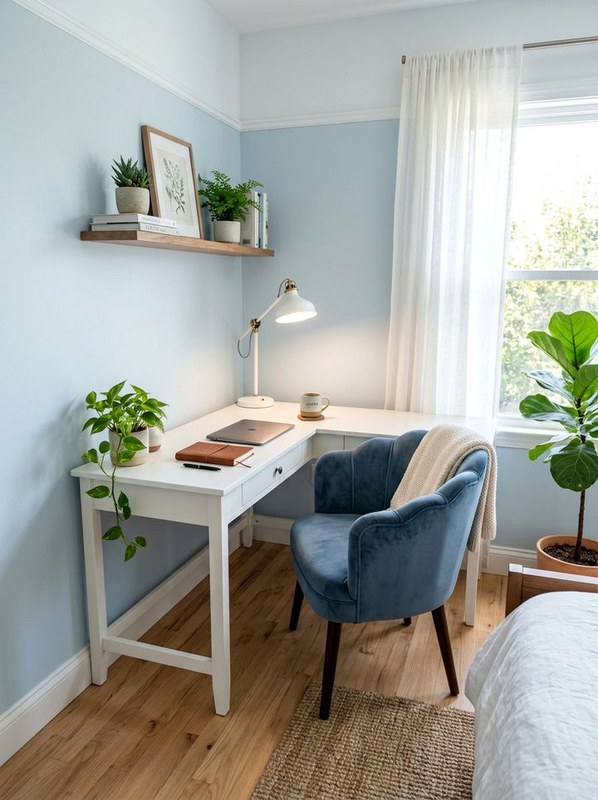
A small writing desk sits neatly in a bright bedroom corner by the window.
Home office corners, bedrooms, living rooms, and hallways
One of the biggest strengths of a small writing desk is flexibility. It can work in a dedicated home office, but it is equally useful in a bedroom corner, under a window in the living room, or along a wide hallway wall.
In a home office, a compact desk can serve as the main workstation for light tasks or as a secondary station for writing and planning. In a bedroom, it often doubles as a vanity-style surface or quiet laptop spot. In a living room, it tends to work best when the design looks like furniture first and office equipment second.
Hallways are trickier but not impossible. A very shallow desk can create a smart drop zone or occasional work area, though circulation needs to remain comfortable. If the desk is in a visible shared space, choose a design that hides clutter easily.
Sizing and clearance guidelines for compact layouts
Compact layouts reward precision. Beyond the desk footprint, think about the total zone the desk creates once a chair, lamp, and body movement are included.
Ask yourself a few practical questions:
- Can the chair tuck in fully when not in use?
- Will drawers open without hitting a bed, radiator, or side table?
- Can you walk past comfortably when the chair is pulled out?
- Will nearby doors or closet panels still open properly?
These questions often matter more than the desk name itself. A desk labeled “small space” can still be wrong for your room if the surrounding clearance is poor.
- Measure wall width, desk depth, and the clearance needed for your chair.
- Check whether drawers, cabinet doors, or fold-down panels need extra room to open.
- Confirm if the desk back is finished if it will be visible from the room.
- Verify material, care instructions, and assembly details on the official listing.
How to position a desk near natural light without causing screen glare
Natural light makes a small workspace feel better, but placement needs some thought. The ideal spot is often near a window rather than directly in front of it, especially if you use a laptop for long stretches.
A desk placed parallel to the window usually gives a good balance of daylight and reduced screen glare. Facing a bright window can create eye strain and reflections, while placing the screen with the window directly behind it can also cause glare.
If your writing nook includes art or shelving above the desk, light quality matters there too. For wall decor lighting ideas in compact spaces, you may find our article on what is a dimmable picture wall light useful when planning a more polished setup.
Materials, Styles, and Design Details That Matter
Solid wood, veneer, metal, glass, and painted finishes compared
Material affects not just appearance, but also weight, maintenance, and how substantial the desk feels.
Solid wood usually offers warmth, longevity, and repair potential, though the exact performance varies by species and construction. It can suit both traditional and modern spaces depending on the shape.
Wood veneer can provide a polished furniture look at a lower cost than solid wood, but durability depends on the substrate and finish quality. It is often a sensible middle ground for decorative home office furniture.
Metal frames tend to look lighter visually and can work well in modern or industrial interiors. The top surface quality still matters, especially if the top is engineered wood or laminate.
Glass can make a room feel airy, but it shows fingerprints, dust, and cable clutter more easily than opaque surfaces. It is often better for occasional use than for paper-heavy daily work.
Painted finishes can be beautiful in cottage or classic interiors, though they may show chips or scuffs more readily in high-contact areas.
Wood and painted desks generally last better when kept away from prolonged moisture, direct radiator heat, and strong sunlight. Always follow the maker’s care guidance, especially for veneer, lacquer, and painted finishes.
Traditional, mid-century, modern, and cottage-style desk profiles
The same basic function can look very different depending on style. Traditional desks often include turned legs, brass-look hardware, richer wood tones, or secretary-style upper storage. Mid-century designs usually feature tapered legs, slimmer drawers, and warm wood finishes. Modern desks lean cleaner and more architectural, while cottage-style desks often use painted finishes and softer detailing.
Style affects how “office-like” the desk feels. If the desk will live in a bedroom or living room, choosing a profile that matches surrounding furniture can make the workspace feel integrated rather than improvised.
How to match a small desk to existing furniture and decor
Start with the room’s dominant visual language. If your furniture is warm wood and soft textiles, a glossy black metal desk may feel disconnected. If the room is minimal and streamlined, an ornate bureau could feel heavy.
Look for one or two points of connection: wood tone, leg shape, hardware finish, or overall silhouette. Exact matching is not necessary. Cohesion usually comes from repeated materials and proportions, not from buying a full furniture set.
Wall styling can help bridge the desk into the rest of the room. A framed print, small mirror, or shelf above the desk can make the workstation feel intentional without taking over the space.
The Benefits and Limitations of a Small Writing Desk
Why compact desks work well for light admin, journaling, and laptop use
For many households, a small writing desk is exactly enough. It handles email, planning, journaling, occasional paperwork, and laptop work without demanding a full office footprint.
It also tends to look more decorative than task-heavy, which makes it easier to place in mixed-use rooms. That matters if you want your home office area to blend into everyday living rather than dominate it.
When a small desk may feel too narrow for dual monitors or deep storage needs
A small writing desk is not ideal for every workflow. If you use dual monitors, large reference books, a desktop tower, or multiple trays of supplies, the surface may feel crowded quickly.
Likewise, if your work involves frequent filing or bulky accessories, limited drawer space can become frustrating. In those cases, a larger desk or a separate storage piece may be the better long-term choice.
Common buying mistakes that lead to clutter or poor ergonomics
The most common mistake is choosing based on looks alone. A desk can be beautiful and still fail because it is too shallow, too tall for the chair, lacking storage, or unstable on your flooring.
Another mistake is assuming “small” automatically means space-saving. If the desk has wide legs, oversized drawers, or requires lots of clearance, it may use space less efficiently than a slightly larger but better-designed option.
- Fits bedrooms, living rooms, and compact home offices.
- Works well for laptops, writing, planning, and light admin.
- Often looks more decorative and less corporate than full office desks.
- Can be easier to style into multipurpose rooms.
- May not suit dual-monitor setups or bulky equipment.
- Storage is often limited.
- Shallow tops can feel cramped for handwriting or creative work.
- Some lightweight designs sacrifice stability.
How to Style a Small Writing Desk So It Looks Intentional
Layering task lighting, seating, and desktop accessories
Good styling starts with function. Choose a chair that fits the scale of the desk and room, then add task lighting that supports the type of work you actually do. A slim table lamp usually works better than an oversized statement lamp on a compact surface.
Accessories should earn their place. A tray for stationery, a small plant, a coaster, and one framed piece of art can be enough to make the desk feel complete. Too many objects make a small desk look busy fast.
Using art, mirrors, and shelving above the desk without overcrowding
The wall above a small desk is useful, but restraint matters. One medium piece of art, a narrow shelf, or a mirror can add height and personality without crowding the work zone.
If you use shelving, keep it shallow and avoid placing heavy or fragile items overhead unless the mounting is appropriate for your wall type and the shelf’s load guidance. In small spaces, visual lightness is as important as storage.
Creating a polished writing nook that still feels practical
The best writing nooks feel finished but usable. Start with the desk, chair, and lamp, then add one layer of personal detail such as art, a ceramic cup for pens, or a small stack of books. Finish with a soft element like a rug or curtain nearby to keep the corner from feeling too hard or utilitarian.
If you need more function, add it vertically rather than across the desktop. That keeps the work surface clear while still giving the area personality and storage.
Care, Value, and the Final Recommendation
Simple cleaning and maintenance by material and finish
Most small desks need only light routine care, but the method depends on the finish. Painted, wood, and veneer surfaces usually do best with a soft dry or slightly damp cloth, followed by drying the surface rather than leaving moisture to sit. Glass shows smudges more easily and may need more frequent cleaning, while metal frames benefit from dusting and quick attention to spills.
Avoid harsh abrasive cleaners unless the manufacturer specifically allows them. If the desk has a specialty finish, confirm care instructions on the official product page or assembly manual before using polish or cleaning sprays.
When a small writing desk offers better value than a full office desk
A small writing desk offers strong value when your real needs are modest. If you mostly work on a laptop, write by hand, or need a flexible station in a shared room, paying for a large office desk can mean spending more money and floor space than necessary.
It is also a smart choice when aesthetics matter as much as function. In bedrooms and living spaces, a compact desk often integrates more gracefully than a full workstation.
Which type to choose based on room, routine, and style priorities
If you want the simplest answer, choose a minimal writing desk for clean laptop work and light daily use, a small desk with drawers for admin tasks and everyday clutter control, a wall-mounted or fold-down desk for very tight spaces, and a secretary desk or bureau if you prefer traditional styling and concealed storage.
The best choice is the one that fits your room honestly, supports your routine without strain, and looks at home with the rest of your furniture. Before buying, verify dimensions, materials, finish care, and installation or assembly details on the official listing so the desk works as well in real life as it does in the product photos.
Frequently Asked Questions


One Comment