Best Drawing Desks for Artists and Creative Workspaces

A good drawing desk can make a home studio feel more usable, more comfortable, and far less cluttered. For artists, students, architects, and hobby sketchers, the right setup often comes down to a few practical details: how much surface area you get, how steep the top can tilt, whether the frame stays steady, and how easily the desk fits into the room you actually have.
This guide compares eight drawing desks for artists with a creative-tools lens, focusing on adjustability, workspace size, included drafting aids, and home-friendly versatility. If you’re still deciding whether a dedicated art desk is worth the footprint, Hurrell Editions also has a helpful look at whether drawing desks are worth it before you commit.
The best drawing desks for artists in this roundup are MEEDEN’s adjustable wood drafting tables if you want a full-size home art workstation, while the Liquidraw A2 Drafting Board is a strong choice for technical drawing in a more compact format. Shoppers should focus first on tilt range, tabletop size, stability, and whether a stool or drafting tools are included.
Quick Product Comparison
| Product | Image | Best For | Today’s Price |
|---|---|---|---|
| 1. MEEDEN White Drafting Table | 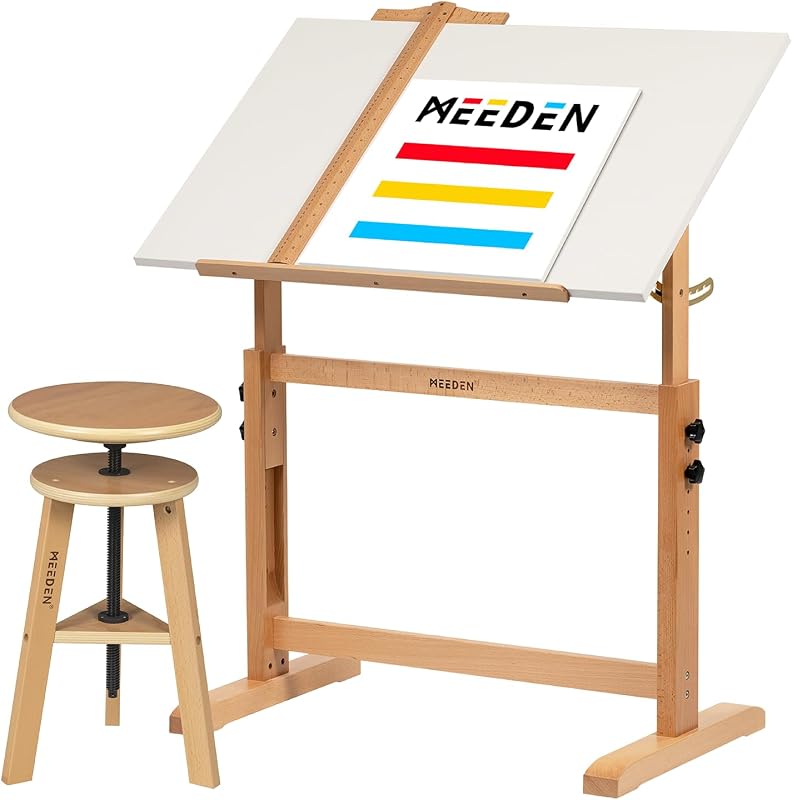 |
Small home studios that need a coordinated desk-and-stool setup | See Price → |
| 2. MEEDEN White Adjustable Drafting Table | 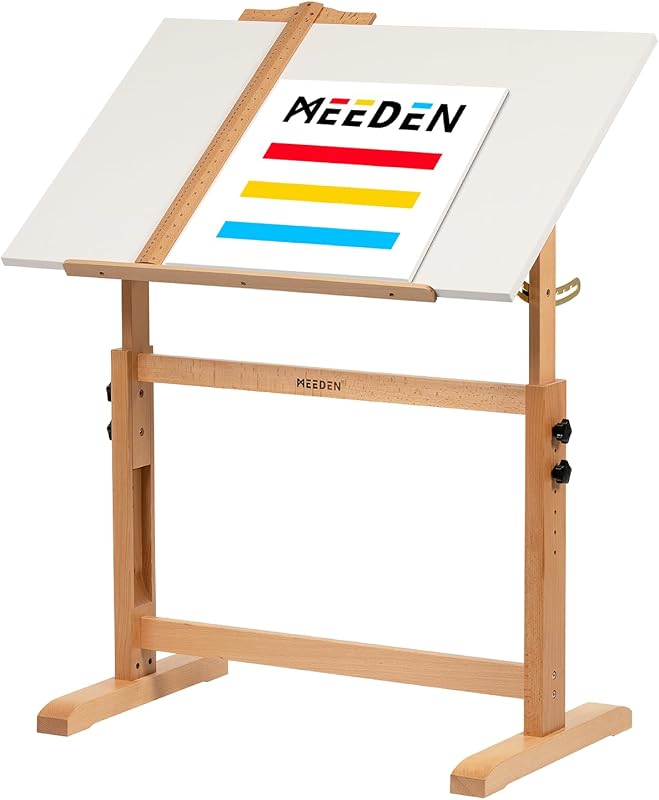 |
Artists who want a bright, versatile desk with drafting accessories | See Price → |
| 3. MEEDEN Wood Drafting Table | 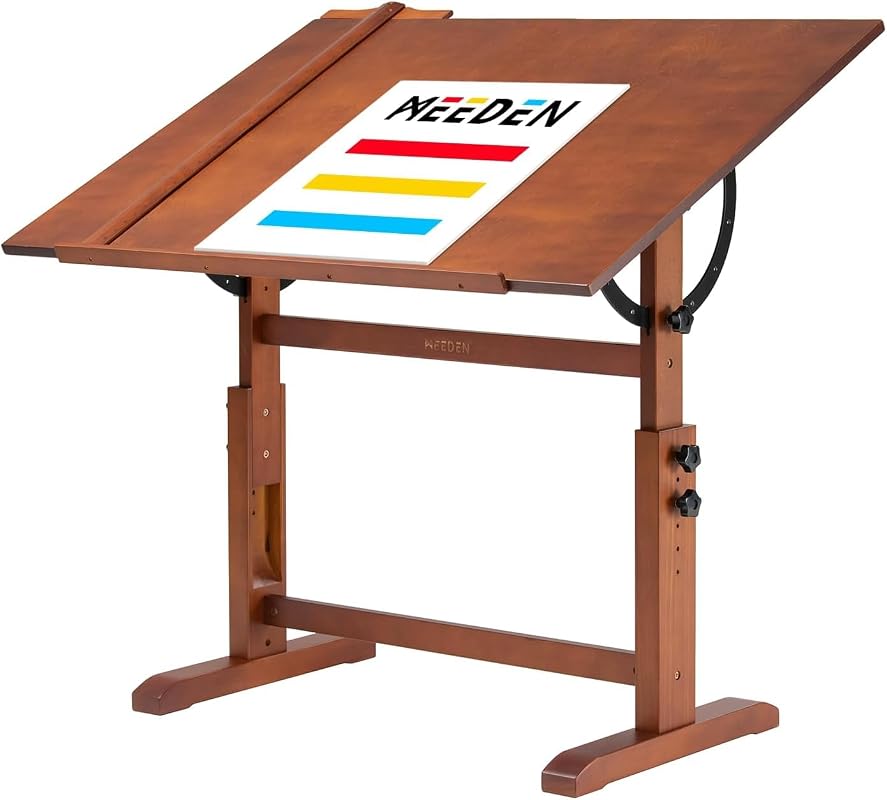 |
Larger projects and artists who need more working surface | See Price → |
| 4. MEEDEN Wood Adjustable Drafting Table | 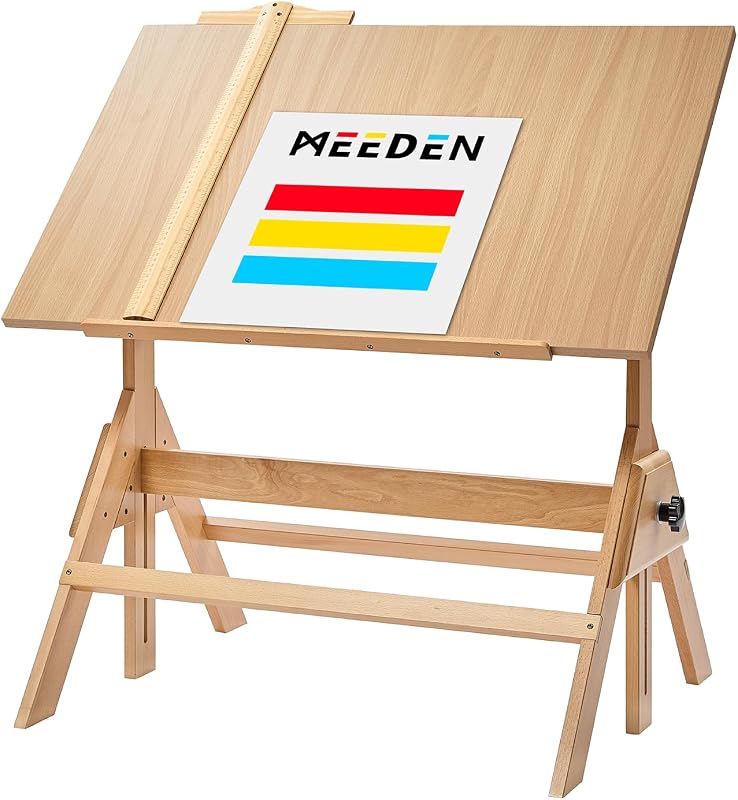 |
Budget-minded buyers who still want a full drafting table | See Price → |
| 5. MEEDEN Adjustable Art Drafting Table | 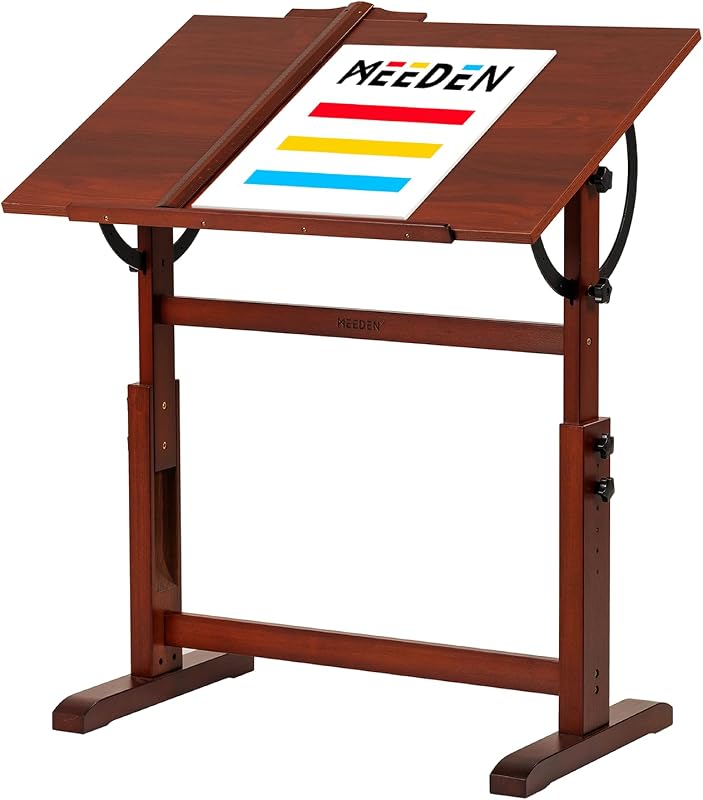 |
Shoppers who prefer a darker vintage look and 90-degree tilt | See Price → |
| 6. MEEDEN Vintage Drafting Table | 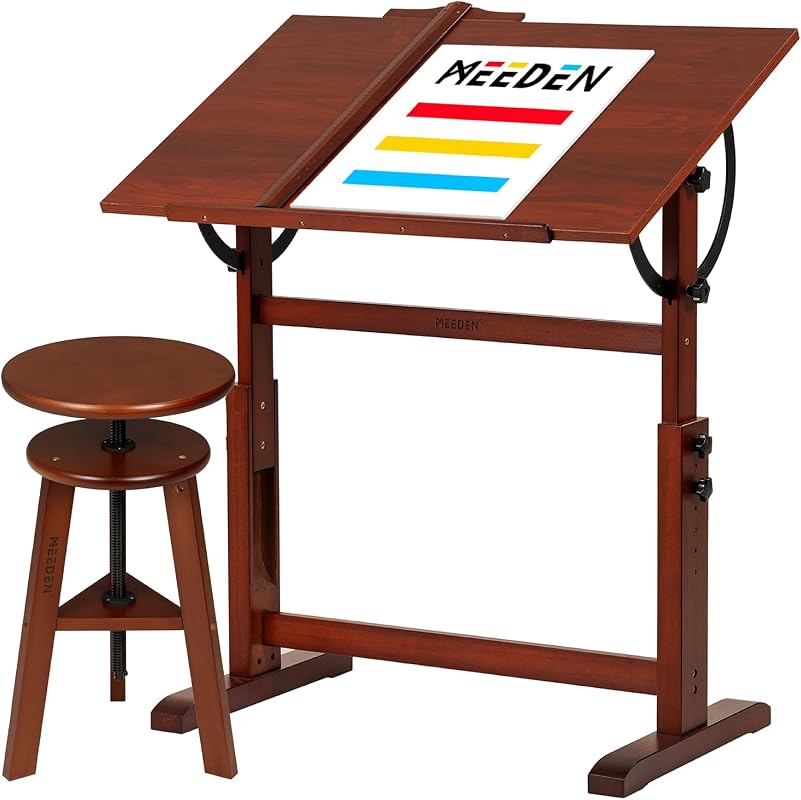 |
Traditional-looking studios that want a matching stool included | See Price → |
| 7. MEEDEN Adjustable Desk Easel | 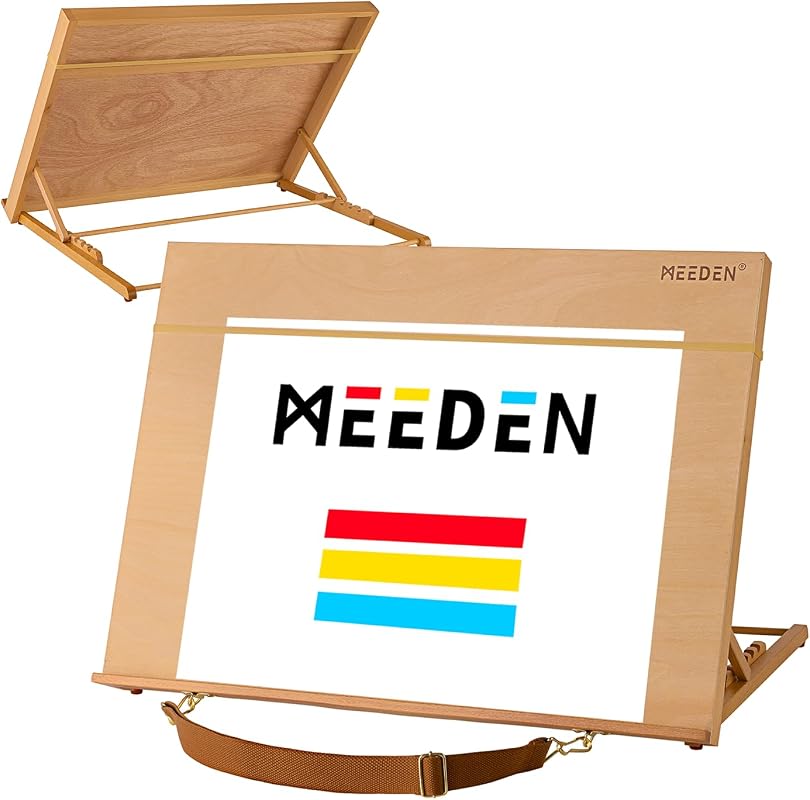 |
Portable tabletop sketching and temporary drawing stations | See Price → |
| 8. Liquidraw A2 Drafting Board | 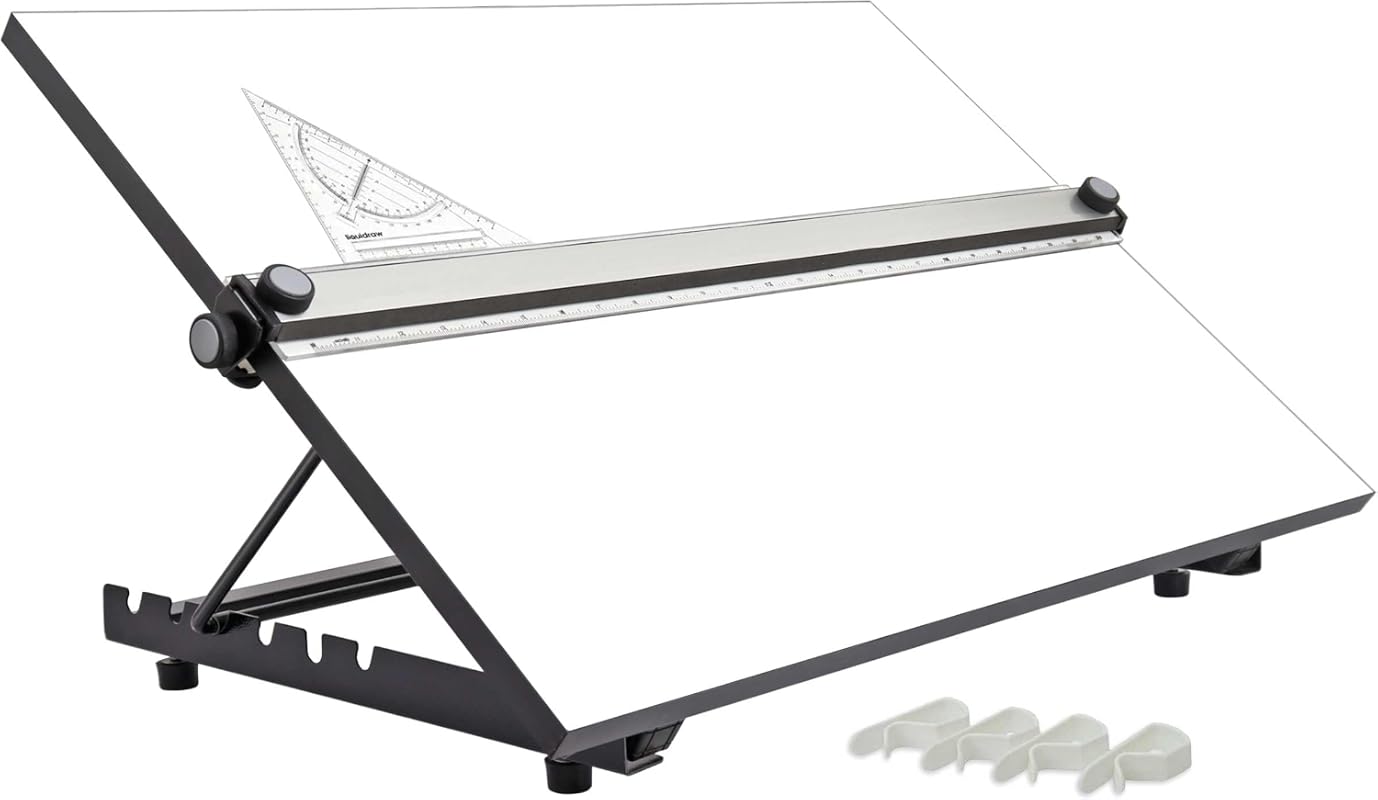 |
Technical drawing, design work, and portable precision setups | See Price → |
What to Look for in drawing desks for artists
Adjustable tilt range
The tilt range shapes how flexible the desk feels day to day. Some artists want a shallow incline for sketching, while others need a steep angle for detailed line work or technical drawing. In this roundup, tilt ranges vary from flat-to-60 degrees up to flat-to-90 degrees, so it helps to match the desk to your working style.
Surface size for your media
Tabletop size matters more than many shoppers expect. A 35.5 x 23.5 inch desk can suit sketchbooks, smaller pads, and general home art use, while a 42 x 30 inch top is better for larger sheets, broader layouts, or multitool workspaces that need room for rulers, pencils, and references. If you mainly work from compact pads, you may also want to compare a full desk with guidance on what size sketchbook is best for daily drawing.
Stability and frame construction
A tilting art desk needs a steady base. Look for details like H-frame construction, cross supports, dual knobs, and beech wood legs, since those features are directly tied to wobble control and load-bearing support in the supplied product information. Stability becomes especially important if you press hard while drawing or frequently change angles.
Included tools and extras
Some drawing desks for artists include practical extras that reduce setup friction. Built-in pencil ledges, 24-inch T-squares, parallel motion bars, clips, rulers, and matching stools can all change the value equation, especially for beginners building a workspace from scratch. If you are also assembling your starter kit, pairing a desk with one of the best drawing pencil sets for fine art beginners can make the setup more complete.
Room fit and visual style
A drawing desk lives in your home, not just your workflow. White finishes tend to look lighter in bedrooms, shared offices, and bright studios, while retro wood and walnut tones can feel warmer and more furniture-like in traditional interiors. Portable boards and tabletop easels are often the better answer when a full drafting table would visually dominate the room.
If your art area shares space with a guest room, living room, or office, prioritize a desk with a built-in ledge and a compact footprint. Those details make it easier to keep tools contained and help the workspace look intentional rather than improvised.
Our Top 8 Drawing Desks For Artists Picks and Reviews
1. MEEDEN White Drafting Table and Stool Set, 35.5 x 23.5 Inch Drawing Desk
This MEEDEN set stands out for shoppers who want a coordinated drawing station rather than piecing together a desk and stool separately. Based on the supplied details, it pairs a solid natural wood drafting table with an adjustable beech wood stool and keeps the footprint manageable for smaller creative spaces.
Key Features That Stand Out
- Solid natural wood construction with an H-frame base is designed to support stability and reduce shaking while you work.
- The tabletop adjusts through 7 angles from flat to 60 degrees, which helps support both sketching and more upright drawing positions.
- Desk height adjusts from 32.3 to 37.4 inches, giving more flexibility for different users and seating preferences.
- The included stool is handcrafted from German beech wood and adjusts from 18.9 to 25.6 inches tall.
Why It Stands Out
Among the drawing desks for artists here, this one offers a straightforward all-in-one setup with a clean white top and a matching adjustable stool. That makes it especially appealing for a home art corner where visual consistency and space efficiency matter as much as the drawing surface itself.
Best For
Artists, students, or hobbyists furnishing a compact home studio who want a matching desk-and-seat setup with adjustable working positions.
Pros and Cons
- Includes an adjustable stool, which simplifies setup
- Solid wood and H-frame construction emphasize stability
- Compact size is easier to place in smaller rooms
- Maximum tilt is 60 degrees rather than 90 degrees
- Shoppers should verify whether the 35.5 x 23.5 inch surface is large enough for their paper size and tools
2. MEEDEN White Adjustable Drafting Table, 35.5 x 23.5 Inch Art Drawing Desk
This white MEEDEN desk is a strong alternative for buyers who want the same general footprint as the top pick but do not need a stool included. The supplied features point to a stable natural wood frame, adjustable height, a tilting top, and drafting-friendly extras like a T-square and built-in pencil ledge.
Key Features That Stand Out
- The tabletop tilts from flat to 60 degrees, which supports both flat work and inclined drawing.
- Height adjusts from 32.3 to 37.4 inches for a more customized work position.
- A 24-inch T-square ruler with inch and metric calibrations is included to help with alignment and measured work.
- The built-in pencil ledge helps keep brushes, pencils, and other tools from sliding off the surface.
Why It Stands Out
This is one of the more balanced picks for mixed-use creative homes because it works as an art desk, study desk, craft desk, or computer desk according to the supplied product facts. The white tabletop also lends it a lighter, less workshop-heavy look in bedrooms, offices, or shared studio spaces.
Best For
Artists and students who want a bright-looking adjustable drafting desk with included measuring tools but prefer to choose their own chair or stool.
Pros and Cons
- Includes a T-square and pencil ledge
- Adjustable height and tilt support varied tasks
- Versatile enough for art, study, and hobby use
- No stool is included
- Buyers who want a steeper drawing angle may prefer a 90-degree model
3. MEEDEN Extra-Large Wood Drafting Table, 42 x 30 Inch Artist Drawing Desk
For artists who feel cramped on standard-size desks, this extra-large MEEDEN model brings a more expansive 42 x 30 inch work surface. The supplied product facts also show a wider tilt range up to 90 degrees, adjustable height, and included drafting aids, making it one of the most capable desks here for larger-format work.
Key Features That Stand Out
- The enlarged 42 x 30 inch surface gives more space for bigger media, layouts, and reference materials.
- The tabletop adjusts from 0 to 90 degrees, which supports both flat work and near-upright positioning.
- Height adjusts from 32.7 to 38 inches for better ergonomic flexibility.
- A T-square ruler and pen ledge are included to support organized drawing sessions.
Why It Stands Out
This desk offers a lot of functionality for shoppers who need more than a basic sketching table. The retro wood finish and beech wood legs also give it a warmer studio-furniture feel than a plain utility desk, while the H-frame base and dual-knob design are intended to help keep the top steady.
Best For
Artists, drafters, and designers who work on larger sheets or want extra room for tools, references, and multi-step projects.
Pros and Cons
- Larger surface than most desks in this roundup
- 90-degree tilt adds flexibility for different drawing styles
- Includes a ruler and pen ledge
- Larger scale may not suit small rooms
- No stool is listed in the supplied product details
4. MEEDEN Wood Adjustable Drafting Table, 35.5 x 23.5 Inch Art Drawing Desk
This MEEDEN drafting table is one of the most approachable full-size options in the group, especially for buyers who want a traditional wood-look work surface and broad use flexibility. The supplied facts highlight adjustable height, a 60-degree tilt range, a built-in ledge, and a bonus T-square.
Key Features That Stand Out
- The 23.5 x 35.5 inch tabletop offers a practical work area for everyday sketching and drafting.
- Height adjusts from 29.7 to 38.4 inches, giving it one of the broadest height ranges in this roundup.
- The top tilts from flat to 60 degrees for seated drawing, writing, and angled sketch work.
- It includes a 24-inch T-square with inch and metric calibrations.
- Cross support and solid beechwood construction are intended to reduce wobble.
Why It Stands Out
For many home artists, this desk lands in a useful middle ground: not oversized, not overly specialized, and adaptable enough for art, study, or computer use. It also has the highest supplied rating count in the roundup, which makes it one of the more established listings to compare.
Best For
First-time buyers who want a classic adjustable drafting desk for sketching, studying, or general creative work without taking over the room.
Pros and Cons
- Broad height adjustment range
- Includes a T-square and pencil ledge
- Designed for multi-purpose home use
- Particle board top may not appeal to shoppers seeking a fully solid wood surface
- Assembly is required
5. MEEDEN Adjustable Art Drafting Table, Solid Beech Wood Tilting Drawing Desk for Artists
This darker MEEDEN drafting table leans into a more vintage, furniture-like look while still offering a full 0-to-90-degree tilt range. Based on the supplied information, it combines a walnut-colored top, beechwood legs, a T-square, and an industrial-style detail for buyers who care about both function and room styling.
Key Features That Stand Out
- The tabletop can be adjusted from flat to 90 degrees across 7 angles for flexible drawing positions.
- Height adjusts from 32.7 to 38 inches with six height options.
- The walnut-colored top includes a built-in pencil ledge to help keep tools in place.
- A 24-inch T-square ruler with inch and metric calibrations is included.
Why It Stands Out
Not every art desk needs to look strictly utilitarian. This one appears geared toward shoppers who want a dedicated drawing surface that also blends more naturally with darker furniture, home libraries, or traditional office décor.
Best For
Artists decorating a warmer-toned studio, office, or study who want a steeper tilt range and a more traditional wood look.
Pros and Cons
- 90-degree tilt supports a wider range of drawing positions
- Darker finish suits classic interiors
- Includes a T-square and built-in ledge
- Price is not supplied beyond “Check Price”
- No stool is included in the listed features
6. MEEDEN Vintage Drafting Table and Stool Set, 35.5 x 23.5 Inch Art Desk
This vintage-style MEEDEN set offers many of the same functional benefits as the darker standalone desk, but adds a matching adjustable stool. The supplied product facts emphasize a walnut-colored top, beechwood structure, 90-degree tilt, and a coordinated look that may appeal to shoppers furnishing a dedicated studio nook.
Key Features That Stand Out
- The tabletop adjusts from flat to 90 degrees with 7 angle options.
- Desk height adjusts from 32.7 to 38 inches for flexible positioning.
- The included stool adjusts from 19 to 26 inches tall and is made of German beech wood.
- A built-in pencil ledge and 24-inch T-square support organized drafting work.
Why It Stands Out
This is a useful choice for buyers who want a more complete studio station in one purchase. Visually, the retro matte walnut color can read more like furniture than equipment, which may help the desk feel at home in a study, den, or refined creative room.
Best For
Traditional home studios or studies where a matching stool and warmer wood tone matter as much as the drafting function.
Pros and Cons
- Includes an adjustable stool
- 90-degree tilt adds flexibility
- Warm walnut tone suits classic interiors
- Full set may be more than casual users need
- Shoppers should verify the overall room footprint before buying
7. MEEDEN Adjustable Desk Easel, 5-Position A2 Portable Tabletop Art Easel with Carry Belt
This is the outlier in the roundup, but a relevant one for artists who do not want a full freestanding desk. Instead of replacing your table, it turns an existing surface into a portable angled drawing station, which can be a smart option for apartments, dorms, and shared spaces.
Key Features That Stand Out
- The easel is handcrafted from seasoned beechwood and finished with natural oil.
- It offers 5 positions for angle adjustment, helping reduce neck strain from flat work.
- The folding design and shoulder strap make it easier to carry and store between uses.
- Rubber foot pads are included to help stabilize the easel on a tabletop.
Why It Stands Out
For some shoppers, the best drawing desk solution is not a desk at all. This portable easel is especially practical if you already own a table you like and just need an angled A2-capable surface that can be packed away after use. Buyers comparing digital and traditional setups may also want to read Hurrell Editions’ guide on how to choose a drawing tablet for digital art if their workspace needs to serve both.
Best For
Apartment dwellers, students, and artists who need a portable tabletop solution instead of a permanent drafting desk.
Pros and Cons
- Portable and easy to store
- Useful for temporary or shared workspaces
- No major assembly is described
- Requires a separate table or desk underneath
- Not a full workstation with adjustable height
8. Liquidraw A2 Drafting Board with Parallel Motion Bar, 6 Adjustable Angles, Drawing Clips
The Liquidraw board is the most technical option in this roundup. Rather than focusing on a furniture-style desk, it centers on drafting precision with a locking parallel motion bar, adjustable angles, and a set of included drawing tools that support measured work.
Key Features That Stand Out
- The 18.5 x 25.5 inch board includes a locking parallel motion bar for vertical and horizontal lines and angles.
- Six adjustable working angles support different drawing positions from 15 to 60 degrees.
- Included accessories include clips, a set square, an acrylic triangle, and an aluminum and acrylic ruler with centimeter and inch markings.
- The board has a carry handle and metal frame for easier portability and setup.
Why It Stands Out
This is the clearest fit for technical drawing, design studies, and portable precision work. It is also a helpful reminder that some artists need drafting functionality more than they need a full furniture piece, especially if the goal is accuracy and transportability rather than a permanent studio installation. For a deeper look at terminology, Hurrell Editions also explains the difference between a drafting board and a drawing board.
Best For
Architects, design students, and artists who prioritize measured technical drawing and a more portable board-based setup.
Pros and Cons
- Parallel motion bar supports precision work
- Comes with multiple drafting accessories
- Portable design with carry handle
- Smaller work area than full drafting desks in this roundup
- Better suited to board-based drafting than a full studio workstation
Before buying, verify the desk or board dimensions against your room layout and your usual paper size. Adjustable tops also need enough clearance behind and above the desk when tilted, especially in smaller bedrooms, dorms, or shared offices.
Complete Buying Guide for Drawing Desks For Artists
The best drawing desks for artists are not all solving the same problem. Some are full home-studio furniture pieces with adjustable height and tilt, some are compact drafting stations for smaller rooms, and some are portable boards that sit on top of a table you already own. The right pick depends on how you draw, how much space you have, and whether your art area needs to disappear when the workday ends.
Price & Value Guide
Room and style fit
White drafting desks generally work well in bright studios, bedrooms, and shared home offices because they look lighter and less visually heavy. Retro wood and walnut-toned options tend to blend better with traditional furniture, darker shelving, and warmer interiors. If your creative space doubles as a living area, a portable easel or drafting board may be easier to store and less dominant in the room.
Dimensions and compatibility
Start with the size of the art you actually make. A 35.5 x 23.5 inch desk can be a practical all-around size for sketching, journaling, and smaller pads, while a 42 x 30 inch surface gives more elbow room for larger sheets and layered tool setups. If you use rulers, triangles, or large reference books, leave extra margin around the working area instead of matching the desk exactly to your paper size.
Choosing by working style
If you sketch, write, and craft in the same spot, a multi-use adjustable desk is usually the most flexible choice. If you focus on technical line work, a drafting board with a motion bar and measuring tools may be a better fit. And if posture is part of your decision, it can help to compare seated drafting setups with Hurrell Editions’ article on do standing desks work for artists.
- Measure both your floor space and your wall clearance before choosing a tilting desk.
- Match the desk size to your usual paper, sketchbook, or board size rather than buying the largest option by default.
- Look for included ledges, rulers, or stools if you want a more complete setup with fewer add-ons.
- Don’t assume every drafting desk reaches a near-vertical angle; some stop at 60 degrees.
- Don’t overlook chair or stool compatibility when comparing desk height ranges.
- Don’t choose a dark wood finish for a very small dim room unless you want the desk to read as a visual anchor.
- Use a shallow tray, cup, or caddy nearby for tools that do not fit securely on the built-in ledge.
- Keep the desk near steady task lighting so the tilt function improves visibility instead of casting stronger shadows.
- If the desk sits in a bedroom or living area, repeat its wood tone or white finish elsewhere in the room so it feels integrated with the décor.
- Wipe surfaces gently and check manufacturer guidance on finishes and cleaning before using stronger products.
- MEEDEN White Drafting Table and Stool Set: A coordinated compact workstation with adjustable desk and stool.
- MEEDEN White Adjustable Drafting Table: A bright, versatile pick with a T-square and built-in ledge.
- MEEDEN Extra-Large Wood Drafting Table: The best fit here for bigger media and more expansive layouts.
- MEEDEN Wood Adjustable Drafting Table: A practical all-around option for first-time drafting desk buyers.
- MEEDEN Adjustable Art Drafting Table: A strong choice if you want darker styling and a 90-degree tilt.
- MEEDEN Vintage Drafting Table and Stool Set: Best for traditional-looking studios that want a matching stool included.
- MEEDEN Adjustable Desk Easel: Ideal when you need portability more than a permanent desk.
- Liquidraw A2 Drafting Board: Best for technical drawing and portable precision work.
- Always verify the desk footprint and tilt clearance in your room before ordering.
- Check whether you need a full workstation, a stool set, or just a board that upgrades an existing table.
Frequently Asked Questions About Drawing Desks For Artists
A drawing desk usually has a tilting work surface and may include features like pencil ledges, rulers, or drafting tools. A regular desk is often better for flat computer or writing work but offers less angle flexibility for art.
For many sketching, writing, and hobby art tasks, a 60-degree tilt can be enough. If you prefer a steeper working angle or more technical positioning, a desk that reaches 90 degrees may be more useful.
It can be, especially in apartments, dorms, or shared rooms where a full desk is hard to place. The tradeoff is that you still need a stable table underneath, and you typically do not get adjustable desk height.
Choose a size based on your usual paper, sketchbook, or drafting board, plus extra space for tools. A compact desk can suit everyday drawing, while larger surfaces are better for oversized sheets or multi-tool workflows.
Not always, but it helps to think about seating before you buy. If the desk height range is tall, an adjustable stool or chair can make the setup more comfortable and easier to use.
In this roundup, the Liquidraw A2 Drafting Board is the most technical option because it includes a locking parallel motion bar and multiple drafting accessories. For a full furniture-style desk with more room, the larger MEEDEN models may be a better fit.
If you want the most balanced home setup, the MEEDEN White Drafting Table and Stool Set is the easiest all-in-one recommendation because it combines adjustable positioning, a manageable footprint, and a coordinated seat. If you want more surface area, the extra-large MEEDEN wood table makes a stronger case for larger projects and more spread-out workflows.
That said, the best drawing desks for artists depend heavily on your room, preferred media, and whether you need portability. A compact tabletop easel or drafting board can be the smarter choice when flexibility and storage matter more than a permanent studio-style workstation.
This roundup is based on supplied product data only, including listed features, dimensions, included accessories, ratings, review counts, price text, and product positioning. We compared these drawing desks for artists for adjustability, workspace size, stability-related construction details, portability, and suitability for different home art setups. No verified first-hand testing evidence was available, so this article does not claim personal use, hands-on measurement, or direct performance testing; shoppers should verify current specifications, pricing, and included components on the product page before buying.