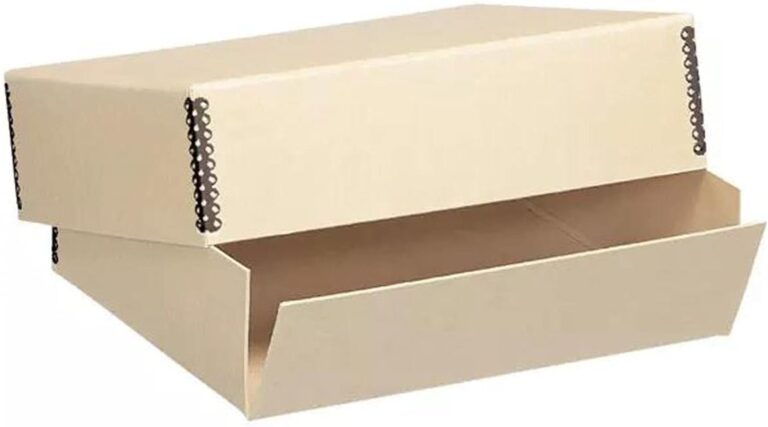
Best Archival Quality Photo Storage Boxes

Archival photo storage boxes are worth choosing when you want safer, more organized long-term storage for prints, negatives, slides, or albums. The best box is the one that matches your format, fits your space, and works with a stable storage environment.
archival quality photo storage boxes are a smart way to protect printed memories, negatives, slides, and albums when you want more than a decorative box. They matter most when you care about slowing fading, reducing dust and handling damage, and keeping a collection organized for the long term.
For Hurrell Editions readers, the best choice is usually the one that matches your format, your storage space, and how often you need to access the collection. If you also want a broader overview of preservation methods, our archival storage guide is a helpful companion piece.
- Choose by format: Prints, negatives, slides, and albums need different box sizes and layouts.
- Material matters: Acid-free, lignin-free construction is the baseline; buffered or unbuffered depends on the contents.
- Storage location counts: Stable rooms and closed shelving protect collections better than attics, garages, or damp basements.
- Labeling is part of preservation: Clear labels reduce handling, confusion, and re-sorting.
- Boxes are one layer: Sleeves, dividers, and climate control can still be necessary for better protection.
What Archival Quality Photo Storage Boxes Are and Why They Matter
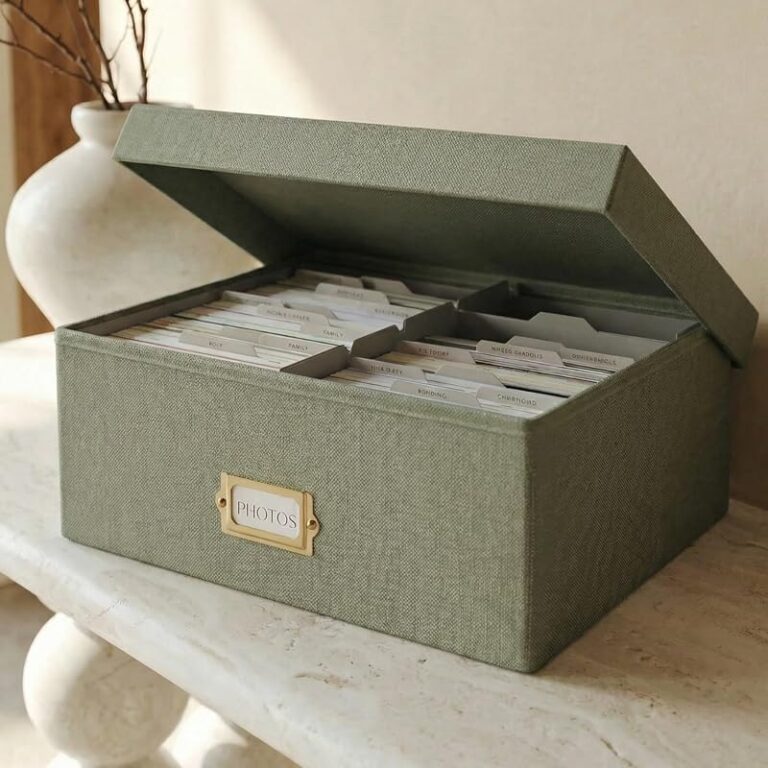
Archival photo storage boxes are containers designed to help preserve photographs and related materials by limiting exposure to dust, light, pollutants, and rough handling. In practice, that usually means boxes made with acid-free and lignin-free materials, plus a construction style that supports safer long-term storage than ordinary cardboard or decorative keepsake boxes.
The main value is not glamour; it is stability. Photos stored in the wrong box can pick up discoloration, curling, abrasion, or surface marks over time, especially if the box is kept in a warm room, a closet with fluctuating humidity, or a shelf near sunlight. A properly made archival box cannot fix a poor environment, but it can reduce avoidable damage.
These boxes are especially useful for family archives, wedding prints, professional work samples, inherited photos, and mixed collections that need to be sorted before they become harder to manage. If your collection includes broader paper ephemera, portfolios, or oversized prints, you may also want to compare box styles with archival portfolio cases.
How to Choose the Right Archival Box for Your Photo Collection
Choosing well starts with the material, then moves to size, access, and how the box will live in your home. The right box should protect the contents without making the collection awkward to use or impossible to store neatly.
Materials and construction: acid-free, lignin-free, buffered, and unbuffered
Acid-free means the materials are made or treated to reduce acidity that can harm paper over time. Lignin-free means the box avoids a wood component that can break down and contribute to yellowing or deterioration. These are the baseline terms to look for in product descriptions, but the exact quality still varies by manufacturer and model.
Buffered and unbuffered refer to whether the material contains an alkaline reserve. Buffered boxes are often used for paper-based items that benefit from extra protection against acid migration. Unbuffered storage is sometimes preferred for materials that may react better without added alkalinity, though the right choice can depend on the photo process, coatings, and any inserts or sleeves already in use. When the manufacturer gives preservation guidance, follow that over general assumptions.
Not every photograph benefits from the same storage chemistry. If you are preserving a mixed archive with prints, negatives, slides, and albums, the safest approach is to verify the maker’s recommendations for each format rather than assuming one box type fits all.
Size, capacity, and format: prints, negatives, slides, and albums
Size is more important than many buyers expect. A box that is too large lets items shift, bend, or slump; a box that is too small encourages overstuffing and edge damage. The best fit is one that holds the contents with enough room for sleeves, dividers, or protective interleaving without compressing the stack.
Think in terms of format first. Standard prints need different depth and footprint than negatives, slides, or bound albums. If you are storing albums, check whether the box is built for upright or flat storage, since a heavy album placed in the wrong orientation can stress the spine or warp the box over time. For negatives and slides, compatibility with sleeves or archival pages matters as much as the outer box dimensions.
- Measure the largest item you plan to store, including sleeves or protectors
- Leave room for dividers, labels, and gentle handling
- Confirm whether the box is meant for flat, upright, or stackable storage
Closure style, stackability, and label visibility
Closure style affects both protection and convenience. Lift-off lids are simple and common, while hinged or clamshell-style boxes can make frequent access easier. If the box will live on a shelf, choose a closure that stays secure without being difficult to open repeatedly.
Stackability matters in small homes, studios, and office closets. A box with a flat lid and reinforced sides usually stacks more predictably than a soft-sided or decorative container. Label visibility is equally important: if you cannot identify contents quickly, the archive becomes harder to maintain and more likely to be handled unnecessarily.
Use a visible label on the box exterior and a matching inventory note inside the lid. That way, you can identify the contents even if the outer label fades or gets covered by another box.
Best Uses by Room and Collection Type
Where you store the box affects how well it performs. Even an excellent archival container will struggle if it sits in a damp closet, near a sunny window, or on a shelf that gets bumped every day.
Home office and study storage
Home offices and studies are often the easiest places to keep photo archives because they tend to be more stable and more organized than garages or attics. A box on a high shelf or inside a closed cabinet can stay accessible while remaining out of direct light and away from daily clutter.
This setup works well for active collections: family history projects, digitization staging, client proofs, or albums that you review seasonally. If the box will be used often, prioritize a closure that opens cleanly and a label system that makes it easy to return items to the correct place.
Closet, shelf, and archive-room placement
Closets can be useful if they are dry, clean, and not prone to temperature swings. A shelf in a dedicated archive room is even better, provided the room is not exposed to plumbing leaks, exterior wall condensation, or frequent heat changes. Avoid floor placement unless the room is exceptionally dry and the box is raised above any risk of spills or flooding.
Open shelving is convenient, but it increases exposure to dust and ambient light. If you use shelves, choose boxes with tight-fitting lids and consider placing the most sensitive items in the center of the shelf rather than at the edge where they are more likely to be knocked or exposed.
Basements, attics, and garages are usually poor long-term storage zones for photo archives because humidity and temperature changes can be hard to control. If you must use one of these spaces, confirm that the room stays dry and stable throughout the year.
Which collections benefit most: family photos, professional work, and keepsakes
Family photo collections benefit because they often grow in mixed formats and need clear sorting over time. Professional photographers and artists benefit because boxed storage helps separate client work, proofs, contact sheets, and reference prints without creating visual clutter. Keepsakes such as postcards, certificates, and small memorabilia can also live safely in archival boxes when they are grouped by size and material.
For sentimental collections, the biggest advantage is not only preservation but also retrieval. A well-labeled box makes it easier to share, scan, or reorganize items later, which is especially useful when family members need access without handling everything at once.
Styling and Organization Ideas for a Cleaner Archive
Archival storage does not have to look clinical. With a little planning, the box can feel like part of the room instead of a purely utilitarian object.
Color-coding, labeling, and chronological sorting
Color-coding is one of the easiest ways to simplify a photo archive. You might assign one color to family branches, one to travel, one to professional work, or one to each decade. The method matters less than consistency, because a consistent system reduces accidental reshuffling.
Chronological sorting is often the most intuitive for long-term family collections, while project-based sorting works better for creatives and professionals. If you digitize images, mirror the same naming logic in your digital folders so the physical and digital archives support each other.
- Use removable labels so you can update categories without damaging the box
- Keep one index card or inventory sheet per box for quick reference
- Group boxes by size or purpose to make shelving look more intentional
Display-friendly storage for shelves and open cabinetry
If your storage lives in a visible room, choose boxes with a clean silhouette and a finish that looks deliberate rather than purely industrial. Neutral tones often work best on shelves because they read as calm and cohesive, especially in shared spaces where you want storage to blend in.
Open cabinetry can be a good compromise for people who want to keep archives nearby without exposing them fully. The key is visual restraint: a few well-labeled boxes usually look more refined than a crowded shelf of mismatched containers.
Matching storage boxes to existing decor in 2026 interiors
In current interiors, archival storage often works best when it follows the room’s existing material language. In minimalist spaces, matte neutrals and simple typography feel at home. In warmer, collected rooms, paper-wrapped or linen-look boxes can complement wood, brass, and soft textiles without drawing too much attention.
The goal is harmony, not disguise. If the box will be visible, treat it as part of the room’s storage story and choose a finish that supports the rest of the furniture rather than competing with it.
Think of your archive shelf as a quiet gallery wall for memory: orderly, calm, and easy to live with every day.
Archival Performance: Benefits, Limitations, and Common Buying Mistakes
Archival boxes are helpful, but they are not magic. Understanding what they do well, and what they cannot do alone, helps you spend money where it actually improves preservation.
Protection from light, dust, handling, and humidity
A good box helps block light, which is one of the main causes of fading and color shift. It also reduces dust exposure and minimizes direct handling, both of which matter when a collection is revisited repeatedly. Better construction can also offer modest buffering against short-term environmental changes.
That said, the box is only one layer of protection. Photos kept in sleeves, separated by tissue or interleaving when appropriate, and stored in a stable room will generally fare better than photos placed loosely in a box, even if the box itself is archival grade.
Where archival boxes fall short compared with sleeves, binders, and climate control
Archival boxes are excellent for bulk storage, but they are not always the best solution for every use case. Sleeves can be better for items you need to inspect frequently. Binders can help with curated presentations or contact sheets. Climate control matters when the room itself is the weak link, because a premium box cannot fully offset chronic humidity or heat.
For collections that are handled often, the outer box should be part of a larger system rather than the only protective layer. If you are building a more complete archive, consider whether the collection needs sleeves, folders, or specialized containers in addition to the box.
- Strong for long-term, low-touch storage
- Helps reduce dust, light, and casual handling
- Can make a collection easier to sort and store neatly
- Not a substitute for stable room conditions
- Less convenient for items you access constantly
- Quality varies widely by material and build
Mistakes to avoid: oversized boxes, mixed materials, and poor labeling
Oversized boxes are a common mistake because they seem flexible, but too much empty space can let contents slide and crease. Mixed materials are another issue: if the box is archival but the dividers, tape, or inserts are not, the weakest material can undermine the whole setup.
Poor labeling creates friction that eventually leads to rough handling. If you have to open multiple boxes to find one image, the archive becomes less usable and more likely to be reorganized carelessly. Clear labels and a simple inventory system are part of preservation, not just convenience.
Care, Maintenance, and Long-Term Storage Tips
Once the box is filled, maintenance is still part of the process. A little routine care helps you catch problems early and keep the archive usable for years.
Cleaning, inspection, and reboxing schedules
Inspect boxes periodically for dust, warping, odor, insect activity, or signs of moisture. If the box shows damage or the contents have shifted too much, rebox the collection before the problem spreads. Cleaning should be gentle and dry; avoid wet cleaning methods unless the manufacturer specifically says they are safe for the material.
A practical schedule is to check active collections more often than long-term sealed archives. Anything you access seasonally deserves a closer look than a box that remains undisturbed on a stable shelf.
Ideal storage conditions for longevity
Cool, dry, and stable conditions are the goal. Sudden swings in humidity or temperature are harder on photographs than many people realize, especially when boxes are opened and closed frequently. Keep storage away from direct sunlight, exterior leaks, vents that blow hot air, and areas that collect condensation.
If your home has multiple storage options, choose the room with the most consistent environment rather than the room with the most space. Preservation usually depends more on stability than on square footage.
How to handle photos safely before placing them in storage
Handle prints with clean, dry hands or with gloves if the material or condition calls for it. Remove clips, rubber bands, and sticky notes that can leave marks or stress the paper. If items are fragile, place them into sleeves or interleaving before they go into the box so they are not rubbing directly against one another.
Group items by format, date, family branch, or project so the box system starts organized.
Use sleeves, folders, or interleaving where appropriate to reduce abrasion.
Mark the box before it goes on the shelf so the system stays easy to maintain.
Final Verdict: Are Archival Quality Photo Storage Boxes Worth It?
For most people who care about preserving printed memories, the answer is yes. Archival quality photo storage boxes are worth it when you want a cleaner, safer, more organized way to keep photos out of light, dust, and casual damage, especially if your collection is valuable to you emotionally or professionally.
Best-fit recommendations by collector type and budget
For family archives, choose a sturdy, clearly labeled box with enough room for sleeves and dividers. For professional collections, look for stronger construction, better stackability, and a format that matches the way you review work. For keepsakes and mixed memorabilia, prioritize flexibility and an interior layout that keeps items from shifting.
Budget matters, but the cheapest option is rarely the best value if the materials are flimsy or the box is the wrong size. If you want a more curated presentation for visible shelves, a neutral, well-finished box is usually the most versatile choice.
When to upgrade from basic storage to archival-grade solutions
Upgrade when the collection becomes harder to manage, more meaningful to preserve, or more exposed to risk. If you are storing originals, irreplaceable prints, negatives, or a growing family archive, archival-grade storage is a practical step rather than a luxury.
The simplest rule is this: if the photos matter enough that you would regret avoidable damage, move them into a box designed for preservation rather than convenience alone. That upgrade will not solve every storage problem, but it gives the collection a much better chance of staying intact and organized.
Frequently Asked Questions