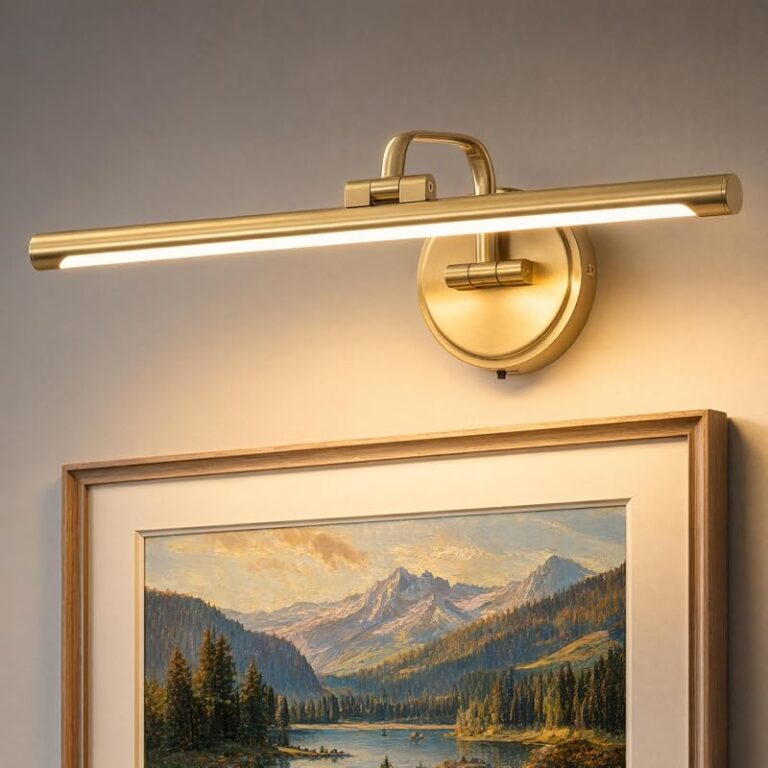
What Batteries Do Picture Lights Use

Picture lights usually use AA batteries, AAA batteries, or built-in rechargeable lithium-ion batteries. Small button-cell batteries are more common in remotes or tiny accent lights than in main picture lights.
When people ask what batteries do picture lights use, the answer is usually AA, AAA, built-in rechargeable lithium-ion batteries, or small button-cell batteries for compact models and remotes. The right option depends less on the category name and more on the light’s size, brightness, controls, and how often you want to deal with battery changes or charging.
Battery-operated picture lights are popular because they bring focused art lighting to places where hardwiring or visible cords would feel inconvenient or visually distracting. For renters, gallery-wall decorators, and anyone styling a hallway or living room without adding electrical work, the power source matters almost as much as the finish or fixture shape.
- Most common types: AA, AAA, and rechargeable lithium-ion are the main battery options.
- Size matters: Larger, brighter lights usually need more battery capacity.
- Rechargeable value: Built-in rechargeable models often suit frequent evening use better.
- Check runtime carefully: Battery life claims may refer to low brightness settings.
- Placement affects results: Beam angle, glare, and mounting height matter as much as battery type.
What Batteries Do Picture Lights Use? The Short Answer for 2026
AA, AAA, rechargeable lithium-ion packs, and button-cell batteries at a glance
Most battery picture lights fall into four power categories:
| Battery Type | Best For | Key Consideration |
|---|---|---|
| AA batteries | Medium and larger picture lights | Easy to replace, but ongoing battery cost can add up |
| AAA batteries | Slim, lightweight, lower-output lights | Compact, but usually shorter runtime than AA-powered models |
| Rechargeable lithium-ion | Frequent use and cleaner long-term maintenance | Needs regular charging access and model-specific charge times |
| Button-cell batteries | Small remotes or tiny accent lights | Not ideal for bright, primary art lighting |
AA-powered models are common in traditional bar-style picture lights because they can support moderate brightness without making the fixture too bulky. AAA batteries often appear in smaller lights where low profile matters more than maximum runtime. Rechargeable lithium-ion systems are increasingly common in modern cordless designs, especially where the fixture is meant to be used often and recharged through USB or a magnetic cable.
Button-cell batteries do show up, but usually in mini accent lights or in the remote rather than the main fixture. If you want dependable illumination for a framed print, mirror, or canvas, button cells are rarely the best main power source.
Why battery type depends on light size, brightness, runtime, and mounting style
A picture light’s battery needs are driven by energy demand. A wider fixture with more LEDs, a stronger beam, or a higher lumen output will drain power faster than a small accent light with a soft glow. That is why two lights that look similar online can have very different battery setups.
Mounting style also matters. A light mounted high above a large frame may need more output to spread light evenly across the artwork. A compact clip-on light or a fixture over a small frame can often get by with less power. If you are comparing styles, it helps to think about the light as a combination of beam width, brightness, and battery capacity rather than just “battery operated” as one broad category.
How Battery-Operated Picture Lights Are Powered
Replaceable batteries vs built-in rechargeable systems
Replaceable-battery picture lights usually open at the back, side, or underside to accept AA or AAA cells. Their main advantage is convenience when you do not want downtime: once the batteries fade, you swap them and move on. This setup can be especially practical in guest rooms, hallways, or seasonal displays where the light is used intermittently.
Built-in rechargeable systems trade battery swapping for charging cycles. Many newer cordless picture lights use an integrated lithium-ion battery that charges through USB-C, micro-USB, or a magnetic charging connection, depending on the model. These can feel tidier over time because you are not repeatedly buying disposable batteries, but they are only convenient if the fixture is easy to remove or easy to charge in place.
If you are still deciding whether cordless art lighting makes sense for your setup, Hurrell Editions also explains the broader pros and trade-offs in do battery operated picture lights work.
LED efficiency, lumen output, and what that means for battery drain
Nearly all modern battery picture lights use LEDs because LEDs produce useful light with relatively low power draw. That efficiency is what makes battery operation realistic in the first place. Even so, “LED” does not automatically mean long runtime.
A brighter LED array still consumes more energy than a dimmer one. So does a light with multiple brightness settings when used mostly on high. If a manufacturer lists lumen output, that can help you compare likely performance: in general, more lumens mean a stronger beam and faster drain, especially on compact battery systems.
For art lighting, brightness should be balanced rather than extreme. Too little output makes the fixture decorative rather than functional. Too much output can create glare, hotspots, or a washed-out look on reflective glazing.
Runtime claims vary by brightness setting. A manufacturer may quote a long runtime based on the lowest mode, not the brightest one, so check whether the listed battery life matches how you actually plan to use the light.
Remote controls, timers, motion features, and their effect on runtime
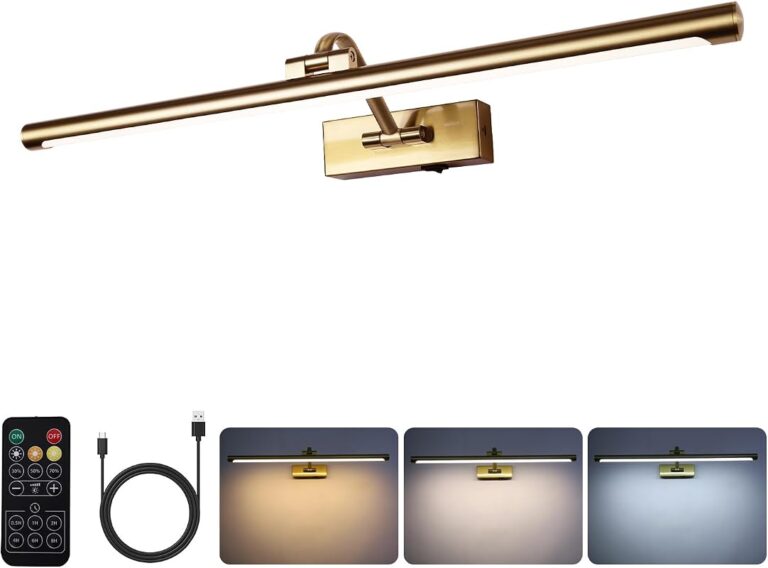
Extra features can improve convenience, but they also affect battery life. Remote controls themselves often use button-cell batteries, while the picture light may use AAs, AAAs, or a rechargeable pack. Dimmers, preset timers, auto-off functions, and motion activation all influence how quickly the main battery drains.
Timers can actually help extend runtime because they prevent lights from staying on longer than needed. A fixture that turns off automatically after a few hours may be more efficient in real homes than one left glowing all evening. Motion features are less common for formal art lighting, but they do appear in some multipurpose wall lights and can be useful in hallways.
Look beyond the feature list and ask a practical question: will this control system make the light easier to live with, or will it add another battery to manage?
How to Choose the Right Battery Type for Your Picture Light
What to look for in battery life, charging convenience, and replacement cost
The right battery setup depends on your routine. If you plan to switch the light on for a few hours every evening, rechargeable models usually make more sense over time. If the light is mostly for occasional entertaining, holiday styling, or a guest room, replaceable AA or AAA batteries may be perfectly reasonable.
Think about these questions before buying:
- How often will the light be used each week?
- Can you easily reach the fixture to recharge or change batteries?
- Does the battery compartment open cleanly without removing the whole light?
- Is the runtime listed for high mode, low mode, or unspecified settings?
- Will ongoing battery replacement cost bother you more than periodic charging?
Replacement cost is often overlooked. A battery light may seem simpler upfront, but frequent use can make disposable cells less appealing over time. Rechargeable designs reduce waste and repeat purchases, though their convenience depends heavily on charging access.
Brightness, beam spread, and colour temperature for art lighting
Battery type is only part of the decision. A good picture light also needs the right beam pattern and color tone for the artwork below it. Warm white light often feels softer and more traditional, while neutral white can look cleaner and crisper in more modern interiors. Extremely cool light can make art feel clinical and may be unflattering on vintage prints, warm-toned paintings, or wood frames.
Beam spread matters just as much as brightness. A narrow beam may leave the frame edges dim, while an overly concentrated beam can create a bright stripe across the center of the artwork. Wider art generally needs a wider fixture or a broader light spread to avoid uneven coverage.
If your artwork includes glazing, metallic accents, or high contrast, careful placement becomes especially important. For more on preservation concerns, see Hurrell Editions’ guide to do LED lights fade pictures, which covers why lower-heat LED lighting is generally preferred over older bulb types.
Safety basics for artwork, walls, and long-term indoor use
Battery picture lights are generally simpler than wired fixtures, but they still need sensible placement. Avoid mounting a fixture where it traps heat against delicate materials, sits in direct sunlight for long periods, or exposes artwork to unnecessary brightness all day and night.
For heavy framed art or mirrors, always confirm that the wall type, hanging hardware, and mounting method are suitable for the combined setup. The light itself may be lightweight, but the wall arrangement as a whole still needs secure installation. If the piece is especially heavy, oversized, or mounted on difficult wall surfaces, a professional installer is worth considering.
Do not assume adhesive mounting works for every picture light or wall finish. Painted drywall, plaster, textured walls, and heavier fixtures may require more secure hardware, and mirrors or large frames should be mounted with appropriate weight-rated support.
Which Picture Lights Suit Different Rooms and Art Displays
Hallways, living rooms, bedrooms, and dining spaces
In hallways, battery picture lights are often used for short viewing moments rather than all-evening illumination. That makes AA or AAA models more practical there than they might be in a living room. In a living room, where the light may be part of the nightly atmosphere, rechargeable options can feel easier to maintain.
Bedrooms usually benefit from softer output and warmer color temperature, especially if the light is meant to add mood rather than gallery-level emphasis. Dining spaces can handle a more dramatic effect, particularly over a single statement artwork or mirror, as long as glare is controlled from seated eye level.
Single frames, oversized art, mirrors, and gallery wall arrangements
A single medium frame is the easiest scenario: most standard battery picture lights are designed for this kind of installation. Oversized art is more demanding. It may need a wider fixture, stronger output, or even more than one light source depending on the display and the room.
Mirrors can be beautiful with picture lights, but reflectivity raises the risk of visible glare. In those cases, beam angle and mounting height matter more than raw brightness. Gallery walls are another special case. One central light can work for a tightly grouped arrangement, but sometimes individual accent lighting or a nearby lamp creates a more balanced result.
If your display is layered on shelving rather than directly mounted, a picture ledge can change how you think about lighting placement, especially when you want flexibility to swap frames without remounting the fixture.
Matching finishes and fixture styles to traditional, modern, and eclectic decor
Battery picture lights come in classic finishes like brass, bronze, black, and polished metallics, as well as streamlined modern silhouettes. Traditional rooms often suit bar-style fixtures with warmer finishes and softer light. Modern interiors usually look better with cleaner lines, slimmer profiles, and understated matte finishes.
Eclectic spaces have more freedom. A vintage-inspired light over contemporary art can add tension in a good way, while a sleek black fixture can ground a mixed gallery wall. The key is to coordinate the light with the frame finish, nearby hardware, and the overall visual weight of the room.
In a room with mixed frame finishes, a matte black picture light often acts as a quiet bridge between warm woods, brass accents, and modern furniture.
Placement, Sizing, and Installation Basics for Battery Picture Lights
Choosing the right light width for the frame or artwork below
A common rule of thumb is to choose a fixture that is narrower than the artwork, often around half to two-thirds of the frame width depending on beam spread and style. This is not a strict law, but it is a helpful starting point. A fixture that is too short may look undersized and leave the edges dim, while one that is too wide can overpower the piece visually.
Large canvases, shadow boxes, and deep frames may need more generous coverage. If you are displaying dimensional work, such as objects in a shadow box frame, pay extra attention to depth and shadowing because the light has more surface variation to cover.
How high above the frame to mount the fixture for even coverage
Mounting height influences both coverage and glare. Too close to the top edge and the light may create a harsh hotspot. Too high above the frame and the beam can spill upward onto the wall or lose focus on the artwork.
Exact placement varies by fixture design, beam angle, and art size, so the safest approach is to review the manufacturer’s mounting guidance and, when possible, temporarily test the position before fixing it permanently. Even a small adjustment can make the difference between soft, even illumination and distracting reflection.
If the artwork has glass or acrylic glazing, test the light at different heights with the room lights dimmed. Reflections that seem minor in daylight often become much more obvious in the evening.
Wall type, fixing method, and hanging hardware considerations
Before mounting any battery picture light, check what kind of wall you have: drywall, plaster, masonry, paneling, or another surface. The right fixing method depends on both the wall and the fixture weight. Included hardware is not always ideal for every wall type, so it is wise to confirm compatibility before installation.
If the light is being added above a ledge display, grouped frames, or heavier decor, make sure the full arrangement still makes sense structurally. Decorative flexibility should not come at the expense of secure hanging.
Spacing and layout tips for gallery walls and grouped frames
For gallery walls, treat the arrangement as one visual unit before deciding on the light. A single centered fixture works best when the grouping is compact and roughly rectangular. If the frames are spread out or asymmetrical, one light may leave some pieces in shadow.
- Center the light over the visual mass of the arrangement, not just the widest frame.
- Keep fixture scale proportional to the overall grouped display.
- Use softer brightness for bedrooms and stronger accenting for transitional spaces like hallways.
- If frames are frequently swapped, choose a mounting setup that leaves room for layout changes.
Benefits and Limitations of Different Battery Options
When AA and AAA batteries are practical
AA batteries are practical when you want straightforward replacement, broad availability, and enough capacity for moderate output. They are especially useful for medium-size picture lights in spaces where usage is occasional or seasonal.
AAA batteries work best in compact fixtures where slim design matters. They can be a smart fit for small frames, narrow hallways, or decorative accent lighting, but they are generally less ideal for bright, long-duration use.
When rechargeable picture lights offer better value
Rechargeable picture lights often offer better value when the fixture is used regularly. If the light comes on most evenings, built-in lithium-ion power can be easier to live with than constantly buying and replacing disposable batteries. It also tends to suit people who prefer lower waste and fewer repeat purchases.
The caveat is access. A rechargeable light is only convenient if charging it does not become annoying. Some models detach easily from their mount, while others are simpler to charge in place. Always check the official listing for charging method, expected runtime, and battery replacement policy if the internal battery eventually degrades.
Trade-offs in brightness, maintenance, sustainability, and upfront cost
There is no universally best battery option, only trade-offs:
- Replaceable batteries are simple and widely available.
- Rechargeable systems can reduce ongoing waste and repeat purchases.
- Battery power avoids visible cords and often suits renters well.
- LED battery lights can provide focused art lighting with relatively low energy use.
- Disposable batteries can become expensive with frequent use.
- Rechargeable lights may be inconvenient if charging access is awkward.
- Brighter fixtures usually mean shorter runtime.
- Compact battery lights may not be strong enough for oversized art.
Common Mistakes to Avoid When Buying and Styling Battery Picture Lights
Choosing a light that is too dim, too cool, or too small for the artwork
One of the most common mistakes is shopping by finish alone. A beautiful brass or black fixture will still disappoint if it is undersized for the frame or too weak to illuminate the art properly. Another frequent issue is buying a very cool-toned light that makes the display feel stark rather than inviting.
Always compare the light’s intended coverage with the width and style of the artwork. If the listing lacks clear brightness or sizing information, that is a sign to verify details before buying.
Ignoring battery compartment access and charging frequency
A picture light may look perfect in photos but become frustrating in daily use if the battery door is awkward, the charging port is hard to reach, or the fixture must be fully removed every few days. Convenience is not a minor detail here; it is part of the product’s actual value.
Check official product photos and specifications for how the battery is accessed, how the light is recharged, and whether a remote is included. These practical details are often more important than a long feature list.
Overlooking glare, shadowing, and nearby sunlight or heat sources
Even a well-designed battery picture light can look poor if it is mounted without considering reflections and room conditions. Glass-covered prints, glossy photographs, and metallic frames are especially sensitive to glare. Nearby windows can also compete with the light during the day and expose the artwork to unnecessary UV and heat.
Try to position art lighting where it supports the display rather than fighting with natural light, overhead fixtures, or strong lamps in the same sightline.
Care, Maintenance, and Final Recommendation
Battery care, safe charging habits, and when to replace cells
For replaceable batteries, follow the polarity markings carefully and avoid mixing old and new cells or different battery brands in the same fixture unless the manufacturer specifically allows it. If the light will sit unused for a long period, removing disposable batteries can help reduce the risk of leakage.
For rechargeable models, use the recommended charging method and avoid forcing incompatible cables or adapters. If the battery no longer holds a useful charge, check the manufacturer’s documentation to see whether the battery is serviceable or whether the fixture is considered non-replaceable.
Cleaning finishes and protecting artwork over time
Dust the fixture gently with a soft dry cloth and avoid harsh cleaners unless the manufacturer’s care instructions say otherwise. Finishes can vary, and what is safe for one metal tone or painted surface may not be safe for another.
Artwork protection matters too. Keep the light clean so dust does not dull output, but also keep the beam moderate and well placed. Good art lighting should reveal the piece, not stress it visually or physically over time.
Who battery-operated picture lights are best for, and when a wired option may be better
Battery-operated picture lights are best for renters, flexible decorators, gallery-wall stylists, and homeowners who want cleaner-looking art lighting without opening walls or running visible cords. They are especially appealing for occasional to moderate use, smaller frames, and spaces where convenience and appearance matter more than maximum brightness.
If you need powerful, all-evening illumination over large artwork, or if the light will be used daily as a major room feature, a wired or plug-in picture light may be the better long-term solution. For everyone else, the smartest choice is simple: pick the battery type that matches your usage habits, confirm the official runtime and mounting details, and prioritize beam quality and access over marketing extras.
Frequently Asked Questions