Why Cant We Have Black Led Lights Gumball Picture

You can’t have true black LED light because black is the absence of visible light. Most people actually mean a black-finished picture light, a UV blacklight effect, or a dark accent-lit display for Gumball artwork.
If you’re searching for why cant we have black led lights gumball picture, the short answer is that LEDs can’t produce “black light” in the literal sense because black is the absence of visible light. In most decor conversations, people are actually talking about a black-finished picture light, a UV blacklight effect, or an LED-lit display that makes Gumball artwork look more dramatic on the wall.
That distinction matters, because each option creates a very different result. A matte black fixture can disappear visually and make the artwork stand out, while a UV-style LED is more of a novelty effect that only works with certain inks, posters, and room moods. If you’re styling a framed Gumball print, poster, or collector display, the smartest setup usually comes down to matching the type of light to the art, frame, and room rather than chasing the idea of a “black” beam.
- Core fact: LEDs emit visible light, but black is not a projected light color.
- Common meaning: “Black LED lights” usually means a black fixture, not black illumination.
- Best for art: A dimmable picture light with good color quality is usually the most practical choice.
- Use UV carefully: Blacklight effects suit novelty displays more than everyday framed art viewing.
- Buy smarter: Check size, beam spread, power source, finish, and mounting method before ordering.
Why you can’t get true black LED light in a Gumball picture setup
The phrase “black LED light” sounds intuitive, but it mixes two separate ideas: the color of the fixture and the color of the light output. LEDs emit light. Black, in lighting terms, is not a color you project onto a wall the way you project warm white, cool white, red, or blue. Black is what you perceive when visible light is absent or heavily absorbed.
How LEDs create visible light and why black is the absence of illumination
An LED works by converting electrical energy into visible light at specific wavelengths. That means the diode is generating something you can see. Black is different because it is not a visible wavelength being added to the scene. Instead, it is the lack of reflected visible light reaching your eyes.
In a framed art setup, this is easy to picture. If you shine a warm white picture light onto a Gumball print, the paper and ink reflect that light back to you. If the room goes dark and the picture light is off, the image may become hard to see because there is no illumination. That darkness is the closest thing to “black light” in the literal sense, but it is not a usable art-lighting product.
What people usually mean by “black LED lights” in decor, art, and display styling
Most shoppers mean one of three things when they use this phrase. First, they may want a black-colored picture light mounted above the frame. Second, they may mean a UV or blacklight-style LED that creates fluorescent glow. Third, they may want a dark, moody backlit look where the artwork is edged with light but the fixture itself stays subtle.
Once you separate those meanings, buying gets much easier. You stop looking for an impossible black beam and start choosing between a practical art light, an effect light, or a display-lighting system.
What a “black LED lights Gumball picture” can refer to in 2026 interiors
In current interiors, this phrase usually points to a styling trend rather than a technical product category. Animation art, pop-culture prints, and collector displays often use darker frames, floating shelves, or shadow-box presentations, so “black LED lights” becomes shorthand for a cleaner, less reflective presentation.
Black-finished picture lights for framed Gumball artwork
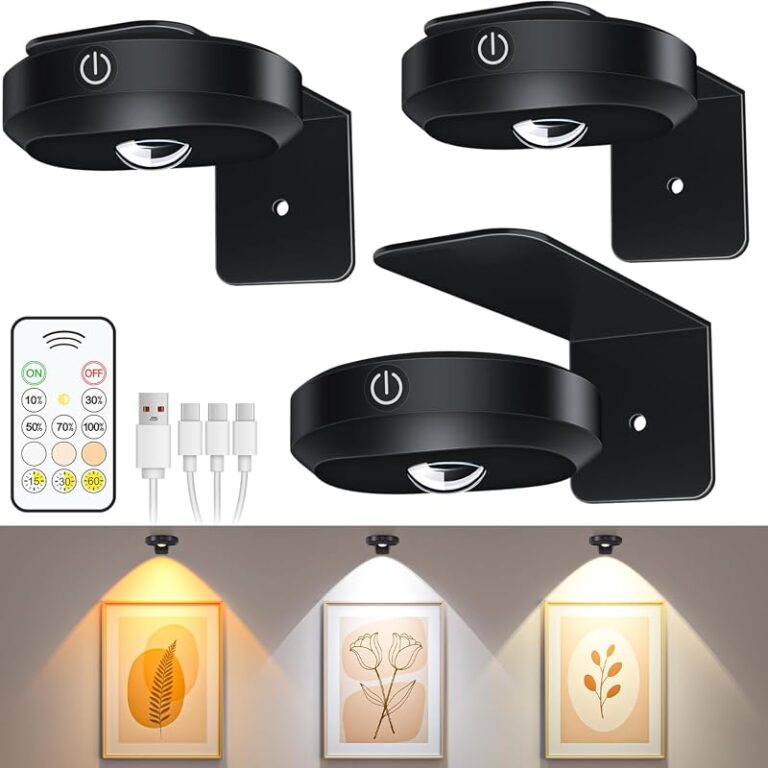
This is the most practical interpretation. A black-finished LED picture light is simply a picture lamp with a black exterior housing. It can be matte, satin, brushed, or powder-coated depending on the model. The light coming out is still warm white, neutral white, or cool white, but the fixture itself blends into black frames, dark walls, or monochrome decor.
For cartoon or animation prints, black fixtures often look sharper than polished metal because they pull less visual attention away from the art. If you’re pairing your print with a dark frame, a guide to black floating picture frames can help you build a more cohesive look.
UV or blacklight-style LEDs for glow effects
Some shoppers really want a glow-in-the-dark or arcade-style effect. In that case, they are usually looking for UV LEDs rather than standard picture lights. UV lighting can make certain neon inks, fluorescent accents, and novelty posters pop, but it is not ideal for everyday art viewing.
Many standard prints will not react much under UV light at all. Even when they do, the effect can distort colors, reduce legibility, and make the display feel more theatrical than refined. For a playroom or media room, that can be fun. For a framed collectible print you want to appreciate clearly, it is usually a secondary effect rather than the main lighting solution.
Backlit wall art, shadow-box frames, and LED accent displays
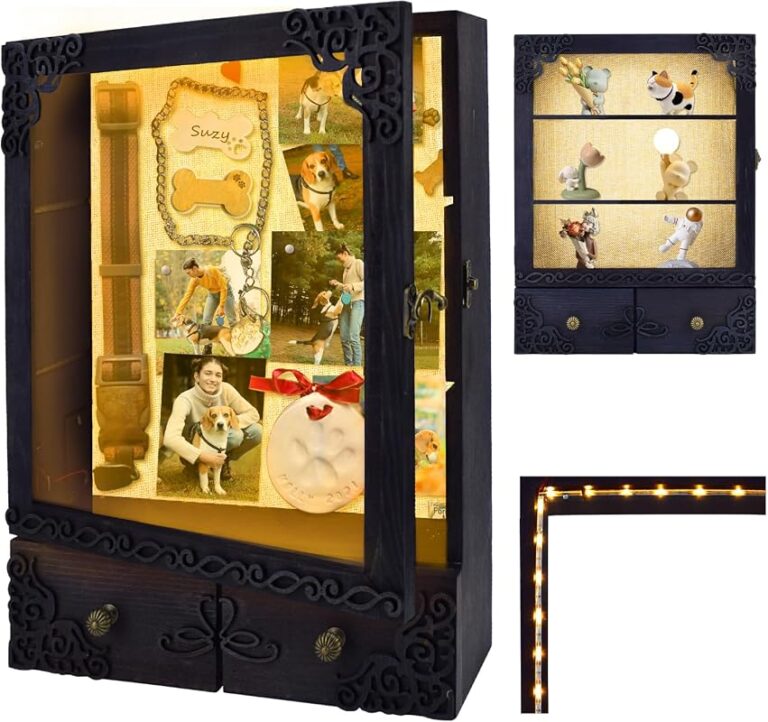
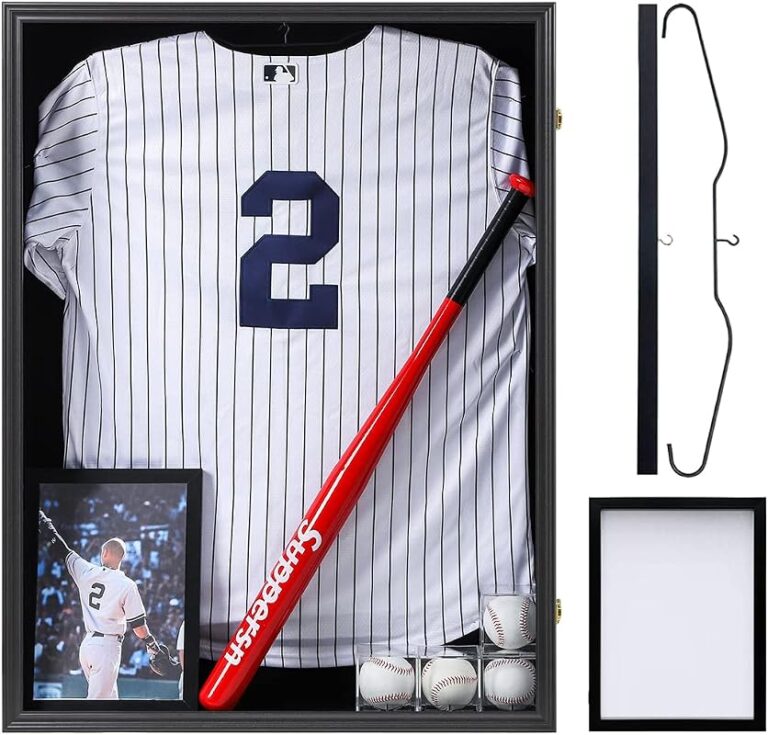
The third meaning is a display style where LEDs are hidden behind or around the artwork. This can work especially well with layered pieces, deep frames, and collector arrangements. A black shadow box frame can make this look more intentional by adding depth and creating a clean boundary between the art and the wall.
Backlighting is less about illuminating the print surface and more about creating atmosphere. It works best when the goal is mood, edge glow, or dimensional presentation. If your main goal is seeing the colors and details of the image accurately, a front-facing picture light is usually the better choice.
UV LEDs, standard picture lights, and backlit accent strips are different products with different purposes. Check the official product listing to confirm the actual light type before buying.
What to look for when choosing LED lighting for a Gumball picture
Once you know what kind of effect you want, focus on the practical specs that shape how the artwork will actually look on the wall.
Brightness, beam spread, and glare control for artwork
Brightness should match the size of the picture and the ambient light in the room. Too dim, and the artwork looks flat or underlit. Too bright, and the print can develop glare, hot spots, and washed-out highlights, especially under glass or acrylic.
Beam spread matters just as much. A narrow beam may create a bright strip across the top half of the frame, while a wider beam can cover the whole artwork more evenly. Look for fixtures that describe their coverage range, dimming options, or adjustable heads if your piece is medium to large.
If the artwork is glazed with glass or acrylic, dimmability is one of the most useful features you can get. It gives you a way to reduce reflections without changing the fixture.
Color temperature and CRI for accurate print and poster colors
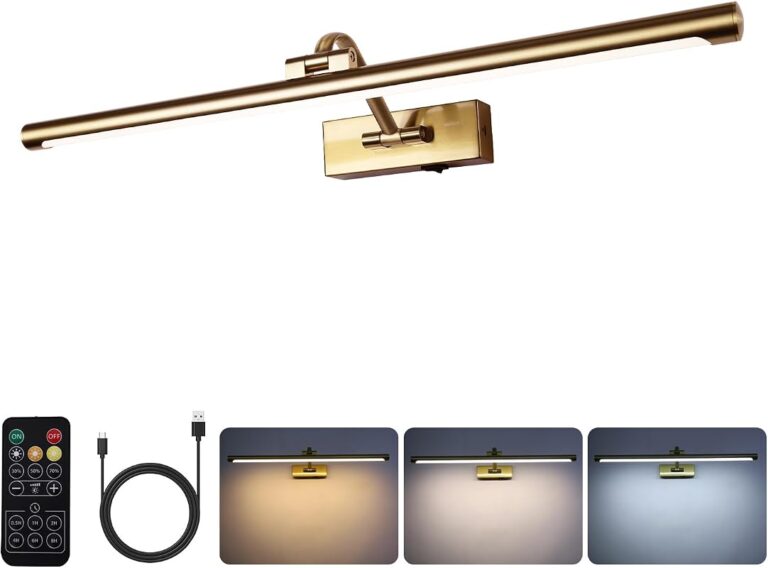
Color temperature affects mood. Warm white tends to feel cozy and softer, while neutral light often shows printed colors more naturally. Cool white can look crisp, but it may make some posters feel harsher than intended.
CRI, or color rendering index, tells you how accurately colors appear under the light. For artwork, higher color accuracy is generally better. Since specifications vary by model, confirm the manufacturer’s stated color temperature and CRI before buying if faithful color appearance matters to you.
If you are concerned about long-term display effects, it also helps to read more about whether LED lights fade pictures, especially for prints displayed for long periods.
Power source options: hardwired, plug-in, rechargeable, and battery-powered
Hardwired picture lights look the cleanest, but they are the least flexible and may require professional installation. Plug-in models are simpler and often brighter, though cable visibility becomes part of the design challenge. Rechargeable and battery-powered lights are popular for renters, gallery walls, and spaces where wiring is inconvenient.
Battery options can work very well for lighter-use displays, but runtime, charging habits, and output consistency vary by model. If you’re comparing convenience and performance, see are battery operated picture lights any good and, if you prefer rechargeable options, do battery picture lights need to be charged.
Black finishes, frame compatibility, and overall visual balance
Not all black finishes look the same. Matte black tends to disappear visually and suits modern or monochrome rooms. Satin black can feel slightly softer. Brushed dark metal finishes may work better if your hardware, shelving, or nearby fixtures are not pure black.
Think about the frame too. A black fixture above a thin black frame can look sleek and graphic. Above a bright acrylic or pale wood frame, the same light may feel too heavy unless there are other dark accents nearby to tie it in.
Best sizing and placement rules for picture lights and framed wall art
Good styling is often less about the brand and more about scale and placement. Even a nice fixture can look awkward if it is too small, too high, or too bright for the frame.
How wide the light should be compared with the frame
As a general rule, picture lights often look best when they are noticeably narrower than the frame, rather than equal to the full width. That keeps the fixture from overpowering the art. Very small lights on wide frames, however, can create uneven coverage and a top-heavy look.
Always compare the fixture width with the visible art area, not just the outer frame measurement. Deep mats and wide borders change how much light coverage you actually need.
Ideal mounting height, distance from the frame, and beam angle
The light should sit high enough to spread across the piece, but not so high that it spills onto the wall above. The correct distance varies by fixture arm, shade design, and beam angle. Adjustable lights are more forgiving because you can fine-tune the throw after installation.
If the art is behind reflective glazing, a slightly altered angle can reduce mirror-like glare. Small changes often make a bigger difference than switching bulbs or finishes.
Spacing and layout tips for single prints, pairs, and gallery walls
A single Gumball print can take one centered picture light. A pair of matching prints usually looks best with one light per frame rather than one oversized light trying to cover both. In a gallery wall, individual picture lights can become cluttered fast, so accent lighting from above or nearby may create a cleaner result.
If your display sits on shelving rather than being permanently mounted, a picture ledge layout can give you more flexibility for rotating prints and adjusting spacing over time.
Wall type, hanging hardware, weight limits, and cable management
Before installing any picture light or heavy framed piece, confirm your wall type, the hardware included, and the weight limits for both the frame and the fixture. Drywall, plaster, masonry, and paneling all behave differently. If the light is hardwired or the piece is heavy, it is wise to consult a qualified installer.
Cable management matters too. A visible cord can be fine in casual spaces, but in a polished display it should look intentional rather than accidental. Cord covers, nearby outlets, and shelf placement can all affect which power source makes the most sense.
- Measure the frame width, visible art area, and available mounting space above the piece.
- Confirm whether you want true artwork illumination, a UV glow effect, or hidden accent lighting.
- Check the official listing for dimming, color temperature, CRI, power source, and included hardware.
- Match the black finish to the frame, shelving, and nearby metal accents.
Which rooms and decor styles suit this look best
A black fixture or moody LED display can look excellent, but it works best in rooms where contrast and visual definition are already part of the design language.
Kids’ rooms, playrooms, media rooms, and animation-themed spaces
Gumball artwork naturally fits playful rooms, but the lighting approach should still match the function of the space. In a child’s room, soft and practical illumination usually wins over dramatic effects. In a media room or game area, darker fixtures and subtle accent glow can feel more immersive.
Modern, monochrome, pop-art, and collector-display interiors
Black picture lights are especially effective in modern and monochrome interiors because they create crisp lines without adding decorative shine. They also work well in pop-art spaces where the artwork itself supplies the color and energy. For collector displays, black fixtures often feel more gallery-like and less fussy.
How to match black fixtures with existing decor, frames, and wall colors
On white walls, black fixtures create strong contrast and a graphic look. On charcoal or deep navy walls, they become more discreet. If your frame is light wood, acrylic, or colorful, add another black accent nearby, such as shelving brackets or a lamp base, so the picture light does not feel visually isolated.
For a collector-style setup, pair a black picture light with a black frame, a slim picture ledge, and one or two restrained decor accents so the artwork stays central.
Benefits, limitations, and common mistakes to avoid
There are good reasons this look remains popular, but it is easy to choose the wrong type of light if the terminology is unclear.
Why black-finished LED picture lights can look sharper than chrome or brass
Black-finished fixtures usually reflect less ambient light than polished metals. That makes them feel quieter and more architectural. With animation art or bold graphic prints, that restraint often helps the piece look more intentional and less decorative.
Limits of blacklight effects for everyday art display
UV-style lighting is fun, but it is specialized. It does not automatically improve every print, and it can make ordinary artwork look murky instead of vibrant. It is best treated as an effect for selected rooms or occasional mood lighting, not the default answer for framed wall art.
Mistakes with over-brightness, poor color rendering, unsafe mounting, and wrong scale
The most common mistake is assuming brighter is better. For framed art, too much brightness can flatten the image and create glare. Another frequent issue is ignoring color quality, which can make printed characters and background tones look off.
Scale is another problem. A tiny light over a large frame looks underpowered, while an oversized fixture can steal attention from the art. Finally, never overlook safe mounting. Decorative success means little if the fixture, frame, or wiring setup is not appropriate for the wall and room.
- Choose a black fixture if you want the hardware to visually recede.
- Prioritize dimming and decent color quality for framed prints.
- Verify mounting method, wall compatibility, and cable path before ordering.
- Expecting a standard LED picture light to produce true “black” light.
- Using UV lighting as your only viewing light for normal artwork.
- Buying by finish alone without checking coverage, power source, and scale.
Care, maintenance, and safety basics for LED picture lighting
Once installed, picture lighting is fairly low-maintenance, but a little routine care helps the setup stay clean and reliable.
Cleaning finishes, lenses, frames, and nearby wall surfaces
Dust tends to gather on the top edge of frames, on light bars, and around mounting points. Use a soft dry cloth for routine cleaning, and follow the manufacturer’s care guidance for painted or powder-coated finishes. Avoid harsh sprays directly on the fixture, lens, frame glazing, or wall.
Battery care, charging routines, and when to replace components
If you choose a battery or rechargeable model, keep an eye on runtime consistency and charging behavior. Dimming sooner than expected, unreliable remote response, or shorter intervals between charges can indicate aging components or battery wear. Manufacturer instructions should guide charging cycles, replacement parts, and compatible batteries.
Heat, wiring, moisture, and child-safe installation considerations
LEDs usually run cooler than older lighting types, but fixtures still need proper ventilation and correct installation. Keep art lights away from moisture-prone areas unless the product is specifically rated for that environment. In children’s rooms or play spaces, make sure cords, mounts, and reachable hardware do not create avoidable hazards.
Do not guess on anchors, wiring, or weight limits for a heavy frame-and-light combination. Check wall type, manufacturer instructions, and professional installation options when needed.
Is it worth it and what’s the smartest setup to buy
For most people, yes, this look is worth considering—but only if you define the goal correctly. The best setup is rarely a mythical “black LED light.” It is usually a well-scaled black-finished picture light or a subtle accent-lighting arrangement that suits the artwork and the room.
Value by budget tier: basic accent lighting, mid-range picture lights, and premium art lighting
At the basic end, battery or rechargeable accent lights can work for casual displays, rentals, and smaller framed prints. Mid-range picture lights often give you the best balance of finish quality, dimming, and beam control. Premium art lighting tends to make the most sense when the framing, placement, and room design are already quite polished and you want the light to feel integrated rather than added on.
When to choose a black fixture, a UV effect, or no added light at all
Choose a black fixture when you want clean styling and better focus on the art. Choose a UV effect only if the print or room concept is specifically meant to glow. Skip added lighting entirely if the room already has balanced ambient light and the frame glazing is likely to create more reflection than benefit.
Final recommendation for a stylish, practical Gumball picture display
If your goal is a polished everyday display, the smartest choice is usually a dimmable black-finished LED picture light with a color temperature and beam spread suited to the size of the frame. If your goal is novelty or mood, use UV or backlighting as a secondary effect rather than your main art light. Confirm the actual specifications on the official product page, match the fixture to the frame and wall, and you’ll get much closer to the look people mean when they ask for “black LED lights” around a Gumball picture.
Frequently Asked Questions