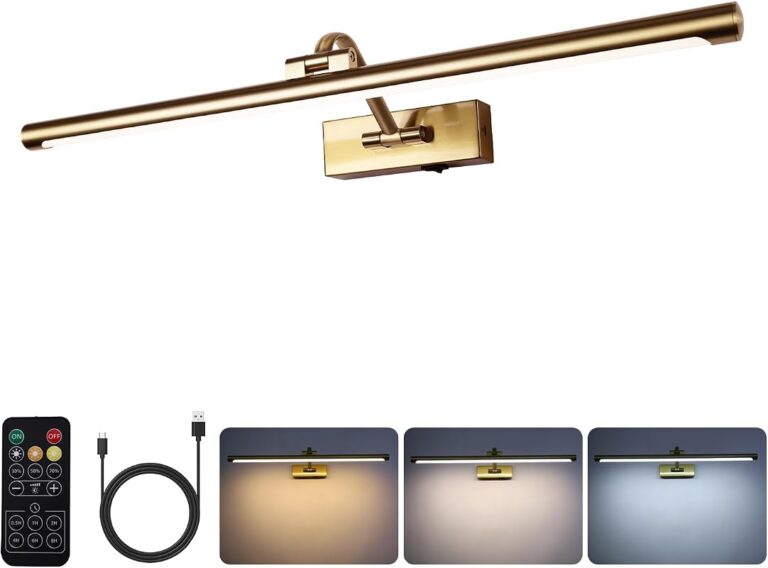
How to Use a Wireless Picture Light Remote Control

A wireless picture light remote control usually handles power, brightness, timers, and sometimes color or mode selection. The best results come from correct placement, moderate brightness, and a model that matches your room and artwork.
how to use a wireless picture light remote control is easiest to understand once you know the remote’s core jobs: power, brightness, timing, and mode selection. This guide walks through setup, placement, and buying considerations so you can choose a model that fits your room and your artwork.
- Control basics: Most remotes manage on/off, dimming, and timer settings; some add presets or color options.
- Placement matters: Center the light above the art and avoid overly bright settings that create glare.
- Buy for compatibility: Check range, pairing method, battery or charging needs, and fixture compatibility before purchase.
- Best room fit: Wireless picture lights work especially well in living rooms, hallways, dining rooms, bedrooms, and.
How to Use a Wireless Picture Light Remote Control
Most wireless picture lights are designed to be simple: charge or install the power source, pair the remote if needed, then use the buttons to switch the light on and adjust it to the right level. The exact button layout varies by model, but the basic workflow is similar across most battery-operated and rechargeable options.
Quick setup steps for turning the light on, adjusting brightness, and saving your preferred settings
Make sure the light is charged, batteries are installed, or the unit is connected to its power source before using the remote.
Press the power button on the remote. If the light does not respond, check whether pairing is required or whether the battery needs charging.
Use the dimmer controls in small steps until the artwork looks balanced rather than overly bright or washed out.
Some remotes let you set an auto-off timer, a preset brightness level, or a lighting mode that recalls your preferred look.
If your model supports memory, save the setting after you find a comfortable brightness level. That can be especially useful in hallways, dining rooms, and guest spaces where you want the same look each time the light is turned on.
Start at a lower brightness than you think you need. Picture lighting often looks more elegant when it softly emphasizes the frame and surface texture instead of overpowering the wall.
What the remote actually controls: power, dimming, timer functions, and mode selection
Remote functions vary by brand, but most wireless picture light remotes control a combination of four things: on/off power, brightness, timer settings, and lighting modes. Some also switch between warm and cool tones, while others only control brightness.
Power is the simplest function, but dimming matters most for presentation. A good remote should let you fine-tune the output so the light supports the art without creating glare on glass or flattening the colors. Timer functions are useful if you want the light to turn off automatically in the evening. Mode selection may include brightness presets, color temperature changes, or a “memory” setting that returns to your last choice.
Remote features are highly model-specific. Before buying, confirm whether the remote uses infrared, radio frequency, or app-based control, because that affects range, line of sight, and how easily it pairs with the fixture.
For readers comparing feature sets, what a dimmable picture wall light is is a useful companion guide, especially if you are deciding whether you need simple on/off control or more nuanced light adjustment. If you are still choosing a fixture, how to choose a picture light for artwork covers the broader sizing and styling questions that come before remote features.
What to Look For in a Wireless Picture Light Remote Control
The best remote is not just the one with the most buttons. It should be easy to use, reliable at the distance you need, and compatible with the finish and mounting style of the fixture. Think about how the light will actually be used in your home, not just the feature list.
Remote range, signal reliability, and pairing method
Range matters most in larger rooms, across open-plan spaces, or when the light is mounted higher on the wall. A weak signal can make a remote frustrating even if the fixture itself is attractive. Pairing methods also differ: some units connect automatically, while others require a sequence of button presses.
If you want convenience, look for clear pairing instructions and a remote that responds consistently from the places where you will stand. Hallways and dining rooms often need less range than living rooms or bedrooms with multiple seating positions.
Brightness levels, color temperature, and dimming precision
Brightness control is one of the most important specifications to check. More levels usually mean better control, but the real value is in smooth dimming rather than a long list of presets. If the light jumps from too dim to too bright, it is harder to create a refined display.
Color temperature also changes the mood. Warm light tends to flatter traditional art, paper prints, and wood frames, while cooler light can suit modern interiors or black-and-white photography. For a deeper look at wireless options, wireless LED picture light explains the broader category and what usually differs from one model to another.
Power source, battery life, and charging options
Wireless picture lights may use rechargeable batteries, replaceable batteries, or a charging cable. Each approach has trade-offs. Rechargeable models are convenient but require regular charging. Replaceable batteries can be easy to manage, but you will need to monitor battery changes. If you want a practical overview of charging expectations, how long it takes to charge a picture light can help set realistic expectations.
Check whether the remote itself also needs batteries and whether the fixture and remote use the same battery type. That small detail can affect everyday convenience more than many shoppers expect.
Build quality, finish, and compatibility with the light fixture
Good remote control is only part of the experience. The fixture should feel stable, the finish should match the room, and the remote should be easy to store or keep nearby. Compatibility matters because some remotes are designed only for a specific fixture line, while others work across a family of lights.
- Confirm the remote works with the exact fixture model, not just the same brand.
- Check whether the finish complements the frame, wall color, and nearby hardware.
- Verify how the light is powered and how often it will need charging or battery replacement.
- Read the official product listing and care instructions for pairing and maintenance details.
Where a Wireless Picture Light Works Best
Wireless picture lights are especially useful where you want a finished look without adding visible cords or planning for hardwiring. They are also practical in rooms where art changes often or where renters prefer a lower-commitment lighting solution.
Ideal rooms: living rooms, hallways, dining rooms, bedrooms, and home offices
Living rooms benefit from picture lighting because it can create a focal point above a sofa, mantel, or console. Hallways are another strong fit, especially when the light is used to make a narrow space feel more intentional. Dining rooms often use picture lights to add atmosphere without relying on overhead lighting alone.
Bedrooms and home offices can also work well, but the scale should stay calm. In a bedroom, a wireless picture light can support a single framed piece or a small pair of artworks. In a home office, it can add polish without making the room feel decorative in a distracting way.
Wireless picture lights suit rooms where you want a polished display without committing to hardwiring. The trade-off is ongoing charging or battery care.
Best artwork types and display settings for framed prints, paintings, and photographs
Framed prints, paintings, and photographs all respond differently to light. Prints and paintings often benefit from a soft wash that brings out color and texture, while photographs usually look best with controlled brightness that avoids glare on glass or acrylic covers. Matte finishes are generally easier to light than glossy surfaces.
For framed artwork with reflective glazing, placement and dimming matter more than raw brightness. A wireless light that can be adjusted precisely is usually more useful than one that is simply powerful.
How the style of the room affects the final lighting effect
The room’s style changes how the light reads. In a traditional room, warmer tones and brass or bronze finishes often feel natural. In a modern room, slimmer profiles and cooler or neutral light can look more deliberate. Gallery-style interiors usually call for restrained brightness and minimal visual clutter.
Think of the picture light as a frame for the frame. The best result usually feels quiet, balanced, and intentionally understated.
Placement, Sizing, and Mounting Basics
Placement is where many buyers get the best or worst result. Even a well-made wireless picture light can look awkward if it is too small, too large, too high, or too close to the artwork.
How to position the light above artwork for balanced illumination
In general, the light should sit centered above the artwork so the illumination falls evenly across the surface. If the fixture is offset, the effect can feel lopsided. The exact distance from the top of the frame depends on the fixture style and the size of the artwork, so use the manufacturer’s guidance when available.
The goal is to light the art, not the wall around it. If the beam is too wide or too high, the wall may become brighter than the artwork itself.
Choosing the right size of picture light for the frame width
Size should relate to the width of the frame. A fixture that is too short can look undersized, while one that is too long can dominate the piece. If you are uncertain, compare the visible width of the light to the frame width and check the product’s recommended coverage range.
For larger pieces, a balanced proportion is especially important. Smaller art usually needs a more compact light, while wide frames and large canvases may need a longer fixture or a different lighting approach altogether.
Wall type considerations and safe hanging hardware
Wall type matters because mounting requirements vary between drywall, plaster, masonry, and other surfaces. Use the hardware recommended by the manufacturer whenever possible, and confirm the weight limits before installation. If the fixture is unusually heavy or the wall surface is uncertain, a professional installer is the safer choice.
Do not assume the included hardware is right for every wall. For heavier fixtures, fragile plaster, or masonry surfaces, confirm anchors and load limits before hanging.
Spacing, alignment, and avoiding glare or shadowing
Good alignment reduces glare and helps the beam spread evenly. If the light is too close to reflective glass, you may see hotspots or bright streaks. If it is too far away, the art may look dim or uneven.
Shadowing can happen when the light is not centered or when the frame depth blocks part of the beam. Adjusting the angle slightly or lowering brightness often improves the result more than replacing the fixture.
Styling Ideas for a More Polished Display
Wireless picture lights are not only functional; they also help define the mood of the room. A thoughtful finish and color temperature can make a display feel more cohesive and intentional.
Matching metal finishes to frames, decor, and hardware in the room
Match or echo nearby metals when possible. Brass can coordinate with warm wood frames and traditional hardware, while black or brushed nickel may suit cleaner, more contemporary interiors. The goal is not perfect matching, but visual harmony.
- Repeat one finish at least twice in the room so the picture light feels connected to the rest of the decor.
- Use a simpler frame when the light fixture has a decorative finish, or vice versa, to avoid visual competition.
- Keep nearby wall decor restrained if the picture light is meant to be the focal point.
Using warm or cool light to support traditional, modern, or gallery-style interiors
Warm light tends to feel inviting and classic, making it a natural fit for older prints, oil-style paintings, and wood-heavy rooms. Cooler light can feel sharper and more contemporary, which may suit architecture prints, monochrome photography, or minimalist spaces. The best choice depends on the artwork and the room, not just personal preference.
Creating a focal point with single artworks or layered wall arrangements
A single artwork under a wireless picture light creates a strong focal point and works well when you want one piece to anchor the room. Layered arrangements can also work, but they require more restraint so the display does not become visually crowded. If you are styling a broader wall composition, it may help to read how to style a picture ledge for ideas on balance and spacing.
Benefits, Limitations, and Common Mistakes
Wireless remote-controlled picture lights are appealing because they simplify everyday use, but they are not perfect for every situation. Understanding the trade-offs helps you choose a model that fits your habits.
Why wireless remote control is convenient for everyday use and entertaining
The biggest advantage is convenience. You can turn the light on without reaching behind the frame or dealing with wall switches, and you can adjust the mood quickly when guests arrive. For rooms used in the evening, the remote makes it easier to shift from general lighting to accent lighting.
Common setup mistakes: poor placement, over-bright lighting, and weak battery management
One common mistake is placing the light too high or too low, which can make the artwork look uneven. Another is using too much brightness, especially on glossy frames or glass-covered pieces. Weak battery management is also easy to overlook, since a dimming or unresponsive light is often mistaken for a pairing problem.
- Test brightness at different times of day before settling on a final setting.
- Keep spare batteries or a charging routine in mind if the fixture is used often.
- Check whether the remote has a memory function for easier daily use.
- Do not assume maximum brightness will make the artwork look better.
- Do not mount the fixture without confirming wall type and hardware compatibility.
- Do not ignore glare on glass or acrylic surfaces.
Limitations to consider: charging needs, range restrictions, and compatibility issues
Wireless lights need ongoing attention. Some require charging more often than buyers expect, and remote range can be limited by room layout or signal type. Compatibility is another issue: a remote may work only with a specific fixture, so replacement parts are not always interchangeable.
If you are comparing wireless to wired options, the convenience of no visible cable must be weighed against the need to maintain power and keep the remote accessible. For some spaces, that trade-off is worth it; for others, a wired fixture may feel more permanent and less maintenance-heavy.
Care, Maintenance, and Long-Term Value
A wireless picture light can be a long-term styling upgrade if it is cleaned gently and powered responsibly. The better you maintain it, the more consistent the lighting will look over time.
Cleaning the fixture and remote without damaging finishes
Use a soft, dry microfiber cloth for regular dusting. For fingerprints or smudges, follow the manufacturer’s care instructions and avoid harsh cleaners that could damage plated or painted finishes. The remote should be wiped gently as well, especially if it has a glossy surface or small buttons.
Battery care, charging habits, and storage tips
Set a routine so the light does not go completely flat before charging. If the model uses removable batteries, store extras in a dry place and replace them as needed rather than mixing old and new cells. If you are unsure about charging expectations, revisit the product’s manual or the retailer’s specification page.
Assessing value: when a wireless picture light is worth the investment
Wireless picture lights are usually worth considering when you want a cleaner installation, flexible placement, or a more polished display without visible cords. They are especially appealing in rooms where the artwork or layout changes often. The value is highest when the fixture’s size, finish, and remote functions match the room rather than when the product simply has the most features.
A wireless picture light with reliable dimming, straightforward pairing, and a finish that echoes the frame is the most balanced choice for everyday homes. It is best for style-conscious rooms where convenience matters, though you should still confirm battery or charging demands before buying.
Final Recommendation: Who Should Buy One and Why
Wireless picture lights are best for people who want a polished art display with minimal installation fuss. They are especially appealing when you value flexibility, clean lines, and easy control from across the room.
Best fit for style-conscious homeowners, renters, and gift buyers
Homeowners may like them for easy accent lighting in living rooms and dining rooms. Renters may appreciate the low-commitment setup, while gift buyers often see them as a practical decor upgrade for art lovers. They also suit anyone furnishing a bedroom, hallway, or home office where a single artwork needs a stronger presence.
When to choose a wireless model over a wired picture light
Choose wireless when you want less visible hardware, fewer electrical constraints, or a setup that can move with you more easily. Choose wired when you want a more permanent installation and do not want to think about charging or battery replacement. If you are still comparing power styles, why use a battery operated picture light is a useful companion read.
Closing verdict on ease of use, presentation, and overall practicality
For most readers, the appeal of a wireless picture light remote control is not complexity but simplicity: one remote, one fixture, and a more finished-looking wall. If you confirm the size, power method, and compatibility before buying, it can be one of the most practical ways to elevate framed art without adding visual clutter.
Frequently Asked Questions