How Long Do Rechargeable Wireless Picture Lights Last

Rechargeable wireless picture lights usually last anywhere from a few hours on high to much longer on low, depending on battery size and brightness. The best choice is the one whose runtime, beam spread, and charging routine fit your room and how often you plan to use it.
how long do rechargeable wireless picture lights last is usually answered best by looking at brightness, battery size, and how often you plan to use the light. In practical terms, many models last anywhere from a few hours on high to much longer on low, but the real answer depends on the specific light and how you set it up.
- Runtime varies: Brightness level and battery capacity matter more than the design alone.
- “Lasts” has three meanings: Battery runtime, LED lifespan, and battery aging all affect ownership.
- Placement changes performance: Correct height and angle can reduce glare and improve efficiency.
- Best use cases: These lights work especially well for framed art, mirrors, hallways, and renter-friendly setups.
How Long Do Rechargeable Wireless Picture Lights Last? A Clear Answer for 2026
There is no single runtime that applies to every rechargeable wireless picture light. The most useful way to think about “lasts” is as a combination of battery runtime, LED lifespan, and how many charge cycles the battery can handle before performance starts to drop.
Typical runtime ranges by brightness setting and battery size
At full brightness, rechargeable picture lights often run for a much shorter stretch than shoppers expect. On lower or medium settings, they can last much longer because LED output and battery drain both drop significantly when dimmed.
Battery size is a major factor, but manufacturers do not always present it in a way that makes direct comparison easy. Some list mAh capacity, some emphasize hours of use, and some focus more on charging convenience than runtime. As a general rule, a larger battery and a lower lumen setting usually mean longer use between charges.
Why “lasts” means more than battery life: LED lifespan, charge cycles, and daily use
A rechargeable wireless picture light can “last” in three different ways. First, there is the runtime per charge. Second, there is the LED lifespan, which is usually much longer than a single battery charge and often outpaces the battery itself. Third, there is battery aging, which matters because rechargeable cells slowly lose capacity over time.
If you want a broader durability picture, it helps to compare this topic with how long battery operated picture lights last and the charging-related details in how long it takes to charge a picture light. Those guides help separate everyday runtime from long-term ownership costs.
For most buyers, the useful expectation is this: the LED portion should be the least of your concerns, while the battery and charging routine will shape day-to-day convenience. If you use the light occasionally, it may feel very low-maintenance. If you use it nightly for several hours, recharge frequency becomes the deciding factor.
What Actually Determines Battery Life in a Wireless Picture Light
Battery life is not just a spec on the box. It is the result of how much power the light uses, how efficiently it uses that power, and how many extra features are running while the light is on.
Battery capacity, lumen output, and dimming levels
Higher-capacity batteries can usually support longer use, but only if the light is designed efficiently. A bright beam aimed at a large frame consumes more power than a softer wash of light over a smaller artwork. That is why two lights with similar-looking designs may perform very differently.
Dimming is one of the easiest ways to extend runtime. If a picture light has multiple brightness steps, the lower settings are often the best option for evening ambiance and less frequent charging. For art that does not need strong illumination, a moderate setting is often enough to create a polished look without draining the battery quickly.
LED efficiency, sensor features, and remote control usage
LED efficiency matters because not all LEDs convert power into light at the same rate. More efficient LEDs generally deliver better runtime for the same perceived brightness. That is one reason two rechargeable wireless lights with similar styling can have very different real-world endurance.
Extra features can also affect battery life. Remote controls, motion sensors, auto-off timers, and status indicators may draw small amounts of power or encourage more frequent use. The impact is usually modest, but it can matter if you leave the light on for long periods or cycle it on and off often.
Manufacturer claims about runtime are usually based on specific brightness settings and ideal conditions. Always check whether the stated hours refer to maximum brightness, a mid-level setting, or a low-power mode.
Mounting height, room temperature, and frequency of recharging
Placement affects how hard the light has to work. A picture light mounted too high may need more output to properly wash over the artwork, while one positioned correctly can look balanced at a lower setting. That can translate into better battery efficiency over time.
Room temperature also matters. Batteries generally perform best in moderate indoor conditions. Very warm spaces can shorten battery health over the long term, while colder rooms can make the light seem less responsive or reduce runtime temporarily.
If you recharge frequently, the battery will age faster than if you use the light occasionally. That does not mean rechargeable models are fragile; it simply means daily habits matter. For a deeper look at the power side of ownership, see whether battery picture lights need to be charged and whether gallery picture lights need to be charged.
What to Look for Before Buying a Rechargeable Picture Light
If runtime matters to you, shopping by style alone is not enough. The best choice is the one that balances brightness, appearance, charging convenience, and the scale of the artwork or room.
Brightness, beam spread, and color temperature for art and frames
Brightness should match the artwork rather than overpower it. A narrow beam can work well for a small frame, while a wider spread is usually better for larger pieces or gallery-style arrangements. Too much brightness can flatten texture and create glare on glass.
Color temperature also changes the mood. Warm light often feels softer and more traditional, while a more neutral tone can suit contemporary art or black-and-white photography. The best choice depends on the frame, the wall color, and the atmosphere you want in the room.
- Choose a softer setting for framed prints behind glass to reduce glare.
- Use a wider beam for large artwork and a narrower beam for small pieces.
- Match warmer light to classic art and cooler-neutral light to contemporary decor.
Materials and finishes: brass, matte black, antique gold, and modern minimal styles
Finish is not just a decorative detail. It helps the light blend with the frame, wall color, and other metal accents in the room. Brass and antique gold usually feel more traditional or layered, while matte black tends to read cleaner and more contemporary. Minimal finishes can disappear visually when you want the artwork to remain the focus.
If you are deciding between a classic and modern look, compare the light to existing hardware in the room. A picture light that echoes your curtain rods, table lamps, or cabinet pulls often looks intentional even when the rest of the decor is mixed.
Build quality, charging method, battery indicators, and timer functions
Build quality matters because rechargeable picture lights are handled more often than hardwired fixtures. Check how the arm moves, whether the finish seems durable, and whether the charging port is easy to access without awkward repositioning.
Battery indicators and timer functions are especially helpful for cordless models. A clear indicator reduces guesswork, and a timer can prevent accidental overnight drain. If the product listing does not clearly explain how charging works, confirm the method on the official page before buying.
- Check runtime at the brightness setting you will actually use.
- Confirm charging method, indicator lights, and timer options.
- Match finish and beam spread to the artwork and room style.
- Review manufacturer care notes and warranty terms.
Where Rechargeable Wireless Picture Lights Work Best
Rechargeable wireless picture lights are most useful in places where you want focused accent lighting without adding visible cords. They are especially appealing in rooms where wall access is limited or where a clean, flexible setup matters more than permanent wiring.
Living rooms, hallways, bedrooms, and home offices
Living rooms are a natural fit because picture lights can turn one framed piece into a focal point. Hallways benefit too, especially when the goal is to add interest to a narrow wall without clutter. Bedrooms and home offices often work well when the light is used as a mood piece rather than a primary source of illumination.
If you are comparing room use cases, the article on best gallery picture lights for living room is a useful companion because the best option for a large social space is often different from the best option for a quieter room.
Best pairings for framed art, mirrors, gallery walls, and shelf displays
Framed art is the obvious match, but mirrors can also benefit from a well-placed picture light if the beam and glare are controlled carefully. Gallery walls may need more than one light or a broader beam pattern, depending on the layout. Shelf displays can work too, though the light should be sized to the display rather than the wall as a whole.
For a broader overview of how these fixtures function in different setups, it may help to read how gallery picture lights work and the related guide on wireless LED picture light options.
Room style matching: classic interiors, contemporary spaces, and transitional decor
Classic interiors usually look best with warmer finishes and more traditional silhouettes. Contemporary spaces often benefit from slimmer forms and darker metals. Transitional rooms can go either way, which makes rechargeable wireless models especially useful because they are easy to move if your decor changes.
Think of the picture light as a finishing touch, not a spotlight. The best result usually feels calm, intentional, and slightly understated.
How to Size and Place a Picture Light Correctly
Size and placement have a bigger effect on the final look than many shoppers expect. A well-sized light looks integrated with the frame, while a poorly sized one can feel too small, too wide, or visually off-center.
Choosing the right width for small, medium, and large artwork
Smaller artwork usually needs a compact light that does not overwhelm the frame. Medium pieces can handle a broader fixture, especially if the artwork sits in a main seating area. Large artwork or oversized mirrors often need a wider light or a more intentional layered lighting plan so the coverage feels even.
A useful rule of thumb is to let the fixture relate to the frame width, not compete with it. If the light is dramatically wider than the artwork, it can dominate the wall. If it is too narrow, the lighting may look weak or unfinished.
Recommended mounting height and light angle for even coverage
The goal is even illumination, not a harsh beam. The light should angle down enough to wash the art surface while avoiding direct glare into the room. If the fixture is too steep, the top of the artwork may be overlit and the lower portion may fall into shadow.
Because frame depth, ceiling height, and wall color all affect the result, there is no single perfect mounting height for every room. The best placement is the one that gives the artwork balanced coverage and keeps the fixture visually aligned with the frame.
Wall type, hanging hardware, and safe installation basics
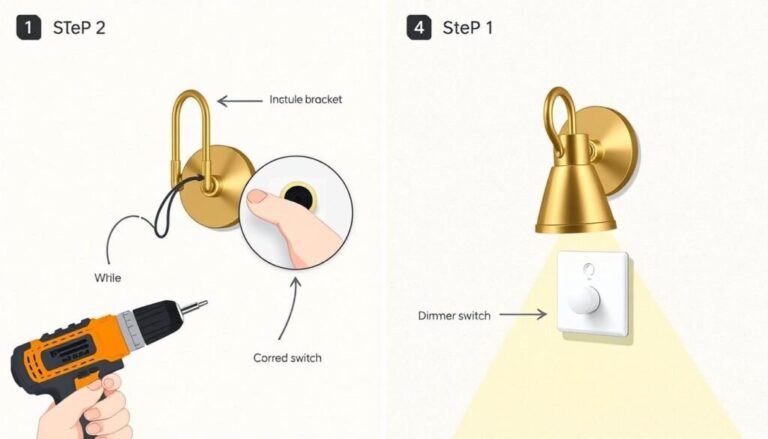
Always check the wall type and the included hardware before installing any mounted light. Drywall, plaster, brick, and paneling each call for different fasteners and approaches. If the fixture is heavier than expected or the wall surface is uncertain, a professional installer is the safer choice.
Do not assume the included screws or anchors are right for every wall. Confirm weight limits, wall material, and the manufacturer’s installation instructions before mounting anything above artwork or mirrors.
Styling Ideas for a More Polished Room
Rechargeable picture lights are at their best when they feel like part of the room rather than a separate gadget. A little attention to finish, scale, and surrounding decor can make the whole space look more deliberate.
Using picture lights to create a focal point above art or a mantel
A single light above one key artwork can create a strong focal point without adding visual clutter. This works especially well above a mantel, where the fixture can help anchor the arrangement and make the wall feel complete. In a hallway, it can turn a simple framed piece into a destination moment.
Matching metal finishes to frames, furniture, and existing fixtures
Match the light to nearby metals when possible, but do not force an exact match if the room already mixes finishes. Brass can warm up a cool room, while black can sharpen a pale wall or minimalist frame. Antique tones often work best when the room already has some traditional character.
The most successful rooms usually repeat a finish at least once or twice elsewhere, even in small ways. That repetition helps the picture light feel intentional instead of isolated.
Layering with ambient and accent lighting for a balanced look
Picture lights should complement the room’s main lighting, not replace it. Pair them with ambient light from ceiling fixtures or lamps, then use the picture light as an accent. That layering creates depth and keeps the artwork visible without making the wall feel overly bright.
Art is often displayed best with a mix of ambient and accent light, because one focused source alone can make a room feel flat or overly dramatic.
Benefits, Limitations, and Common Mistakes
Rechargeable wireless picture lights are popular because they solve a real decorating problem, but they are not the right answer for every wall or every habit. Knowing the trade-offs makes it easier to buy one you will actually enjoy using.
Advantages of cordless installation, flexibility, and low-maintenance operation
The biggest advantage is flexibility. Without a visible cord, the light looks cleaner and can be placed in more locations. That makes it especially useful for renters, temporary displays, and rooms where wiring would be inconvenient.
Rechargeable models also tend to be low-maintenance once you understand the charging rhythm. For many households, that is enough to make them more practical than a fixture that requires permanent electrical work.
Trade-offs: recharge frequency, brightness limits, and battery aging over time
The main trade-off is that cordless convenience comes with a charging routine. If you leave the light on for long periods, you will recharge more often. Brightness may also be limited compared with some hardwired options, especially if you want strong illumination over a large artwork.
Battery aging is another reality. Over time, rechargeable batteries hold less charge than they did when new. That does not make the light unusable, but it does mean long-term runtime may gradually shrink.
- Clean, cordless look
- Easy to place in more rooms
- Good for renters and changing displays
- Needs regular recharging
- Battery performance can decline over time
- May not suit very large or very bright displays
Common mistakes with placement, over-lighting, and ignoring wall color or glare
One common mistake is choosing a light that is too bright for the artwork. Another is mounting it without considering wall color, since dark walls absorb more light and pale walls can reflect more glare. Glass-covered frames also need extra attention because reflections can become distracting quickly.
For shoppers who want a deeper buying framework, how to choose a picture light for artwork is a helpful next read because it covers the same decision from the artwork’s point of view, not just the battery’s.
Care, Maintenance, and Final Buying Recommendation
A rechargeable wireless picture light can stay attractive and useful for a long time if you treat it like a lighting fixture rather than a disposable accessory. Small habits make a difference in both appearance and battery health.
Cleaning finishes, protecting the battery, and extending usable life
Clean the finish gently with a soft, dry cloth unless the manufacturer says otherwise. Avoid harsh cleaners that can dull brass, scratch matte finishes, or leave residue near the charging port. If the light is removable, store it in a dry indoor space when not in use for long periods.
To support battery health, avoid letting the light sit completely drained for extended stretches. If the model has a battery indicator, use it. If it has a timer, use that too, because small controls like these can reduce unnecessary drain.
When a rechargeable model is the best value versus a hardwired alternative
A rechargeable model is usually the best value when you want a clean look, flexible placement, and simple installation. It is especially appealing for renters, smaller rooms, and framed art that does not need intense illumination every day.
A hardwired alternative may be the better long-term choice if you want a fixture that stays on for many hours, lights a very large artwork, or fits into a permanently designed feature wall. The right answer depends less on trend and more on how often the light will actually be used.
Final recommendation for different room sizes, art types, and usage habits
For most people, the best rechargeable wireless picture light is the one that matches the artwork size, offers useful dimming, and makes recharging feel manageable rather than annoying. Small to medium framed pieces in living rooms, hallways, and bedrooms are the easiest match. Larger art, bright display needs, or all-night use may justify a different power approach.
If you want the simplest buying rule, choose the model whose runtime at your preferred brightness level is comfortable for your routine, then confirm the finish and beam spread suit the room. That balance matters more than chasing the longest claimed battery life on the spec sheet.
Frequently Asked Questions