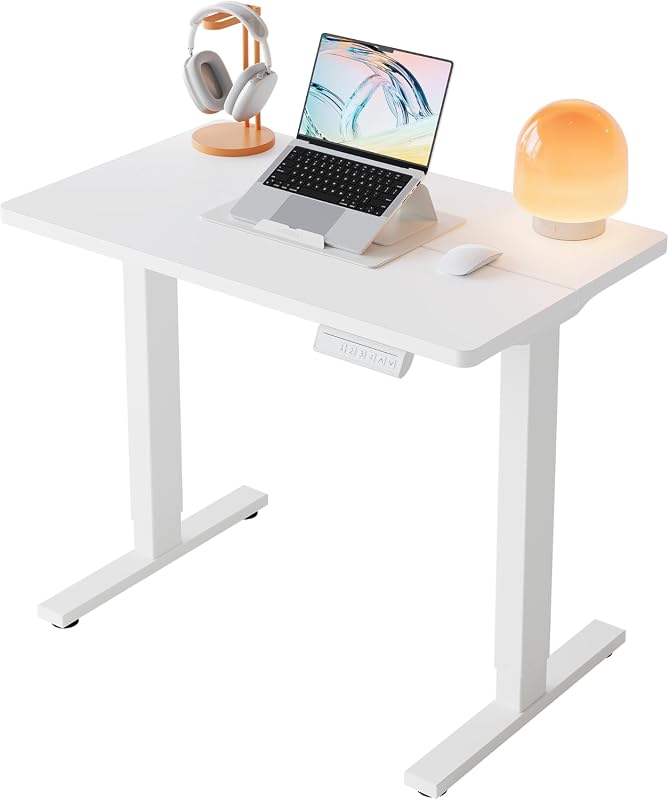
What Is a Modern Office Desk with Storage Guide

A modern office desk with storage is a desk that combines a work surface with built-in drawers, shelves, cabinets, or cable organization in a clean, current design. It suits people who want a functional workspace that keeps clutter contained and looks more at home in modern interiors.
What is a modern office desk with storage? It’s a work desk designed with built-in organization features like drawers, shelves, cabinets, or cable-routing compartments, paired with a cleaner, more current look than a traditional office desk. In practice, that means a piece that helps you work, store essentials, and keep the room visually calm instead of turning your setup into open clutter.
For many home office shoppers, the appeal is simple: one piece of furniture can support a laptop, monitor, notebooks, chargers, and paperwork without looking bulky or overly corporate. The right version depends less on trend labels and more on how much storage you actually need, how much floor space you can spare, and whether the desk has enough surface area and legroom for your daily routine.
- Core definition: It combines workspace and built-in organization in one desk.
- Main difference: It offers more storage and often better cable handling than a basic writing desk.
- Best for: Home offices, bedrooms, apartments, and shared living spaces.
- Key buying factors: Check surface size, legroom, drawer layout, materials, and assembly details.
- Smartest approach: Choose storage based on your real workflow, not just the desk’s appearance.
What Is a Modern Office Desk with Storage?
How today’s designs combine workspace, organisation, and style
A modern office desk with storage blends three jobs into one footprint. First, it gives you a usable work surface. Second, it builds in practical storage so pens, files, devices, and accessories do not have to live permanently on top. Third, it contributes to the room’s design through cleaner lines, quieter hardware, and finishes that feel more residential than old-school office furniture.
“Modern” does not refer to one exact style. It can mean Scandinavian light wood, matte black metal, minimalist white lacquer, warm walnut mid-century shapes, or mixed-material designs with subtle tech features. What these desks usually share is visual restraint: slimmer silhouettes, less ornament, and storage that feels integrated rather than added on as an afterthought.
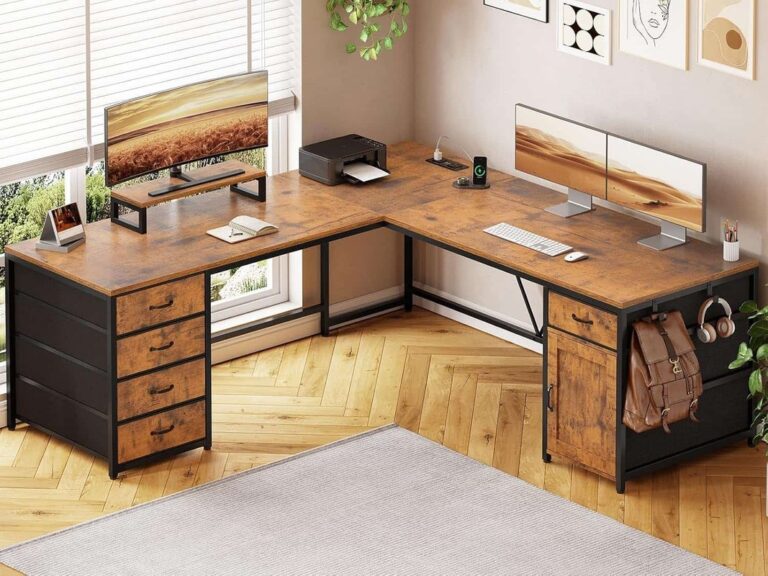
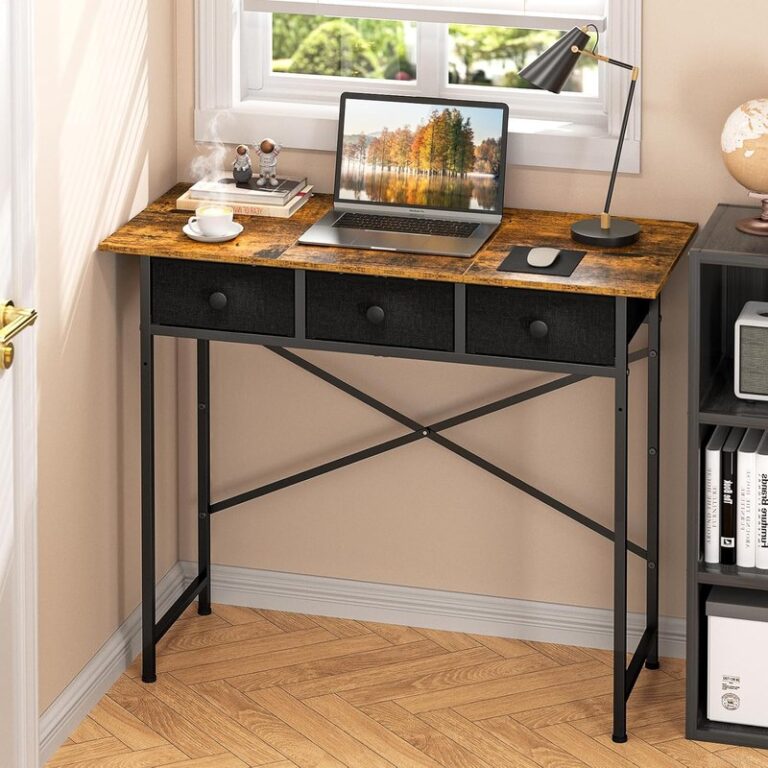
Storage can take many forms. Some desks use a single shallow drawer for stationery. Others include a pedestal with two or three drawers, open cubbies, a cabinet for bulkier items, or a raised shelf that keeps the main work surface clearer. In smaller spaces, even modest built-in storage can make a major difference because it reduces the need for extra filing units or rolling carts.
What separates a modern storage desk from a basic writing desk
A basic writing desk is usually simpler and lighter in form. It often has a flat top, four legs or a slim frame, and little to no built-in storage. That can work well if you prefer a minimal setup or already use separate shelving. If you want a closer look at that category, Hurrell Editions also explains what a small writing desk is called and where it fits best.
A modern office desk with storage goes further. It is designed around daily use that includes organization, device charging, paperwork, and accessories. Compared with a writing desk, it may have deeper drawers, better cable routing, stronger support for monitors, and more intentional compartment layouts.
That does not automatically mean larger or more formal. Many compact models are still apartment-friendly. The real difference is that a storage desk is expected to contain part of your workflow, not just hold your laptop.
Who a Modern Office Desk with Storage Suits Best
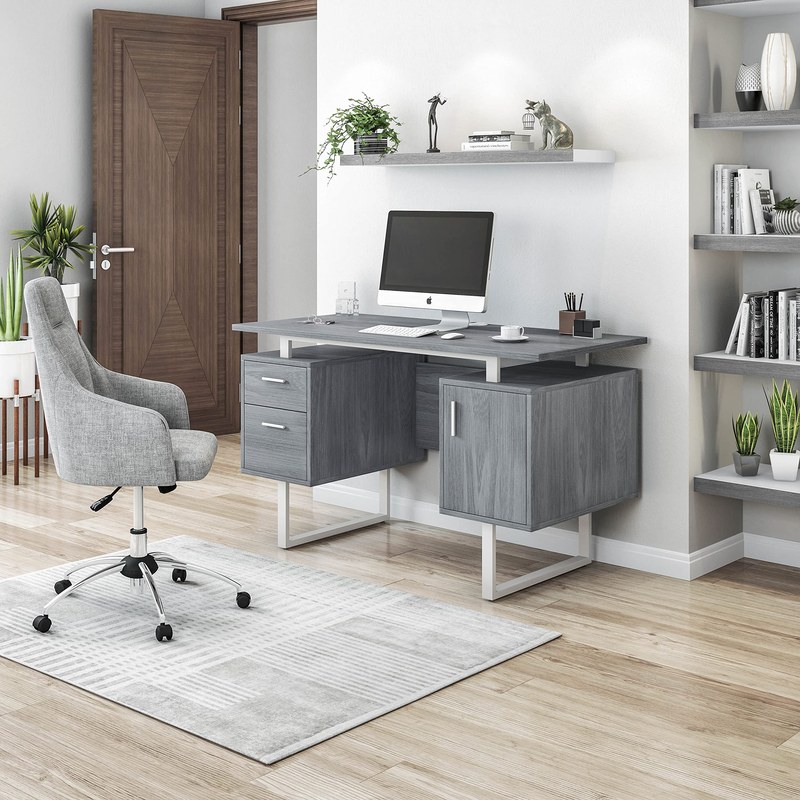
A worker uses a storage desk with built-in drawers and shelving.
Home offices, spare bedrooms, living areas, and compact apartments
This desk type suits spaces where every piece of furniture has to work hard. In a dedicated home office, built-in storage can reduce visual noise and keep supplies close at hand. In a spare bedroom, it helps the room function as both guest space and work zone without adding multiple storage pieces. In a living room or open-plan area, a modern design is often easier to blend with the rest of the decor than a traditional executive desk.
Compact apartments benefit especially well from desks that combine surface and storage in one footprint. A desk with drawers may remove the need for a side cabinet. A desk with shelving may replace a separate organizer. If your room is especially tight, articles like best small writing desks with storage can be useful for comparing smaller formats and layout ideas.
Professionals, students, creatives, and hybrid workers in 2026
In 2026, many people still need home workspaces that can shift between focused desk work, video calls, study sessions, and creative projects. A modern office desk with storage suits professionals who need papers and tech accessories within reach, students who need room for books and stationery, and creatives who want a surface that can stay partly clear for sketching, planning, or editing.
Hybrid workers often benefit most because they need a setup that can disappear visually at the end of the day. Closed drawers and cabinets help a room feel less like a permanent office. That matters in bedrooms and shared living areas where mental separation is just as important as square footage.
What to Look for in a Modern Office Desk with Storage
Drawer types, shelving, cabinets, and hidden cable management
Start by matching the storage layout to what you actually keep at your desk. Shallow top drawers are best for pens, notebooks, chargers, sticky notes, and small accessories. Deeper drawers can hold documents, tablets, or bulkier tools. Open shelves work well for baskets, books, and decor, but they also display clutter more easily. Cabinets are useful when you want visual calm and less dust exposure.
Cable management is one of the most overlooked details in modern desks. Some models include grommet holes, rear cutouts, hidden trays, or channels that keep cords from pooling behind the desk. If you use a monitor, laptop charger, lamp, speakers, or docking station, this feature can matter as much as the drawers.
Storage layouts vary widely by model. Always check the official product listing for interior drawer dimensions, cabinet openings, and whether cable cutouts are included or just shown in styled images.
Surface size, legroom, ergonomics, and daily workflow needs
A desk can look beautifully streamlined and still feel frustrating if the top is too shallow or the storage intrudes into leg space. Think about how you work for a full day, not just how the desk looks in a product photo. Do you use one screen or two? Do you write on paper beside your keyboard? Do you need room for a desk lamp, a mug, or a planner without crowding your mouse area?
Legroom matters just as much as storage. A drawer pedestal on one side may be fine, but heavy storage on both sides can make the center kneehole too narrow for comfort. If you sit for long stretches, make sure the desk height works with your chair and allows your arms to rest naturally while typing.
For users comparing simpler desks with more tech-friendly ones, Hurrell Editions’ guide to small writing desk vs small computer desk helps clarify where storage, cable handling, and equipment needs start to diverge.
Build quality, weight capacity, finishes, and ease of assembly
Build quality affects both feel and longevity. Look for stable joinery, smooth drawer operation, and materials that fit your expectations. A desk used for a laptop and a notebook has different demands than one supporting a monitor arm, printer, or heavy stacks of books.
Weight capacity is worth checking whenever you plan to place more than light office basics on the desk. If a retailer or manufacturer does not clearly state load limits, treat that as a prompt to ask before buying. The same goes for assembly. Some modern desks are straightforward; others arrive flat-packed with many parts and hardware bags. If easy setup matters, confirm the assembly requirements and whether tools are included.
- Measure the wall, not just the old desk footprint.
- Check whether drawers reduce usable legroom.
- Confirm cable access if you use multiple devices.
- Review official specs for materials, load limits, and assembly details.
Best Materials, Finishes, and Design Details for a Modern Look<
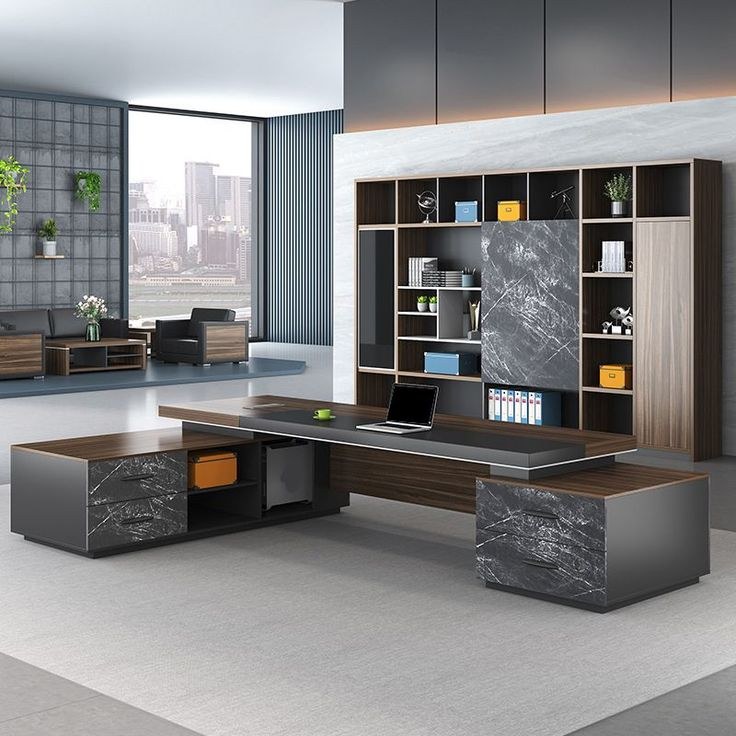
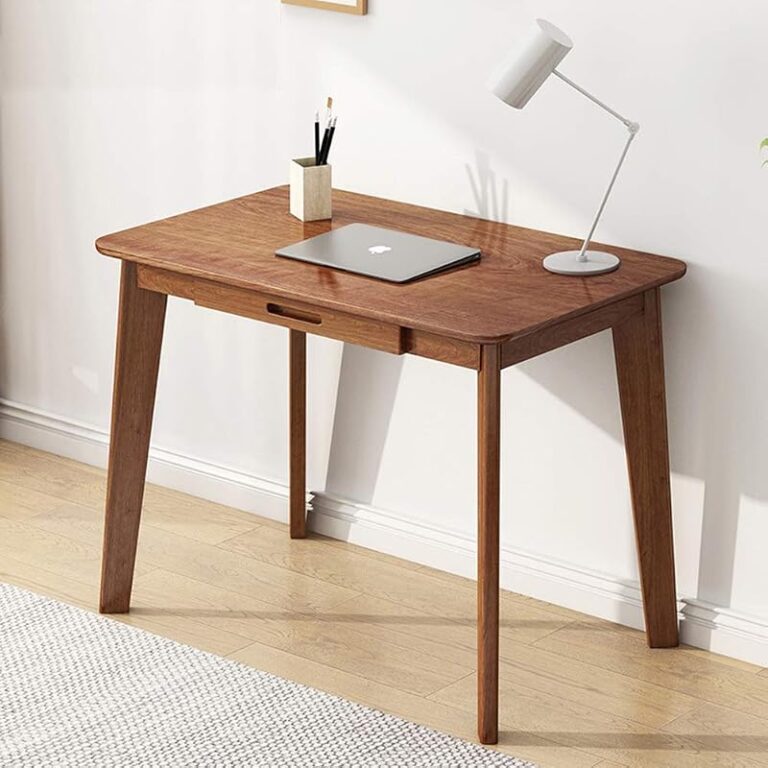
A modern storage desk with matte surfaces, wood grain, and streamlined drawer details.
A modern storage desk with matte surfaces, wood grain, and streamlined drawer details.
/h2>
Solid wood, engineered wood, metal, glass, and mixed-material options
Material choice shapes both appearance and maintenance. Solid wood generally offers warmth, character, and better long-term repair potential, though it can be heavier and more expensive. Engineered wood is common in modern desks because it supports cleaner lines, consistent finishes, and lower price points, but durability varies by construction quality and surface layer.
Metal frames add a lighter visual profile and can make a desk feel more architectural. Glass can look airy in small rooms, though it tends to show fingerprints and may feel less forgiving for daily work. Mixed-material desks, such as wood tops with metal legs or painted cabinets with wood drawer fronts, often strike the most balanced modern look.
Handleless drawers, slim profiles, soft-close hardware, and integrated tech
Modern design details usually focus on subtlety. Handleless drawers, recessed pulls, and slim hardware keep the front profile cleaner. Tapered legs or floating-style drawer boxes reduce visual bulk. Soft-close hardware can make a desk feel more refined, especially in shared spaces where noise matters.
Some newer desks also include integrated charging ports, concealed outlets, or wireless charging areas. These features can be convenient, but they should not distract from the basics. A well-sized desk with durable drawers is usually a better long-term choice than a cramped desk with flashy tech add-ons.
How colour, texture, and silhouette affect the room
Color has a major effect on how large or heavy a desk feels. White, pale oak, ash tones, and soft gray finishes tend to recede visually, which helps in small rooms. Walnut and black finishes can look sophisticated and grounded, but they usually read heavier. Matte textures often feel more contemporary than glossy ones, while wood grain adds warmth that can keep a modern room from feeling sterile.
Silhouette matters too. Open metal legs create more visual breathing room. Full side panels and deep storage blocks feel more substantial and can work well in larger rooms. If you want the desk to blend in, choose a finish close to your flooring or shelving. If you want it to anchor the room, use contrast deliberately.
Sizing and Placement Guide for Different Rooms
How to choose the right desk width, depth, and height
Width determines how much real working room you have from side to side. Depth affects whether your screen sits at a comfortable distance and whether you can write in front of a keyboard. Height needs to work with your chair and body position. Exact ideal measurements vary by user and model, but the principle is consistent: buy for how you work, not just for how the desk photographs.
If you use only a laptop, a narrower desk may be enough. If you use a monitor, paperwork, and a lamp, you will usually want more depth and width. Storage desks sometimes sacrifice top surface for built-in organization, so pay attention to the actual clear working area after shelves or raised compartments are accounted for.
Clearance around chairs, storage drawers, and walkways
Many desk mistakes happen outside the desk itself. You need enough room to pull the chair back, open drawers fully, and walk past the setup without squeezing. A desk that technically fits the wall can still feel awkward if a cabinet door hits the bed, radiator, or side table.
Corner placement can help in tight rooms, but only if the drawer side does not block movement. In bedrooms, leave enough clearance so the desk does not make the room feel like a maze. In living areas, consider how the back or side of the desk looks from the rest of the room, especially in open-plan layouts.
Where to place a storage desk for light, focus, and visual balance
Natural light is usually helpful, but desk placement should avoid harsh screen glare. Side light is often easier to work with than direct front or back light. If you take video calls or create content, your lighting plan may influence placement even more. Readers building a creative workstation may also find Hurrell Editions’ guide to what a softbox lighting kit is useful when planning a desk area for filming, streaming, or photography.
For visual balance, place a heavier storage desk where it feels anchored rather than squeezed. That might be centered on a wall, balanced with shelving, or paired with artwork above it. In a shared room, using a rug, lamp, or picture ledge nearby can help define the office zone without needing built-in partitions.
Mock up the desk footprint with painter’s tape on the floor before ordering. Then test chair movement and drawer swing so you can catch spacing problems early.
How to Style a Modern Office Desk with Storage
Pairing the desk with seating, lighting, shelving, and wall decor
A modern desk looks best when the surrounding pieces repeat its visual language. If the desk has slim black legs, echo that finish in a task lamp or shelving brackets. If the desk is warm wood, choose a chair, picture frames, or accessories that support that warmth rather than fighting it.
Your chair should fit both physically and stylistically. An oversized chair can make a slim desk look undersized and may not tuck in properly. Lighting is equally important. A focused desk lamp supports work, while wall decor softens the office feel. If you want vertical styling without bulky furniture, a picture ledge or a few restrained framed prints can add personality above the desk.
Keeping the surface minimal without losing personality
The goal is not an empty showroom desk. It is a desk where the visible items are intentional. Keep daily-use tools out, and store the rest. A tray for small accessories, one plant, a lamp, and a notebook may be enough to make the setup feel personal without becoming messy.
Closed storage helps here because it hides the less attractive parts of work life: chargers, paper stacks, adapters, spare cables, and sticky-note pads. If you are organizing a more creative setup, Hurrell Editions also has guidance on how to organize a desk for an artist, which translates well to mixed-use home office spaces.
Best modern looks: Scandinavian, mid-century, minimalist, and industrial
Scandinavian styling usually favors light woods, white surfaces, soft textures, and minimal clutter. Mid-century looks often lean into walnut tones, tapered legs, and warm brass or black details. Minimalist rooms work best with clean-lined desks, hidden storage, and very limited surface accessories. Industrial spaces pair wood with black metal, exposed structure, and slightly more contrast.
None of these styles require a perfect match. A desk can borrow from more than one. What matters is consistency in tone, scale, and restraint. If the desk is visually simple, the room usually feels calmer and more expensive-looking.
Benefits, Limitations, and Common Buying Mistakes
Why built-in storage can improve productivity and reduce clutter
Built-in storage reduces friction. Pens have a home, chargers are easier to find, and papers are less likely to spread across the room. That can improve focus because you spend less time resetting the workspace every day. It also helps the room recover faster after work, which matters in bedrooms and living spaces.
Modern storage desks can also reduce the number of extra furniture pieces you need. That is useful in small homes where one well-chosen desk may do the work of a desk, organizer, and side cabinet.
Potential drawbacks in small rooms, shared spaces, or tech-heavy setups
Storage is not always a pure advantage. More built-in compartments can mean more visual mass, less legroom, and a heavier piece to move. In very small rooms, a desk with too much storage can dominate the wall and make the room feel tighter than a simpler desk plus one separate organizer.
Tech-heavy users may also outgrow some modern desks if cable access is poor or if storage is designed more for paper than devices. A beautiful desk can become frustrating if there is nowhere sensible to route power cords, store a docking station, or place a PC tower.
Mistakes to avoid with sizing, storage expectations, and finish selection
The most common mistake is buying based on appearance alone. A desk may look compact online but feel bulky once drawers, side panels, and chair clearance are considered. Another mistake is assuming every drawer is useful. Some are shallow and decorative; others are deep enough for real storage. Check dimensions where available.
Finish selection is another frequent problem. High-gloss surfaces can show smudges quickly. Very dark finishes may reveal dust. Light finishes can brighten a room but may look flat if everything else is also pale. Aim for a finish that works with your real household habits, not just an idealized photo setup.
- Match storage type to what you actually use every day.
- Measure for chair pull-back and full drawer opening.
- Verify specs, care guidance, and warranty terms before ordering.
- Assuming “modern” automatically means ergonomic.
- Choosing open shelving if you dislike visible clutter.
- Ignoring cable routing until after assembly.
Care, Maintenance, and Long-Term Value
How to protect wood, laminate, metal, and painted finishes
Care depends on the material. Wood surfaces usually benefit from gentle dusting and prompt cleanup of spills. Laminate is often easy to wipe down but can be vulnerable to edge damage if treated roughly. Metal frames are generally low-maintenance, while painted finishes may chip if drawers are slammed or hard objects strike corners.
Use coasters, desk pads, and felt organizers where helpful. Avoid dragging heavy accessories across the top. For exact care steps, follow the retailer or manufacturer’s instructions for the specific finish you buy.
Managing drawer hardware, cable wear, and everyday cleaning
Long-term value is not only about the top surface. Drawer slides, hinges, and cable openings all take repeated wear. Keep hardware free from dust buildup, do not overload drawers, and occasionally check that screws remain snug after assembly. If cords pass through cutouts, make sure edges are smooth and not rubbing through cable jackets over time.
Keep drinks, heat sources, and direct prolonged sunlight in mind. Sun exposure can alter some finishes over time, and heat or moisture can damage wood veneers, laminates, and painted surfaces.
When a modern office desk with storage is worth the investment
A storage desk is usually worth the investment when it replaces multiple smaller pieces, supports your real workflow, and improves how the room functions day to day. It is also a smart buy when you need your workspace to look orderly in a visible part of the home.
If your needs are very light, a simpler writing desk may still be the better value. But if clutter tends to spread, or if you want a cleaner all-in-one workstation, paying more for thoughtful built-in storage can be justified over time.
Final Recommendation: How to Choose the Right Modern Office Desk with Storage
The best fit by room size, work style, and design priorities
The best modern office desk with storage is the one that fits your room first, your workflow second, and your style third, in that order. In a small bedroom or apartment, prioritize a lighter-looking desk with modest drawers and good cable handling. In a dedicated home office, you can choose a wider surface and more substantial storage if it improves organization without crowding movement.
For laptop-based work, a slimmer desk with one or two drawers may be enough. For paperwork, study, or creative tasks, look for a broader top and more varied storage. If appearance matters most in a shared room, choose cleaner fronts, quieter hardware, and a finish that coordinates with nearby furniture.
What matters most before you buy in 2026
Before buying in 2026, focus on the basics that still matter more than trend features: real surface space, usable storage, legroom, cable management, and finish durability. Then confirm the official specifications, assembly details, care instructions, and any warranty terms directly with the seller or manufacturer.
A modern office desk with storage should make work easier and the room calmer. If it does both without compromising comfort, it is probably the right choice.
Frequently Asked Questions